Emotional storms can feel like they are happening all the time if you live with Borderline Personality Disorder, or BPD. One minute you might feel fine, and the next, a small comment triggers an overwhelming wave of panic, anger, or despair. It is exhausting. You might find yourself acting in ways that you later regret, damaging relationships or hurting yourself just to make the pain stop. But here is the good news: there is a proven way to navigate these intense emotions without losing control. That method is called Dialectical Behavior Therapy, often shortened to DBT.
DBT was created by Dr. Marsha Linehan in the late 1980s specifically for people who struggle with chronic emotional dysregulation and self-harm. Unlike traditional talk therapy, which focuses on understanding *why* you feel a certain way, DBT focuses on *what* you can do right now to survive the moment. It combines cognitive-behavioral techniques with mindfulness practices to help you build a life worth living. This guide breaks down the core DBT skills and shows you how to create a practical crisis plan that actually works when things get tough.
The Four Pillars of DBT Skills
DBT is not just one technique; it is a comprehensive toolkit divided into four main modules. Think of these as the foundation of your emotional survival kit. Each module addresses a specific challenge associated with BPD.
- Mindfulness: The core skill that underpins everything else. It teaches you to be present in the moment without judgment.
- Distress Tolerance: How to survive a crisis without making it worse.
- Emotion Regulation: Understanding and changing intense emotions that cause problems.
- Interpersonal Effectiveness: Asking for what you need and saying no while maintaining self-respect and relationships.
You don't have to master all of them at once. Most programs start with Mindfulness because being aware of your current state is the first step to changing it. Research from Robinson et al. (2018) suggests that just eight weeks of consistent mindfulness practice can increase emotional regulation capacity by 32% in patients with BPD. That is a significant shift in how you handle daily stressors.
Mastering Distress Tolerance for Immediate Relief
When you are in the middle of a crisis, logic often goes out the window. You cannot reason with a panic attack. This is where Distress Tolerance skills come in. These tools are designed to help you get through the immediate storm without resorting to self-harm or other destructive behaviors.
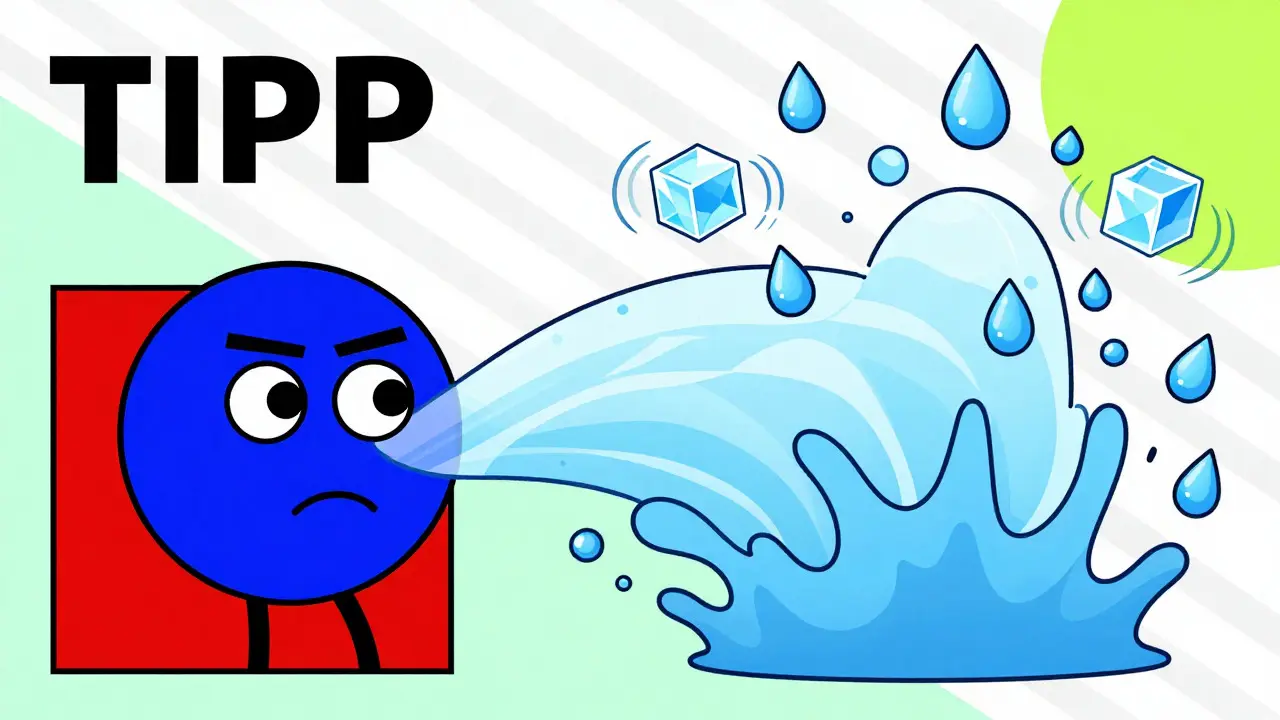
One of the most powerful techniques is TIPP. It stands for Temperature, Intense exercise, Paced breathing, and Paired muscle relaxation. If you feel your heart racing and emotions spiking, try splashing ice-cold water on your face. This triggers the mammalian dive reflex, which physically slows down your heart rate and calms your nervous system. It is a biological hack that works instantly. Another key skill is STOP: Stop, Take a step back, Observe, and Proceed mindfully. It sounds simple, but pausing for even ten seconds before reacting can prevent long-term damage to your relationships and self-esteem.
DeCou, Comtois, and Landes (2019) found that using these specific distress tolerance skills reduced emergency room visits for self-harm by 57% in the first four months of treatment. Why? Because they give you a concrete action to take instead of leaving you helpless against your feelings.
Regulating Emotions Before They Overwhelm You
Distress tolerance helps you survive the crisis, but Emotion Regulation helps you reduce the frequency and intensity of those crises over time. People with BPD often experience emotions more intensely and for longer periods than others. The goal here is not to eliminate emotions-that is impossible-but to manage them so they don't drive your actions.
A crucial skill in this module is PLEASE. It reminds you to treat Physical illness, maintain Balanced eating, Avoid mood-altering drugs, ensure Balanced sleep, and Exercise. When you are emotionally vulnerable, your body needs extra care. If you are running on caffeine, junk food, and three hours of sleep, your emotional baseline will be shaky. Stabilizing your physical health makes it easier to handle emotional ups and downs.
Another strategy is Opposite Action. If you feel angry and want to yell, but yelling will hurt your relationship, you do the opposite: speak softly and calmly. If you feel depressed and want to isolate, you force yourself to reach out to a friend. By acting contrary to your emotional urge, you can actually change the emotion itself. Studies show that consistent practice of these skills can lead to a 40% reduction in emotional reactivity after six months.
Navigating Relationships with Interpersonal Effectiveness
Relationships are often a major source of stress for people with BPD. Fear of abandonment and difficulty setting boundaries can lead to chaotic interactions. The Interpersonal Effectiveness module gives you scripts and strategies to communicate clearly and assertively.
The DEAR MAN skill is a favorite for many. It helps you ask for what you want effectively:
Step
Action
Example
Describe
State the facts objectively.
"You arrived two hours late for our dinner."
Express
Share your feelings using "I" statements.
"I felt worried and unimportant."
Assert
Clearly state what you want.
"I would like you to call if you are going to be late."
Reinforce
Explain the positive outcome.
"It would help me feel secure and valued."
Mindful
Stay focused on your goal.
Don't get sidetracked by their excuses.
Appear confident
Use strong body language.
Maintain eye contact and steady voice.
Negotiate
Be willing to compromise.
"Can we agree on a text message instead?"
Using structured communication reduces misunderstandings and helps you set boundaries without feeling guilty. According to a longitudinal study by McLean Hospital (2023), mastering these interpersonal skills improved relationship satisfaction scores by 28%. It transforms interactions from potential landmines into opportunities for connection.

Creating a Personalized Crisis Plan
Knowing the skills is one thing; using them when you are in the depths of despair is another. This is why a written Crisis Plan is essential. A crisis plan is a document you create when you are calm, detailing exactly what to do when you are not. It serves as a lifeline when your brain is too overwhelmed to think clearly.
Your crisis plan should include:
- Early Warning Signs: What does your mood look like before it spirals? Do you start isolating? Do you stop sleeping?
- Coping Strategies: List your top five DBT skills. For example, "Use TIPP if I feel suicidal urges. Use STOP if I am about to send an angry text."
- Support Network: Who can you call? Include phone numbers of friends, family, and your therapist.
- Professional Resources: Save the number for a crisis hotline (like 988 in the US or local equivalents) and your psychiatrist's emergency line.
- Safety Measures: If you are prone to self-harm, list steps to remove access to harmful objects during high-risk times.
Keep this plan somewhere accessible. Some people keep it on their fridge, others save it as a note on their phone. The key is that it is ready when you need it. Integrating mobile crisis planning tools with DBT has been shown to increase skill utilization during crises by 52% compared to traditional methods alone.
Getting Started with DBT Treatment
Finding the right support is critical. Comprehensive DBT involves individual therapy, skills training groups, phone coaching, and therapist consultation teams. While this structure is demanding-typically requiring 2-3 hours per week for 6-12 months-it offers the highest success rates. Look for therapists certified through the Linehan Board of Certification to ensure you are receiving evidence-based care.
If comprehensive DBT is not available in your area, consider DBT-informed adaptations or digital tools. Apps like DBT Coach can supplement your learning, though they are not a replacement for professional therapy. Remember, progress takes time. Early stages may involve emotional flooding as you confront difficult feelings, but compliance and comfort with skills improve significantly after the first few months. You are building new neural pathways, and that requires repetition and patience.
How long does it take to see results from DBT?
Most people begin to notice improvements in self-harm behaviors and emotional stability within the first 3 to 6 months of consistent practice. However, full mastery of skills and sustained lifestyle changes typically require 6 to 12 months of dedicated therapy. Individual results vary based on the severity of symptoms and commitment to homework.
Is DBT only for people with Borderline Personality Disorder?
No. While DBT was originally developed for BPD, it is now used effectively for treating depression, eating disorders, substance abuse, PTSD, and anxiety. Any condition involving emotional dysregulation can benefit from DBT skills.
What should I do if I don't have access to a DBT therapist?
You can start by reading validated workbooks like "The Dialectical Behavior Therapy Skills Workbook" by McKay, Wood, and Brantley. Online courses and apps like DBT Coach also offer structured lessons. However, for complex cases involving self-harm or suicidality, seeking professional help via telehealth services is strongly recommended.
Does insurance cover DBT therapy?
Many insurance plans, including Medicare in the US and various private insurers, cover DBT as it is recognized as an evidence-based practice. Coverage details vary, so check with your provider regarding session limits and whether they require certification from the Linehan Institute.
Can I use DBT skills alongside medication?
Yes. DBT is often used in conjunction with medication management. While DBT addresses behavioral and emotional patterns, medication can help stabilize mood and reduce symptoms like anxiety or depression, making it easier to engage with therapy skills.