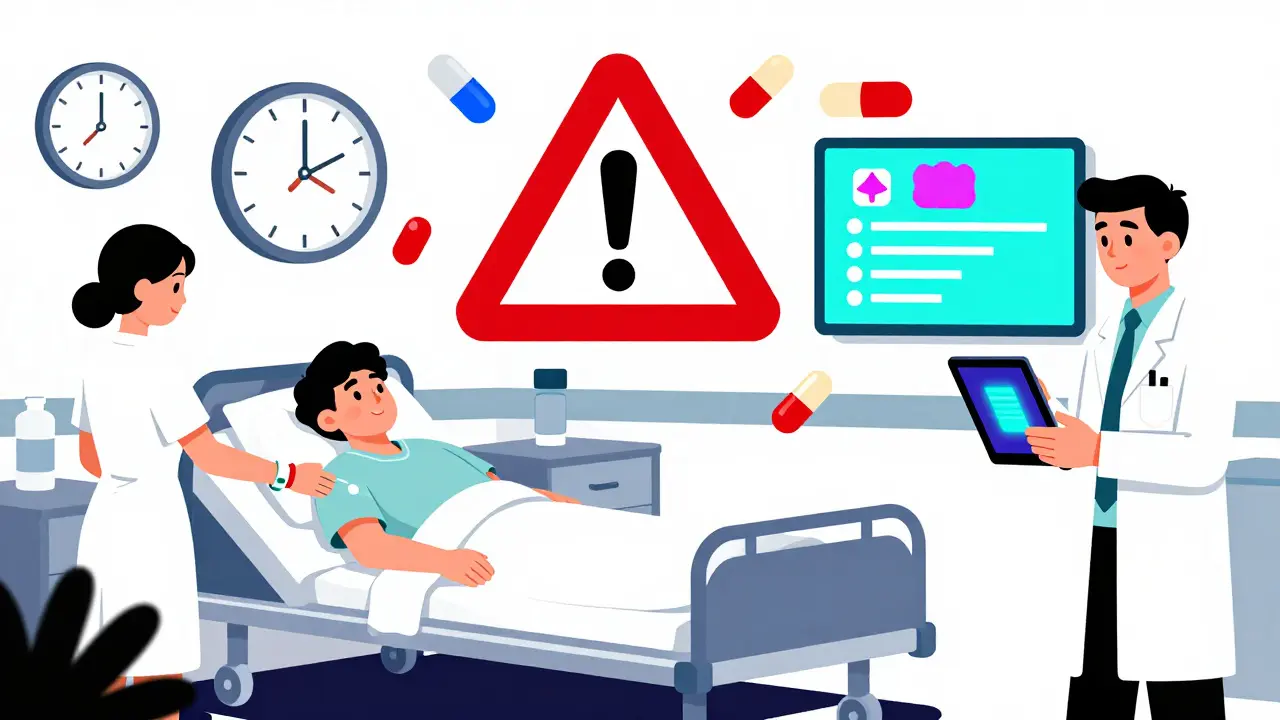
Every year, millions of people in the U.S. get the wrong medication, wrong dose, or wrong instructions - and it’s not always because someone was careless. The truth is, medication errors happen differently in hospitals than in retail pharmacies, and the consequences aren’t the same. One setting has more errors but more safety nets. The other has fewer errors but fewer chances to catch them before they hurt someone.
How Often Do Errors Happen?
In hospitals, mistakes are common - shockingly so. A 2006 study across 36 hospitals and nursing homes found that nearly 1 in every 5 doses had some kind of error. That means if you’re getting five medications in a day, one of them is likely wrong. Most of these errors happen when nurses give the medicine - timing issues, wrong pills, or incorrect amounts. The median error rate during administration? Between 8% and 25%. In retail pharmacies, the numbers look better. A 2018 review of 23 studies found that community pharmacies make errors in about 1.5% of prescriptions. That’s roughly 1 in 67 prescriptions. Sounds low? Think again. With over 3 billion prescriptions filled in the U.S. each year, that adds up to 45 million errors. A typical pharmacy filling 250 prescriptions a day might make four mistakes daily. Most are caught before the patient leaves - but not always.What Kind of Mistakes Happen?
In hospitals, errors are messy. They happen at every step: a doctor writes the wrong dose, a pharmacist misreads it, a nurse gives it at the wrong time. The most common? Wrong dosage, wrong drug, or wrong timing. A patient on insulin might get 10 units instead of 5. Or they get a drug meant for someone else. These mistakes often happen because patients are sicker, more medications are used at once, and shifts change quickly. In retail pharmacies, the mistakes are simpler but just as dangerous. The top three errors:- Wrong medication (giving amoxicillin instead of azithromycin)
- Wrong dose (10 mg instead of 5 mg)
- Wrong instructions (‘take twice a day’ instead of ‘take twice a week’)
Why Do These Errors Happen?
In hospitals, the problem is complexity. Patients have multiple conditions. Doctors, nurses, and pharmacists are rushed. Communication breaks down. A doctor types a prescription into a system, but the nurse doesn’t see the update. A pharmacist is interrupted while counting pills. Staff shortages make it worse. In retail pharmacies, it’s more about human factors. A 2023 AHRQ report found that 80% of community pharmacy errors come from cognitive mistakes - not laziness, but mental overload. You’re filling 30 prescriptions an hour. One looks like another. The screen is small. The scanner beeps wrong. The customer is in a hurry. You miss a decimal point. You misread handwriting. You assume the doctor meant something else. It’s not that pharmacists are careless - it’s that the system sets them up to fail.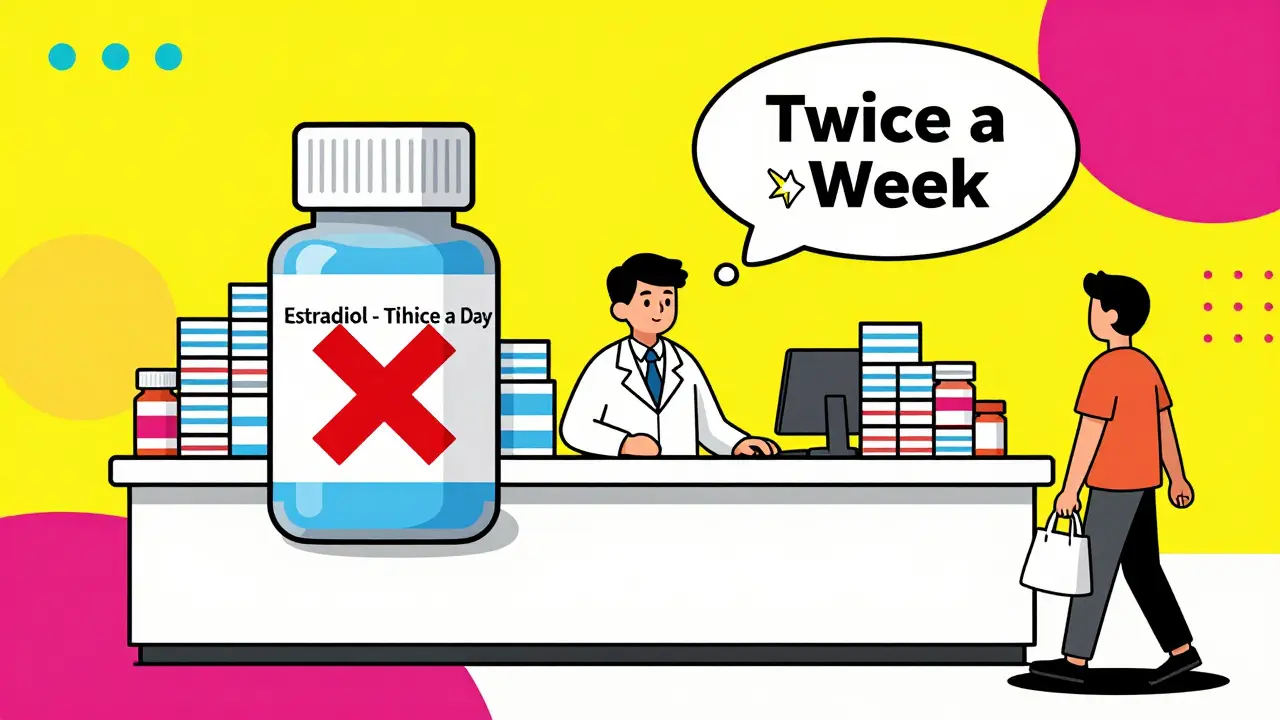
Who Catches the Mistakes?
This is the biggest difference. In hospitals, there are layers of checks. The pharmacist reviews the order. The nurse double-checks the drug, dose, and patient before giving it. Barcode scanners scan the patient’s wristband and the pill. If something’s wrong, an alarm goes off. In many places, barcode medication administration systems have cut errors by up to 86%. In retail pharmacies? The pharmacist is the last line of defense. No nurse. No scanner. No second pair of eyes. The patient walks out with the prescription. If the instructions say ‘take once daily’ but it should be ‘once weekly,’ the patient has no reason to question it. They trust the pharmacy. That trust becomes a vulnerability.What Happens When Errors Go Uncaught?
Hospital errors are more frequent - but more often caught before they hurt. If a nurse notices the wrong pill, she calls the pharmacist. If the system flags a drug interaction, it stops the process. That’s why fewer hospital errors lead to serious harm - even though there are more of them. Retail pharmacy errors are rarer - but they often slip through. A 2007 NIH study found that for every 10,000 prescriptions filled, there was about 1 actual dispensing error that reached the patient. But 23 prescription corrections happened before that. That means for every error that got through, 23 were caught - usually by the pharmacist catching their own mistake. Still, some slip through. The same study found that three out of every 10,000 errors led to hospitalization. One patient took too much warfarin and bled internally. Another took too much insulin and went into a coma. These aren’t rare cases - they’re happening every day.Are These Errors Reported?
Hospitals report everything. They have mandatory systems. A big hospital might log 100 medication errors per month. These aren’t used to punish staff - they’re used to fix the system. Did a new computer system cause confusion? Did shift changes lead to miscommunication? The data helps improve. Community pharmacies? Not so much. Until recently, most didn’t report errors. There was no system. No incentive. Fear of blame kept pharmacists quiet. That’s changing. California now requires pharmacies to log every error and make it available during inspections. Other states are following. The FDA gets over 100,000 reports a year - but experts say that’s less than 10% of what actually happens.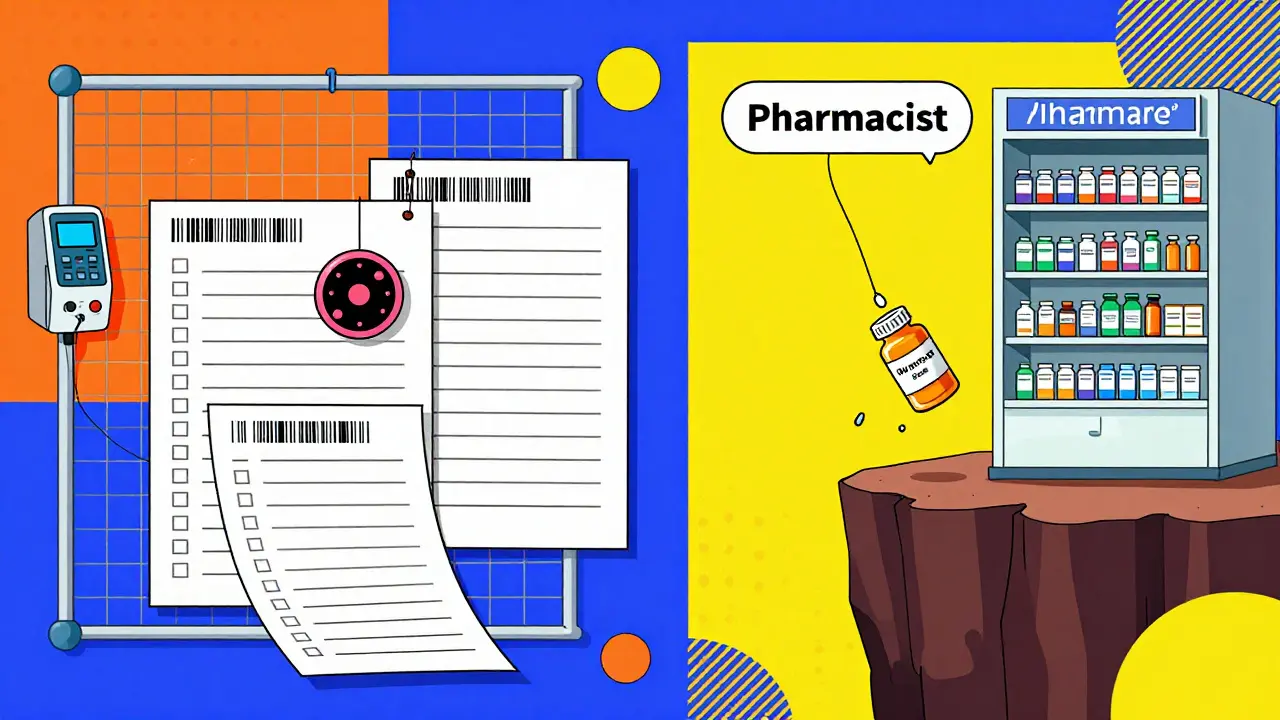
How Are Things Getting Better?
Technology is helping - in both places. In hospitals, electronic health records tied to pharmacy systems have cut errors by over half. Mayo Clinic saw a 52% drop after linking their systems. Barcode scanners, automated dispensing machines, and real-time alerts have made a huge difference. In retail pharmacies, AI is stepping in. CVS Health rolled out AI-powered prescription verification in 2022. It checks the prescription against the patient’s history, allergies, and other meds. Result? A 37% drop in dispensing errors. The University of California San Francisco tested AI tools that cut transcription errors by 63% in pilot programs. The biggest change? Culture. More pharmacies are now encouraging staff to report mistakes - not to get in trouble, but to learn. No blame. Just improvement. That’s what saves lives.What Can You Do?
You’re not powerless. Whether you’re getting medicine in a hospital or at your local pharmacy, here’s what works:- Always ask: ‘What is this for? How should I take it?’
- Check the pill bottle against the prescription slip.
- If the instructions say ‘once a week’ but the pill looks like it’s for daily use - ask again.
- Keep a list of all your meds - including supplements - and bring it to every appointment.
- Use one pharmacy. It helps them spot dangerous interactions.
Final Thought
Hospitals have more errors - but more safety nets. Retail pharmacies have fewer errors - but no safety net after the counter. The system isn’t broken. It’s uneven. And fixing it means building checks where they’re missing - not just in hospitals, but in every pharmacy that hands you a pill without asking if you understand it.Medication safety isn’t about perfection. It’s about layers. And in retail pharmacies, we’re still missing too many.
How common are medication errors in hospitals?
In hospitals, nearly 1 in every 5 doses (about 20%) contains some kind of error, according to a 2006 study across 36 U.S. healthcare facilities. Most occur during the administration phase - when nurses give the medicine. Common errors include wrong dosage, wrong timing, or giving the wrong drug entirely.
What’s the error rate in retail pharmacies?
Retail pharmacies make dispensing errors in about 1.5% of prescriptions. That’s roughly 1 error per 67 prescriptions. With over 3 billion prescriptions filled yearly in the U.S., that adds up to 45 million errors annually. Most are caught before the patient leaves, but some still get through.
What are the most common types of pharmacy errors?
The top three are: giving the wrong medication, giving the wrong dose, and writing incorrect instructions. One frequent example is mixing up ‘twice a day’ with ‘twice a week’ - a small typo with life-threatening consequences, especially with drugs like insulin or blood thinners.
Why are retail pharmacy errors more dangerous?
Because there’s no one else to catch them. In hospitals, nurses, pharmacists, and scanners double-check everything. In retail pharmacies, the pharmacist is the last person to review the prescription - and then the patient walks out. If the instructions are wrong, the patient often has no reason to question it.
Can technology reduce medication errors?
Yes. Barcode scanning in hospitals has cut errors by up to 86%. AI tools in retail pharmacies - like those used by CVS Health - have reduced dispensing errors by 37%. Systems that flag drug interactions, check patient history, and auto-correct handwriting have proven to be game-changers.
What should I do if I think I got the wrong medicine?
Don’t take it. Call the pharmacy immediately. Ask them to verify the prescription with your doctor. Keep your medication list updated and bring it to every appointment. Studies show patients who ask, ‘Is this the right medicine for me?’ reduce their risk of error by 41%.


February 17, 2026 AT 01:57 AM
Of course the system is rigged. You think these errors are accidents? Nah. Big Pharma and hospital conglomerates *want* you to mess up your meds so they can sell you more drugs. They profit off your confusion. The barcode scanners? Just a show. They still let 1 in 5 doses go wrong because it keeps you dependent. And don't get me started on AI - it's just another way to track your health data. They're not fixing it. They're monetizing it.
February 17, 2026 AT 15:53 PM
I mean... have you ever considered that maybe, just maybe, the real issue isn't the system, but the fact that we've outsourced our own cognitive responsibility to machines and overworked professionals? We live in a society that expects perfection from humans operating under conditions designed to induce failure... and then we blame the humans? The pharmacist who misreads 'twice a week' as 'twice a day' isn't a villain-they're a casualty of an economy that demands 30 prescriptions per hour while paying them barely above minimum wage. And yet, we demand accountability without offering dignity. It's tragic. It's systemic. And we're all complicit.
February 19, 2026 AT 01:47 AM
This whole thing feels like a metaphor for late-stage capitalism. Hospitals? The overcomplicated labyrinth of control. Retail pharmacies? The hollowed-out shell of trust. We used to have community pharmacists who knew your name, your kids, your dog. Now? You're a barcode. A transaction. A data point. And when the system fails-because it *will* fail-it's not a bug, it's a feature. The illusion of safety is what keeps people compliant. The truth? We're all one typo away from a coma. And nobody's coming to save you. Not the algorithm. Not the nurse. Not even the pharmacist. Just you. And your list.
February 20, 2026 AT 16:27 PM
Honestly? I think people are way too scared of hospitals. Yeah, they make more errors-but they also have *layers*. In retail? You're on your own. I had a friend get the wrong blood thinner once. The pharmacist didn't catch it. She took it. Ended up in the ER. But here's the kicker: she *knew* something was off because she asked, 'Is this right?' And that one question saved her life. So yeah, retail's riskier-but you're not powerless. Just ask. Always ask.
February 21, 2026 AT 15:38 PM
America's healthcare is a mess because we let corporations run it. Meanwhile, countries with single-payer systems have 1/10th the medication errors. Why? Because they don't pay pharmacists by the script. They pay them to *care*. We're not talking about technology here-we're talking about values. We prioritize profit over people. And until we fix that, no AI, no barcode, no checklist is gonna fix what's broken at the soul level.
February 21, 2026 AT 21:36 PM
I love how you said 'ask if this is the right medicine for me'-I do that every single time 😊 I even write it on a sticky note and hold it up to the pharmacist. They always smile and say 'good for you!' I'm not trying to be annoying-I'm trying to stay alive. And honestly? If more people did this, we'd cut errors in half. It's not about being paranoid. It's about being smart 💪❤️
February 22, 2026 AT 16:13 PM
I used to work in a pharmacy back in '17. The pressure was insane. You're juggling 40 scripts, two crying kids in the lobby, a diabetic patient asking if their insulin looks right, and the scanner keeps beeping because someone scanned a bottle upside down. You're not lazy. You're not careless. You're just human. And we treat humans like machines until they break. Then we replace them with AI and call it progress. Meanwhile, the real fix? Hire more staff. Pay them better. Let them breathe. Not another app. Not another camera. Just more humans who aren't on the verge of a breakdown.
February 23, 2026 AT 08:25 AM
The real scandal isn't the error rates-it's the *lack of transparency*. Hospitals log 100 errors a month? That's not accountability. That's PR. They're not fixing systems-they're scrubbing data. And retail pharmacies? They're legally shielded from reporting. This isn't a healthcare crisis. It's a governance crisis. We need mandatory public dashboards-real-time error metrics for every pharmacy and hospital in the U.S. If you're not transparent, you shouldn't be allowed to dispense. Period. No more 'we're working on it.' Show us the numbers. Or shut it down.
February 25, 2026 AT 04:36 AM
The data is clear: systemic interventions reduce harm. Barcode scanning cuts errors by 86%. AI verification drops dispensing mistakes by 37%. But these aren't magic bullets-they're *tools*. The real breakthrough is cultural: creating environments where staff feel safe to report near-misses. Fear of blame kills safety. Psychological safety saves lives. Hospitals have this. Retail pharmacies? Still stuck in 'blame and shame.' The solution isn't more tech. It's more trust. More training. More time. And less profit pressure. Simple. But politically inconvenient.
February 25, 2026 AT 15:05 PM
You know what's wild? In Japan, pharmacists sit down with you for 10 minutes after you pick up a prescription. They ask how you're sleeping. They check if you're eating. They draw diagrams. In the U.S.? You get a bag and a receipt. We treat medicine like a fast-food order. 'Large combo, no onions, and thanks for the $120.' Meanwhile, people are dying because 'twice a week' became 'twice a day' and no one noticed. Maybe we need to stop treating healthcare like a transaction and start treating it like a relationship.
February 26, 2026 AT 18:21 PM
This reminds me of my uncle in Kerala-he got his meds from a local shopkeeper who knew his name, his wife's name, his grandson's allergies. No barcode. No AI. Just memory. And trust. And care. We don't need more tech. We need more humanity. Maybe the answer isn't in algorithms-it's in community.
February 27, 2026 AT 19:01 PM
Ive been to 3 diffrent pharmacies in 2 weeks and every time they got somethin wrong. Its not even hard. How is this still a thing? The system is BROKEN. And no one cares. I mean seriously. I had a prescription for 5mg and they gave me 10mg. I noticed because I read the label. But what about people who cant? Thats not negligence. Thats criminal.
February 28, 2026 AT 03:07 AM
The fact that retail pharmacies don't report errors is proof they're hiding something. This isn't about safety-it's about liability. Hospitals have to report because they're federally regulated. Pharmacies? They're privately owned. And they don't want the feds breathing down their necks. So they let errors slide. And we pay for it-in blood. This isn't a healthcare issue. It's a corporate cover-up.
March 1, 2026 AT 20:46 PM
I used to think medication errors were rare. Then my mom had a stroke because they gave her the wrong blood thinner at her local CVS. She lived. But she lost half her vision. The pharmacist said, 'It was a typo.' A typo. That's it. No apology. No follow-up. Just 'we'll fix it next time.' There's no 'next time' for someone who's already in the ICU. We need to stop calling these 'errors' and start calling them what they are: preventable tragedies. And then we need to hold people accountable-not just the system.
March 2, 2026 AT 03:17 AM
Barcodes help. AI helps. But the real hero? The pharmacist who takes the extra 30 seconds to double-check. The one who doesn't rush. The one who says, 'Let me call your doctor.' That's the person we should be celebrating. Not the tech. Not the policy. The human. And we need more of them. Not fewer.
March 3, 2026 AT 16:29 PM
This is why America is collapsing. We've replaced responsibility with automation. We've replaced compassion with algorithms. We've replaced human judgment with corporate efficiency. And now people are dying because we thought a scanner could replace a conscience. This isn't a healthcare problem. It's a moral failure. We've lost the ability to care. And that's the most dangerous error of all.
March 4, 2026 AT 06:52 AM
Every pill you take is a quiet act of trust 🤝💖 You trust the doctor. The pharmacist. The system. But trust isn't magic-it's built. And right now, we're building it on sand. We need to rebuild it with transparency, time, and humanity. Not just tech. Not just policy. But *presence*. The next time you pick up a prescription, look the pharmacist in the eye. Thank them. Ask them how their day is going. Because the system won't save us. We will.
March 4, 2026 AT 21:11 PM
I really think we're moving in the right direction. AI, better training, more staff-these are all steps. It's not perfect, but it's better than it was. And the fact that patients are starting to ask questions? That’s huge. Change doesn't happen overnight. But it *does* happen. One question. One correction. One pharmacist who takes the time. We're not doomed. We're becoming more aware. And that’s the first step.
March 5, 2026 AT 20:26 PM
The UK system is lightyears ahead. We have pharmacists embedded in GP clinics. They review every script. They have time. They have support. We don't need more apps. We need more pharmacists. And we need to stop pretending that profit-driven retail chains can be trusted with people's lives.