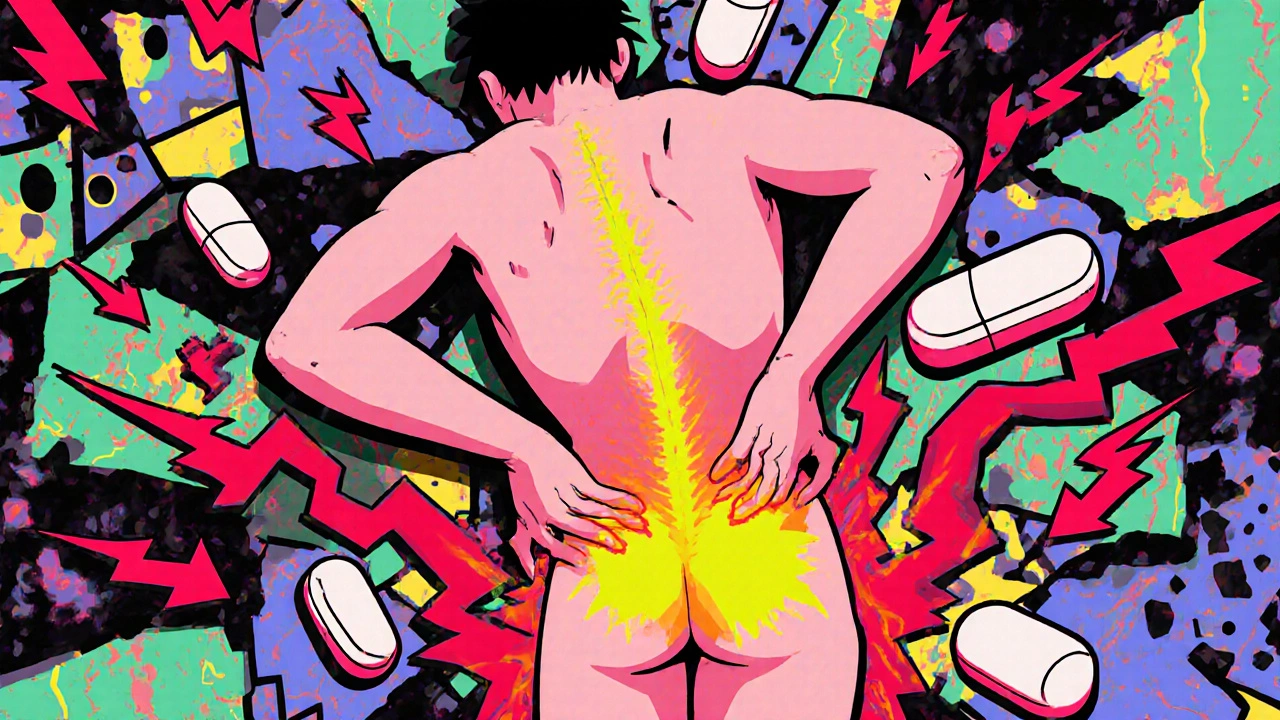
What if your pain gets worse every time you take more opioids? It sounds backwards - like adding fuel to a fire that’s already burning too hot. But this isn’t rare. Thousands of people on long-term opioid therapy for chronic pain are experiencing exactly this: opioid-induced hyperalgesia (OIH). Their pain spreads, becomes more sensitive, and doesn’t respond to higher doses - even when their original injury or condition hasn’t changed. Many doctors mistake it for tolerance. Many patients are told to take more. And that makes it worse.
What Is Opioid-Induced Hyperalgesia?
Opioid-induced hyperalgesia isn’t just side effects. It’s a real, measurable change in how your nervous system processes pain. When you take opioids for a long time - especially high doses of morphine or hydromorphone - your body doesn’t just get used to them. It starts overreacting to pain signals. You become more sensitive. Light touches hurt. Areas far from your original injury start aching. This isn’t in your head. It’s in your spinal cord and brain.
First noticed in lab rats back in 1971, OIH was dismissed as a curiosity for decades. Now, we know it affects 2% to 15% of people on chronic opioid therapy. That’s tens of thousands in the U.S. alone. And it’s not just about addiction. You can have OIH even if you’re taking opioids exactly as prescribed. The key sign? Your pain gets worse when your dose goes up.
How OIH Is Different From Tolerance
People often confuse OIH with tolerance. But they’re not the same.
- Tolerance means you need more drug to get the same pain relief. Your pain stays the same - you just need a higher dose to control it.
- OIH means your pain actually gets worse with higher doses. You’re not just needing more medicine - you’re creating more pain.
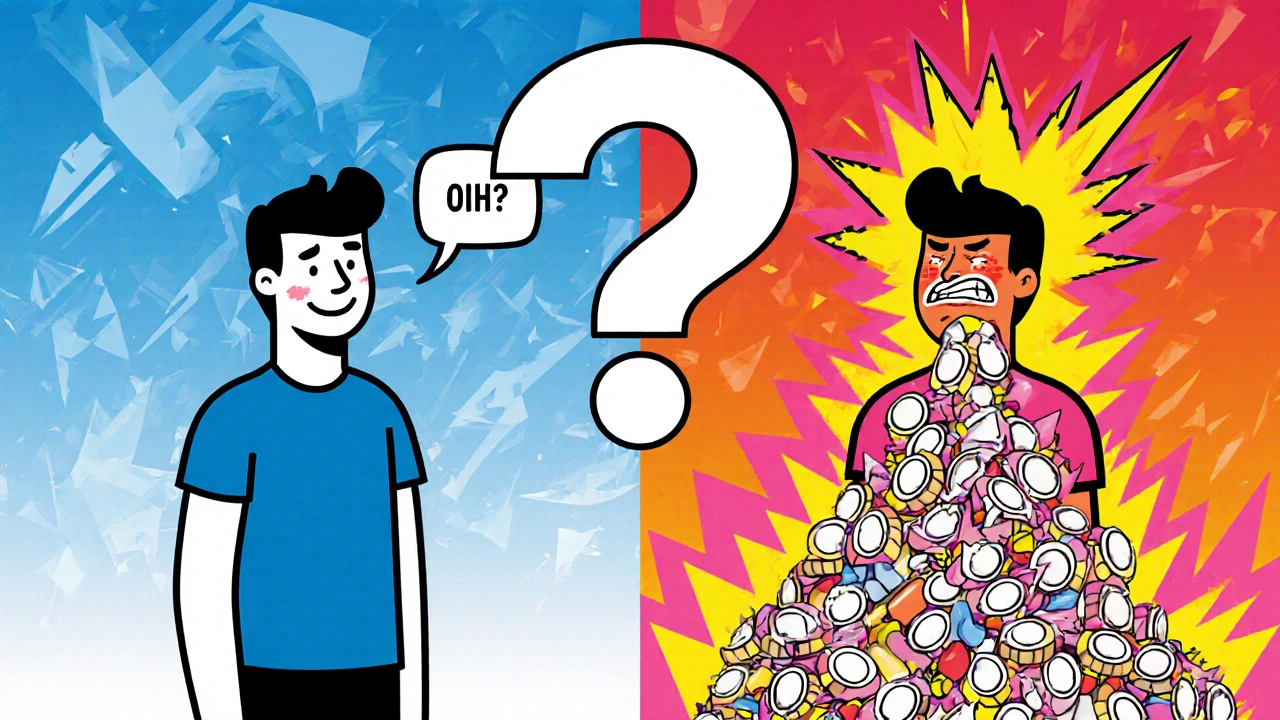
Imagine your pain was at a 5 out of 10. You take oxycodone, and it drops to a 2. After a few months, you’re on twice the dose, but now your pain is a 7. That’s not tolerance. That’s OIH. Your body isn’t just resisting the drug - it’s fighting back.
Both can happen together. But if your pain is spreading, becoming more intense, or showing up in new places - like your arms, legs, or back - when you never had pain there before, OIH is likely involved.
What Does OIH Feel Like?
OIH doesn’t just make pain stronger. It changes its shape.
- Diffuse pain: Pain spreads beyond the original area. A low back injury starts hurting in your hips, knees, or even feet.
- Allodynia: Things that never hurt before now do. A light blanket, a breeze, or even clothes brushing your skin cause pain.
- Increased sensitivity: You react more strongly to heat, cold, or pressure. A routine physical exam becomes unbearable.
- No relief from higher doses: You’re on more opioids than ever - but you feel worse, not better.
These symptoms usually show up after 2 to 8 weeks of continuous opioid use. They’re more common with high doses - especially above 300 mg of morphine per day - or in people with kidney problems, where opioid byproducts build up.
Why Does This Happen?
The science behind OIH is complex, but here’s the core idea: opioids don’t just block pain. They also trigger the brain’s pain amplifiers.
The most well-understood mechanism involves the NMDA receptor - a protein in your spinal cord that normally helps with learning and memory. When opioids activate it, your nervous system gets stuck in overdrive. Pain signals get louder. More neurons fire. The system becomes hypersensitive.
Other factors include:
- Toxic opioid metabolites like morphine-3-glucuronide, which build up in kidney disease
- Increased release of dynorphin, a natural pain-enhancing chemical
- Changes in how your brain sends signals down the spine - turning off pain relief and turning on pain amplification
- Genetics: People with certain versions of the COMT gene are more likely to develop OIH
This is why some people get OIH after a few months, while others don’t - even on the same dose. Your biology matters.
How Do Doctors Diagnose OIH?
There’s no single blood test or scan for OIH. Diagnosis is based on pattern recognition - and ruling out other causes.
Doctors look for:
- Worsening pain despite increasing opioid doses
- Pain that spreads beyond the original area
- Allodynia not explained by disease progression
- No signs of infection, nerve damage, or new injury
They also use tools like the Opioid-Induced Hyperalgesia Questionnaire (OIHQ), validated in 2017. It’s 85% accurate at spotting OIH when used correctly.
Quantitative sensory testing (QST) can help too - measuring how sensitive someone is to heat, cold, or pressure before and after opioid use. In OIH, pain thresholds drop. You feel pain at lower levels than before.
But here’s the catch: OIH is a diagnosis of exclusion. Your doctor must rule out cancer progression, new arthritis, nerve compression, or withdrawal. That’s why it’s often missed.
How Is OIH Treated?
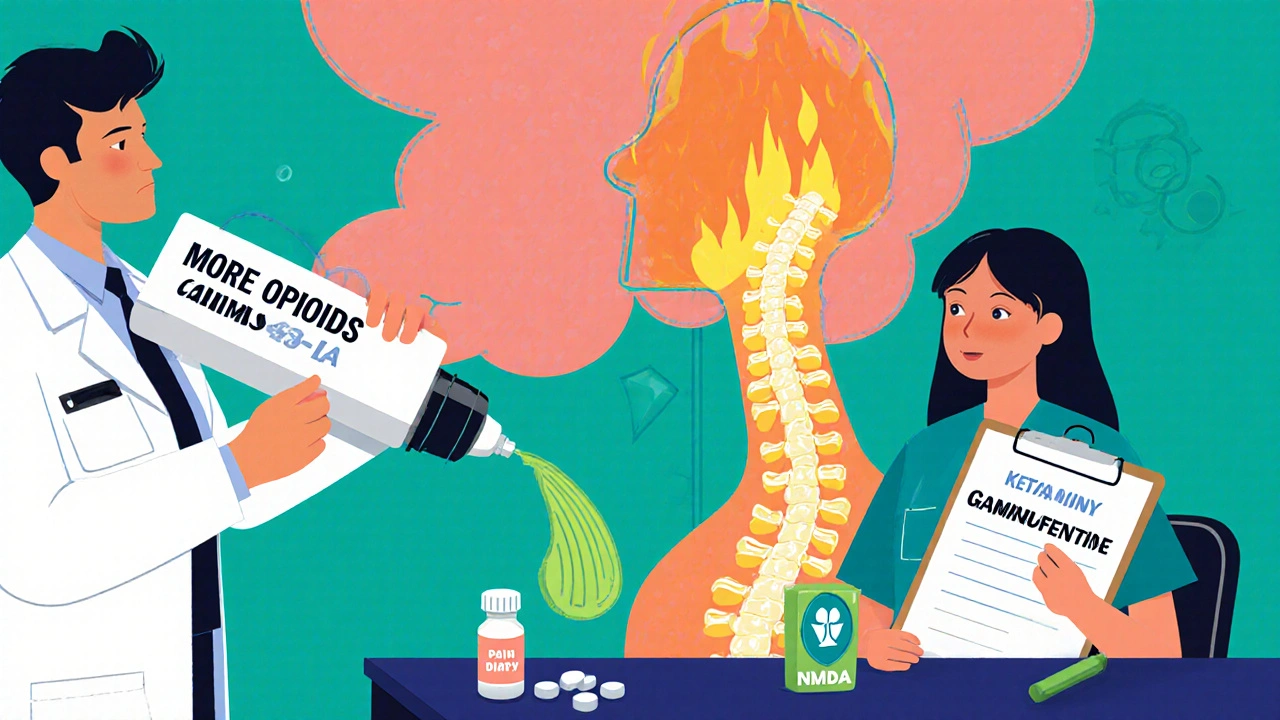
The biggest mistake? Giving more opioids. That’s like pouring gasoline on a fire.
Effective treatment means stepping back - not pushing forward.
1. Reduce or Taper Opioids
Lowering the dose is the most proven way to reverse OIH. Studies show pain improves within 2 to 4 weeks of a 10% to 25% reduction every few days.
It’s hard. Patients often panic. They think less medicine means more pain. But with proper support, pain usually drops below the original level. Many report feeling more like themselves again.
2. Switch Opioids
Not all opioids are the same. Methadone and buprenorphine have NMDA-blocking properties - meaning they may actually help calm the overactive pain system instead of making it worse.
Methadone is often used because it blocks NMDA receptors while still providing pain relief. Buprenorphine has a ceiling effect, reducing overdose risk and sometimes easing OIH symptoms without triggering further sensitization.
3. Use NMDA Receptor Blockers
Ketamine - yes, the same drug used in anesthesia - is one of the most effective treatments for OIH. At low doses (0.1 to 0.5 mg/kg/hour), it blocks the NMDA receptors that are overactive in OIH.
IV ketamine infusions are used in clinics. Some patients get relief after just one session. Oral ketamine or nasal sprays are being studied for home use.
4. Add Non-Opioid Medications
- Gabapentin or pregabalin: These calm overactive nerves and reduce central sensitization. Doses range from 300 mg to 1800 mg three times daily.
- Clonidine: An alpha-2 agonist that reduces spinal pain signals. Often used at 0.1 to 0.3 mg twice daily.
- Antidepressants: Duloxetine or amitriptyline can help with nerve pain and improve sleep, which reduces pain sensitivity.
5. Non-Drug Therapies
Medication alone isn’t enough. OIH is a nervous system problem - so your nervous system needs retraining.
- Cognitive behavioral therapy (CBT): Helps change how you think about pain. Reduces fear, anxiety, and catastrophizing - all of which amplify pain.
- Physical therapy: Gentle movement, stretching, and graded exposure rebuild confidence in your body. Avoiding movement makes OIH worse.
- Mindfulness and biofeedback: Teach you to regulate your nervous system’s response to stress and pain.
What Happens If You Don’t Treat It?
Left alone, OIH can spiral.
Pain gets worse. Doses go up. Side effects pile on - constipation, drowsiness, mood changes, respiratory depression. You may be prescribed more drugs to manage those side effects. You might be labeled as “difficult” or “drug-seeking.” Your quality of life plummets.
And the cycle continues. Because OIH is misunderstood, many patients end up on dangerously high opioid doses - not because they need them, but because their pain is being made worse by the very drugs meant to help.
Why Is OIH Still Underdiagnosed?
Three big reasons:
- Doctors aren’t trained to look for it. Medical schools rarely teach OIH in depth. Many still think “more opioids = better pain control.”
- Patients don’t know to speak up. They assume their pain is just getting worse from their disease - not from the medicine.
- It looks like tolerance. Without careful questioning and tracking, the two are easily confused.
But awareness is rising. In 2010, only 30% of pain specialists recognized OIH. By 2024, that number jumped to 65%. The FDA now requires opioid labels to mention OIH as a possible side effect. Pain fellowship programs now include it in their curriculum.
What’s Next for OIH?
Research is accelerating.
- Genetic tests for COMT variants - which predict OIH risk - are coming to market in early 2025. This could help doctors choose safer pain treatments before starting opioids.
- Three new drugs targeting NMDA receptors are in late-stage trials, designed specifically for OIH.
- The NIH is funding a major study (NCT05217891) to find biomarkers that can diagnose OIH with a simple blood test.
As opioid prescribing drops - down 44% since 2016 - OIH will become even more important to recognize. Why? Because 10.1 million Americans still rely on long-term opioids for chronic pain. They need better options.
What Should You Do If You Suspect OIH?
If you’re on opioids and your pain is getting worse - especially with new or spreading pain, or if higher doses don’t help - talk to your doctor. Ask:
- “Could this be opioid-induced hyperalgesia?”
- “Has my pain spread beyond the original area?”
- “Are there other options besides increasing my dose?”
Don’t stop opioids suddenly. That can cause dangerous withdrawal. But do ask for a plan to reduce slowly - with support.
Keep a pain diary: Note your dose, pain level, new areas of pain, and any triggers. Bring it to your appointment. Data beats guesswork.
OIH isn’t your fault. It’s a known biological response. And it’s treatable. The first step? Recognizing it.

November 27, 2025 AT 07:24 AM
This hit me right in the chest. I’ve been on opioids for six years after a car wreck, and I swear my pain got worse every time they upped my dose. I thought I was just getting worse - turns out my body was turning against me. No one ever told me this could happen. I’m not addicted. I’m just in pain that the medicine made worse. Thank you for naming it.
Now I’m tapering slowly with my doctor’s help. It’s rough, but last week I held my grandbaby without wincing for the first time in years. That’s worth the struggle.
OIH isn’t weakness. It’s biology. And we deserve better than being told to take more.
November 28, 2025 AT 16:53 PM
While I commend the clinical precision of this exposition, I must interject with a critical epistemological observation: the conflation of pharmacodynamic adaptation with neuroplastic maladaptation remains a persistent diagnostic fallacy in contemporary pain medicine. The NMDA receptor hypothesis, though compelling, lacks longitudinal validation in heterogeneous patient populations. Furthermore, the suggestion that opioid reduction constitutes a therapeutic panacea ignores the confounding influence of psychosocial determinants - particularly the role of catastrophizing and fear-avoidance behaviors in perpetuating central sensitization. One cannot dissociate neurobiology from phenomenology without risking iatrogenic harm. A more rigorous approach would integrate validated biomarkers - such as serum dynorphin levels and quantitative sensory thresholds - prior to intervention. Until then, we are treating symptoms, not mechanisms.
November 29, 2025 AT 17:46 PM
Oh wow, so now we’re blaming the medicine for pain instead of people just being weak? Next you’ll say gravity is to blame when you trip on the sidewalk. People get addicted, then cry ‘OIH’ so they can keep getting pills. This is just woke medicine for lazy people who don’t want to tough it out. You think your body’s ‘overreacting’? Maybe you just need to stop being a baby.
And why is everyone so shocked? Opioids are drugs. Drugs change your brain. That’s not a surprise. That’s science 101. Stop pretending you’re special.
November 30, 2025 AT 22:35 PM
I’ve seen this happen so many times in my work as a rehab nurse. Patients come in with a story: ‘I used to be able to walk to the mailbox. Now I can’t even sit in a chair without screaming.’ And their script? Tripled. And they’re terrified to ask for help because they think they’re being judged.
This isn’t about addiction. It’s about trust. We need doctors who listen more than they prescribe. We need systems that support tapering - not punish people for trying to get off. You’re not broken. You’re not weak. You’re just caught in a system that doesn’t know how to help.
And if you’re reading this and thinking you might have this - you’re not alone. Talk to someone. Even just one person. It gets better.
One step. One day. One breath at a time.
December 2, 2025 AT 21:53 PM
Typical overblown pseudoscience dressed up as ‘awareness.’ You say OIH affects 2–15%? That’s just the number they pulled out of their ass to justify pushing ketamine infusions and gabapentin cocktails. Who funded this? Pharma? The same ones pushing opioids in the first place?
And now we’re supposed to believe that methadone and buprenorphine are ‘better’? They’re still opioids. Just slower-acting ones. And ketamine? That’s a party drug with dissociative side effects. You’re replacing one problem with three.
Real solution? Don’t take opioids. Ever. End of story. Stop making excuses for people who can’t handle pain. This isn’t medicine. It’s a business model.
December 3, 2025 AT 00:32 AM
In India, we don’t talk about this. Pain is something you endure. Opioids? Only in hospitals, and even then, doctors fear giving them. But I’ve seen relatives on long-term pain meds - their faces change. They stop laughing. They flinch at the wind. We call it ‘nervous pain’ - not knowing it has a name.
This article gave me words for something I’ve watched silently for years. Thank you. Maybe now, when my uncle goes to the doctor again, I can say: ‘Maybe it’s not the spine. Maybe it’s the medicine.’
It’s not weakness. It’s biology. And it’s real.
December 4, 2025 AT 11:28 AM
ok so like i was on oxy for my back and my pain got worse?? so i asked my doc to lower it and they said no u need more?? like wtf?? i was crying every night and my husband said i looked like a ghost?? then i found this article and i was like ohhhhhhhhh so its not me??
i cut my dose by half last month and i swear i can feel my body breathing again. not cured but like… lighter. like i’m not being eaten alive from the inside.
thank you for writing this. i feel less alone.
December 4, 2025 AT 20:32 PM
Diagnostic criteria are insufficient. No biomarkers. No gold standard. This is anecdotal medicine masquerading as science. The OIHQ? A self-reported questionnaire with 85% accuracy? That’s not a diagnosis - that’s a guess. And ketamine infusions? Costing $2,000 per session. Who pays? The taxpayer? This is a profit-driven narrative disguised as patient advocacy.
Stop pathologizing opioid dependence. It’s addiction. Call it what it is.
December 5, 2025 AT 13:47 PM
You think you’re the first person to notice this? I’ve been telling my patients for years: more opioids = more pain. But no one listens. Doctors are trained to fix things with pills. Not to think. Not to listen. Not to admit they don’t know.
And now you’re pushing gabapentin? That stuff turns people into zombies. And CBT? Great. But what if you’re too tired to sit through a session because your body is screaming? You need to fix the biology first.
This isn’t about ‘mindset.’ It’s about neurochemistry. And until doctors stop acting like they’re wizards with prescriptions, people will keep suffering.
December 6, 2025 AT 13:51 PM
One is compelled to observe that the prevailing discourse surrounding opioid-induced hyperalgesia exhibits a conspicuous lack of epistemological rigor. The reliance upon phenomenological reports - unquantified, uncontrolled, and subject to confirmation bias - renders the entire construct vulnerable to the fallacy of post hoc ergo propter hoc. One must inquire: where is the double-blind, placebo-controlled trial demonstrating causality? Where is the longitudinal cohort study controlling for psychological comorbidities? Absent such evidence, this remains a hypothesis dressed in the rhetorical finery of compassion.
One regrets to note that the medicalization of suffering, while emotionally resonant, may inadvertently undermine the integrity of clinical science.
December 8, 2025 AT 00:50 AM
Of course they’re going to call it OIH. It’s easier than admitting the opioid epidemic was a catastrophic failure of medical ethics. You think this is new? This has been happening since the 90s. Doctors were paid to prescribe. Patients were lied to. Now they’re rebranding addiction as a neurological glitch so they can keep selling treatments.
Ketamine? Gabapentin? You’re just swapping one poison for another. And you wonder why people don’t trust doctors anymore?
Stop pretending you’re helping. You’re just repackaging the same lie.
December 9, 2025 AT 13:41 PM
Let me tell you something straight. I’ve been through hell with this. My wife had back surgery. They put her on opioids. She was fine for a while. Then she started screaming at the sound of the door closing. She cried because the sheets touched her skin. She lost 30 pounds because she couldn’t eat - the pain was too much. We went to five doctors. Four said she was exaggerating. One said she needed more pills.
Then we found a pain specialist who asked the right question: ‘Has your pain gotten worse since you started taking more?’
We tapered. Slowly. With support. And guess what? After six weeks, she laughed again. She hugged our kids without flinching. She slept through the night.
This isn’t magic. It’s science. And if you’re still on high doses and your pain is worse - you’re not broken. You’re just caught in a system that doesn’t know how to help you.
But you can get better. I promise.
Ask for help. Don’t wait. Don’t be ashamed. You’re not alone.