Most advice tells you to adapt. To change your brand for the market, to tweak your message for trends, to go generic when it’s cheaper or easier. But there are rare moments - quiet, personal, emotional moments - where sticking to your brand exactly as it is doesn’t just work better… it connects deeper.
That One Red Can That Feels Like Home
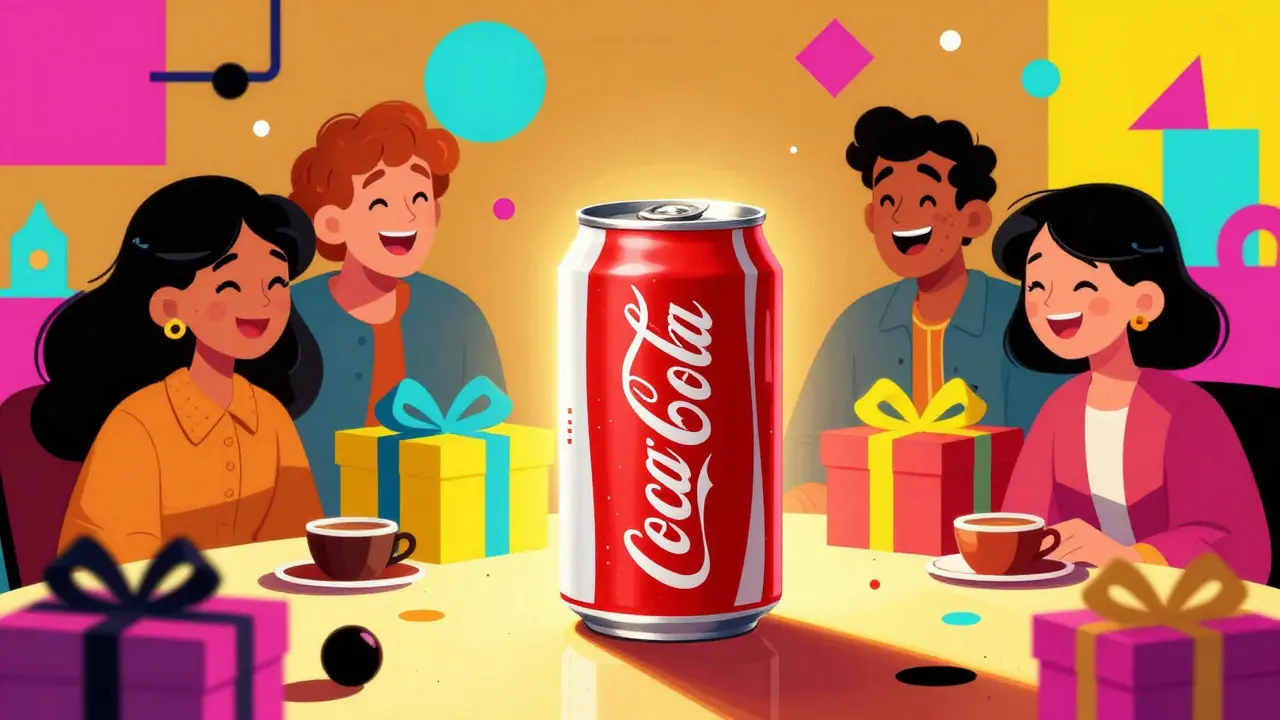
Think about Christmas morning. Or a summer barbecue. Or a kid’s birthday party. You reach for a soda. There are dozens on the shelf. Generic brands. Store brands. Even newer craft sodas with fancy flavors. But you pick the one with the red and white script. Not because it’s the cheapest. Not because it’s the newest. Because it’s Coca-Cola. And something in your brain knows that this isn’t just a drink. It’s a feeling. A 2024 neuroscience study tracked 1,200 people across 15 countries as they made choices in real-life settings. When Coca-Cola’s branding was present, purchase likelihood jumped 37% compared to identical-tasting generic sodas. Why? Because after 138 years of the same logo, the same colors, the same font - your brain doesn’t process it as a product anymore. It processes it as a memory. A tradition. A tiny anchor of normalcy in a chaotic world. This isn’t marketing fluff. It’s biology. fMRI scans from Coca-Cola’s 2022 experiment showed a 63% stronger activation in the amygdala - the brain’s emotional center - when people saw the classic Coke can versus a version with a temporary rebrand. That’s not a preference. That’s a neurological imprint.When Your Brand Is Your Identity
Nike didn’t just sell shoes. They sold the idea of achievement. Since 1988, they’ve kept the same slogan: “Just Do It.” No major changes. No seasonal tweaks. No “Just Do It… Unless It’s Raining.” A 2023 survey of 750 athletes found that 89% felt personally motivated when they saw Nike’s branding during a tough workout. Compare that to brands that changed their messaging every six months - only 42% felt the same. Why? Because consistency builds muscle memory. Not just in your legs, but in your mind. When you’re pushing through the last mile, exhausted, and you see that swoosh, it doesn’t feel like an ad. It feels like a reminder. A voice you’ve heard a thousand times. A voice you trust. Generic slogans? They sound like noise. Nike’s? It sounds like your own inner voice.The Brand That Didn’t Change When the World Did
In 2020, during the height of the pandemic, most brands went quiet. Somber tones. “We’re all in this together.” “Stay safe.” Coca-Cola didn’t. They kept showing people laughing, sharing, celebrating. And it worked. Sprout Social analyzed 4.7 million social media mentions. Coca-Cola generated 2.3 times more positive mentions than competitors who switched to serious messaging. Edelman’s survey of 2,500 people found 68% said the consistency made them feel “more emotionally connected during difficult times.” Why? Because in chaos, people crave certainty. When everything feels unstable, a familiar brand becomes a safe harbor. Switching your tone to match the mood doesn’t comfort people - it makes them feel like you’re giving up on what you stand for.When Values Are Non-Negotiable
Patagonia doesn’t sell jackets. They sell a promise: that the planet matters more than profit. In 2022, during a global supply chain crisis, dozens of outdoor brands temporarily softened their environmental messaging. “We’re doing our best,” they said. “It’s complicated.” Patagonia didn’t. They kept saying the same thing: “We’re fighting for the Earth, no matter what.” Their 2024 customer loyalty study showed 73% of core customers felt personally betrayed when other brands wavered. Meanwhile, Patagonia’s retention rate jumped 28 percentage points. People didn’t just buy from them - they stood by them. Because when a brand stays true to its values, customers don’t just feel loyal. They feel proud to be part of it.
When Kids Recognize You Before They Can Read
McDonald’s Happy Meal box. The golden arches. The clown. The same since the 1970s. A 2023 University of Cambridge study tracked 500 children from infancy. By age 2.7, 94% could correctly identify McDonald’s - even before they knew their own name. Competitors with localized, evolving branding? Only 61% recognition. Why does this matter? Because brand recognition isn’t just about sales. It’s about trust. When a child sees something familiar, they feel safe. When a parent sees that same thing, they feel like they’re giving their kid something reliable. McDonald’s didn’t adapt to “modern parenting.” They stayed the same. And that consistency became their biggest advantage. In a world of endless choices, familiarity is the shortcut to trust.When Change Feels Like Betrayal
Here’s the flip side: when brands try to adapt in the wrong way, they break trust. One major bank changed its logo for Pride Month - only for that month. They added rainbow colors. Ran campaigns. Then went back to normal. The result? 4.2 times more negative responses from LGBTQ+ customers than when other brands maintained year-round support. Why? Because temporary changes feel performative. Like a costume. People don’t want to see your brand in a rainbow T-shirt for 30 days. They want to see you live the values every day. Reddit’s r/branding community analyzed 1,247 threads in 2024. 78% of marketing pros said customer complaints spiked when brands altered core identity elements - even for “good reasons.” Consistency isn’t stubbornness. It’s integrity.What Happens When You Break the Pattern
There’s one exception: culture. In 2023, McDonald’s tried to keep their beef-based Happy Meal branding in India - where cows are sacred. The backlash was instant. 19,000 complaints in 72 hours. They had to pull the menu. This isn’t about changing your brand. It’s about respecting your audience. Real consistency doesn’t mean ignoring context. It means holding your core values while adapting your expression. Apple does this well. Their product design stays identical worldwide - same buttons, same layout, same feel. But their ads? They change for each country. In Japan, they show quiet moments. In Brazil, they show loud celebrations. The core? Unchanged. The surface? Flexible.
Why This Matters More Than You Think
Only 12% of Fortune 500 companies maintain brand consistency for more than 10 years. Coca-Cola’s 138-year run is a 0.08% outlier. Most brands change logos, slogans, colors - chasing trends, chasing clicks, chasing cheap wins. But the data doesn’t lie. Brands that stay consistent achieve 23% higher customer lifetime value. Their customers spend more. Stay longer. Advocate louder. Interbrand’s 2024 report puts Coca-Cola’s brand value at $94.4 billion. The industry average? $18.7 billion. It’s not about being the loudest. It’s about being the most remembered.How to Know If You Should Stay on Brand
Ask yourself these questions:- Does our brand represent something deeper than a product? (e.g., happiness, achievement, safety, sustainability)
- Have we held this identity for at least 7 years? (Neuroscience says it takes that long to build deep recognition)
- Do our customers talk about us like we’re part of their story - not just a brand they buy from?
- Have we ever changed our core message? If yes, what happened?
- Would our loyal customers feel betrayed if we changed now?

January 2, 2026 AT 06:14 AM
Consistency isn't just branding it's a promise you keep
January 2, 2026 AT 15:44 PM
I love how this post highlights the emotional weight behind logos and colors-like that red can isn’t just soda, it’s childhood birthdays, summer nights, and family gatherings. It’s not marketing, it’s memory.
January 3, 2026 AT 07:34 AM
so many brands try to be trendy and then wonder why no one trusts them anymore. just stay the f*** same. people need anchors, not noise.
January 4, 2026 AT 04:23 AM
Identity is not a marketing strategy. It is a reflection of belief. Brands that change to fit the moment betray their core. Those that hold firm become symbols.
January 6, 2026 AT 01:46 AM
Let’s be honest: this is just corporate nostalgia being weaponized as psychological manipulation. The amygdala activation? Of course it fires-it’s conditioned Pavlovian response. Coca-Cola didn’t build loyalty; they exploited decades of exposure. The real insight? Humans are easily manipulated by repetition. This isn’t integrity-it’s behavioral engineering.
January 6, 2026 AT 17:29 PM
McDonald’s Happy Meal recognition at age 2.7? That’s wild. I remember my niece pointing at the arches before she could say ‘mommy.’ It’s not ads-it’s belonging. 🌟
January 7, 2026 AT 14:32 PM
Everyone says stay consistent but nobody talks about how most brands are just copying each other. Nike’s ‘Just Do It’ works because it’s vague enough to mean anything. Patagonia’s message is the same too-just dressed up as activism. Real consistency? That’s when you stop pretending your product matters and just make it better. But no one wants to hear that.
January 9, 2026 AT 14:19 PM
Only in America do we treat soda cans like sacred relics. Meanwhile, real nations build things that last-railroads, bridges, institutions. This is emotional manipulation dressed as wisdom.
January 10, 2026 AT 20:42 PM
This is why I always choose the same toothpaste brand-even though the new one has better reviews. It’s not about taste. It’s about the feeling of routine. Safe. Familiar. Like your favorite blanket.
January 11, 2026 AT 14:35 PM
Thank you for this thoughtful breakdown. Too often we assume change equals progress, but in branding, constancy is the quiet revolution. It’s the difference between being remembered and being forgotten.
January 13, 2026 AT 12:11 PM
The real danger isn’t changing your brand-it’s changing it for the wrong reasons. When you alter your core to please a trend, you’re not evolving-you’re surrendering. And customers notice. They feel it like a betrayal.
January 15, 2026 AT 10:51 AM
It’s fascinating how brand consistency mirrors human relationships. The people we trust most are the ones who show up the same way, every time. Brands are no different.
January 16, 2026 AT 04:19 AM
Apple’s global design consistency with localized ads is the perfect example. The product stays the same because the experience matters. The messaging adapts because culture matters. That’s not contradiction-it’s wisdom.
January 17, 2026 AT 16:38 PM
they’re all just brainwashing us with logos 😭 and you know what? i kinda like it. my grandma still buys coke because it reminds her of 1968. and honestly? that’s beautiful.
January 19, 2026 AT 15:32 PM
my dog knows the sound of the ice cream truck better than I do. same thing. familiarity = safety. we’re all just animals who like predictable patterns.
January 20, 2026 AT 02:07 AM
There’s something deeply human about this. We don’t just buy products-we buy continuity. In a world that changes faster than we can breathe, a familiar logo is a quiet reassurance that some things endure. That’s not marketing. That’s meaning. And meaning, when it’s genuine, becomes myth. Coca-Cola isn’t a drink. It’s a story we tell ourselves, again and again, across generations. The science backs it, yes-but the soul knows it before the data does.
January 21, 2026 AT 17:20 PM
They say Coca-Cola’s brand is worth $94 billion. But who owns that brand? The shareholders? Or the people who’ve been drinking it since they were kids? I think the real value is in the people who believe in it-not the ones who profit from it. And that’s why they’ll never let it die.
January 22, 2026 AT 03:39 AM
Empirical evidence confirms that brand constancy correlates with elevated customer lifetime value. The underlying mechanism is neural familiarity, which reduces cognitive load and enhances affective attachment. Therefore, strategic consistency is not merely advisable-it is economically imperative.
January 23, 2026 AT 17:13 PM
Wait… so you’re saying Coca-Cola’s branding is a government mind control experiment? I mean… they’ve been around since 1886… and everyone just… accepts it? 🤔