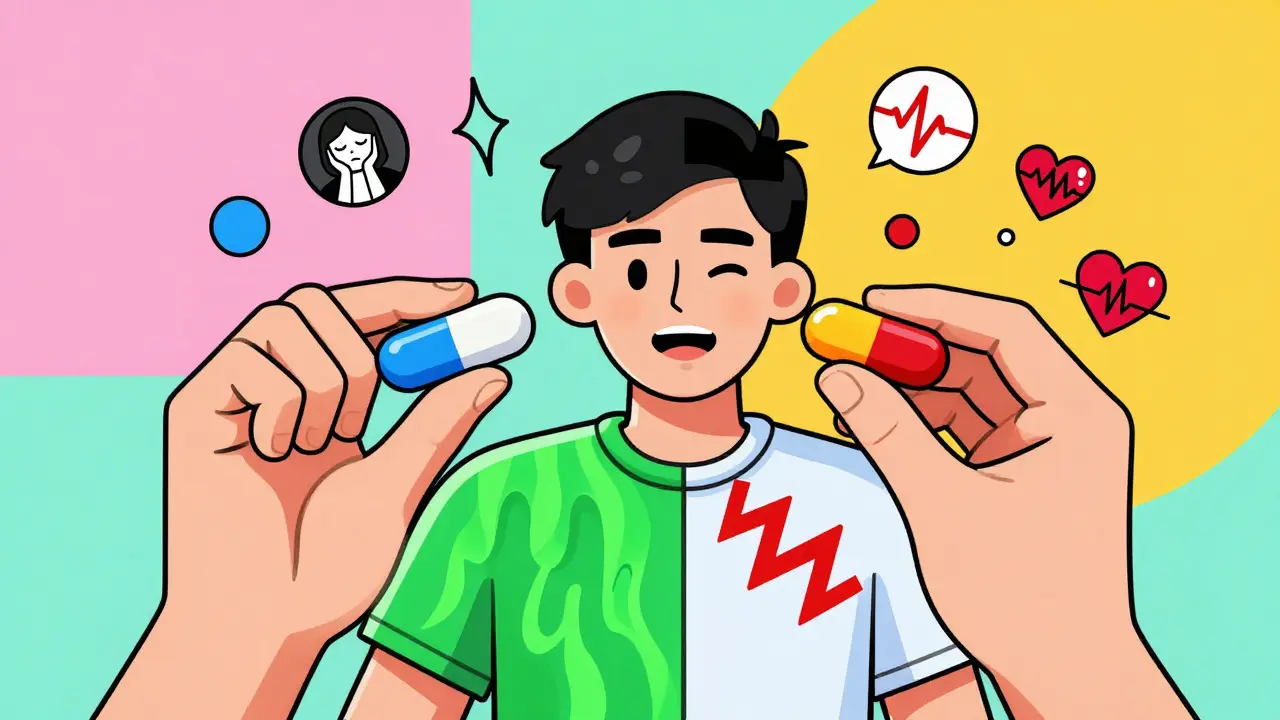
Switching from a brand-name drug to a generic version is supposed to save money - and for most people, it does. But what if you start feeling worse after the switch? You’re not imagining it. Some people really do have reactions, and some medications are far more sensitive to changes than others. Knowing when to call your doctor could prevent a hospital visit or even save your life.
Why Some Generics Cause Problems
Generic drugs must contain the same active ingredient as the brand-name version, and they must deliver it into your bloodstream at the same rate and amount. That’s the law. The FDA requires generics to be within 80% to 125% of the brand’s bioavailability - meaning the amount of drug your body absorbs can legally vary by up to 25%. For most drugs, that’s fine. But for drugs with a narrow therapeutic index, even a small change can throw your body off balance. These are the high-risk drugs: warfarin (for blood thinning), levothyroxine (for thyroid function), phenytoin and lamotrigine (for seizures), and clopidogrel (for heart health). A 2017 study found that 15.3% of patients on brand-name levothyroxine saw their TSH levels go out of range after switching to generic. For someone with hypothyroidism, that means fatigue, weight gain, or worse - heart problems. In epilepsy patients, switching generics has been linked to a 25% higher chance of seizure recurrence. The problem isn’t the active ingredient. It’s the fillers, dyes, and binders - the inactive ingredients. A generic made by one company might use cornstarch. Another might use lactose or a different dye. For people with sensitivities, that’s enough to trigger a reaction. One woman in California developed severe migraines after switching from Imitrex to generic sumatriptan. Her headaches vanished when she went back to the brand.Warning Signs That Demand a Doctor’s Call
Not every side effect means you need to panic. But some signs are red flags. Call your doctor within 24 hours if you notice any of these after switching to a generic:- Skin rash, hives, or itching - This is the most common reaction, reported in over 14% of adverse events tied to generic switches. It could be mild, but it could also be the start of something serious.
- Persistent nausea, vomiting, or diarrhea - If it lasts more than two days, it’s not just an upset stomach. It could mean your body isn’t absorbing the drug properly.
- Unexplained fatigue or dizziness - Especially if you’ve been stable for months or years. This is a classic sign that your medication isn’t working the way it should.
- Changes in how well your medication works - Your blood pressure is creeping up again. Your seizures are coming back. Your thyroid symptoms are returning. Your depression is worsening. These aren’t coincidences.
For people on high-risk drugs, monitor specific numbers:
- If you take warfarin, check your INR levels. Normal range is 2-3. A swing outside that could mean bleeding or clotting risk.
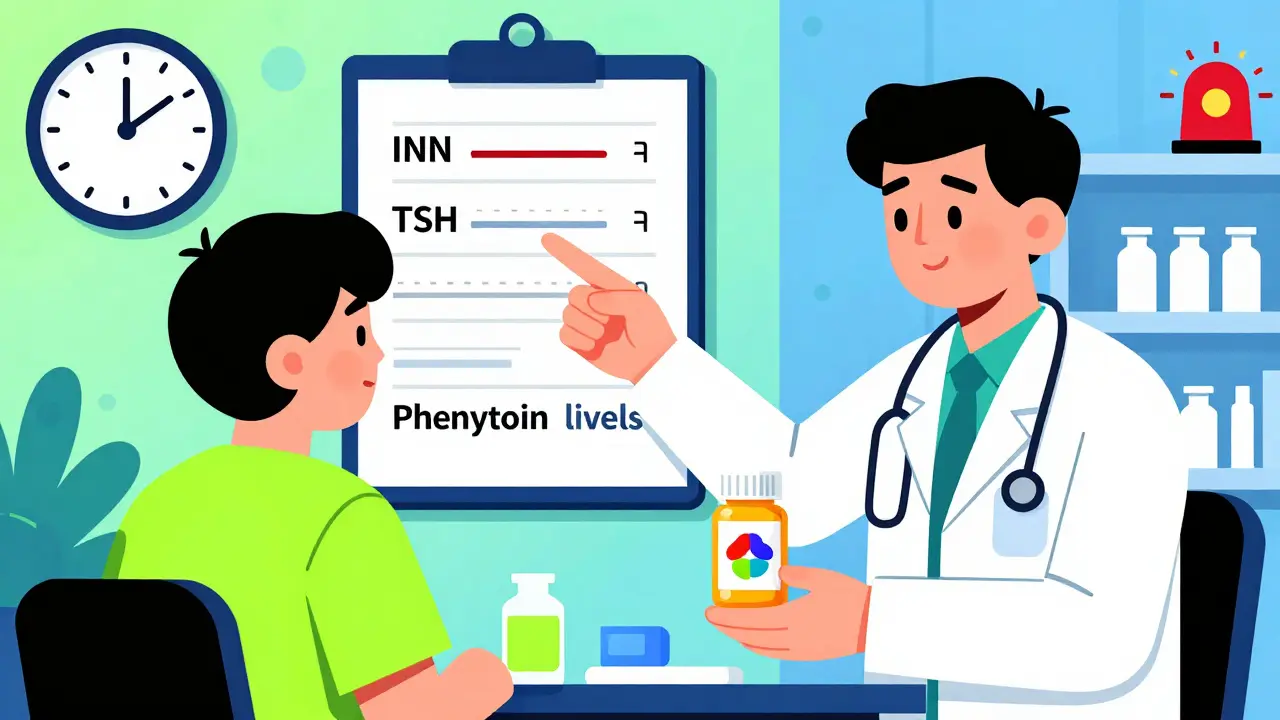
- If you take levothyroxine, get your TSH tested. Target is 0.5-4.5 mIU/L. A jump above 5 or below 0.4 means your dose needs adjusting.
- If you take phenytoin or lamotrigine, ask your doctor about blood level checks. The therapeutic range for phenytoin is 10-20 mcg/mL. Even a 2-point drop can trigger seizures.
Who’s at Highest Risk?
Not everyone needs to worry. But certain groups are more vulnerable:- People on narrow therapeutic index drugs - As listed above. These are the ones where tiny changes matter most.
- Older adults - Slower metabolism and multiple medications increase the chance of interactions.
- People with autoimmune or allergic conditions - You’re more likely to react to fillers like lactose or dyes.
- Patients with mental health conditions - Switching generics for antidepressants like sertraline or mood stabilizers like lamotrigine has been linked to relapses. One patient with bipolar disorder went into mania after switching to a generic lamotrigine and had to be hospitalized.
- Those who’ve been on the same brand for years - Your body has adapted. A sudden change can disrupt that balance.
On the flip side, drugs like metformin for diabetes or atorvastatin for cholesterol show almost no difference between brand and generic in large studies. The science says generics work fine for these - and they save hundreds a year.
What to Do If You Suspect a Problem
Don’t stop your medication. Don’t wait to see if it gets better. Call your doctor. Here’s what to say:- “I switched to a generic [drug name] on [date].”
- “I’ve started having [symptom].”
- “I’m worried it’s related to the switch.”
Your doctor can:
- Order lab tests to check your drug levels or biomarkers.
- Prescribe the brand-name version again - sometimes with a letter explaining it’s medically necessary.
- Ask the pharmacist to give you the same generic manufacturer you were on before.
- File a report with the FDA’s MedWatch system - your experience helps improve safety.
In some states, like California, pharmacists are required to notify your doctor before switching you on certain high-risk drugs. But not everywhere. You have to be your own advocate.
Emergency Signs - Go to the ER Immediately
If you experience any of these, don’t call your doctor - call 911 or go to the nearest emergency room:- Swelling of the throat or tongue - This can block your airway.
- Difficulty breathing or wheezing - A sign of anaphylaxis.
- Sudden drop in blood pressure - Feeling faint, cold skin, rapid pulse.
- Severe chest pain or irregular heartbeat - Especially if you’re on heart medication.
These reactions are rare - less than 0.05% of cases - but they can be deadly. Never ignore them.

How to Protect Yourself Going Forward
You don’t have to avoid generics. But you can reduce your risk:- Ask your doctor if your medication is on the narrow therapeutic index list before switching.
- Keep the same generic brand - If your first generic works, stick with it. Don’t let the pharmacy switch you again without telling you.
- Check the pill - If the color, shape, or imprint changes, ask why. That’s a different manufacturer.
- Use the FDA’s Orange Book - You can look up your drug online. Look for “AB” ratings - those mean proven equivalence. “B” ratings mean caution.
- Track your symptoms - Keep a simple log: date, drug, symptoms, severity. Bring it to your next visit.
Generic drugs are safe for most people. They’ve saved billions in healthcare costs. But medicine isn’t one-size-fits-all. Your body might respond differently than the next person. That’s why listening to your body - and acting fast - matters more than ever.
Can generic drugs be less effective than brand-name drugs?
For most medications, generics are just as effective. But for drugs with a narrow therapeutic index - like warfarin, levothyroxine, or lamotrigine - even small differences in how your body absorbs the drug can affect how well it works. Studies show some patients experience changes in blood levels or symptom control after switching. That doesn’t mean generics are inferior - it means they aren’t always interchangeable for everyone.
Why do I feel worse after switching to a generic?
It’s often not the active ingredient. The fillers, dyes, or binders in the generic version might be different from what your body is used to. Some people react to lactose, cornstarch, or artificial colors. Others have a subtle change in how the drug is released, which matters most for time-sensitive medications like seizure or heart drugs. If you feel worse, it’s not in your head - it’s worth investigating.
Should I ask my doctor to keep me on the brand-name drug?
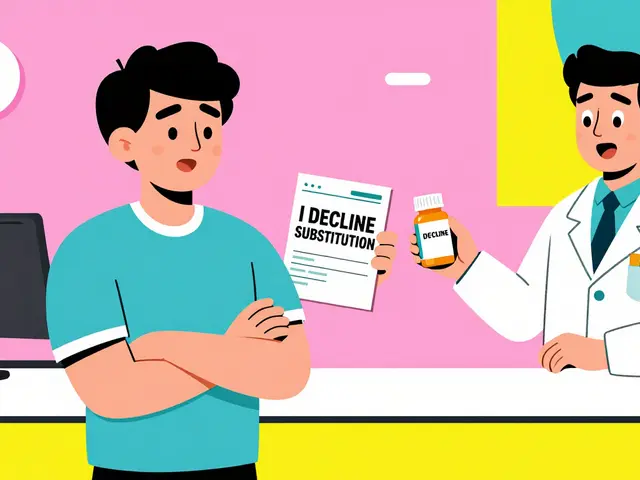
If you’ve had a bad reaction to a generic, or if you’re on a high-risk medication like levothyroxine or lamotrigine, yes. Ask your doctor to write “Dispense as written” or “Do not substitute” on your prescription. Many doctors will do this if you explain your symptoms. In some states, pharmacists must notify your doctor before switching you on certain drugs.
Are generic drugs less safe than brand-name drugs?
No - generic drugs are held to the same safety standards. But they’re made by different manufacturers, and quality control can vary. In 2023, 18% more generic drugs were recalled than in 2021, mostly due to impurities or potency issues. While the overall rate is still low (under 0.3% of shipments), it’s why you should report any unusual side effects to your doctor and the FDA.
What should I do if my pharmacy switches my generic without telling me?
Ask for the name of the manufacturer on the pill bottle. If it’s different from what you’ve been taking, call your doctor. You have the right to request the same generic version. Some pharmacies will switch automatically to save money - but you can ask them not to. Write down the name of the manufacturer and stick with it unless your doctor says otherwise.

January 5, 2026 AT 19:43 PM
Wait so generics can cause seizures? I just switched my mom's lamotrigine last week and she's been zoning out a lot... should I panic?
January 6, 2026 AT 14:23 PM
Man, I used to think generics were just cheaper versions of the same thing. Then I switched my warfarin and started bruising like a grape. Turned out my INR went from 2.4 to 4.1 in two weeks. Docs were like 'it's the same drug'-but my body didn't get the memo. Now I pay extra to keep the same brand. Worth every penny.
Don't let anyone tell you your body's 'just being dramatic.' If you feel different, you are different.
Also, check the pill imprint. If it looks weird, ask why. Pharmacists don't always tell you when they swap it out.
January 8, 2026 AT 02:56 AM
It’s fascinating, isn’t it?-how we assume equivalence in pharmaceuticals, as if biology were a mathematical equation. But the human body is not a machine; it’s a delicate, adaptive system that responds not only to active ingredients, but to the subtle symphony of excipients-lactose, dyes, binders-that we’ve been conditioned to ignore.
And yet, the regulatory framework treats all drugs as fungible commodities. There’s a profound irony here: we demand precision in engineering, yet accept a 25% variance in bioavailability for life-sustaining medications. Is that safety-or complacency?
I applaud the author for highlighting the lived experience of patients, not just the lab data. Science doesn’t live in spreadsheets; it lives in trembling hands, in missed seizures, in unexplained fatigue. We must listen.
And yes-this isn’t anti-generic. It’s pro-patient. And that distinction matters.
January 8, 2026 AT 06:58 AM
My sister switched to generic levothyroxine and gained 18 pounds in 3 months. No diet change. No new meds. Just the pill. She cried when she found out it was the generic. Now she’s back on brand and sleeping again. I wish someone had told her this before.
Don’t wait until you’re exhausted and depressed. Get your TSH checked. Ask for the same manufacturer. You’re not being difficult-you’re being smart.
January 10, 2026 AT 06:02 AM
Big Pharma doesn't want you to know this but generics are often made in the same factories as brand names-just labeled differently. They’re literally the same thing, just cheaper. So why do people feel worse? Because they’re scared. Nocebo effect. Plain and simple.
And don’t get me started on pharmacists switching without telling you. That’s just greed. But blaming the generic? That’s just fear-mongering.
January 11, 2026 AT 00:15 AM
Oh, so now we’re supposed to believe that a 25% bioavailability variance is dangerous? That’s the FDA’s legal limit-not a flaw. If your body can’t handle a 25% fluctuation, maybe you’re the problem, not the drug.
And let’s be real: if you’re on warfarin and your INR is off, it’s because you’re eating kale or drinking grapefruit juice, not because the pill changed color.
This article is fear porn disguised as medical advice. Stop letting corporations scare you into paying more. Generics save lives by making meds affordable. Don’t be the person who chooses luxury over access.
January 11, 2026 AT 23:27 PM
While the concerns raised in this post are valid, they must be contextualized within the broader framework of pharmacoeconomics and public health policy. The FDA’s bioequivalence standards are not arbitrary; they are derived from extensive clinical trials and population-level data.
That said, individual variability in pharmacokinetics and pharmacodynamics is well-documented. The key is not to reject generics, but to implement pharmacogenomic screening for high-risk populations-particularly the elderly and those on narrow-therapeutic-index drugs.
Furthermore, the practice of automatic substitution without patient notification is ethically questionable and should be standardized across all jurisdictions. A national registry of generic manufacturers and patient-reported outcomes would be a valuable public health tool.
January 12, 2026 AT 00:09 AM
In India, we’ve been using generics for decades. Most are excellent. But I’ve seen cases-especially with epilepsy and thyroid meds-where switching caused real problems. Not because the drug is bad, but because the formulation varies.
One patient I knew switched from one Indian generic to another, and his seizures returned. The pharmacist didn’t even tell him it was a different brand. He didn’t know to check the imprint.
So I tell my students: if you’re on a critical drug, write down the manufacturer name. Take a photo of the pill. Don’t trust the pharmacy to remember. Your body remembers. Trust it.
And yes-sometimes, the brand is worth the extra cost. That’s not weakness. It’s wisdom.
January 13, 2026 AT 10:35 AM
So let me get this straight: you’re telling me I paid $4 for a pill that’s supposed to be the same as the $40 one… but now I’m dizzy? And the doc says ‘it’s fine’?
Yeah, I’ll take the $40 one. My brain’s worth more than $36.
Also, why does every generic look like a different candy? I’m not a chemist. I just want to not feel like I’m on a rollercoaster.
January 15, 2026 AT 02:23 AM
Bro, I switched my mom’s levothyroxine to save money. She started feeling like a zombie. We went back to the brand. She’s smiling again. No shame in that.
Generics are great for metformin or statins. But for thyroid? Seizures? Blood thinners? Nah. Don’t gamble with your life. You’re not saving money if you end up in the ER.
And if your pharmacist switches it without asking? Tell them to stop. You’re not asking for special treatment-you’re asking to not feel awful.
January 15, 2026 AT 12:53 PM
I used to think this was all hype until I switched my lamotrigine and started having panic attacks I hadn’t had in 5 years. I didn’t even connect it to the pill until I read this. Took me 3 weeks to get back on the brand. My therapist said I was lucky I didn’t spiral further.
Just… check your pill. Write down the name. If it changes, speak up. You’re not crazy. You’re just paying attention.
January 16, 2026 AT 08:31 AM
WHAT THE ACTUAL F-? So my doctor just switched me to some random generic for my seizure med and now I’m having mini blackouts? And I’m supposed to just ‘wait it out’? No. No. NO.
I’m going to the FDA. I’m calling my senator. I’m posting this on every forum I can find. This isn’t ‘personal preference’-this is a public health scandal. Someone’s making money off people having seizures because they’re too cheap to pay $10 more.
My kid almost died because a pharmacist thought ‘it’s the same thing.’ It’s not. It’s not. It’s not.
January 17, 2026 AT 11:48 AM
I switched my antidepressant to generic and felt like I was underwater for a month. My anxiety spiked. My sleep vanished. I thought I was failing. Turns out, it was the pill. Back on brand, I’m myself again.
It’s not weakness. It’s biology. And we need to stop shaming people who need the brand. You wouldn’t tell someone with a peanut allergy to ‘just eat peanuts and get over it.’
January 18, 2026 AT 04:02 AM
The entire framework of pharmaceutical regulation assumes homogeneity in human physiology. But we are not lab rats in a controlled environment. We are complex, metabolically diverse, genetically unique beings living in different environments, under different stressors, with different microbiomes, dietary habits, and epigenetic profiles.
To treat a 25% bioavailability variance as trivial is to reduce medicine to a corporate accounting exercise. The FDA’s ‘AB’ rating system is a statistical approximation-not a biological guarantee. For a patient on lamotrigine with a history of bipolar disorder, a 2-point drop in serum concentration may be the difference between stability and hospitalization.
And yet, we have no mandatory pharmacovigilance tracking for individual patients. No system to record which manufacturer’s generic worked for whom. No database to warn others. We rely on anecdote. We rely on luck.
This isn’t about fear. It’s about justice. We owe every patient the right to consistent, predictable, and documented pharmaceutical care. Not cost-cutting convenience.
January 19, 2026 AT 02:44 AM
Let’s talk about the real issue: the FDA’s bioequivalence thresholds were established in the 1980s using outdated PK models. Modern pharmacokinetics shows that Cmax and AUC variance thresholds are insufficient for drugs with nonlinear metabolism or active metabolites-like lamotrigine, which forms a neurotoxic glucuronide conjugate.
Furthermore, excipient variability can alter dissolution kinetics in the GI tract, especially in elderly patients with reduced gastric motility. Lactose in one generic may trigger an immune response in those with subclinical gluten sensitivity-mimicking drug intolerance.
And don’t get me started on the 18% increase in generic recalls due to nitrosamine impurities from unregulated API sourcing in India and China. This isn’t about ‘feeling worse’-it’s about carcinogenic contamination.
So yes, if you feel off after a switch, it’s not placebo. It’s pharmacology. And we need a regulatory overhaul-not more anecdotes.
January 20, 2026 AT 15:45 PM
As a clinical pharmacist with over 20 years of experience, I can confirm: for the vast majority of patients, generics are safe, effective, and life-saving. However, in high-risk populations-particularly those on narrow therapeutic index medications-individualized care is paramount.
My recommendation: always verify the manufacturer, document patient-reported changes, and advocate for therapeutic equivalence testing when clinically indicated. Do not assume bioequivalence equals clinical equivalence.
Patients deserve transparency. Pharmacists deserve accountability. And regulators deserve to be held to the standard of patient outcomes-not corporate profit margins.