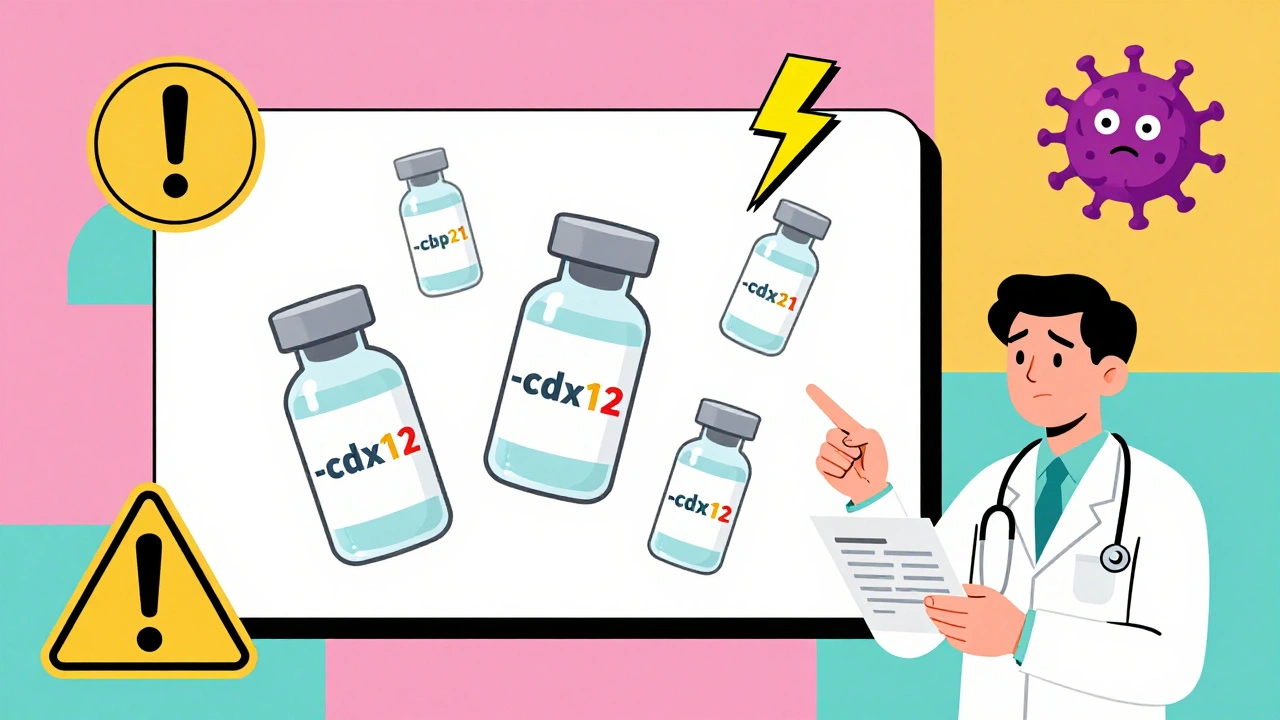
When a patient gets a biosimilar instead of the original biologic drug, how do doctors and regulators know if something goes wrong? It’s not as simple as tracking a generic pill. Biosimilars are made from living cells, not chemicals. Even tiny changes in how they’re manufactured can affect how the body reacts. That’s why adverse event monitoring for biosimilars isn’t just important-it’s a complex, high-stakes system built to catch problems early.
Why Biosimilars Need Special Safety Tracking
Generics are copies of small-molecule drugs. They’re chemically identical to the original. Biosimilars? They’re highly similar, but not identical. Think of it like two handmade leather jackets from the same designer. They look the same, but the stitching, dye batch, or hide source might differ slightly. Those small differences can trigger immune responses in some patients-something called immunogenicity. That’s the biggest safety concern.
Unlike generics, biosimilars can’t be tested for every possible variation before approval. Clinical trials involve thousands, not millions, of patients. Rare side effects-like severe allergic reactions or autoimmune flare-ups-might only show up after thousands more people start using the drug. That’s why post-approval monitoring isn’t optional. It’s required.
How Adverse Events Are Reported
Most reports start with doctors, nurses, or patients. If someone has an unexpected reaction-rash, fever, joint pain, or worse-they or their provider file an adverse event report. In the U.S., that goes into the FDA’s FAERS system. In Europe, it’s EudraVigilance. Canada uses its Canada Vigilance Program.
But here’s the catch: these systems don’t automatically know if the drug was the reference product or the biosimilar. If a patient gets Amjevita (a biosimilar to Humira) and has a reaction, the report might just say “adalimumab.” That’s useless. You can’t tell if the problem came from the biosimilar or the original.
That’s why product identification matters. The FDA started requiring unique four-letter suffixes in 2017-like “-abp21” for Amjevita. But not all countries do this. Health Canada relies on brand names. In Spain, electronic health records now include the manufacturer’s name. In the U.S., a 2022 survey found 63% of doctors were confused about how to document which version the patient received.
The Two-Track Monitoring System
There are two main ways to track safety: passive and active.
Passive monitoring is spontaneous reporting. It’s the backbone of most systems. Healthcare providers report reactions as they come in. The FDA requires serious events to be reported within 15 days. Non-serious ones within 90 days. But this system has gaps. A 2021 IQVIA analysis showed that biosimilar-specific reports made up only 0.3% of all biologic reports-even though biosimilars accounted for 8.7% of prescriptions. That means most reactions are either missed or misattributed.
Active monitoring fixes that. Systems like the FDA’s Sentinel Initiative pull data from millions of electronic health records, insurance claims, and pharmacy databases. They look for patterns: Is there a spike in liver enzyme levels after switching to a specific biosimilar? Are patients on one biosimilar having more infections than those on another? This isn’t just waiting for reports-it’s hunting for signals.
Global Differences in Rules
Every country has its own rules. The European Medicines Agency (EMA) treats biosimilars the same as reference products under its pharmacovigilance framework. No extra rules. The U.S. takes a middle path: biosimilars must have a risk management plan (RMP) that includes immunogenicity monitoring and detailed reporting protocols. Health Canada goes further-it explicitly requires manufacturers to explain how they’ll tell biosimilar reports apart from reference product reports.
Traceability is where things get messy. In the U.S., biosimilars have suffixes, but many hospitals still don’t have systems to capture them. In Canada, brand names are required. In Spain, electronic records include the manufacturer. In India, manufacturers must submit safety reports every six months for two years after launch. In the EU, it’s annual.
And then there’s the problem of multiple biosimilars for the same drug. In 2022, the U.S. approved 10 new biosimilars for just one reference product. Now you’ve got six different versions of the same drug. If a patient has a reaction, which one caused it? Current systems struggle with this.
Real-World Challenges for Doctors and Pharmacies
Healthcare workers are on the front lines. A 2022 survey of 1,247 U.S. physicians found that hematologists and oncologists-the ones most likely to prescribe biosimilars-had the highest confusion rates. One doctor on Medscape said: “I now document both the brand and the specific manufacturer. Otherwise, I can’t tell what caused the reaction.”
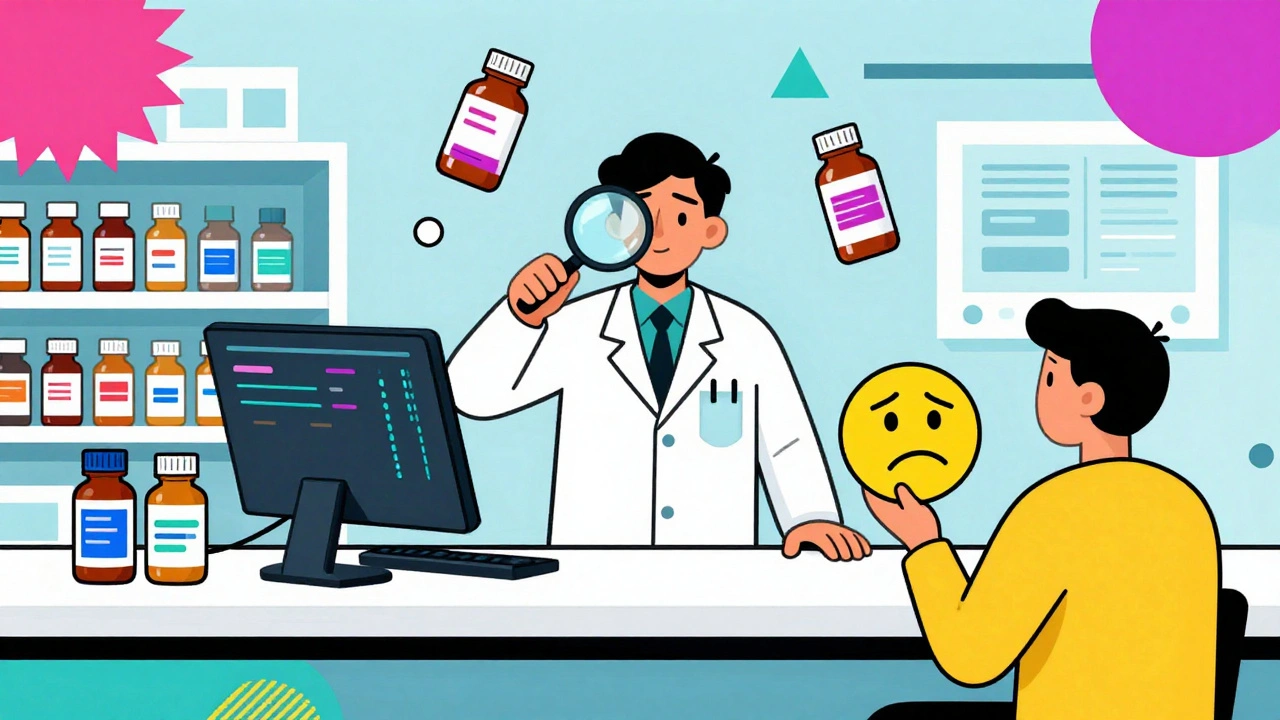
Pharmacists are equally caught in the middle. A 2021 study showed only 37.8% of U.S. pharmacists knew exactly what information to include in a biosimilar adverse event report. Many don’t know if they’re supposed to write the brand name, the generic name, the suffix, or the manufacturer. One pharmacist in Barcelona said switching to mandatory manufacturer tracking in electronic records boosted reporting accuracy from 58% to 92%.
Patients don’t help much either. A 2022 Arthritis Foundation survey found 41.2% of patients on biosimilars didn’t know whether they got the reference product or the biosimilar. How can they report a reaction accurately if they don’t know what they took?
Technology Is Changing the Game
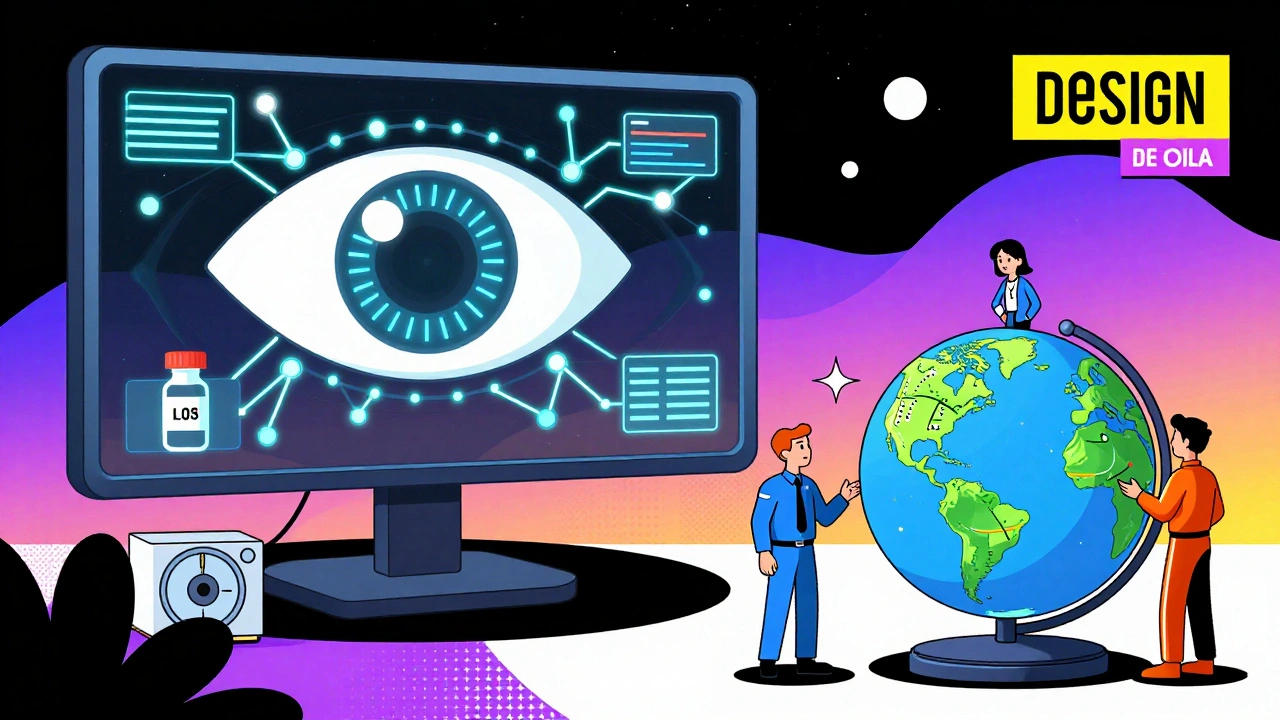
Manual reporting isn’t enough anymore. AI is stepping in. In 2022, the EMA launched VigiLyze-an AI tool that scans 1.2 million new safety reports every year. It flags potential signals with 92.4% accuracy. Companies like ArisGlobal and Oracle Health Sciences now offer cloud-based platforms that automate data collection, reduce reporting errors, and speed up analysis.
But it’s expensive. Implementing an AI-driven system costs between $250,000 and $500,000 for a mid-sized company. Most small manufacturers can’t afford it. That creates a gap: big players have advanced monitoring. Smaller ones rely on outdated methods.
Another innovation? Lot-level tracking. Right now, most reports just say “adalimumab.” What if every vial had a unique lot number, like a serial number on a phone? That way, if a batch causes a spike in reactions, you can pull it off the shelf fast. The International Pharmaceutical Regulators Programme is pushing for a global UDI-like system for biologics by 2026. Early pilots in Switzerland showed it could cut attribution errors by 73.5%.
Costs and Future Pressures
Monitoring biosimilars isn’t cheap. The Tufts Center estimates it costs $2.1 million per year to run pharmacovigilance for a single biosimilar in the U.S. That’s 18.3% of all post-approval spending. As the market grows-projected to hit $34.9 billion by 2028-these costs will climb.
And the pressure is building. The WHO predicts over 300 biosimilars will be on the market by 2030, targeting just 30 reference products. Current systems weren’t built for that scale. Regulatory agencies are already warning that they’ll need a complete redesign.
One thing’s clear: if we want biosimilars to keep lowering drug costs, we need safety systems that are smarter, faster, and more precise. Right now, we’re relying on patchwork solutions. The next decade will decide whether we can scale this properly-or if patients will pay the price.
What’s Next for Biosimilar Safety?
The FDA’s 2023 draft guidance on interchangeable biosimilars now requires post-marketing studies to track what happens when patients switch back and forth between the reference product and biosimilar. That’s new. That’s important. Because if switching causes more reactions, we need to know before it becomes widespread.
Health Canada’s 2023 rule requiring clear manufacturer identification in every report is a step in the right direction. Non-compliance can cost up to $500,000. That’s a strong incentive.
But the real solution isn’t just better rules. It’s better systems. Electronic health records that auto-populate the manufacturer name. Pharmacy software that forces the right selection. Patient apps that tell them exactly what they’re getting. And global standards so a report from Germany can be understood by a regulator in Canada.
For now, the system works-mostly. A 2016 Danish study found no difference in safety between biosimilars and their reference products. But that was five years ago. The number of biosimilars has tripled since then. The rules are catching up. The technology is improving. But the human factor-documentation, training, awareness-is still the weakest link.
Until every provider knows which product a patient received, and every patient can tell you what they were given, the safety net will always have holes.
Why can’t biosimilars be exactly like the original biologic?
Biosimilars are made from living cells-like bacteria or yeast-while original biologics are made the same way. Even tiny changes in the manufacturing process-temperature, pH, purification methods-can alter the final molecule’s structure. These differences don’t affect safety or effectiveness, but they can influence how the immune system reacts. That’s why biosimilars can’t be identical, and why they need extra safety monitoring.
Do biosimilars cause more side effects than the original drug?
So far, no. Real-world data from Denmark, Canada, and the U.S. show no consistent difference in safety profiles between biosimilars and their reference products. But detecting rare side effects-like a 0.1% increase in immunogenicity-requires monitoring tens of thousands of patients. Current systems aren’t always powerful enough to catch those small differences, which is why ongoing surveillance is critical.
What’s the biggest problem with current biosimilar safety systems?
The biggest problem is poor product identification. Most adverse event reports don’t clearly say whether the patient received the reference product or a specific biosimilar. Without that, regulators can’t tell if a reaction came from one version or another. This is especially bad when multiple biosimilars exist for the same drug. Many hospitals still don’t have systems to capture the manufacturer or lot number.
How do regulators know if a biosimilar is safe after it’s approved?
They use two methods: spontaneous reporting (where doctors and patients report side effects) and active surveillance (where systems like the FDA’s Sentinel scan electronic health records and insurance claims for patterns). Manufacturers must also submit Risk Management Plans that include immunogenicity monitoring. All of this data is reviewed regularly to detect any unexpected safety signals.
Why do some countries use suffixes and others use brand names to track biosimilars?
The U.S. uses four-letter suffixes (like -abp21) to make biosimilars distinct in databases and prescriptions. Canada and the EU rely on brand names because they believe that’s what providers and patients recognize. The EU doesn’t require suffixes because they treat biosimilars the same as reference products under their pharmacovigilance rules. The U.S. chose suffixes to improve traceability, but adoption has been slow in hospitals.
Can patients help with biosimilar safety monitoring?
Yes, but only if they know what they’re taking. Many patients don’t know if they received a biosimilar or the original drug. If they report a reaction without knowing the product name, it’s useless for regulators. Patient education and clearer labeling-like including the manufacturer on the prescription label-are key. Some advocacy groups are pushing for apps that show patients exactly which version they’re getting at each refill.
Is biosimilar safety monitoring getting better?
Yes, but slowly. AI tools like EMA’s VigiLyze are improving signal detection. Countries like Spain and Canada are improving electronic record systems. The push for lot-level tracking and global standards is gaining momentum. But progress is uneven. Many hospitals still lack the tech, and many providers still don’t know the rules. The system is evolving-but it’s not yet ready for the next wave of biosimilars.

December 3, 2025 AT 14:21 PM
lol why are we even doing this? biosimilars are just cheap knockoffs. if it works, who cares? my cousin took one and didn't die. 🤷♂️
December 4, 2025 AT 20:06 PM
I’ve been thinking about this a lot lately, especially after seeing how many patients get switched without any explanation. The system feels like it’s built on trust and hope, not data. I mean, we’re asking doctors to remember suffixes that look like random keyboard mashes, and patients to know the difference between a drug with a four-letter tag they’ve never heard before and the one they’ve been on for years. It’s not just confusing-it’s kind of cruel. And yet, we keep acting like this is fine because the numbers look good on paper. But real people are out there, wondering why their joints are swelling again, and nobody’s asking if it’s the brand or the copy.
December 6, 2025 AT 02:21 AM
Suffixes? Who even uses those? Just call it by brand. Simple.
December 6, 2025 AT 08:47 AM
I really appreciate how much thought went into this post. It’s easy to take safety systems for granted until something goes wrong-and then it’s too late. I’ve worked with patients who’ve switched to biosimilars because of cost, and the fear they carry is real. They don’t want to be guinea pigs. Maybe the answer isn’t just better tech or stricter rules, but better communication. Clear labels, simple language on prescriptions, even a quick video patients can scan with their phone that says, ‘This is what you’re getting, and here’s why it’s safe.’ Small things, but they build trust. And trust is what keeps people alive.
December 8, 2025 AT 04:40 AM
I CAN’T BELIEVE WE’RE STILL LETTING THIS HAPPEN!! PEOPLE ARE DYING BECAUSE NO ONE KNOWS WHICH DRUG THEY GOT!! AND THE GOVERNMENT JUST SITS THERE WITH THEIR ‘SUFFIXES’ LIKE IT’S A BRANDING ISSUE??!! THIS IS A MASS CASUALTY WAITING TO HAPPEN!! WHY ISN’T THIS ON THE NEWS??!!
December 8, 2025 AT 20:56 PM
man i just read this and thought… we’re trying to track living molecules like they’re barcodes on a soda can 😅 the science is wild, but the system? it’s like trying to run a marathon with flip-flops. ai helps, sure, but until every pharmacist, nurse, and patient knows what’s in the vial, we’re just guessing. and hey-maybe we need a universal app? like ‘drug ID’ where you scan the label and it tells you: brand, biosimilar, lot, manufacturer, side effect history. just a thought. 🤖💊
December 10, 2025 AT 20:04 PM
U.S. is the only country that actually takes this seriously. Europe? They treat biosimilars like generic aspirin. India? They’re just dumping stuff on the market. Canada’s half-baked. This isn’t science-it’s global chaos. We need American standards, not some EU compromise. We built the internet. We can fix drug tracking.
December 11, 2025 AT 05:55 AM
The passive monitoring gap is real but overstated. The real bottleneck is interoperability. EHRs don’t talk to pharmacy systems, which don’t talk to payer databases, which don’t talk to FDA’s FAERS. You’ve got siloed data in 30 different formats. Even with lot-level tracking, if the data can’t be normalized across systems, you’re just collecting noise. The solution isn’t more reporting-it’s data standardization. HL7 FHIR with biosimilar-specific extensions. That’s the baseline. Everything else is noise.
December 11, 2025 AT 15:41 PM
Let’s be honest-the entire biosimilar safety framework is a PR exercise disguised as science. The regulatory agencies don’t want to scare patients away from cheaper drugs, so they downplay the risks. The data gaps aren’t accidental; they’re structural. Why would a company invest in robust pharmacovigilance when the bar is set so low? And why would a hospital bother training staff when the reimbursement system doesn’t reward accuracy? This isn’t a technical problem. It’s a moral failure dressed in regulatory jargon.
December 12, 2025 AT 22:58 PM
Honestly? I think we’re overcomplicating it. If it works and doesn’t kill people, let people use it. The system’s messy, sure, but so is everything in healthcare. Maybe instead of chasing perfect tracking, we just need to make sure patients know to report anything weird-and that someone’s actually listening. That’s the real win.
December 13, 2025 AT 17:39 PM
This is exactly why we need mandatory patient education at the point of dispensing. Every biosimilar prescription should come with a one-page, plain-language handout: ‘You are receiving [Biosimilar Name] by [Manufacturer]. It is highly similar to [Original Drug]. Side effects may include X, Y, Z. If you experience [red flag symptoms], call your provider immediately and tell them you’re on [Biosimilar Name].’ Simple. Clear. Non-negotiable. We don’t need AI to fix this-we need accountability. And if manufacturers won’t fund it, the government should require it as a condition of approval.
December 15, 2025 AT 03:50 AM
The passive surveillance deficit is only part of the equation. The deeper issue is the epistemic asymmetry between regulators and manufacturers. Regulators rely on manufacturer-submitted data for risk management plans, yet those same manufacturers control the data pipelines, the reporting infrastructure, and the algorithms used for signal detection. It’s a self-auditing system with no independent verification. Until we mandate third-party validation of pharmacovigilance outputs-ideally via public-private partnerships with academic health systems-we’re not monitoring safety; we’re auditing marketing claims.
December 15, 2025 AT 08:50 AM
The current pharmacovigilance paradigm for biosimilars is fundamentally inadequate for the scale and complexity of the modern biologics market. The reliance on spontaneous reporting, coupled with inconsistent product identification protocols across jurisdictions, constitutes a systemic vulnerability. The implementation of a globally harmonized Unique Device Identification (UDI) framework, incorporating lot-level traceability and standardized electronic reporting schemas, is not merely advisable-it is an ethical imperative. Without such structural reform, the risk of undetected immunogenicity events will continue to escalate in parallel with market penetration.
December 15, 2025 AT 19:50 PM
India doesn't even have proper tracking. Doctors just write the name. Patients don't know. Nobody cares. It's fine.
December 17, 2025 AT 08:40 AM
The fact that 63% of U.S. physicians are confused about documentation protocols is not a failure of regulation-it is a failure of leadership. This is not a technical problem. It is a cultural one. If healthcare professionals cannot be trusted to record basic prescribing data, then no algorithm, no suffix, no lot number will save us. The system is rotten at the core.
December 18, 2025 AT 20:30 PM
why do we need all this tech? just make the biosimilar have a different color pill or something. patients will notice if it looks different. duh.