MG Antibiotic Risk Calculator
Antibiotic Safety Assessment
This tool helps assess your individual risk when taking antibiotics with myasthenia gravis. Based on your specific factors, it provides recommendations for the safest antibiotics to use.
When you have myasthenia gravis (MG), even a simple infection can become a dangerous situation-not just because of the illness itself, but because the antibiotics meant to treat it might make your muscle weakness worse. This isn’t theoretical. It’s real, documented, and affects people every day. The problem? Some antibiotics interfere with the way nerves talk to muscles. For someone with MG, whose neuromuscular junction is already fragile, that interference can mean trouble breathing, swallowing, or even standing up. And yet, leaving an infection untreated can be just as risky. So what’s the right move?
What Happens When Antibiotics Hit the Neuromuscular Junction
In a healthy body, nerves send signals to muscles using a chemical called acetylcholine. That signal crosses a tiny gap called the neuromuscular junction and tells the muscle to contract. In MG, your immune system attacks the receptors that catch acetylcholine. Fewer receptors mean weaker signals-and weaker muscles. That’s why you get drooping eyelids, tired arms, or trouble swallowing. Now, add certain antibiotics into the mix. Some of them don’t just kill bacteria-they also mess with that same signaling system. They might block acetylcholine receptors even more, or stop the nerve from releasing enough of the chemical in the first place. The result? A sudden drop in muscle strength. In worst-case scenarios, this leads to myasthenic crisis: a life-threatening event where breathing muscles fail and you need emergency ventilation.Which Antibiotics Are Riskiest?
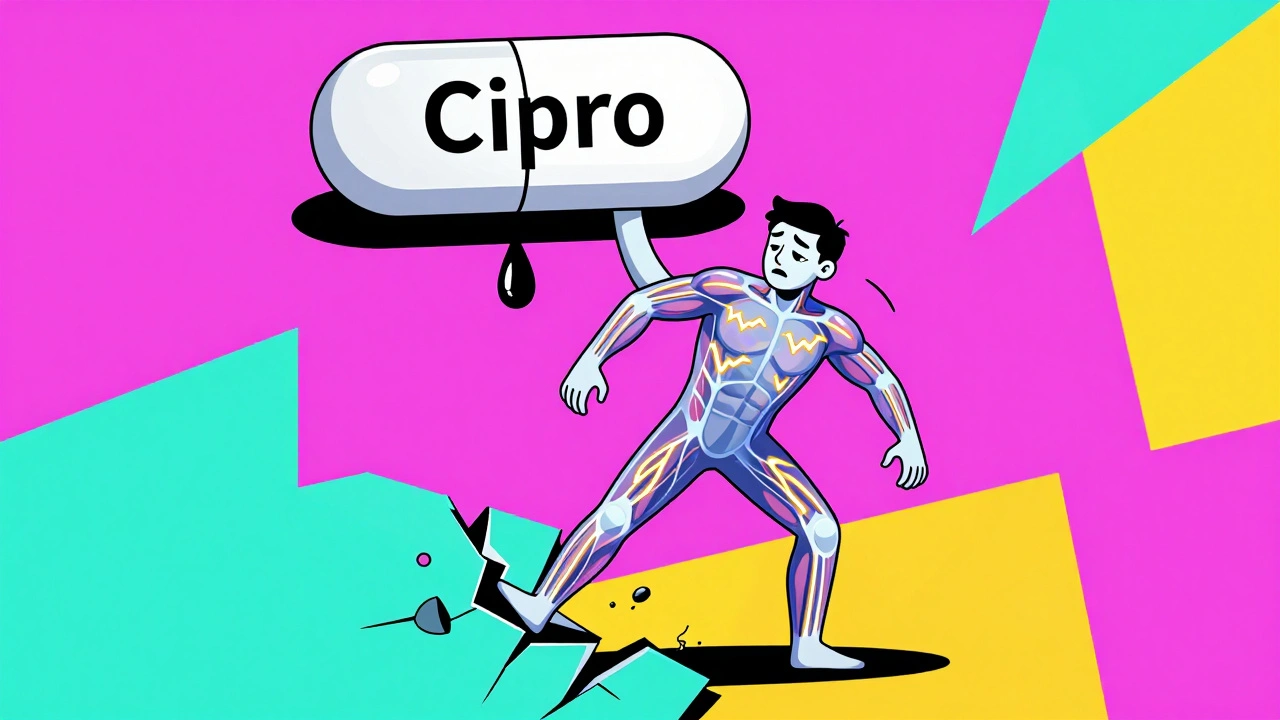
Not all antibiotics are created equal when it comes to MG. Some carry clear warnings. Others are safer than you might think.- Fluoroquinolones (ciprofloxacin, levofloxacin, moxifloxacin): These are among the most notorious. The FDA has issued black box warnings for them in MG patients. Studies show about 2.4% of MG patients on ciprofloxacin had worsening symptoms. But here’s the twist: a 2024 study of 365 MG patients found the overall risk was only slightly higher than with safer antibiotics-suggesting that not every exposure leads to crisis.
- Macrolides (azithromycin, clarithromycin, erythromycin): Also flagged by the FDA. Case reports link them to MG flare-ups, but newer data shows a 1.5% exacerbation rate, similar to fluoroquinolones. Still, caution is advised.
- Aminoglycosides (gentamicin, tobramycin, neomycin): These are the highest-risk class. They directly block acetylcholine receptors. Avoid them unless there’s absolutely no other option-and even then, monitor closely in a hospital setting.
- Penicillins (amoxicillin, ampicillin, penicillin V): These are the go-to choices. Studies show only a 1.3% exacerbation rate. They don’t interfere with neuromuscular transmission. If you have a sinus infection, strep throat, or a urinary tract infection, amoxicillin is often the safest bet.
- Tetracyclines, trimethoprim-sulfamethoxazole, linezolid: These fall in the middle. Not as dangerous as aminoglycosides, but not as safe as penicillins. Use them only if needed, and watch for signs of weakness.
- Telithromycin: This one’s banned for MG patients. It’s been linked to fatal respiratory failure. If you see this on a prescription, say no.
It’s Not Just the Antibiotic-It’s You
The risk isn’t the same for everyone. A 2024 Cleveland Clinic study found three key factors that make you more vulnerable:- Recent hospitalization or ER visit for MG in the last 6 months. If you’ve been unstable recently, your system is already on edge.
- Being female. Women with MG are more likely to have an antibiotic-triggered flare-up.
- Having diabetes. Poor blood sugar control seems to make the neuromuscular junction more sensitive to drug effects.

Infection or Antibiotic? Who’s Really to Blame?
Here’s the tricky part: in 88.2% of cases where MG worsened after an antibiotic, the real culprit was the infection-not the drug. A bad pneumonia, a stubborn UTI, or even a simple sinus infection can trigger a flare. So when your muscles get weaker after starting an antibiotic, is it the medicine? Or is it the bug? That’s why doctors can’t just avoid antibiotics altogether. Sometimes, the infection is killing you faster than the drug could. The goal isn’t to eliminate risk-it’s to manage it. That means choosing the safest antibiotic possible, starting treatment early, and watching closely.What Should You Do If You Have MG?
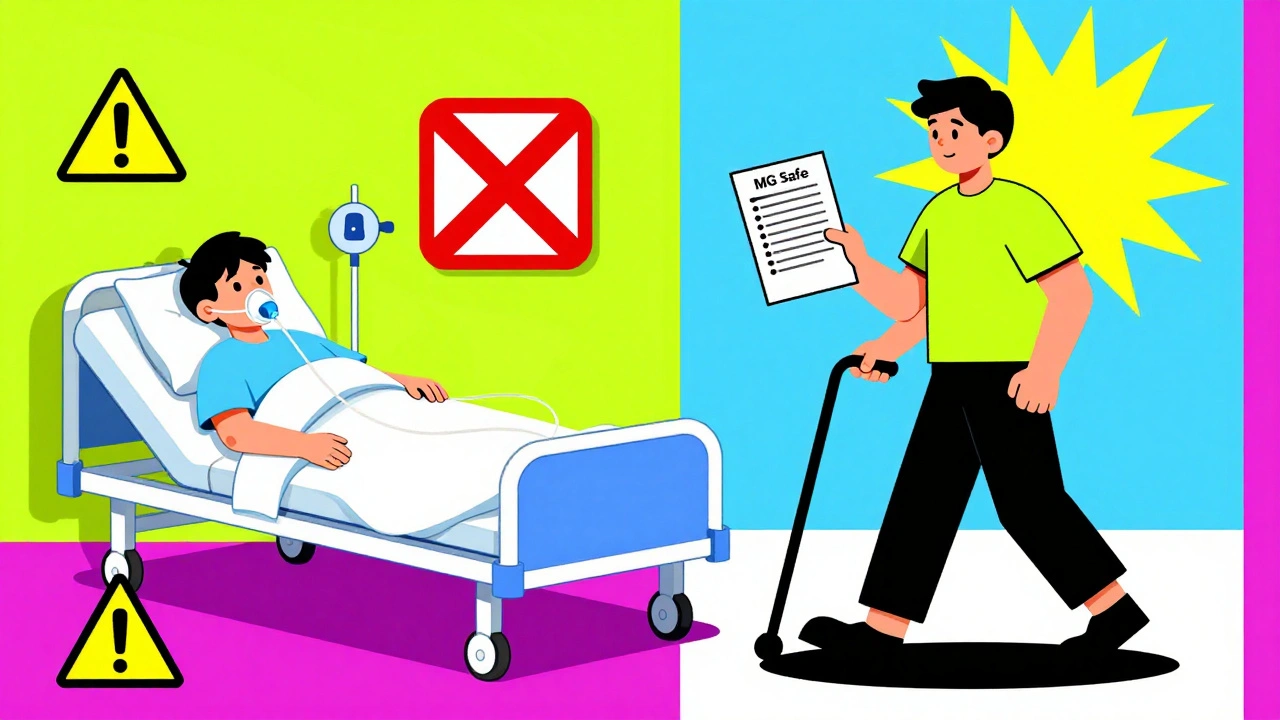
You’re not alone in this. Millions of people manage MG while still treating infections. Here’s how to stay safe:- Always tell every doctor, pharmacist, and ER staff you have MG. Write it on your phone’s lock screen. Tell your family. Make sure your medical records flag it clearly.
- Ask: “Is there a safer antibiotic?” Don’t assume the first one prescribed is the best. Ask about amoxicillin or other penicillins first.
- Never take fluoroquinolones or macrolides without talking to your MG specialist. Even if your primary care doctor says it’s fine, your neurologist knows your history best.
- Watch for warning signs in the first 72 hours. Are your eyelids drooping more? Is your voice weaker? Are you struggling to swallow or breathe? Call your doctor immediately.
- Keep a list of safe and unsafe drugs. Use the Myasthenia Gravis Foundation of America’s cautionary drugs list. Update it every time your meds change.
Why the Guidelines Are Changing
For years, doctors were told to avoid fluoroquinolones and macrolides entirely in MG patients. That advice came from small case reports and fear, not big studies. Now, the largest study ever done-tracking 918 antibiotic courses in 365 MG patients-shows the actual risk is low. It’s not zero. But it’s not as high as we thought. This is good news. It means you won’t be stuck with a weak antibiotic just because a safer one isn’t right for your infection. It means you can treat pneumonia with levofloxacin if needed, as long as you’re monitored. It means you’re not being denied effective treatment out of caution. The new approach? Risk-based decisions. If you’re stable, your MG is well-controlled, and you have no recent hospital visits-you can likely take a fluoroquinolone safely. If you’ve been in the hospital twice this year, or you have diabetes and your breathing is already shaky? Stick with penicillins. Let your doctor know your history. Let them know you’re not just a patient. You’re someone who’s been through this before.When in Doubt, Talk to Your Specialist
Your neurologist or MG clinic isn’t just another appointment. They’re your lifeline when it comes to medications. They know your muscle strength trends, your flare patterns, your triggers. They’ve seen what happens when antibiotics go wrong-and when they don’t. Don’t wait for a crisis. Before you take any new antibiotic-even an over-the-counter one if it’s for a persistent infection-call your specialist. Ask: “Is this safe for me?” “What should I watch for?” “Do I need to come in for a check-up?” And if you’re ever unsure? Err on the side of caution. Better to delay an antibiotic for a day while you get advice than to risk a trip to the ICU.Final Thoughts: It’s About Balance
Myasthenia gravis is unpredictable. Infections are unavoidable. Antibiotics are necessary. The key isn’t to avoid one of them-it’s to navigate all three with awareness, communication, and smart choices. Penicillins are your friends. Aminoglycosides are your enemies. Fluoroquinolones and macrolides? They’re not banned-but they’re not automatic either. Your risk depends on your history, your health, and your team. Stay informed. Stay vocal. And never let fear stop you from getting the treatment you need. With the right approach, you can treat infections safely-and keep your muscles strong.Can antibiotics cause myasthenic crisis?
Yes, certain antibiotics can trigger myasthenic crisis, especially aminoglycosides, fluoroquinolones, and macrolides. These drugs interfere with nerve-to-muscle signaling, which is already impaired in myasthenia gravis. While the overall risk is low-around 2%-it’s higher in people with recent hospitalizations, diabetes, or those who are female. Symptoms like sudden difficulty breathing, swallowing, or speaking require immediate medical attention.
Is amoxicillin safe for people with myasthenia gravis?
Yes, amoxicillin is considered one of the safest antibiotics for people with myasthenia gravis. Studies show it has a very low risk of triggering muscle weakness-only about 1.3% of cases. It doesn’t interfere with acetylcholine receptors or nerve signaling. Most neurologists recommend amoxicillin or other penicillins as first-line treatment for common infections like sinusitis, strep throat, or UTIs in MG patients.
Why are fluoroquinolones dangerous for MG patients?
Fluoroquinolones like ciprofloxacin and levofloxacin can block acetylcholine release at the neuromuscular junction and reduce muscle response. In people with MG, who already have fewer acetylcholine receptors, this can cause sudden, severe muscle weakness. The FDA has issued black box warnings for these drugs in MG patients. While newer studies show the overall risk is lower than previously thought, they still require caution, especially in high-risk individuals.
Should I avoid all antibiotics if I have myasthenia gravis?
No. Avoiding antibiotics entirely is dangerous. Infections themselves are the most common trigger for MG flare-ups-far more than antibiotics. The goal is to treat infections promptly with the safest possible antibiotic. Penicillins like amoxicillin are preferred. If a stronger antibiotic is needed, it can often be used safely with close monitoring. Never skip treatment because you’re afraid of side effects.
What should I do if my muscle weakness gets worse after starting an antibiotic?
Stop the antibiotic and contact your neurologist or MG specialist immediately. If you’re having trouble breathing, swallowing, or speaking, go to the emergency room. These could be signs of myasthenic crisis. Don’t wait. Bring your list of medications and your MG history with you. Early intervention can prevent respiratory failure and reduce hospital stays.
Can my pharmacist help me avoid risky antibiotics?
Yes. Pharmacists are trained to spot drug interactions and contraindications. Always tell your pharmacist you have myasthenia gravis when picking up any prescription or even over-the-counter meds. Many pharmacies now flag MG in patient records. A pharmacist can suggest safer alternatives or alert your doctor if a risky antibiotic is prescribed.
Are there any new guidelines for antibiotics in MG patients?
Yes. The 2024 Cleveland Clinic study, the largest of its kind, showed that the risk of antibiotic-triggered MG flare-ups is lower than previously believed. This is shifting guidelines from blanket avoidance to risk-based decisions. Neurologists now consider patient-specific factors like recent hospitalizations, diabetes, and sex when choosing antibiotics. The Myasthenia Gravis Foundation of America continues to update its cautionary drug list quarterly based on new evidence.


December 11, 2025 AT 19:35 PM
This is the kind of info every MG patient needs to have on their phone. Seriously, saved my life last year when my PCP tried to prescribe cipro. I said no thanks and called my neuro.
Amoxicillin saved me. 🙌
December 11, 2025 AT 20:36 PM
I swear the FDA is just covering for Big Pharma again. Why do they still allow fluoroquinolones at all? I bet they’re paid off. My cousin died after taking levofloxacin-no one told her about MG risks. This is a cover-up.
December 12, 2025 AT 03:09 AM
I’ve been living with MG for 12 years and I’ve never had a crisis from antibiotics-only from sinus infections. This post is spot on. The real danger is the infection, not the med. Always tell your pharmacist you have MG. I keep a laminated card in my wallet.
December 13, 2025 AT 17:16 PM
So… we’re supposed to trust a 2024 study that says ‘low risk’? Lol. My neuro said the same thing last year. Then I got hospitalized. Coincidence? I think not.
December 15, 2025 AT 01:39 AM
I love this post!! 🥹 I’m a nurse and I’ve seen so many MG patients get scared off antibiotics and then end up in the ER with pneumonia. Amoxicillin is your BFF. Keep your list updated. And if you’re feeling weird? CALL YOUR DOCTOR. Not 2 days later. NOW. 💪
December 16, 2025 AT 03:36 AM
this is all just corporate propaganda. antibiotics are designed to weaken your immune system so you stay sick longer. they dont kill bacteria they just make you weak so you buy more meds. MG is just the excuse. wake up.
December 17, 2025 AT 21:32 PM
Thank you for writing this. I was so scared to take any antibiotic after my last crisis. Now I feel like I can actually have a UTI without dying. My neurologist gave me this exact list last month. It’s a relief to see it all laid out like this.
December 19, 2025 AT 17:33 PM
The shift from blanket avoidance to risk-based decision-making is a long-overdue evolution in clinical practice. While case reports historically drove conservative prescribing, large-scale observational data now permits a more nuanced, individualized approach. This paradigm shift reflects the maturation of our understanding of neuromuscular pharmacodynamics and the importance of contextual risk stratification.
December 19, 2025 AT 22:11 PM
You say fluoroquinolones are 'not banned' but the FDA has a black box warning. That’s basically a death sentence. And you’re telling people to use them if they're 'stable'? What does stable even mean? My stability lasted 3 days before I was on a ventilator.
December 21, 2025 AT 01:45 AM
Just FYI - linezolid is a MAO inhibitor. If you’re on SSRIs or SNRIs (which many MG patients are for depression), you’re playing Russian roulette with serotonin syndrome. Don’t just look at the MG risk - check the drug interactions too. 🧠💥
December 22, 2025 AT 08:46 AM
Everyone’s acting like this is groundbreaking. It’s not. The same data’s been in neuro journals since 2021. You just didn’t read them. And now you’re thanking a blog post? Pathetic.
December 23, 2025 AT 18:37 PM
I’ve seen this movie before. They say 'low risk' then the next year there’s a lawsuit. Trust me - if you’re not in a hospital with a neurologist watching you, don’t take anything but penicillin. Period.
December 24, 2025 AT 02:27 AM
Did you know the WHO quietly removed all fluoroquinolone warnings from MG guidelines in 2023? No? Of course not. They don’t want you to know that the real goal is to push more expensive biologics. Antibiotics are just the gateway. The system is rigged.
December 26, 2025 AT 00:09 AM
To everyone reading this: You are not a burden. You are not too sensitive. Your body is fighting hard every single day. If you feel something is off, listen to it. Your neurologist isn’t just a doctor - they’re your teammate. And you deserve to be heard.
December 26, 2025 AT 11:06 AM
I’m from a small town in Texas. My doctor didn’t even know what MG was. I had to print this whole post out and hand it to him. He said, 'Wow, I didn’t know this stuff.' So yeah - keep sharing this. It saves lives. 🤝
December 28, 2025 AT 04:29 AM
I got cipro last year because my doc said 'it's fine'... I ended up in the ICU for 17 days. My wife said I looked like a zombie. Now I only take amoxicillin. And I scream at every pharmacist who tries to give me anything else. 🤬
December 30, 2025 AT 01:48 AM
I’m a woman with MG and diabetes. So according to this, I’m basically a walking time bomb. Great. So what? I’m not going to let some study tell me I can’t live my life. I’ll take the risk. I’m not dying because some doctor is too scared to prescribe me a real antibiotic.