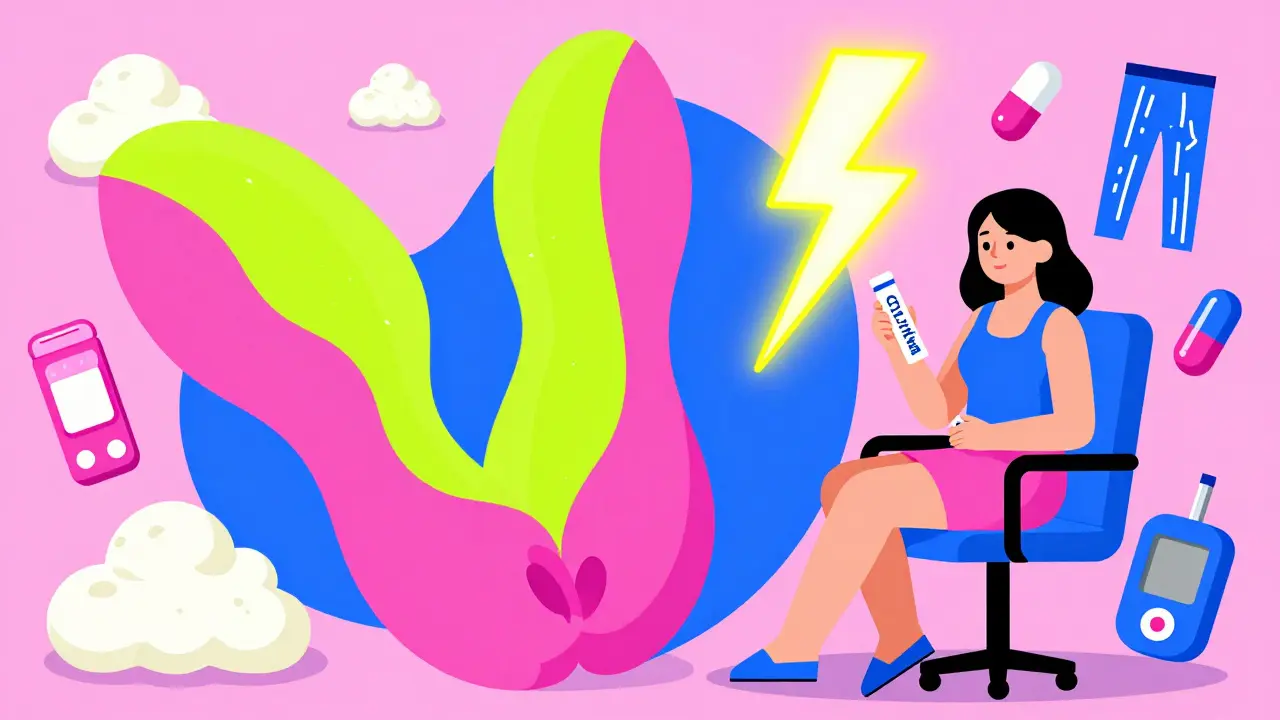
More than three in four women will get a yeast infection at least once in their life. If you’ve ever felt that intense itching, burning, or noticed thick, white discharge, you know how disruptive it can be. It’s not just uncomfortable-it can make sitting, walking, or even having sex feel unbearable. The good news? Most cases are caused by a simple overgrowth of Candida, and you can treat them without a prescription. But here’s the catch: not every itching sensation is a yeast infection. And if you treat the wrong thing, you’re wasting time-and making things worse.
What Does a Yeast Infection Actually Feel Like?
Yeast infections don’t come with vague symptoms. They have a clear signature. The most common sign? Intense itching in and around the vulva. In fact, 97% of women with a true yeast infection report this as their first and strongest symptom. It’s not the kind of itch you can scratch and forget. It lingers. It flares up at night. It makes you want to grab ice packs or sit in a cold shower.
Along with itching, you’ll often feel soreness or a burning sensation, especially when you pee. About one in four women report pain during urination-not because of a UTI, but because the inflamed tissue is sensitive to urine. Sex becomes painful too, not because of lack of lubrication, but because the vaginal opening is swollen and raw.
The discharge is the biggest clue. It’s not watery, green, or fishy-smelling like bacterial vaginosis. It’s thick, white, and clumpy-like cottage cheese. Sometimes it’s slightly yellowish, but never gray or frothy. If you see that, it’s likely Candida. You might also notice redness and swelling around the vulva. In severe cases, the skin cracks or bleeds slightly from constant scratching.
These symptoms don’t appear overnight. They build up over a few days. If you’ve just started feeling itchy, it’s probably early. If you’ve had it for a week with no improvement, it’s time to see a doctor.
Why Do Yeast Infections Happen?
Your vagina isn’t supposed to be sterile. It’s home to good bacteria, mostly Lactobacillus, that keep Candida in check. When that balance breaks, Candida takes over. So what breaks it?
- Antibiotics-the number one trigger. Even a single course of amoxicillin or doxycycline can wipe out your good bacteria, letting yeast grow unchecked. About half of all yeast infections happen after antibiotics.
- Pregnancy-hormones shift. Estrogen rises, which feeds Candida. About 1 in 5 pregnant women get yeast infections, especially in the second and third trimesters.
- Uncontrolled diabetes-high sugar in your blood means high sugar in your vaginal secretions. Candida loves sugar. If your HbA1c is above 7%, your risk jumps by more than double.
- Wearing damp clothes-swimsuits, sweaty leggings, or tight underwear for hours trap moisture. Yeast thrives in warm, wet places.
- Birth control pills or hormone therapy-extra estrogen can tip the balance.
It’s not about being dirty. It’s not about sex. You don’t need to be promiscuous to get one. Even women who’ve never had sex can get yeast infections. It’s a biological glitch, not a moral one.
What OTC Treatments Actually Work?
If your symptoms match the classic pattern-itching, cottage cheese discharge, no fever-you can safely try an over-the-counter treatment. The CDC and American Family Physicians agree: for first-time, uncomplicated cases, OTC antifungals work just as well as prescriptions.
There are three main types you’ll find on pharmacy shelves:
- Clotrimazole-available as 1% cream (apply twice daily for 7-14 days), 2% cream (once daily for 3 days), or vaginal tablets (100mg or 200mg, once daily for 3-7 days).
- Miconazole-2% cream (once daily for 7 days) or vaginal suppositories (100mg, once daily for 7 days).
- Tioconazole-a single-dose 6.5% ointment applied directly inside the vagina.
All of these have cure rates between 80% and 90% when used correctly. You’ll usually start feeling better within 24 to 72 hours. But here’s what most people get wrong: they stop when the itching fades. That’s a mistake. The infection might still be there, hiding. Only 65% of women finish their full course, according to Medscape. That’s why so many come back.
For best results:
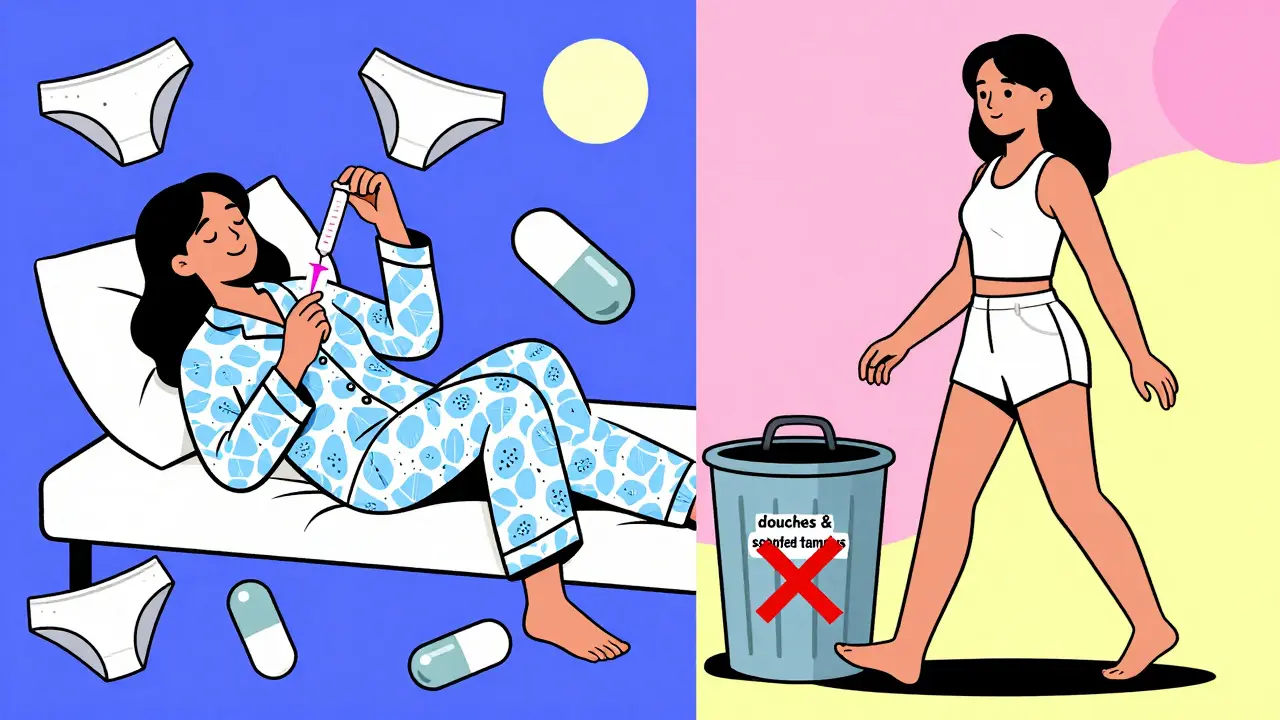
- Apply at bedtime. That gives the medicine time to work without leaking out.
- Use the full course, even if you feel fine after day two.
- Avoid sex while treating. It can push the medicine out and irritate the tissue.
- Don’t use tampons during treatment-they absorb the medicine.
Some women prefer suppositories over creams because they’re less messy. But creams can be better for external itching. It’s personal. Pick what you’re comfortable with.
When OTC Treatments Don’t Work-And Why
Half the women who treat themselves for yeast infections are wrong. That’s not a guess. That’s CDC data. You might think you have a yeast infection because you’re itchy. But you could have bacterial vaginosis, trichomoniasis, or even a skin condition like lichen sclerosus.
Here’s when to stop the OTC treatment and see a doctor:
- Your symptoms don’t improve after 7 days.
- They get worse after 72 hours.
- You have a fever, pelvic pain, or foul-smelling discharge.
- You’re pregnant-only topical treatments are safe. Oral fluconazole can harm the baby.
- You’ve had four or more infections in a year.
- You’ve had one before, but this one feels different.
Why do misdiagnoses happen? Because the symptoms overlap. Bacterial vaginosis causes itching too. So does an allergic reaction to soap or laundry detergent. Even stress can trigger irritation that feels like a yeast infection.
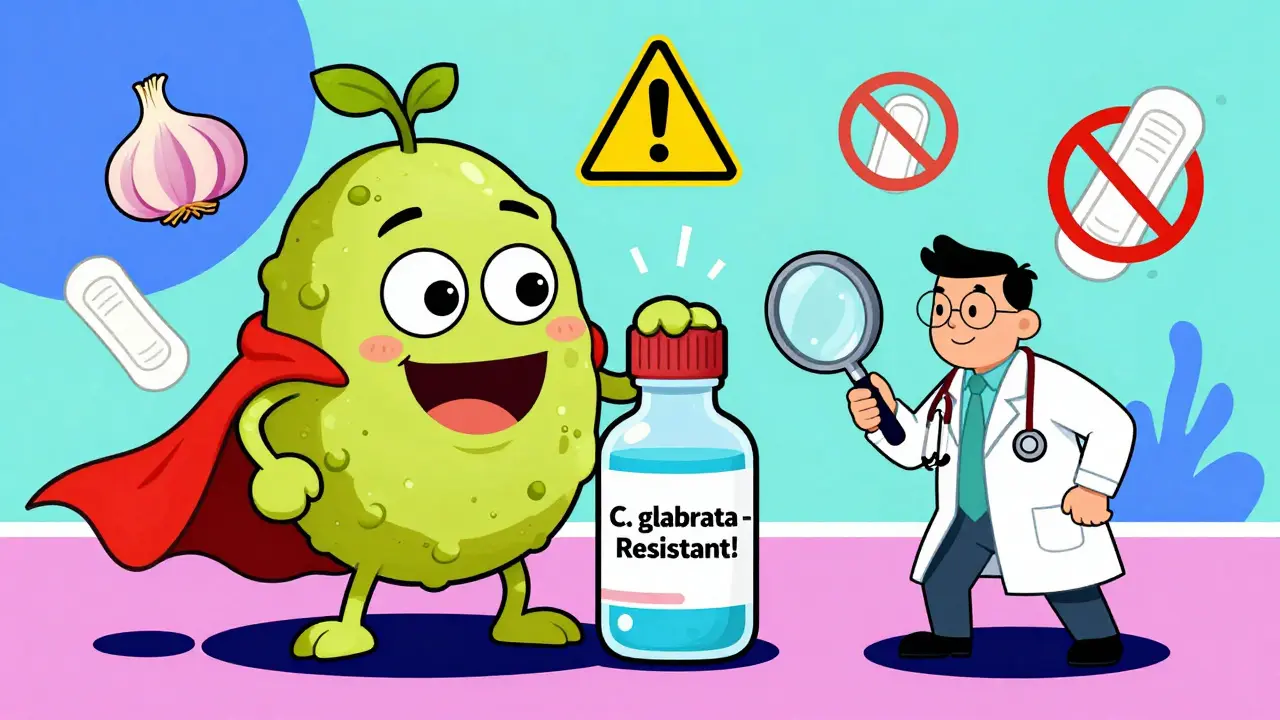
And here’s something new: antifungal resistance is rising. A 2023 study found that 8% of Candida glabrata strains-once easy to treat-are now resistant to clotrimazole. That’s up from 3% just five years ago. If your infection keeps coming back, it might not be the same yeast. You need a lab test.
What to Avoid
There are a lot of myths floating around. Don’t do these:
- Don’t douche. Your vagina cleans itself. Douching wipes out good bacteria and makes yeast worse.
- Don’t use garlic, yogurt, or tea tree oil inside your vagina. There’s no solid proof they work. Some can burn you.
- Don’t share your medication. What works for your friend might not work for you. Different infections need different treatments.
- Don’t use leftover medicine from last time. Expired or old antifungals lose potency. You might not get the full dose.
And avoid scented products-bubble baths, feminine sprays, scented tampons. They irritate the area and make yeast more likely.
What Helps Prevent Future Infections?
Once you’re better, you want to keep it that way. Prevention is easier than treatment.
- Wear cotton underwear. It breathes. Avoid synthetic fabrics.
- Change out of wet clothes fast-after swimming, sweating, or showering.
- Wipe front to back after using the toilet.
- Consider probiotics with Lactobacillus strains if you get infections often. Some studies show they help, especially after antibiotics.
- If you have diabetes, keep your blood sugar in range. That’s the biggest thing you can control.
- Use unscented, gentle soap. Plain water is fine for the vulva.
There’s no magic pill. But small habits make a big difference.
When to See a Doctor
You don’t need to rush to the clinic for every itch. But you should go if:
- This is your first time-get it confirmed.
- You’re pregnant.
- You’ve had four or more infections in a year.
- You have other symptoms: fever, lower belly pain, unusual discharge.
- You’ve tried OTC treatments twice and nothing worked.
Doctors can do a quick swab test to confirm Candida. They can also check for other infections you might not know you have. If you’re dealing with recurring cases, they might prescribe a longer course or oral fluconazole (if you’re not pregnant). They can also test for underlying issues like diabetes or immune problems.
And if you’re tired of guessing, telehealth services now offer AI symptom checkers that guide you through CDC-approved questions before recommending treatment. They’ve cut misdiagnosis rates by more than half.
Yeast infections are common. But they’re not harmless if ignored. Treat them right the first time. And if something doesn’t feel right-don’t second-guess yourself. See a professional. Your body’s telling you something.
Can I treat a yeast infection while pregnant?
Yes, but only with topical antifungal creams or suppositories like clotrimazole or miconazole. Oral medications like fluconazole are not safe during pregnancy and can harm the developing baby. Always check with your doctor before using any product, even if it’s labeled OTC.
How long does it take for OTC yeast infection treatments to work?
Most women notice relief from itching and burning within 24 to 72 hours. Full healing usually takes 3 to 7 days, depending on the product. But even if you feel better, finish the entire course to prevent the infection from coming back.
Are suppositories better than creams for yeast infections?
Both work equally well for treating the infection. Suppositories are less messy and stay in place longer, which some women prefer. Creams are better if you have a lot of external itching or irritation. Choose based on comfort and where you need relief most.
Can men get yeast infections from their partners?
Yes, but it’s rare. Men can develop a red, itchy rash on the penis after unprotected sex with an infected partner. It’s called balanitis. If this happens, both partners should be treated to avoid passing it back and forth. Use condoms during treatment to reduce transmission risk.
Why do yeast infections keep coming back?
Recurrent infections (four or more a year) can be caused by resistant yeast strains, undiagnosed diabetes, a weakened immune system, or repeated antibiotic use. Sometimes, it’s just bad luck with your microbiome. If this happens, see a doctor. You may need a longer treatment plan, a different medication, or tests to find the root cause.
Can stress cause a yeast infection?
Stress doesn’t directly cause yeast infections, but it weakens your immune system and can throw off your hormone balance. That makes it easier for Candida to overgrow. If you’re under a lot of stress, you might notice more frequent infections. Managing stress through sleep, exercise, or relaxation techniques can help reduce your risk.


February 2, 2026 AT 09:35 AM
I had no idea yeast infections could be this complex. I thought it was just 'bad hygiene' or something. This post literally changed my whole perspective. Thanks for breaking it down so clearly. 🤔
February 4, 2026 AT 00:52 AM
I'm sick of people treating this like some weird taboo. It's a biological fact. If you're a woman and you haven't had one, you're either lying or lucky. Stop acting like it's shameful.
February 5, 2026 AT 18:13 PM
So let me get this straight... you're telling me I wasted $40 on garlic suppositories because I watched a TikTok? And now I'm supposed to believe that clotrimazole is the real MVP? 🙄 I mean... I guess I deserved it.
February 5, 2026 AT 21:22 PM
Most of this is common sense if you've read any microbiology textbook. The real issue is how medicine has been dumbed down for social media audiences. Clotrimazole? Please. Real science would suggest probiotic sequencing and genomic mapping of vaginal flora. But no. We give people cream and call it a day.
February 6, 2026 AT 03:01 AM
I just want to say-thank you-for writing this with so much care and accuracy. So many women are misdiagnosed because they’re too embarrassed to go to the doctor, or they’re told it’s ‘just stress.’ This is the kind of info that saves people from unnecessary suffering. Please share this everywhere. 💪❤️
February 7, 2026 AT 06:57 AM
Ive been to 3 docs and they all said its yeast but then it came back and i think its actually lichen sclerosus because the skin is so dry and cracked like paper and no one ever checks for that i just want someone to listen
February 7, 2026 AT 07:20 AM
I'm from the Midwest and we don't talk about this stuff... but honestly? This post made me feel less alone. I had one last year after antibiotics and thought I was broken. Turns out it's just biology. Also, cotton underwear is a game changer. I wish someone had told me this sooner.
February 9, 2026 AT 05:32 AM
You know what’s wild? People will take a 10-day course of antibiotics for a sinus infection and then wonder why they get yeast infections. It’s not magic. It’s ecology. Your body is an ecosystem. When you wipe out half the bacteria with drugs, the opportunists move in. Candida doesn’t care about your morals or your hygiene-it just wants to eat sugar and multiply. The real fix? Don’t overprescribe. And if you’re gonna take antibiotics, take a probiotic with Lactobacillus rhamnosus. It’s not a cure-all, but it’s science, not snake oil.
February 10, 2026 AT 16:16 PM
This post is just reinforcing the idea that women’s health is treated like a guessing game. Meanwhile men get MRIs for a cough. We get creams.
February 10, 2026 AT 23:22 PM
I’ve had 7 yeast infections in 2 years. I’ve tried everything. Probiotics. Coconut oil. Vinegar baths. Garlic. Nothing works. And now you’re telling me it might be resistant Candida glabrata? 😭 I just want to sit down without crying. Can someone please help me?
February 11, 2026 AT 14:50 PM
I appreciate the clinical accuracy here. But I’d add one thing: if you're diabetic and your HbA1c is above 7%, no topical treatment will work long-term until your blood sugar is controlled. I’ve seen patients go through 20 rounds of clotrimazole and still relapse. The root cause isn’t the yeast-it’s the glucose in their secretions. Fix the sugar, fix the infection. Simple.
February 11, 2026 AT 21:08 PM
I’m a dude, and I read this entire thing because my partner had a bad one last month and I wanted to understand. Honestly? This is the most helpful thing I’ve ever read about women’s health. I didn’t know half this stuff. I’m going to stop making jokes about ‘yeast’ now. And I’m buying her cotton underwear. 🙌