CBD Medication Interaction Checker
CBD & Medication Interaction Checker
Based on CYP450 Enzyme Inhibition Data
Imagine taking your morning blood thinner or anxiety medication, adding a drop of CBD oil is a popular cannabinoid extract derived from Cannabis sativa plants, widely used for its potential therapeutic benefits including pain relief and anxiety reduction., and suddenly feeling like you’ve been hit by a truck. You aren’t imagining it. For millions of people, this isn’t just fatigue; it’s a chemical collision happening in their liver.
The rise of CBD has been meteoric, but so have the reports of unexpected side effects. The core issue isn’t the CBD itself-it’s how it talks to your body’s internal pharmacy. Specifically, CBD acts as a powerful inhibitor of the CYP450 enzyme system is a group of enzymes primarily located in the liver responsible for metabolizing approximately 70-80% of all clinically used medications.. When CBD blocks these enzymes, your prescription drugs stay in your system longer and at higher concentrations than intended. This leads to two major problems: dangerous toxicity levels and extreme sedation is an excessive state of calmness, drowsiness, or sleepiness caused by the accumulation of central nervous system depressants in the bloodstream..
How CYP450 Enzymes Control Your Medication Levels
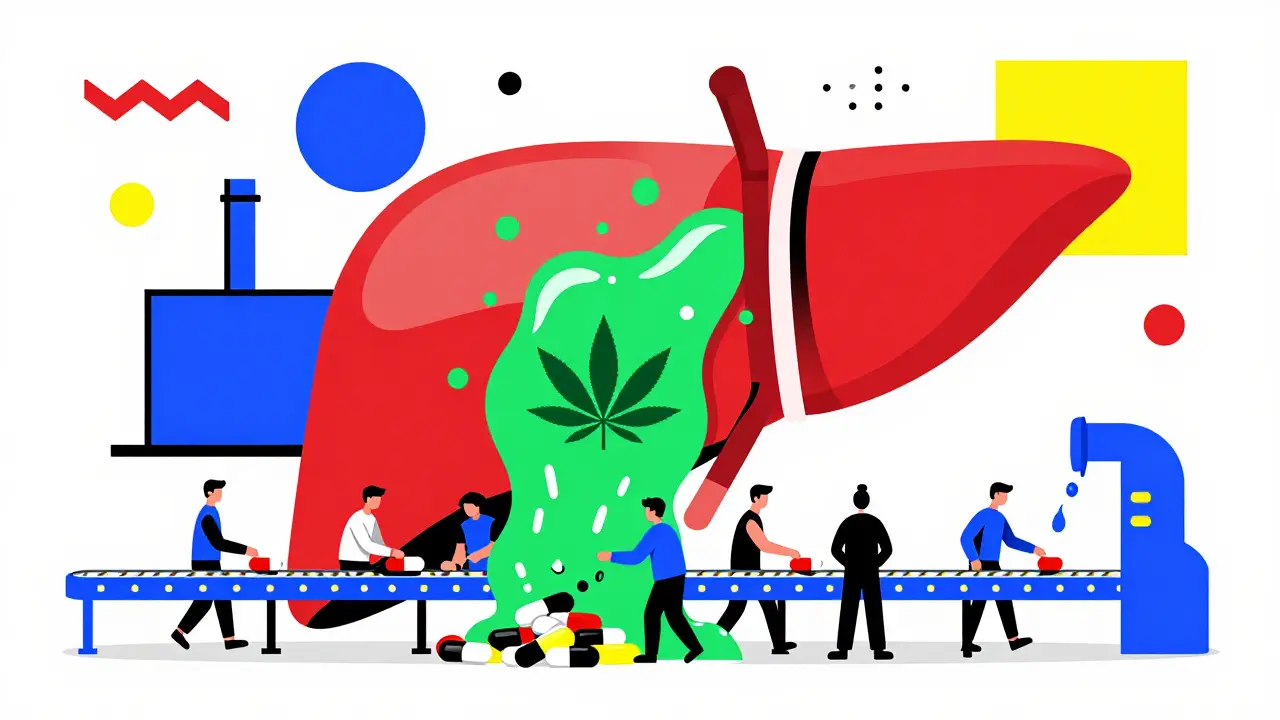
To understand why CBD causes issues, we need to look at the mechanics of metabolism. Think of the CYP450 system as a team of workers on an assembly line, breaking down chemicals so your body can process them safely. There are several key workers, known as isoforms, including CYP3A4 is the most abundant cytochrome P450 enzyme in the human liver, responsible for metabolizing about 50% of all prescription drugs., CYP2C9 is a specific CYP450 isoform that metabolizes critical drugs such as warfarin, phenytoin, and certain non-steroidal anti-inflammatory drugs., CYP2C19 is a CYP450 enzyme variant involved in the metabolism of proton pump inhibitors, antidepressants, and antiepileptic drugs like clobazam., and CYP2D6 is a genetically variable enzyme that processes roughly 25% of all medications, including many beta-blockers and antidepressants..
Research published in PMC (2023) with PMID 11022895 highlights that CBD doesn’t just slow down one worker; it jams the whole line. It demonstrates competitive inhibition across multiple isoforms. The study found that CBD inhibits CYP1A2, CYP3A4, CYP2B6, CYP2C9, CYP2C19, and CYP2D6. Because CYP3A4 and CYP2D6 handle about half of all prescription drugs, the net result is that CBD effectively pauses the breakdown of a massive portion of modern medicine.
This isn’t theoretical. The FDA-approved drug Epidiolex is a purified cannabidiol oral solution approved by the FDA in 2018 for treating seizures associated with Lennox-Gastaut syndrome and Dravet syndrome. carries explicit black-box warnings about these interactions. When patients take Epidiolex alongside other medications, doctors must often cut the dose of the companion drug by 25% to 50% just to keep blood levels safe.
The Sedation Trap: Why You Feel So Tired
You might wonder why blocking a liver enzyme makes you sleepy. The answer lies in pharmacokinetics-the study of how drugs move through the body. When CYP450 enzymes are inhibited, the clearance rate of sedating medications drops. Instead of being processed and eliminated within hours, these drugs accumulate.
Consider clobazam is a benzodiazepine anticonvulsant medication commonly prescribed for epilepsy, which is metabolized primarily by the CYP2C19 enzyme into its active form N-desmethylclobazam.. A landmark interaction occurs here. The FDA label for Epidiolex notes that co-administration with clobazam resulted in a 60% increase in plasma concentrations of N-desmethylclobazam. That active metabolite is what causes the calming effect-and the heavy sedation.
Real-world data backs this up. The FDA’s Adverse Event Reporting System (FAERS) recorded 147 reports of sedation-related events linked to CBD-drug interactions between 2018 and 2023. Of those, 32% involved antiepileptic drugs and 28% involved benzodiazepines. One patient on r/Epilepsy reported their clobazam levels spiking from 600 ng/mL to 1,050 ng/mL within two weeks of starting CBD, leading to extreme drowsiness that required a 50% dose reduction.
It’s not just seizure meds. Benzodiazepines like diazepam (Valium) and alprazolam (Xanax), as well as opioids like fentanyl and oxycodone, are heavily metabolized by CYP3A4. Adding CBD to this mix can turn a manageable dose into a hazardous one, increasing the risk of respiratory depression and accidents due to impaired coordination.
Beyond Sedation: Dangerous Interactions with Blood Thinners and Antidepressants
Sedation is uncomfortable, but some interactions are life-threatening. The most critical concern involves drugs with a narrow therapeutic index-medications where the difference between a helpful dose and a toxic dose is tiny.
Warfarin is a widely used anticoagulant medication that prevents blood clots, metabolized primarily by the CYP2C9 enzyme, requiring regular monitoring via INR tests. is metabolized by CYP2C9. If CBD inhibits CYP2C9, warfarin stays in your blood longer, raising your International Normalized Ratio (INR). An elevated INR means your blood takes too long to clot. A patient review on PatientsLikeMe described their INR jumping from a safe 2.5 to a dangerous 5.8 within ten days of adding CBD oil, necessitating emergency vitamin K administration to reverse the bleeding risk.
Antidepressants present another complex scenario. Many SSRIs and SNRIs, such as fluoxetine and sertraline, rely on CYP2D6 and CYP3A4. Inhibiting these enzymes can lead to serotonin syndrome-a potentially fatal condition caused by excessive serotonin activity. Symptoms include agitation, rapid heart rate, high blood pressure, and confusion. While less common than sedation, the stakes are incredibly high.
| Medication Class | Primary CYP Enzyme | Risk of Interaction with CBD | Potential Consequence |
|---|---|---|---|
| Anticoagulants (e.g., Warfarin) | CYP2C9 | Very High | Increased bleeding risk, elevated INR |
| Benzodiazepines (e.g., Clobazam, Diazepam) | CYP2C19 / CYP3A4 | High | Extreme sedation, respiratory depression |
| Opioids (e.g., Fentanyl, Oxycodone) | CYP3A4 | High | Overdose risk, prolonged sedation |
| Antidepressants (SSRIs/SNRIs) | CYP2D6 / CYP3A4 | Moderate to High | Serotonin syndrome, increased side effects |
| Statins (e.g., Simvastatin) | CYP3A4 | Moderate | Muscle pain, liver stress |
Not All Cannabinoids Are Created Equal
If you’re worried about interactions, you might think all cannabis products are the same. They aren’t. The research distinguishes clearly between Cannabidiol (CBD) is the primary non-psychoactive cannabinoid in cannabis, known for its broad inhibitory effects on multiple CYP450 enzymes., Delta-9-Tetrahydrocannabinol (THC) is the primary psychoactive component of cannabis, which also inhibits several CYP450 enzymes but generally with lower potency than CBD., and minor cannabinoids.
CBD is the heavyweight champion of inhibition. Studies show it has the broadest profile, potently hitting CYP2E1, CYP2C19, and others. THC also inhibits these enzymes, but typically with higher IC50 values (meaning it requires more THC to achieve the same level of inhibition as CBD). Minor cannabinoids like Cannabigerol (CBG) is a minor cannabinoid found in hemp plants that shows significantly less inhibition of CYP450 enzymes compared to CBD and THC. and Cannabichromene (CBC) is another minor cannabinoid with limited clinical data regarding CYP450 inhibition, potentially offering a safer alternative for those on medications. appear to have weaker effects. A 2022 study by Doohan et al. evaluated ten minor cannabinoids and found that while most had some inhibitory effect, none matched the potency of CBD.
This suggests that if you are on sensitive medications, full-spectrum oils containing high CBD might be riskier than isolates or products rich in minor cannabinoids, though rigorous clinical trials on these alternatives are still pending. Always check the Certificate of Analysis (COA) for any product to know exactly what you are ingesting.
Practical Steps for Safe Usage
You don’t necessarily have to choose between your prescriptions and CBD. However, you cannot treat CBD like a harmless herbal tea. It requires medical management. Here is how to proceed safely:
- Consult Your Pharmacist: Pharmacists are the experts in drug metabolism. Ask them specifically: "Does my medication rely on CYP3A4, CYP2C9, or CYP2C19?" If the answer is yes, you are in the high-risk zone.
- Start Low and Go Slow: The Epidiolex prescribing info recommends starting at 2.5 mg/kg/day. For over-the-counter users, this translates to very low doses initially. Never start with a high-dose tincture.
- Monitor Biomarkers: If you are on warfarin, get your INR checked within 3-5 days of starting CBD. If you are on clobazam or other narrow-therapeutic-index drugs, ask your doctor about checking trough levels.
- Stagger Doses: Some clinicians suggest separating CBD and medication intake by 2-4 hours to minimize peak concentration overlaps, though this does not eliminate the metabolic inhibition effect.
- Watch for Symptoms: Be hyper-aware of new drowsiness, dizziness, or signs of bleeding (bruising, nosebleeds). These are early warning signs of an interaction.
The Cleveland Clinic’s Medical Marijuana Program noted that 78% of their CBD-related drug interaction cases were resolved through dose adjustment rather than stopping CBD entirely. This proves that with careful oversight, co-administration is possible.
The Regulatory Gap and Product Quality
A complicating factor is that the CBD market is largely unregulated. A 2022 study in JAMA Network Open found that only 30% of CBD products contained the amount of CBD listed on the label. Others ranged from 42% to 121% of the labeled amount. This variability makes dosing unpredictable. If you think you’re taking 10mg but you’re actually taking 20mg, your CYP450 inhibition doubles unexpectedly.
In response, the FDA issued warning letters to 15 CBD companies in 2023 for omitting drug interaction information. The American Pharmacists Association now requires pharmacists to complete continuing education on cannabinoid interactions. As a consumer, buy from reputable brands that provide third-party lab testing (COAs) verifying both potency and the absence of contaminants.
Can I take CBD with blood thinners like Warfarin?
Taking CBD with warfarin is high-risk because CBD inhibits CYP2C9, the enzyme that breaks down warfarin. This can cause warfarin levels to spike, leading to dangerously high INR levels and increased bleeding risk. If you must combine them, frequent INR monitoring within the first week is essential, and dose adjustments are likely required.
Why does CBD make me feel so sleepy when I take it with my anxiety meds?
Many anxiety medications, particularly benzodiazepines, are metabolized by CYP3A4 and CYP2C19. CBD inhibits these enzymes, causing the medication to build up in your system. This accumulation intensifies the sedative effects, leading to excessive drowsiness or lethargy. Consult your doctor to potentially lower the dose of your anxiety medication.
Is THC safer than CBD regarding drug interactions?
THC also inhibits CYP450 enzymes, but studies suggest it is generally less potent than CBD in this regard. However, THC still interacts with CYP1A2, CYP2C9, and others. While it may pose a slightly lower risk of severe metabolic inhibition, it is not free of interactions, especially at high doses.
How long does it take for CBD to affect my medication levels?
The inhibitory effect of CBD on CYP450 enzymes begins almost immediately upon ingestion. Significant changes in blood levels of interacting medications can occur within 3 to 5 days of consistent CBD use. This is why immediate monitoring is crucial when starting a new regimen.
Are there any CBD products that do not interact with medications?
No CBD product is completely free of interaction potential, as CBD itself is the inhibitor. However, products with lower concentrations or those formulated with minor cannabinoids like CBG may have reduced inhibitory effects. Topical CBD applied to the skin has minimal systemic absorption and therefore poses a much lower risk of liver-mediated drug interactions than oils or edibles.

May 26, 2026 AT 03:24 AM
Another long article about how natural things are dangerous. People have been using plants for thousands of years without dying.
May 26, 2026 AT 21:41 PM
The issue isn't really whether it is 'natural' or not, but rather the pharmacokinetics involved in hepatic metabolism. 🧬 The cytochrome P450 system is quite complex and CBD acts as a potent inhibitor across multiple isoforms including CYP3A4 and CYP2C9 which means that when you introduce high doses of cannabidiol into your system you are essentially slowing down the clearance rate of many common prescription medications leading to increased plasma concentrations which can result in adverse effects such as excessive sedation or bleeding risks depending on the specific drug class involved so it is important to understand that this is a biochemical interaction not just a vague feeling of being tired. 😴
May 27, 2026 AT 05:35 AM
It is truly pathetic how many people ignore basic medical advice because they want to feel superior by taking 'alternative' remedies. If you cannot follow a simple instruction from a doctor regarding drug interactions then perhaps you should not be managing your own health at all. The data is clear and yet here we are with another wave of ignorance masquerading as wellness culture. It is insulting to those who actually study pharmacology to see laymen dismiss these serious warnings with anecdotes about grandmas using herbs.
May 28, 2026 AT 08:51 AM
Oh please spare me the lecture from someone who probably thinks their degree makes them a god. I take my meds fine thanks. You sound like a robot written by a pharmaceutical company trying to scare people away from anything that doesn't come in a pill bottle with a warning label longer than the bible. Typical elitist nonsense.
May 30, 2026 AT 08:38 AM
I think it is wonderful that we are having this conversation because awareness is key to safety. We should embrace knowledge while remaining open to different perspectives on health. It is possible to appreciate both modern medicine and natural supplements if we approach them with respect and caution. Let us support each other in making informed choices rather than judging one another. Education empowers us all to live healthier lives regardless of our individual paths.
May 31, 2026 AT 02:31 AM
You know what I find hilarious? That everyone assumes CBD is the only thing messing with their liver. Alcohol does way more damage and nobody writes a twenty page essay about it. Also half these studies are funded by pharma companies who lose money when people use hemp. So maybe the real danger is bias in the research itself rather than the oil. Just a thought.
June 1, 2026 AT 07:17 AM
I wonder if your liver is okay since you seem so obsessed with everyone else's. Maybe you should check your own INR levels before lecturing strangers online. Who do you think you are anyway? Getting personal with people over a blog post is weird behavior.
June 2, 2026 AT 22:38 PM
Please keep the discussion focused on the scientific content provided in the post. Personal attacks do not contribute to a productive dialogue. We should maintain a respectful environment for everyone participating in this thread.
June 4, 2026 AT 00:37 AM
Let us look at this from a broader perspective. The human body is an intricate system designed to balance inputs and outputs. When we introduce external compounds we must consider how they fit into that existing equilibrium. This is not about fear but about understanding mechanics. By learning how enzymes work we gain control over our health outcomes. Empowerment comes from knowledge not from avoidance. Let us help each other navigate this landscape with wisdom and clarity.
June 5, 2026 AT 17:17 PM
This is very true indeed!! And also very important to note!!! Many people do not realize how interconnected our bodily systems are!!!! It is crucial to pay attention to these details!!!!! Thank you for sharing this insight!!!!!
June 6, 2026 AT 23:18 PM
But why do they not regulate the dosage better? The fact that products vary by 100% is unacceptable. How can anyone trust a market where you do not even know what you are buying? This is negligence on a massive scale. They need stricter laws immediately.
June 8, 2026 AT 22:31 PM
i totally get that frustration man. its wild how unregulated it is. but hey at least we got options right? just gotta be careful i guess. hope u find something that works for ya! vibes are good though.
June 10, 2026 AT 06:42 AM
u shud talk to ur doc. dont mix stuff w/o asking. its risky. stay safe bro.
June 11, 2026 AT 17:20 PM
I would like to add that the regulatory gap mentioned in the article is a significant concern for public health. However, it is also essential to recognize the strides being made in pharmacogenomics. As we learn more about individual genetic variations in enzyme activity, we can tailor treatments more precisely. This personalized approach may mitigate some of the risks associated with broad-spectrum inhibitors like CBD. Collaboration between patients, physicians, and researchers is vital for advancing this field. We must remain hopeful yet vigilant in our pursuit of optimal health outcomes.
June 12, 2026 AT 07:40 AM
This is absolutely correct!!! The integration of pharmacogenomic data into clinical practice is paramount!!!! It allows for a more nuanced understanding of drug metabolism pathways!!!!! Furthermore, the inclusion of diverse patient populations in clinical trials ensures that these insights are applicable across different demographic groups!!!!! We must champion equitable access to advanced healthcare solutions!!!!! Let us continue to advocate for evidence-based practices!!!!!