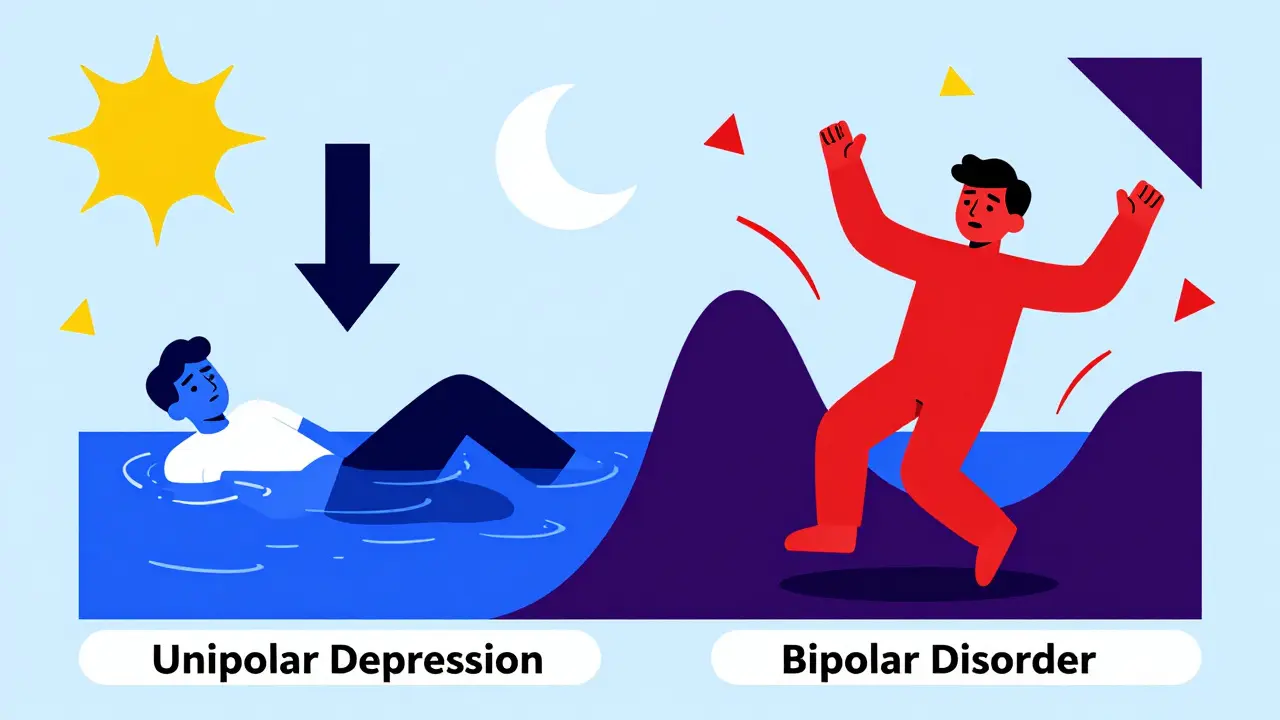
When someone feels persistently low, tired, and hopeless, it’s easy to assume they have depression. But not all depression is the same. Bipolar depression and unipolar depression look alike on the surface - both involve deep sadness, loss of energy, and trouble sleeping. Yet they’re fundamentally different conditions, and mistaking one for the other can lead to dangerous treatment mistakes.
What Exactly Is the Difference?
Unipolar depression, also called Major Depressive Disorder (MDD), means a person experiences only depressive episodes. No highs. No energy surges. No periods of reckless behavior or extreme confidence. It’s a one-way mood slide - down. Bipolar depression is different. It’s not a standalone illness. It’s the low phase of bipolar disorder. People with bipolar disorder swing between depression and mania (or hypomania). Mania means elevated mood, racing thoughts, little need for sleep, impulsive spending, or risky behavior. Hypomania is a milder version, but still noticeable and disruptive. If someone has ever had even one manic or hypomanic episode, they have bipolar disorder - even if they spend most of their time depressed. This distinction isn’t just academic. It changes everything about treatment. Giving an antidepressant to someone with bipolar depression can trigger mania, rapid cycling, or worsen their illness long-term.How Doctors Tell Them Apart
Diagnosing correctly starts with asking the right questions. Many people with bipolar disorder are misdiagnosed as having unipolar depression - sometimes for years. A 2018 study found that 37% of people with bipolar disorder were initially labeled as having unipolar depression. Doctors look for clues:- Family history: If a close relative has bipolar disorder, the risk jumps from 1-2% in the general population to 5-10%.
- Early age of onset: First depressive episodes before age 25 are more common in bipolar disorder.
- Atypical symptoms: Sleeping too much (hypersomnia), feeling heavy or numb (leaden paralysis), and intense sensitivity to rejection are more frequent in bipolar depression.
- Antidepressant response: If someone had a bad reaction to an antidepressant - like sudden agitation, impulsivity, or mania - it’s a red flag for bipolar disorder.
- Episode patterns: Rapid cycling (four or more mood episodes in a year) almost always points to bipolar disorder.
Treatment: Why One Size Doesn’t Fit All
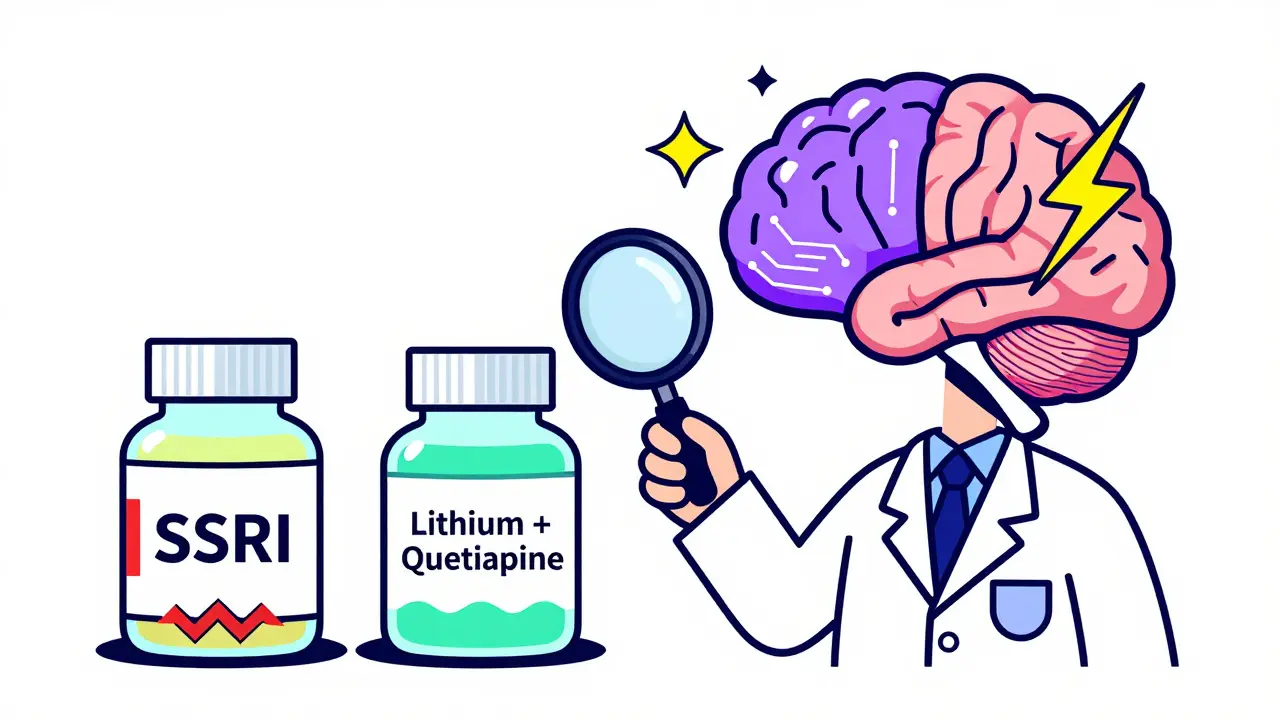
This is where things get critical. Treatment for unipolar depression is straightforward: antidepressants are the first line. SSRIs like sertraline or escitalopram help about 60-65% of people within 8-12 weeks. But for bipolar depression? Antidepressants alone are risky. The STEP-BD study showed that 76% of people with bipolar disorder who took antidepressants without a mood stabilizer had their mood destabilized - some into full-blown mania. Instead, bipolar depression treatment focuses on mood stabilizers and atypical antipsychotics:- Lithium: One of the oldest and most studied treatments. It reduces depressive symptoms in about 48% of cases, compared to 28% with placebo.
- Quetiapine (Seroquel): Approved specifically for bipolar depression. In trials, 58% responded, versus 36% on placebo.
- Lurasidone (Latuda): Also FDA-approved for bipolar depression, with strong evidence for reducing symptoms without triggering mania.
What Happens When You Get It Wrong?
Misdiagnosis isn’t just inconvenient - it’s harmful. A 2017 study found that people misdiagnosed with unipolar depression when they actually had bipolar disorder spent an average of 8.2 years on the wrong treatment. During that time, 63% had at least one hospitalization because antidepressants triggered mania. Real stories back this up. On Reddit’s r/bipolar, 78% of 1,243 respondents said they were first told they had unipolar depression. One user wrote: “I was on Prozac for seven years. My mood cycles went from two episodes a year to twelve. My psychiatrist finally noticed - I was hypomanic every time I got a prescription refill.” The financial cost is heavy too. A 2021 study estimated that misdiagnosed bipolar patients cost the healthcare system $13,247 more per year due to hospital stays and medication changes.Long-Term Management
Unipolar depression often allows for stopping medication after 6-12 months of remission - especially if it’s the first episode. Many people never have another episode. Bipolar disorder is different. It’s a lifelong condition. Stopping mood stabilizers? The relapse rate jumps to 73% within five years. With continued treatment, it drops to 37%. That’s why lithium, lamotrigine, or quetiapine are often taken indefinitely - not because the person is “broken,” but because the illness requires ongoing management.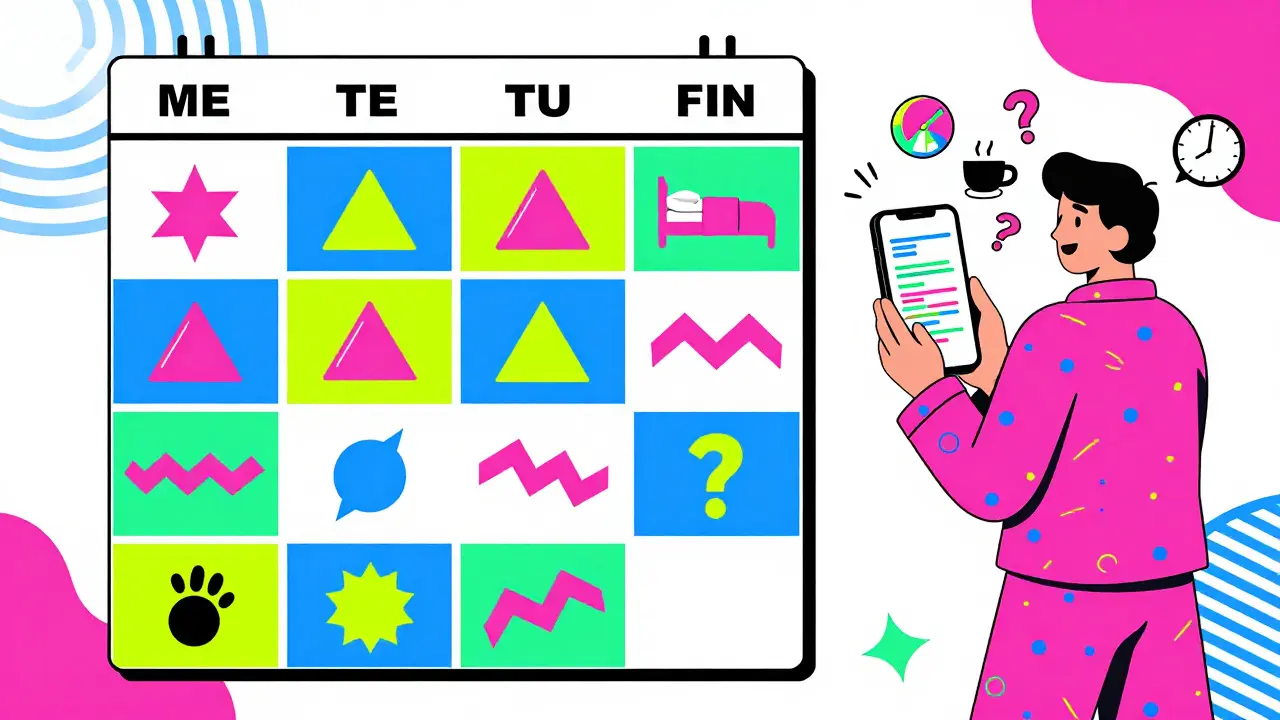
New Hope on the Horizon
Research is moving fast. In 2019, the FDA approved esketamine (Spravato) for treatment-resistant unipolar depression. It works fast - some feel better in hours. For bipolar depression, cariprazine (Vraylar) was approved the same year, with 37% of patients achieving remission in 8 weeks. Even more promising: a 2023 study in Lancet Psychiatry identified a 12-gene pattern that distinguishes bipolar from unipolar depression with 83% accuracy. Blood tests may one day help confirm diagnosis. Digital tools are also emerging. Apps that track sleep, speech patterns, and typing speed through smartphones can detect subtle mood shifts before they become full episodes.What Should You Do?
If you’ve been diagnosed with depression and:- Have a family history of bipolar disorder
- Had a bad reaction to an antidepressant
- Experienced periods of unusually high energy or impulsivity
- Have frequent mood swings
- Are still struggling after trying two or more antidepressants
Can you have bipolar disorder without ever being manic?
No. By definition, bipolar disorder requires at least one manic or hypomanic episode. If someone has only depressive episodes, they’re diagnosed with unipolar depression. However, many people don’t recognize their hypomanic episodes as abnormal. They might feel “more productive” or “more social” during those times and never mention them to a doctor. That’s why it’s critical to ask about past periods of unusually high energy, reduced sleep, or impulsive behavior.
Are antidepressants always dangerous for bipolar depression?
Not always - but they’re risky as a standalone treatment. Antidepressants can trigger mania, rapid cycling, or worsen mood instability. The American Psychiatric Association and NICE guidelines strongly advise against using them alone. However, if mood is stabilized first with lithium, quetiapine, or another mood stabilizer, antidepressants may be cautiously added for persistent depressive symptoms. Even then, they’re used sparingly and monitored closely.
How long does it take to get the right diagnosis?
On average, it takes 7 to 10 years from first symptoms to correct bipolar diagnosis. Many people see multiple doctors, try several medications, and experience multiple hospitalizations before someone connects the dots. The delay is often because depression is the most visible symptom, and manic episodes may be rare, mild, or forgotten. Screening tools like the MDQ and HCL-32 can help speed this up.
Is bipolar depression more severe than unipolar depression?
It’s not necessarily more severe - but it’s more complex. People with bipolar depression often have more intense symptoms: higher rates of psychosis, early morning waking, psychomotor slowing, and suicidal thoughts. They also cycle between extremes, which makes daily life harder to manage. The risk of suicide is higher in bipolar disorder than in unipolar depression, especially during depressive phases. But both conditions are serious and require professional care.
Can lifestyle changes help with bipolar depression?
Yes - but they’re not a replacement for medication. Regular sleep, consistent meals, avoiding alcohol, and managing stress are essential. In fact, Interpersonal and Social Rhythm Therapy (IPSRT) is built around this. Keeping a steady daily routine helps prevent mood episodes. Exercise, sunlight, and mindfulness can support treatment, but they won’t stop mania or deep depression on their own. Medication and therapy are still the foundation.

February 20, 2026 AT 21:03 PM
Depression isn’t a diagnosis. It’s a symptom. And we’re still treating it like a light switch instead of a dimmer.
Stop prescribing SSRIs like they’re aspirin.
February 21, 2026 AT 13:55 PM
Bro this is so real. In India, we just call it ‘stress’ and tell people to drink chai and pray.
No one asks if they’ve been ‘too happy’ before.
Thanks for breaking this down. 🙏
February 23, 2026 AT 06:59 AM
OMG I JUST REALIZED I HAD HYPOMANIA FOR YEARS AND THOUGHT I WAS JUST ‘PRODUCTIVE’ 😭
My therapist never asked about sleep changes or spending sprees.
So many people are missing this.
Thank you for sharing!! 💛
February 23, 2026 AT 23:25 PM
Appreciate the clarity here. A lot of docs skip the family history part.
But if your mom had bipolar and you’ve been ‘depressed’ since 19, that’s a red flag.
Not just ‘bad genes’-it’s diagnostic.
February 24, 2026 AT 15:54 PM
My cousin was on Zoloft for 6 years. Then one day he went on a 3-day road trip, bought 3 cars, and called his ex.
Turns out he was bipolar.
Now he’s on lithium and actually sleeping.
God bless this post.
February 26, 2026 AT 05:13 AM
Let’s be real-the pharmaceutical industry doesn’t want you to know bipolar is misdiagnosed 37% of the time.
SSRIs are a $12 billion market. Mood stabilizers? Not as profitable.
They train doctors to see ‘depression’ and ignore mania because it’s easier.
And the DSM-5? A joke.
They’re gaslighting an entire generation.
Read the STEP-BD study. Read it again. Then call your senator.
February 27, 2026 AT 17:52 PM
You’re not broken. You’re not lazy. You’re not ‘just depressed.’
There’s a reason you didn’t respond to meds.
There’s a reason you felt worse after starting them.
It’s not your fault.
It’s a system failure.
And you deserve better care.
Keep pushing. Keep asking. You’re not alone.
February 28, 2026 AT 01:43 AM
As an Irishman, I find it deeply concerning that American psychiatry continues to pathologize mood variation as a disease rather than a spectrum.
Our ancestors understood emotional cycles as natural.
Now we medicate people into numbness.
This is not progress. It is corporate medicine.
March 1, 2026 AT 07:46 AM
So I got diagnosed with MDD in 2018.
2020: I started dating someone and suddenly I was texting 15x a day, working 18-hour days, sleeping 3 hours.
Thought I was ‘in love.’
2022: I maxed out 3 credit cards, bought a Tesla, then cried for 3 days straight.
Turns out I was hypomanic.
Now I’m on lamotrigine.
My therapist cried when she saw my MDQ score.
Why didn’t anyone ask me about sleep?!
March 2, 2026 AT 03:56 AM
Had a friend who went from ‘depression’ to full mania after 2 years of Lexapro.
They ended up in ER with psychosis.
Now they’re stable on quetiapine.
It’s terrifying how often antidepressants are the trigger, not the cure.
March 4, 2026 AT 03:02 AM
It’s ironic that we treat depression like a singular entity when even the DSM acknowledges heterogeneity.
Yet we prescribe one-size-fits-all pharmacotherapy.
The reductionist model is not only scientifically unsound-it’s ethically negligent.
Neurobiological substrates of MDD and bipolar depression differ in prefrontal-limbic connectivity.
But we don’t image. We don’t probe. We just prescribe.
March 5, 2026 AT 17:51 PM
It is regrettable that the clinical literature continues to conflate depressive phenomenology with diagnostic taxonomy.
While the MDQ and HCL-32 demonstrate moderate sensitivity, their specificity remains insufficient.
Moreover, the reliance on self-report introduces significant recall bias.
One must question the validity of retrospective hypomania identification.
Longitudinal mood charting, validated via actigraphy and speech analytics, presents a more robust framework.
Until then, we are diagnosing shadows.
March 6, 2026 AT 04:54 AM
I’m so tired of people saying ‘just take your meds.’
You don’t know what I’ve been through.
They gave me antidepressants and I almost died.
My doctor didn’t care.
Now I’m on lithium and I’m alive.
That’s it. No more. No less.
March 8, 2026 AT 00:05 AM
Ugh I’m so over this. Like, I get it, bipolar is real.
But why do we keep acting like mania is this ‘superpower’ thing?
‘Oh I was so productive!’ No, you were reckless.
‘I didn’t need sleep!’ You were sleep-deprived and delusional.
Stop romanticizing it.
It’s not ‘creative energy’-it’s a neurological glitch.
And yeah, I’ve been there. And I’m glad I’m on meds now. 💅
March 9, 2026 AT 23:03 PM
Bro I was on Celexa for 5 years 😭
Then I got into crypto and bought a yacht 🤯
Then I cried for 3 weeks straight 🤕
Turns out I’m bipolar
Now I take Seroquel and chill
Thanks for the post 🙌
March 11, 2026 AT 00:57 AM
Look, I’ve been a therapist for 20 years.
Most of these people? They’re not bipolar.
They’re just anxious, lonely, or spiritually lost.
You think they need lithium? No. They need a hug, a job, and a purpose.
We’re over-medicalizing sadness.
And it’s making people dependent on pills instead of healing.
It’s not science. It’s convenience.
March 11, 2026 AT 16:46 PM
One must consider the ontological implications of diagnosing mood states as discrete disorders.
If depression is a symptom, and mania is its counterpart, then perhaps bipolarity is not a disease-but an expression of the human condition under modern stressors.
Are we pathologizing resilience? Or are we finally seeing the spectrum?
Perhaps the answer lies not in pharmacology, but in epistemology.
March 11, 2026 AT 18:55 PM
Just wanted to say thanks for this.
My sister was misdiagnosed for 10 years.
She’s doing so much better now.
We all need to be better at asking the right questions.