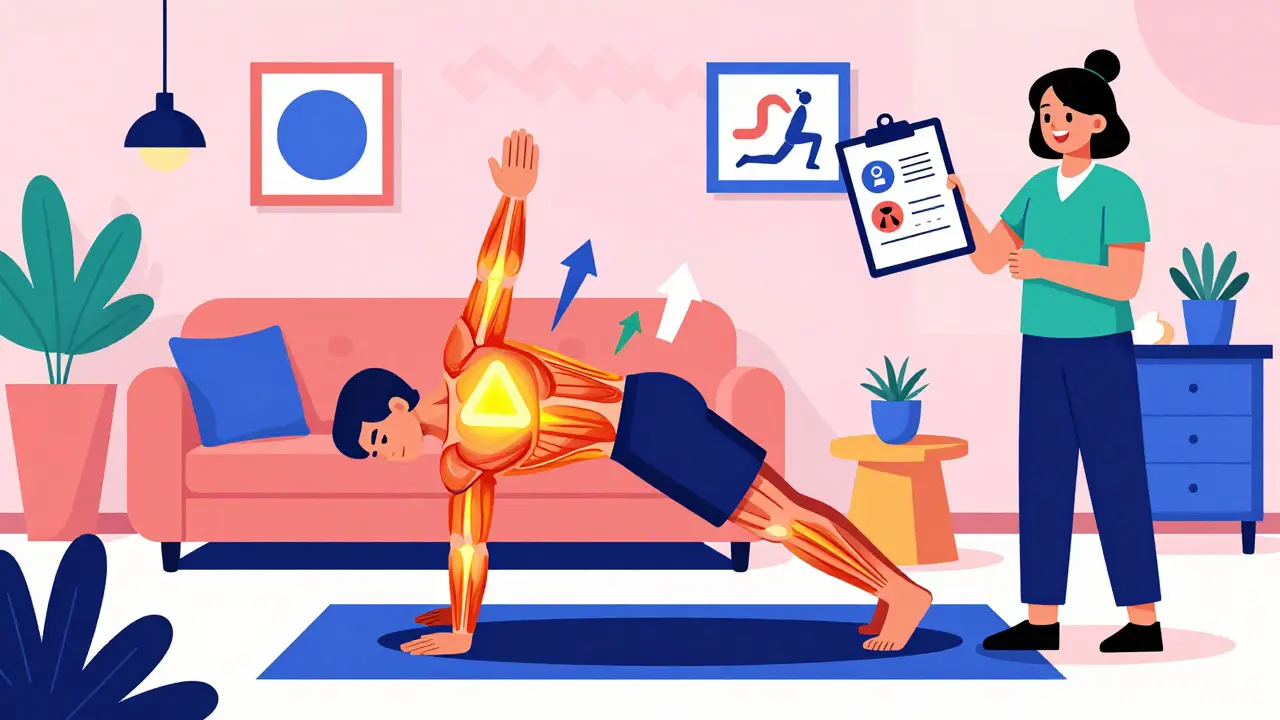
Chronic back pain isn’t just a sore back that won’t go away. It’s pain that sticks around for 12 weeks or longer, even after an injury should have healed. Around 8% of adults in the U.S. live with it, and many have tried everything-rest, OTC pills, even injections-only to feel stuck. The truth? There’s no magic fix. But there is a proven way forward: combining physical therapy, smart medication use, and daily self-management. This isn’t about quick fixes. It’s about rebuilding your body and your life, one step at a time.
Physical Therapy: The First Line of Defense
Most doctors now agree: start with movement, not pills. The American College of Physicians recommends physical therapy before any medication for chronic low back pain. Why? Because it targets the root causes-not just the symptoms.
Effective physical therapy isn’t just stretching or massage. It’s structured, science-backed movement designed around your body’s specific weaknesses. A good program includes five core elements:
- Pain tolerance assessment: Your therapist doesn’t push you to the limit. They map your pain threshold and build from there.
- Posture retraining: Slouching at your desk or leaning forward while driving? That’s adding pressure to your spine. Therapy teaches you how to stand, sit, and move with better alignment.
- Core strengthening: Your deep abdominal and spinal muscles (transverse abdominis and multifidus) are your natural back braces. Weakness here = more pain. Exercises like dead bugs and bird-dogs rebuild them slowly and safely.
- Flexibility and stretching: Tight hamstrings or hip flexors pull on your lower back. Stretching improves spinal mobility by 15-25%, according to clinical data from the Orthopedic Institute of Pennsylvania.
- Aerobic conditioning: Walking, swimming, or cycling increases blood flow to your spine by 30-40%. More oxygen and nutrients mean less inflammation and faster healing.
Studies show 78% of people see meaningful improvement with physical therapy alone. But here’s the catch: you have to keep doing the exercises at home. Those who stick with their home program have an 82% success rate. Those who don’t? Only 45% improve.
Medications: Use Them Wisely
Medications can help, but they’re not the hero-they’re the sidekick. The opioid crisis changed everything. In 2016, nearly half of chronic back pain patients got opioids. By 2024, that number dropped to 12%. Why? Because long-term opioid use doesn’t just risk addiction-it can make pain worse through a condition called opioid-induced hyperalgesia.
Here’s what actually works, step by step:
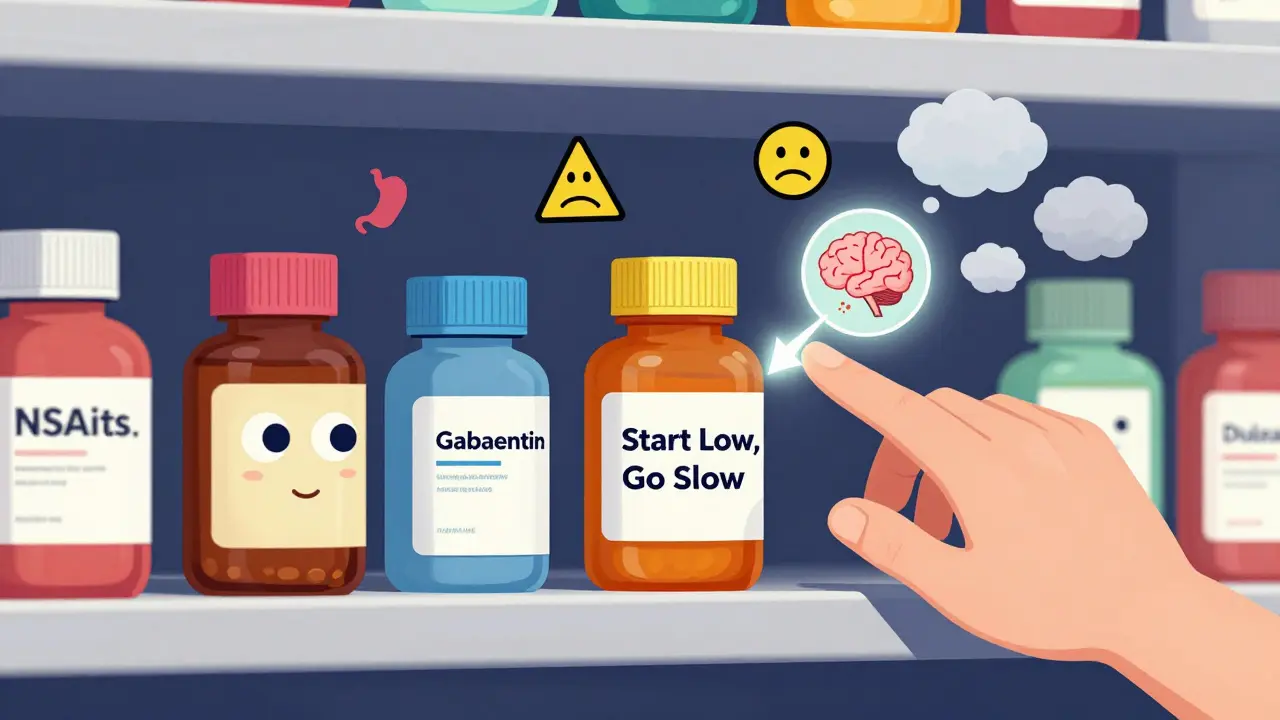
- First-line: NSAIDs-ibuprofen (400mg three times daily) or naproxen (500mg twice daily). These reduce inflammation and give 30-40% pain relief in about 65% of users. But they’re not harmless. Up to 20% develop stomach issues, ulcers, or kidney problems with long-term use.
- Second-line: Muscle relaxants and neuropathic drugs-cyclobenzaprine (5-10mg three times daily) helps with spasms, but causes drowsiness. Gabapentin (300-1200mg daily) targets nerve pain. Many report 50% relief, but brain fog is common.
- Third-line: SNRIs-duloxetine (60mg daily) is an antidepressant that also blocks pain signals. In clinical trials, it helped 45% of patients reduce pain by half. Side effects? Nausea in 25%, dizziness in 15%.
Dr. Robert Shmerling from Harvard Medical School says NSAIDs are often the go-to-but warns: “Stomach pain, ulcers, bleeding, or kidney damage can happen.” He’s not exaggerating. A 2017 review of 6,000 patients confirmed these risks.
There’s no single best drug. It’s trial and error. One person finds gabapentin too foggy. Another can’t tolerate duloxetine’s nausea. The key? Start low, go slow, and track what works-and what doesn’t.
Self-Management: Your Daily Power Move
Therapy and meds help, but they’re not enough if you don’t take charge of your own recovery. Self-management is where real change happens. It’s not about willpower. It’s about building habits that stick.
Harvard Health and UCSF both recommend structured self-management programs that take 20-30 minutes a day. These include:
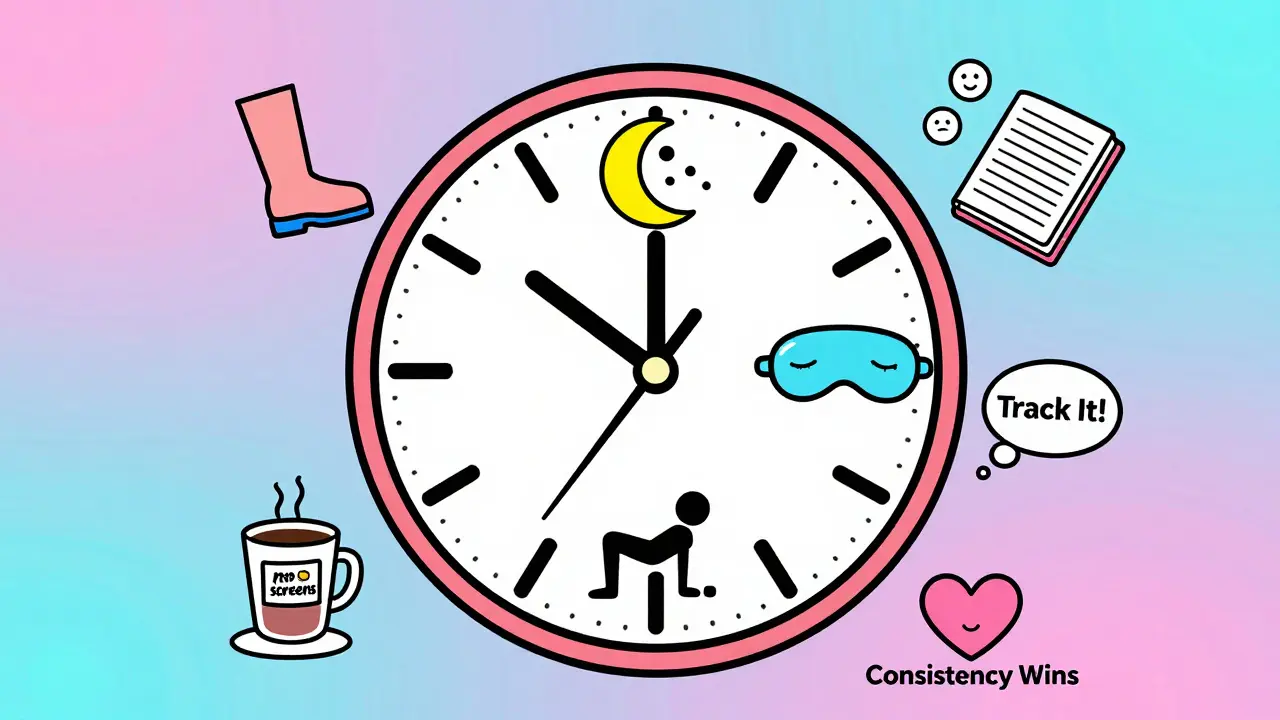
- Keeping a pain journal: Note what triggers pain, what helps, and how you feel each day. Patterns emerge over time.
- Graded activity: Don’t rest. Don’t overdo. Do a little more each day. Walking 10 minutes → 12 → 15. Small wins build confidence.
- Mind-body techniques: Deep breathing, meditation, or mindfulness reduce the brain’s pain response. Studies show these lower pain intensity by 20-30% over 8-12 weeks.
- Sleep hygiene: Poor sleep = more pain. Aim for 7-8 hours. No screens an hour before bed. Cool, dark room.
UCSF tracked 1,247 chronic pain patients. Those who stuck with self-management for 8+ weeks and had 63% adherence saw 40-50% pain reduction. The biggest factor? Consistency-not intensity.
What Works Best for Whom?
Not all back pain is the same. Your treatment should match your type:
- Mechanical pain (worse with movement, better with rest): Physical therapy shines. Improves function by 45-55%.
- Inflammatory pain (like ankylosing spondylitis): NSAIDs or biologics work better. Medication can control 50-60% of symptoms.
- Nerve-related pain (burning, tingling, shooting): Gabapentin or duloxetine help. But physical therapy still improves mobility and reduces flare-ups.
- Complex regional pain syndrome: Even the best treatments only help 30-40%. Multidisciplinary care (therapy + meds + psychology) is essential.
Here’s the bottom line: physical therapy helps most people, no matter the cause. Medications help specific symptoms. Self-management makes it all stick.
Real People, Real Results
Reddit user BackPainWarrior87 said: “Six months of PT dropped my pain from 8/10 to 3/10. But the exercises? Brutal to keep up.”
SpineSurvivor22 switched from gabapentin to duloxetine: “Gabapentin gave me 50% relief but made me feel drunk. Duloxetine? Less fog, same relief.”
Healthgrades reviews show physical therapy gets 4.2/5 stars. But 22% complain about cost-$85 per session adds up fast. Medicare only covers 20 sessions a year unless you get special approval. Private insurance varies. Some employers now offer subsidized therapy as part of wellness programs.
On Drugs.com, NSAIDs have a 6.4/10 rating. People love the fast relief. But after three months? “My stomach hates me.”
The common thread? People who succeed are the ones who don’t give up after the first setback. They adjust. They track. They keep moving.
What to Avoid
There are traps everywhere:
- Over-relying on opioids: Even short-term use can rewire your pain system. Avoid unless absolutely necessary-and only under strict supervision.
- Bed rest for more than a day or two: It weakens muscles, increases stiffness, and delays recovery.
- Ignoring mental health: Chronic pain and depression feed each other. Therapy or counseling isn’t optional-it’s part of treatment.
- Buying miracle devices: Back braces, magnetic pads, or “pain-relief” belts? Most have zero scientific backing.
The Bigger Picture
Chronic back pain is a $12.8 billion industry in the U.S. And the market is shifting. Physical therapy makes up 42% of spending. Medications, 38%. Advanced procedures like spinal stimulators? Only 20%. Why? Because the data shows: the most effective approach is the simplest.
According to the Institute for Clinical and Economic Review, combining physical therapy with smart medication use delivers 65% of the maximum possible benefit at just 40% of the cost of surgery or implants.
New research is coming fast. The NIH launched a $45 million precision medicine study in January 2024 to find out who responds best to what. UCSF is testing integrated pathways-mixing acupuncture, meds, and therapy before jumping to injections.
What’s clear? The future isn’t one treatment. It’s a personalized mix-tailored to your body, your life, your goals.
How long does physical therapy take to work for chronic back pain?
Most people start noticing small improvements in 3-4 weeks, but meaningful change usually takes 6-12 weeks. Consistency matters more than intensity. If you’re doing your home exercises daily, you’re on track. If you stop after two weeks, you won’t see lasting results.
Can I just take painkillers instead of going to physical therapy?
You can, but you’re treating the symptom, not the cause. Painkillers might make you feel better for a few days or weeks, but without strengthening your core, improving posture, or increasing mobility, the pain will likely return. Physical therapy reduces your long-term reliance on meds and helps prevent flare-ups.
Are there any back pain medications that are safe for long-term use?
NSAIDs aren’t safe for long-term daily use due to stomach, kidney, and heart risks. Duloxetine and gabapentin can be used long-term under doctor supervision, but they come with side effects like dizziness, nausea, or brain fog. The goal isn’t lifelong medication-it’s using meds as a bridge while you build strength and habits through therapy and self-management.
What if my insurance won’t cover enough physical therapy sessions?
Many insurers limit sessions-Medicare caps it at 20 per year. Ask your therapist for a home program you can do without supervision. Use free resources like the American Physical Therapy Association’s ‘Move Forward’ guides. Walk daily, stretch in the morning, do core exercises while watching TV. You don’t need a clinic to stay consistent.
Can stress make chronic back pain worse?
Absolutely. Stress tightens muscles, increases inflammation, and makes your brain more sensitive to pain signals. That’s why mindfulness, breathing exercises, and even talking to a counselor are part of effective pain management. It’s not ‘all in your head’-it’s your head influencing your body.
When should I consider an injection or surgery for chronic back pain?
Only after you’ve tried at least 3-6 months of physical therapy, self-management, and appropriate medications with no improvement. Procedures like epidural injections or spinal cord stimulators help some people-but they’re not cures. Success rates vary, and they often need repeating. Don’t rush to surgery. Most people avoid it entirely with the right combination of non-invasive approaches.
If you’re living with chronic back pain, you’re not alone. And you’re not broken. The system is designed to offer quick fixes, but real relief comes from patience, consistency, and the right mix of tools. Start with movement. Use meds wisely. Take back control of your days. That’s how you don’t just manage pain-you reclaim your life.

January 22, 2026 AT 04:08 AM
This is the exact kind of performative wellness garbage that makes me want to scream into a pillow. You think stretching and journaling fixes chronic pain? My cousin got a spinal stimulator after 7 years of this 'holistic' nonsense and now she can walk without crying. Stop pretending therapy is a magic wand when insurance won't cover real help.
And don't get me started on 'self-management'-like it's some personal failure if you can't meditate your way out of nerve damage. Wake up.
January 22, 2026 AT 04:17 AM
physical therapy works if you dont have a desk job and your spine isnt already destroyed from 15 years of bad posture and caffeine addiction
also gabapentin is a gateway drug to forgetting your own name
also why is everyone ignoring that 70 of these studies are funded by physical therapy associations
just sayin
January 23, 2026 AT 18:40 PM
so like… the body is just a machine? if you fix the gears it stops hurting? what about the soul? what about the trauma? what about the fact that my back hurts because i cried too much in college and never processed it?
you’re all just shoveling bandaids on a hemorrhage and calling it ‘science’
also i tried bird-dogs and i cried
not because of pain
because i remembered my dad never hugged me right
January 24, 2026 AT 07:06 AM
lol the fact that someone actually thinks duloxetine is a ‘third-line’ treatment and not a last-resort emotional tourniquet is wild
my therapist told me to ‘retrain my brain’ like it’s a glitchy iPhone
also i spent $1,200 on PT and got a pamphlet and a pat on the head
the real treatment? antidepressants and silence
and maybe a new job
and maybe not living in a city that smells like regret and wet concrete
January 25, 2026 AT 18:48 PM
America’s healthcare system is a scam and you’re all just polishing the coffin with yoga mats.
PT costs $90 a session? Try getting that covered when you’re on Medicaid.
Meanwhile, my cousin got a $50k spinal implant and now he’s back on the golf course.
Stop pretending this is about health. It’s about who can afford to suffer slowly.
January 27, 2026 AT 05:16 AM
I’ve had chronic pain for 11 years. PT helped me get off opioids. Not because it was perfect. But because it gave me back control.
Some days I do 2 exercises. Some days I do 10. Some days I cry on the floor.
But I never stopped.
That’s the secret. Not the exercises. Not the pills.
Just not quitting.
January 27, 2026 AT 15:48 PM
everyone talks about PT like its the answer but what if you cant even stand up to do a bird dog
i tried and i fell over and my wife laughed and now i hate her
also gabapentin made me dream i was a potato
so now i just lay down and wait for the pain to get bored
January 28, 2026 AT 05:06 AM
Physical therapy doesn’t work for 55% of people. Stop pretending it’s a cure-all.
Medications are vilified because Big Pharma is evil.
But so is Big PT.
And Big Wellness.
And Big Reddit.
Everyone’s selling hope. No one’s selling truth.
January 29, 2026 AT 16:22 PM
so i tried mindfulness and now i’m just aware of my pain… and also the fact that my cat is judging me
and also that my landlord is a demon
and also that i’m 37 and still live in a studio with a mattress on the floor
so yeah
mindfulness didn’t fix my back
but it did make me really good at crying quietly
😅
January 30, 2026 AT 22:02 PM
I did everything right. PT. Journaling. Walking. Sleep hygiene. Meditation. Duloxetine. Even acupuncture. And I still wake up every morning like my spine is being crushed by a giant, tired elephant.
So now I just wear a heated back brace and scream into a pillow while drinking cold brew.
It’s not healing.
It’s survival.
And I’m proud of it.
January 31, 2026 AT 00:52 AM
While the data presented is methodologically sound and grounded in peer-reviewed literature, I must emphasize the critical importance of longitudinal adherence to therapeutic regimens.
Furthermore, the socioeconomic disparities in access to physical therapy cannot be overstated, particularly in underserved communities where transportation and insurance limitations create systemic barriers to care.
Recommendations must be contextualized within structural inequities, not merely individual responsibility.
February 1, 2026 AT 07:08 AM
Let’s be real: if you’re not doing your PT exercises like your life depends on it, you’re wasting everyone’s time-including your own.
It’s not magic. It’s not a miracle. It’s a daily grind.
And if you’re too tired, too broke, too broken to do it? That’s not the fault of the system.
That’s the fault of the lie that pain is something you can outsource.
You have to show up.
Even when you hate yourself.
Especially then.
February 2, 2026 AT 00:10 AM
According to the 2023 National Health Interview Survey, chronic low back pain prevalence is significantly higher among individuals with annual household incomes under $30,000. Furthermore, the American Physical Therapy Association’s reimbursement model remains inconsistent across state lines, creating de facto rationing of care.
This article, while well-intentioned, fundamentally misrepresents chronic pain as an individual behavioral problem rather than a structural public health crisis.
February 2, 2026 AT 06:39 AM
Hey-I just want to say thank you for writing this. I’ve been in pain for 9 years. I tried everything. Opioids. Injections. Chiropractors. Acupuncture. Even a weird crystal thing from Etsy.
Then I found a PT who didn’t just tell me to stretch. She asked me how I felt when I woke up. When I walked to the fridge. When I hugged my kid.
She made me a plan that fit my life.
Not a perfect life.
Just my life.
And now? I can play with my daughter without wincing.
It’s not gone.
But I’m not broken anymore.
You’re not alone.
February 2, 2026 AT 18:46 PM
I’ve been doing PT for six months. I still hurt. But now I know why.
My hips are tight.
My core is weak.
My posture is terrible.
And I’m not alone in any of that.
It’s not a moral failing.
It’s just biology.
And biology can be rewritten.
Slowly.
February 4, 2026 AT 00:49 AM
My mom had back pain for 20 years. She didn’t do PT. She didn’t take meds. She just started walking every morning with her dog.
10 minutes. Then 15. Then 30.
Now she hikes.
Not because of science.
Because she refused to stop moving.
That’s the real secret.
Not the exercises.
Just… not stopping.