
Switching from a brand-name medication to a generic version for a chronic condition can feel scary. You’ve been on the same pill for years. Your body knows it. Your symptoms are stable. Then your pharmacy says, "We’re switching you to the generic." Suddenly, you’re wondering: Will this still work? Could I feel worse? Is this just a cost-cutting trick?
The truth is, for most people, generics work just as well - and save a lot of money. But it’s not always simple. If you’re managing diabetes, high blood pressure, thyroid disease, depression, or another long-term condition, understanding how to make this switch safely matters more than you might think.
What Exactly Are Maintenance Medications?
Maintenance medications are the drugs you take every day - or every week - to keep a chronic condition under control. They’re not for quick fixes. They’re for long-term stability. Think of them like brushing your teeth: you don’t stop just because your gums don’t hurt today.
Common examples include:
- Atorvastatin (for high cholesterol)
- Levothyroxine (for hypothyroidism)
- Metformin (for type 2 diabetes)
- lisinopril or amlodipine (for high blood pressure)
- Fluticasone inhalers (for asthma)
- Sertraline or fluoxetine (for depression)
These aren’t occasional pills. They’re the backbone of daily health for millions. And here’s the kicker: 90% of all prescriptions filled in the U.S. are for generics, and about 85% of maintenance meds are generic. That’s not a fluke - it’s because they work.
Why Generics Are Just as Effective (Most of the Time)
The FDA doesn’t approve generics lightly. To be sold as a generic, a drug must have the same active ingredient, strength, dosage form, and route of administration as the brand-name version. That means if your brand-name pill has 10 mg of atorvastatin, so does the generic. No less. No more.
But here’s what most people don’t realize: the FDA also requires generics to be bioequivalent. That means the amount of drug entering your bloodstream, and how fast it gets there, must be within 80-125% of the brand-name version. In plain terms: your body absorbs it the same way.
Studies show that patients on generic maintenance meds have 12-15% higher adherence rates than those on brand-name versions - simply because they can afford them. And higher adherence means 23% fewer hospitalizations for complications like heart attacks, strokes, or diabetic emergencies.
For most conditions - high blood pressure, cholesterol, depression, arthritis - generics are just as effective. The American College of Physicians says switching to generics should be standard practice. And for good reason: a patient with diabetes, hypertension, and high cholesterol could save over $1,200 a year just by using generics.
When Generics Can Cause Problems
Not all drugs are created equal when it comes to switching. There’s a small group of medications where even tiny changes in how your body absorbs the drug can matter - a lot.
These are called narrow therapeutic index (NTI) drugs. A little too much? You risk side effects. A little too little? Your condition flares up. Examples include:
- Levothyroxine (thyroid hormone)
- Warfarin (blood thinner)
- Phenytoin (seizure control)
For levothyroxine, studies show 5-8% of patients have noticeable changes in their TSH levels when switching between different generic manufacturers. Why? Because the inactive ingredients - like fillers, dyes, or coatings - can slightly alter how the pill breaks down in your gut. For someone with thyroid disease, even a small shift can mean fatigue, weight gain, or heart palpitations.
Same with warfarin. A slight change in absorption can throw off your INR levels, increasing the risk of clots or bleeding. That’s why many doctors recommend sticking with the same generic manufacturer - or even the brand - if you’re stable.
And for some chronic conditions, like multiple sclerosis, patients report increased symptom fluctuations after switching to generic disease-modifying therapies. But here’s the catch: neurologists often find these changes line up with natural disease progression, not the medication switch. Still, if you feel off, speak up.
What Patients Are Really Saying
Online forums are full of stories. On Reddit, a thread about switching from Synthroid (brand) to generic levothyroxine got over 140 comments. Sixty-three percent said they felt worse - tired, anxious, weight gain. Thirty-seven percent said they felt fine.
A Drugs.com survey of 2,450 people taking maintenance meds found:
- 41% noticed no difference at all
- 32% said they felt better because they could finally afford their meds
- 19% had minor side effects (headache, nausea) that faded in a few weeks
- 8% stopped the generic because they believed it didn’t work
Here’s what’s telling: those who stopped were often the ones who didn’t get proper guidance. They switched cold turkey, didn’t track symptoms, and assumed the problem was the drug - not the transition.
Meanwhile, low-income seniors on Medicare say generics are the only reason they can keep taking their meds. One focus group participant said, "Without generics, I’d be choosing between my blood pressure pill and my groceries."
How to Switch Safely
Don’t panic. Don’t refuse. But don’t just accept the switch without a plan.
Here’s how to do it right:
- Ask your doctor if your medication is on the NTI list. If it’s levothyroxine, warfarin, or phenytoin, ask if you should stay on the same version.
- Check your pharmacy. Ask which generic manufacturer they’re switching you to. If you’ve been on one brand of generic before, ask if they can keep you on the same one.
- Give yourself 30 days. Your body needs time to adjust. Don’t judge effectiveness after one week.
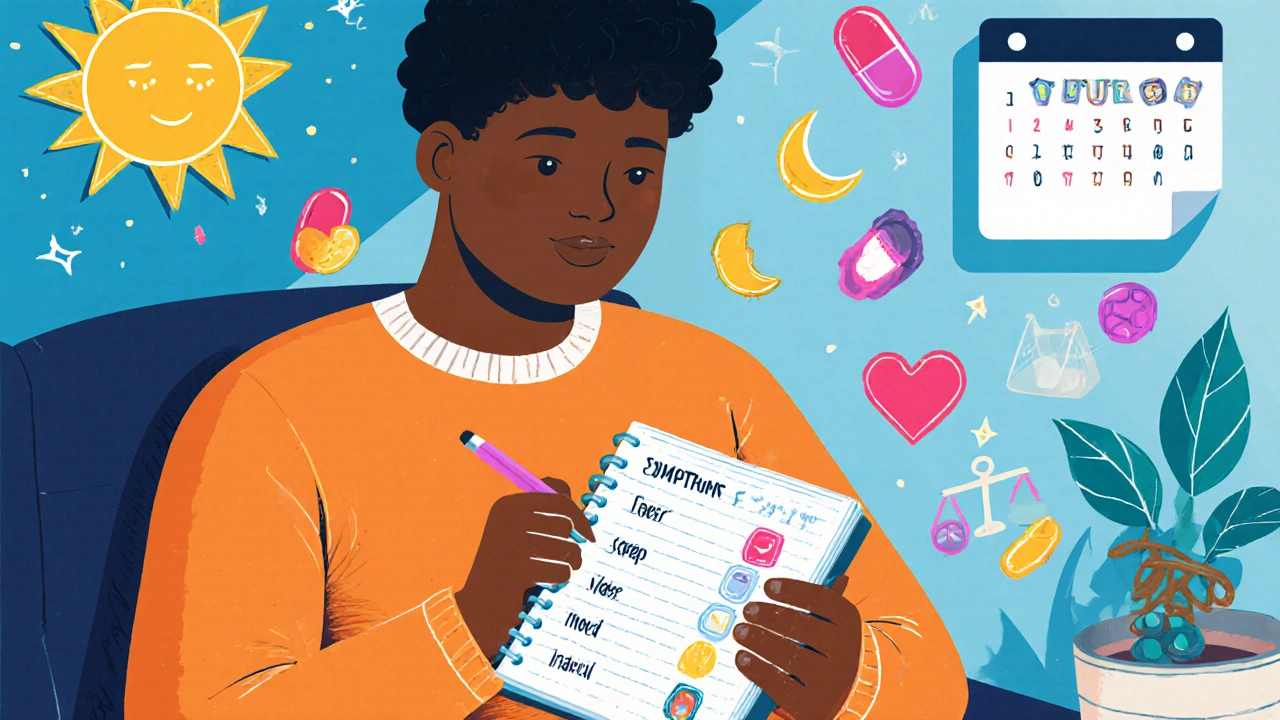
- Track your symptoms. Use a notebook or the FDA’s free Medication Tracker app. Note energy levels, sleep, mood, weight, or any new symptoms.
- Get a blood test (if applicable). For thyroid, kidney, or heart meds, ask your doctor to check levels 4-6 weeks after switching.
- Don’t mix generics. If you start on one generic manufacturer, stick with it. Switching between different generics (even for the same drug) can cause instability.
Pharmacists are your allies here. They know which generics are stocked, which ones patients report issues with, and which manufacturers have the most consistent quality. Ask them.

Insurance, Cost, and What You Can Do
Most insurance plans - including Medicare Part D - automatically prefer generics. They’ll cover them at a lower copay. If you ask for the brand-name version, you’ll pay more - often a lot more.
For example:
- Lipitor (atorvastatin): $378 for a 30-day supply (brand) vs. $0.99 (generic)
- Lantus (insulin): $345 (brand) vs. $98 (authorized generic)
The Inflation Reduction Act now caps insulin costs at $35/month for Medicare patients. That’s helped push more people toward generics and biosimilars.
If your plan denies a brand-name request, you can appeal - but approval rates are low (only 14%). You’ll need proof you tried at least two generics and had a clear reaction. Most doctors won’t fight for a brand unless there’s documented failure.
What’s Changing in 2025
The FDA approved 79 new generic maintenance drugs in the first half of 2023 alone - including generics for Jardiance (diabetes) and Entresto (heart failure). More patents are expiring. By 2026, Eliquis (a blood thinner) will go generic, potentially saving billions.
But there’s a warning: fewer companies make generics now than 10 years ago. In 2010, an average drug had 15 generic makers. Now, it’s down to 8. That means if one factory has a problem, shortages can happen. The FDA is tightening inspections, but supply chain risks remain.
Some states now require pharmacies to stick with the same generic manufacturer across refills - a practice called "consistent substitution." That’s a good thing. It reduces variability.
Final Thoughts: It’s Not About Brand - It’s About Consistency
Generics aren’t "cheap versions." They’re FDA-approved copies that work the same way for most people. The savings are real. The benefits are real. The fear? Often, it’s based on myths or isolated experiences.
If you’re stable on a brand-name drug, and your doctor says it’s safe to switch, go for it. But if you’re on a narrow therapeutic index drug - or you’ve had bad reactions before - don’t rush. Talk to your pharmacist. Track your symptoms. Get blood work done.
For the vast majority of people managing chronic conditions, generics aren’t a compromise. They’re the smart, safe, affordable way to stay healthy - for years to come.

November 11, 2025 AT 03:47 AM
generic levothyroxine gave me brain fog for 3 weeks. switched back to synthroid. worth the extra cash.
November 12, 2025 AT 12:16 PM
I get why people are scared. I was too. But after 6 months on generic metformin, my A1C is lower and I’m not broke. It’s not magic, but it works.
November 14, 2025 AT 04:12 AM
In India, generics are the only option and we’ve been using them for decades without issue. The fear is mostly western, fueled by pharma ads. If your body reacts badly, sure, switch back-but don’t assume all generics are trash. Many are made in FDA-approved plants in the US or EU. I’ve seen Indian-made atorvastatin that’s identical to the brand. It’s about the manufacturer, not the word 'generic'.
November 15, 2025 AT 09:56 AM
I switched my mom to generic lisinopril last year. She’s 72, on Medicare, and was skipping doses because it cost $120. Now she takes it daily. Her BP is better. No side effects. Sometimes the system sucks, but generics fix that.
November 16, 2025 AT 14:19 PM
You’re all missing the point. The FDA bioequivalence range is 80-125%. That’s a 45% swing. That’s not 'the same'. That’s a gamble. If your drug has a narrow therapeutic index, you’re playing Russian roulette with your health. And no, your 'feelings' don't count if your labs are normal. Science > anecdotes.
November 18, 2025 AT 08:41 AM
Generics aren’t the enemy. Fear is. We treat pills like sacred relics instead of tools. If you’re stable on brand, fine. But if you’re struggling to afford it? That’s the real crisis. A pill that saves your life but costs your rent isn’t medicine-it’s extortion.
November 19, 2025 AT 17:46 PM
so you’re telling me the $0.99 pill is just as good as the $378 one? wow. i’m so relieved. guess i’ll stop going to the doctor and just eat more kale.
November 19, 2025 AT 21:34 PM
The 12-15% higher adherence rate? That’s not because generics work better. It’s because people who can’t afford the brand take it more often. That’s not a win-it’s a failure of the system. Stop praising generics as if they’re a solution. They’re a Band-Aid on a hemorrhage.
November 21, 2025 AT 00:51 AM
AMERICA NEEDS TO STOP LETTING FOREIGN FACTORIES MAKE OUR MEDS. IF YOU’RE TAKING A GENERIC MADE IN INDIA OR CHINA, YOU’RE RISKING YOUR LIFE. THE FDA ISN’T WATCHING. I’D RATHER PAY MORE AND KNOW IT’S MADE IN TEXAS.
November 22, 2025 AT 15:33 PM
I’m a pharmacist. I’ve seen it all. If someone says they feel worse on generic levothyroxine, I check the manufacturer. If it’s Teva or Mylan, I switch them to the one they were on before. Consistency > brand. And yes, I’ve had patients cry because they couldn’t afford their meds. Generics aren’t perfect-but they’re the only thing keeping millions alive.
November 23, 2025 AT 02:20 AM
took the generic for my anxiety med. felt weird for a week. then fine. saved $200/mo. no regrets.
November 23, 2025 AT 12:27 PM
The article claims generics are 'just as effective'-but the FDA’s bioequivalence standard allows for a 25% variation in absorption. That’s not 'just as effective.' That’s statistically significant variability. You are misinforming the public by implying equivalence where none is guaranteed.
November 24, 2025 AT 22:15 PM
The real issue isn’t generics. It’s that 80% of Americans can’t afford even the generic. This whole debate is a distraction. Fix healthcare. Don’t praise pills that let you live on a dime.
November 26, 2025 AT 13:34 PM
i switched to generic synthroid and felt like a zombie for a month. my doctor said 'it's fine' and didn't check my TSH. dumb.
November 27, 2025 AT 02:10 AM
You know what’s worse than a bad generic? A doctor who won’t listen. I’ve been on the same generic for three years. My TSH is perfect. But when I asked to stick with the same manufacturer, they laughed. 'It’s all the same,' they said. It’s not. And I’m not just some data point.