Drug-Induced Lupus Symptom Checker
Select Your Symptoms
Check all that apply to you currently.Ready to Analyze
Select your symptoms from the list and click analyze to see how they correlate with Drug-Induced Lupus profiles.
Imagine feeling perfectly fine one month, then waking up the next with severe joint pain, unexplained fever, and crushing fatigue. You might assume you’ve caught a bad flu or are just getting older. But if you’re taking certain medications for blood pressure, heart rhythm, or acne, your body might be reacting to those drugs in a specific way. This condition is known as Drug-Induced Lupus, a temporary autoimmune reaction triggered by pharmaceutical agents that mimics systemic lupus erythematosus (SLE) but usually resolves once the medication is stopped.
Unlike classic lupus, which is a chronic, lifelong disease affecting millions worldwide, drug-induced lupus (DIL) is reversible. In fact, about 80% to 90% of patients see their symptoms disappear completely within weeks to months after discontinuing the offending drug. The key lies in recognizing the signs early, understanding which medications carry the highest risk, and knowing exactly what tests to request from your doctor.
Recognizing the Signs: How Drug-Induced Lupus Presents
The symptoms of DIL can be vague at first, often leading to misdiagnosis. Many patients spend months visiting different specialists before the connection to their medication is made. The most common complaints include muscle pain (myalgia), which affects 75% to 85% of cases, and joint pain with swelling (arthritis), seen in 65% to 75% of patients. Fatigue is also a major player, reported by 80% to 90% of individuals with this condition.
Beyond general aches, look out for these specific indicators:
- Fever: Unexplained low-grade fevers occur in 50% to 60% of cases.
- Serositis: Inflammation of the linings around organs. This includes pleuritis (pain when breathing due to lung lining inflammation) and pericarditis (chest pain from heart lining inflammation), affecting 25% to 35% of patients.
- Weight Loss: Unintended weight loss happens in 30% to 40% of cases.
- Skin Rashes: Unlike classic lupus, the butterfly-shaped malar rash is rare in DIL (only 10% to 15% of cases). Photosensitivity (skin sensitivity to sunlight) is slightly more common, appearing in 20% to 30% of patients.
What’s reassuring is that major organ damage is uncommon. Kidney disease affects fewer than 5% of DIL patients, compared to 30% to 50% in classic SLE. Similarly, central nervous system involvement-like seizures or psychosis-is rare, occurring in less than 3% of cases. If you have kidney issues or neurological symptoms alongside lupus-like signs, it is much more likely to be idiopathic SLE rather than drug-induced.
Which Medications Trigger Drug-Induced Lupus?
Not all drugs cause this reaction. While over 100 medications have been linked to DIL, only a handful account for the majority of cases. Knowing your medication history is crucial because DIL typically develops after 3 to 6 months of continuous use, though it can take anywhere from 3 weeks to 24 months.
| Medication Class | Specific Drugs | Risk Level / Incidence | Primary Use |
|---|---|---|---|
| Antiarrhythmics | Procainamide | High (Up to 30% with long-term use) | Heart rhythm control |
| Antihypertensives | Hydralazine | Moderate-High (5% - 10%) | Blood pressure management |
| Antibiotics | Minocycline | Low-Moderate (1% - 3%) | Acne treatment |
| TNF-alpha Inhibitors | Infliximab, Etanercept | Low (1% - 3%) | Autoimmune diseases, cancer |
| Immune Checkpoint Inhibitors | Pembrolizumab | Very Low (< 2%) | Cancer immunotherapy |
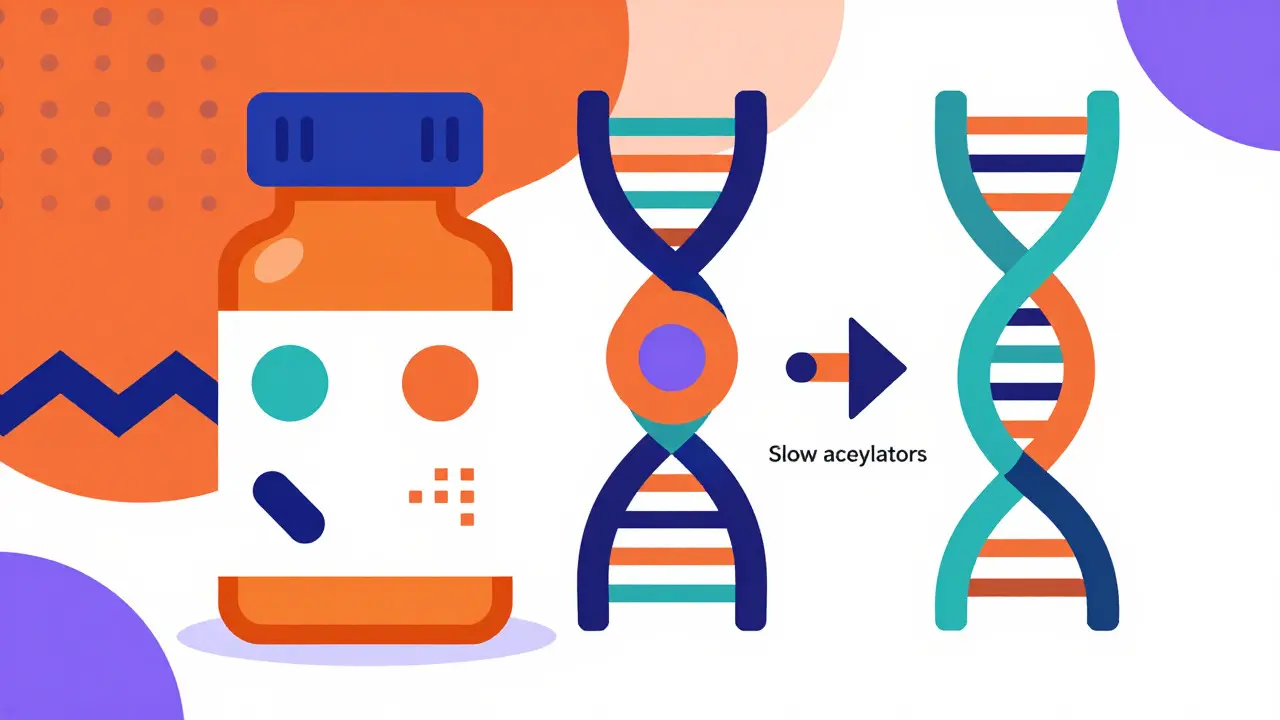
Procainamide carries the highest risk, with up to 30% of patients developing DIL after prolonged use. Hydralazine follows closely, responsible for 5% to 10% of cases among users. Interestingly, genetic factors play a huge role here. People who are "slow acetylators"-meaning their bodies break down certain drugs slowly due to variations in the NAT2 gene-are 4.7 times more likely to develop hydralazine-induced lupus. This is why some newer guidelines suggest pharmacogenetic testing before starting high-risk medications.
Diagnosis: Blood Tests That Reveal the Truth
If you suspect DIL, your doctor will need to distinguish it from classic SLE and other inflammatory conditions. The diagnostic process relies heavily on blood work and a detailed review of your medication timeline.
The first step is an Antinuclear Antibody (ANA) test. Over 95% of DIL patients test positive for ANA. However, since ANA can be positive in many conditions, further testing is required. The gold standard marker for DIL is the Anti-Histone Antibody. Approximately 75% to 90% of DIL patients have these antibodies, especially those caused by hydralazine or procainamide. In contrast, only 50% to 70% of classic SLE patients have anti-histone antibodies.
Conversely, Anti-dsDNA Antibodies are rarely found in DIL (less than 10% of cases) but are present in 60% to 70% of SLE patients. Their absence strongly points toward a drug-induced cause. Other markers like Erythrocyte Sedimentation Rate (ESR) and C-Reactive Protein (CRP) may be elevated, indicating general inflammation, but they are not specific to DIL.
Dr. Robert Phillips, a rheumatologist at Johns Hopkins University, emphasizes that "the single most diagnostic clue for DIL is the temporal relationship between medication initiation and symptom onset, coupled with resolution after discontinuation." If you started a new drug three to six months ago and now have these symptoms, mention it explicitly to your specialist.
Recovery and Treatment Strategies
The good news? DIL is largely self-limiting. The primary treatment is simply stopping the causative medication. Once the drug is removed from your system, the immune system usually calms down on its own.
Here is what the recovery timeline typically looks like:
- Immediate Discontinuation: Your doctor will switch you to an alternative medication that does not carry DIL risk. For example, if hydralazine caused the issue, they might switch you to another blood pressure medication like an ACE inhibitor.
- First 4 Weeks: About 80% of patients experience significant improvement in symptoms within the first month. Joint pain and fatigue often decrease noticeably.
- 2 to 12 Weeks: Most patients achieve full resolution. By 12 weeks, 95% of people are symptom-free.
However, stopping the drug isn’t always enough for immediate relief. If symptoms are severe, doctors may prescribe:
- NSAIDs: Nonsteroidal anti-inflammatory drugs like ibuprofen or naproxen help manage joint pain and inflammation in 60% to 70% of mild cases.
- Corticosteroids: For moderate cases, a short course of low-dose prednisone (5-10 mg daily for 4-8 weeks) is effective in 85% to 90% of patients.
- Immunosuppressants: Rarely needed, but drugs like azathioprine or methotrexate may be used if symptoms persist despite steroid treatment.
It is important to note that while symptoms resolve quickly, the autoantibodies (like ANA and anti-histone) can remain in your blood for months or even years after the drug is stopped. Do not panic if follow-up tests still show positivity; clinical symptoms matter more than lab results in determining recovery.
Prevention and Future Outlook
As medical treatments evolve, so do the causes of DIL. Historically, hydralazine and procainamide were the main culprits. Today, biologic therapies like TNF-alpha inhibitors (used for arthritis and Crohn’s disease) and immune checkpoint inhibitors (used in cancer treatment) are emerging causes. Since 2015, TNF inhibitors have accounted for 12% to 15% of new DIL cases.
To prevent DIL, stay informed about your medications. If you are prescribed a high-risk drug, ask your doctor about your personal risk factors, such as age (over 50 increases risk) and genetic predisposition. Regular monitoring for symptoms like joint pain or unexplained fever during the first year of treatment can catch the issue early.
Research is also advancing. New studies are looking into microRNA profiles that could predict who is at risk before symptoms start. Additionally, targeted immunomodulators are being developed to allow patients to continue necessary life-saving drugs without triggering an autoimmune response. For now, awareness and timely diagnosis remain the best tools we have.
How long does it take for drug-induced lupus to go away?
Most patients see significant improvement within 4 weeks of stopping the offending medication. Complete resolution typically occurs within 2 to 12 weeks, with 95% of patients fully recovering by the end of the third month.
Can drug-induced lupus become permanent?
In rare cases, if the medication is not identified and stopped, symptoms can persist. However, even in these instances, the condition is generally manageable. True progression to chronic systemic lupus erythematosus (SLE) is extremely uncommon but has been reported in less than 1% of cases.
What is the difference between drug-induced lupus and regular lupus?
Drug-induced lupus is triggered by medications and is reversible upon stopping the drug. It rarely affects kidneys or the brain. Regular lupus (SLE) is a chronic autoimmune disease, often affects women of childbearing age, frequently involves kidney and neurological systems, and requires long-term management.
Which blood test confirms drug-induced lupus?
The presence of Anti-Histone Antibodies is the strongest indicator, found in 75-90% of DIL cases. A positive Antinuclear Antibody (ANA) test is also common (>95%), but the absence of Anti-dsDNA antibodies helps distinguish it from classic SLE.
Does everyone taking hydralazine get lupus?
No. Only about 5% to 10% of people taking hydralazine develop drug-induced lupus. Risk is higher in older adults and those who are slow acetylators due to genetic factors in how their liver processes the drug.