Running out of a critical medication is stressful enough without the added confusion of not knowing if it’s actually available. If you are a healthcare provider, a pharmacist, or even a patient managing chronic conditions, checking the official FDA drug shortage database is your first line of defense against treatment delays. This isn't just a list; it is the primary federal resource for tracking supply chain disruptions in the United States.
The landscape of drug availability has changed dramatically. Since 2010, drug shortages have increased by 300%, according to the FDA's own economic analysis. As of mid-2024, there were nearly 300 active shortages, mostly affecting generic sterile injectables. Knowing how to navigate this data quickly can mean the difference between uninterrupted care and scrambling for alternatives.
Understanding the FDA Drug Shortage Database
The FDA Drug Shortage Database is an official, publicly accessible tool maintained by the Center for Drug Evaluation and Research (CDER) that tracks current and resolved medication shortages nationwide. It was formalized under the Strategic Plan for Preventing and Mitigating Drug Shortages published in December 2019. The public-facing data catalog went live on February 25, 2021.
This database serves a specific purpose: transparency. Under the Food and Drug Administration Safety and Innovation Act (FDASIA) of 2012, manufacturers are legally required to report shortages. Failure to do so can result in penalties up to $10,000 per day. This legal mandate ensures that the data you see is backed by regulatory authority, making it the "gold standard" for verification, as noted by Dr. Erin Fox, Senior Director of Drug Information Services at University of Utah Health.
However, it is crucial to understand what qualifies as a "shortage" here. The FDA only lists products where demand or projected demand exceeds supply on a nationwide level. If you are experiencing a local stockout at your pharmacy but the national supply is fine, it might not appear here. This distinction is vital for setting realistic expectations when you search.
How to Access the Database: Web and Mobile Options
You have two main ways to access this information: the web interface and the mobile application. Both are free and do not require registration for basic viewing.
- Web Interface: Visit the primary portal at
www.accessdata.fda.gov/scripts/drugshortages/default.cfm. This site is updated daily with new and resolved shortages. It provides comprehensive details including National Drug Code (NDC) numbers, manufacturer names, and estimated duration. - Mobile App: Download the "FDA Drug Shortages" app, launched in September 2022. Available on iOS (12.0+) and Android (8.0+), it has been downloaded over 150,000 times. It offers push notifications for critical shortages and allows you to search by generic name or therapeutic category.
For those who prefer raw data, a machine-readable dataset is also available on data.gov, updated weekly. This is particularly useful for hospital IT departments integrating shortage alerts into their electronic health records (EHR).
Step-by-Step: Checking Medication Availability
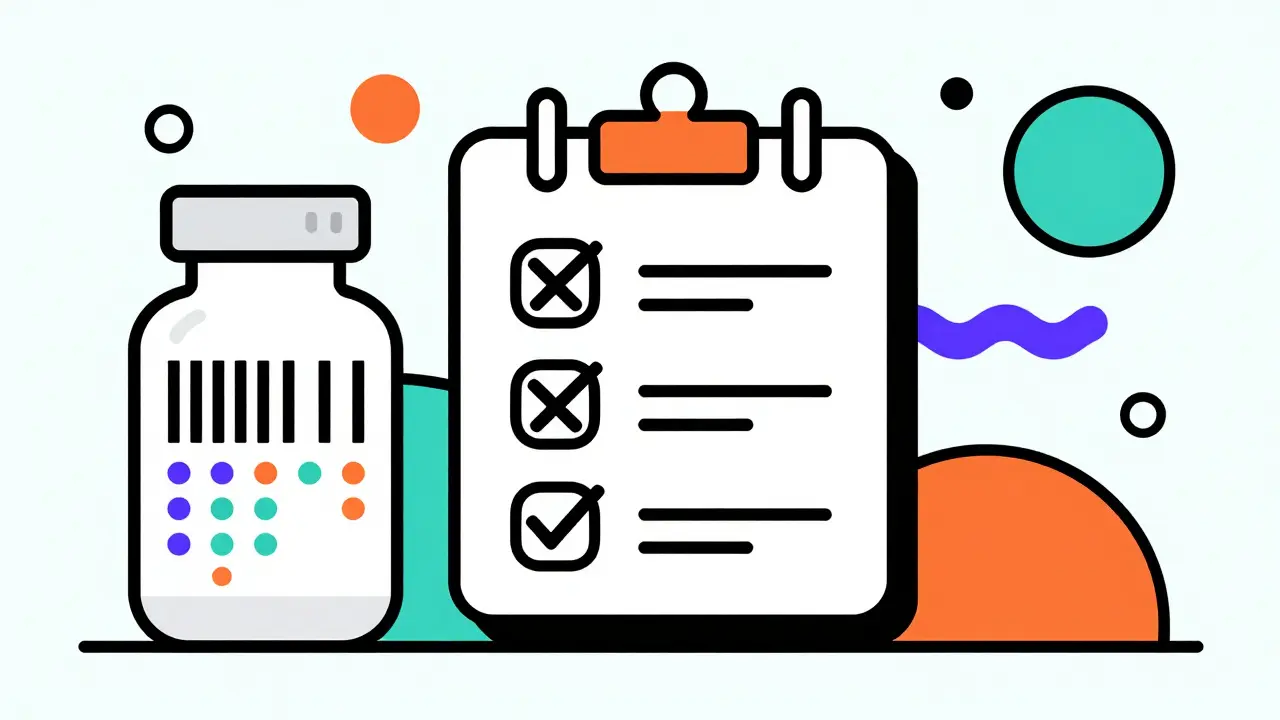
Finding the right information requires precision. A common mistake is searching for a brand name when the shortage applies only to a specific generic formulation. Here is the recommended workflow used by pharmacists:
- Search by Generic Name or Active Ingredient: Start broad. Enter the non-proprietary name of the drug. This will show you all variations currently flagged.
- Verify the NDC Number: This is the most critical step. According to FDA data, 62% of shortages impact only certain formulations (e.g., 500mg tablets but not 250mg capsules). Check the National Drug Code (NDC) on your prescription bottle against the NDCs listed in the database. If they match, you are dealing with a confirmed shortage.
- Check the "Reason for Shortage": The database categorizes reasons, with manufacturing and quality issues accounting for 68.3% of cases. Understanding the root cause helps you predict if alternative brands might also be affected. For example, if the issue is a raw material shortage, multiple manufacturers using that same ingredient may soon report shortages.
- Review Extended Use Dates: Some drugs have extended use dates approved during shortages. You can find this information via the separate "Search List of Extended Use Dates" page linked from the main dashboard. About 7% of listed products fall into this category.
- Interpret Status Correctly: Be careful with the "Resolved" status. In FDA terms, "resolved" means supply currently meets demand. It does not necessarily mean inventory levels have returned to pre-shortage norms. A sudden spike in demand could trigger a new shortage quickly.
FDA vs. ASHP: Which Resource Should You Trust?
Many healthcare professionals cross-reference the FDA database with the American Society of Health-System Pharmacists (ASHP) Drug Shortages resource. While both are valuable, they serve different roles.
| Feature | FDA Database | ASHP Resource |
|---|---|---|
| Scope | Nationwide shortages only | Includes localized/temporary issues |
| Data Coverage | ~280-320 active shortages | 15-20% more products than FDA |
| NDC Detail | 100% of listed products | 82% of listed products |
| Clinical Guidance | Limited (monthly updates) | Extensive (weekly updates) |
| Primary Use Case | Verification & Regulatory Status | Clinical Decision Support & Alternatives |
In a 2024 University of Michigan study, 92% of healthcare providers preferred ASHP for clinical decision support because it offers plain-language explanations and alternative therapy suggestions. However, 89% of users cited the FDA database as more authoritative for verifying if a shortage is officially recognized. The best practice? Check the FDA database first for verification, then consult ASHP for management strategies.

Common Pitfalls and How to Avoid Them
Even experienced users make mistakes when interpreting shortage data. Here are three common errors and how to sidestep them:
1. Ignoring the Reporting Lag
The FDA database suffers from a 7-10 day reporting lag. Manufacturers must confirm supply issues before they are reported, meaning the data is often reactive rather than predictive. If you suspect a shortage based on pharmacy calls but don't see it in the database yet, wait a few days or check ASHP, which often picks up trends earlier.
2. Misinterpreting "Estimated Duration"
A Government Accountability Office (GAO) report found that the FDA's "estimated duration" field had only 58% accuracy for resolution timelines in 2023, though this improved to 79% for reports coming through the CDER Direct NextGen Portal. Treat these dates as rough estimates, not guarantees.
3. Overlooking Formulation Specificity
As mentioned, many shortages are specific to dosage forms. A user on Reddit's r/pharmacy community highlighted this frustration: "I need to know if the 500mg tablet is short, not just that the drug is short." Always drill down to the specific strength and form before assuming a total drug unavailability.
Future Developments: What’s Coming in 2026?
The FDA is actively working to improve the database's responsiveness. In July 2024, enhanced search functionality was launched, allowing filtering by manufacturer, dosage form, and therapeutic category-a direct response to user feedback. Looking ahead, the FDA's 2024-2026 roadmap prioritizes AI-driven shortage prediction models, with testing beginning in Q3 2024.
Commissioner Robert M. Califf stated at a June 2024 Congressional hearing that the goal is to reduce the reporting lag from days to hours and ultimately predict shortages before they occur. Additionally, an integration with the National Association of Boards of Pharmacy's Verified-Accredited Wholesale Distributors database is scheduled for Q1 2025, which should improve tracking of distribution-level bottlenecks.
Until these predictive tools go live, the database remains a reactive tool. For now, combining regular checks of the FDA database with proactive communication from your pharmacy team is the most reliable strategy for managing medication access.
Is the FDA drug shortage database free to use?
Yes, the FDA drug shortage database is completely free and publicly accessible. There are no fees for accessing the web interface or downloading the mobile app. Registration is not required for basic searches, though email verification is needed if you wish to report suspected shortages.
How often is the FDA drug shortage database updated?
The database is updated daily with new and resolved shortages. The underlying data catalog on data.gov is updated weekly. However, due to the time required for manufacturers to confirm and report issues, there is typically a 7-10 day lag between a shortage occurring and it appearing in the system.
Why isn't my medication listed in the FDA database if my pharmacy says it's out of stock?
The FDA only lists shortages that affect supply on a nationwide level. Localized stockouts, distribution delays, or temporary pharmacy inventory issues do not qualify as national shortages. Additionally, if the shortage is specific to a different dosage form or manufacturer than the one you are prescribed, it may not appear in your search results unless you filter specifically.
Can I report a drug shortage to the FDA?
Yes, you can report suspected shortages by emailing [email protected]. The mobile app also includes a reporting feature. However, note that the primary responsibility for reporting lies with manufacturers under FDASIA regulations. Patient and provider reports help the FDA identify emerging issues faster.
What is the difference between a "current" and "resolved" shortage status?
A "current" status means demand exceeds supply. A "resolved" status indicates that supply currently meets demand. However, "resolved" does not mean inventory levels have fully recovered. Supplies may still be tight, and a sudden increase in demand could lead to a new shortage notification shortly after resolution.
Should I use ASHP or the FDA database for finding alternatives?
Use the FDA database to verify if a shortage is officially recognized and to get precise NDC details. Then, consult the ASHP (American Society of Health-System Pharmacists) resource for clinical guidance, alternative therapy suggestions, and management strategies. ASHP provides more frequent updates and plain-language explanations suitable for clinical decision-making.

June 7, 2026 AT 17:10 PM
It is absolutely baffling that the FDA still relies on a reporting lag of seven to ten days in an era where real-time data analytics are ubiquitous. This delay is not merely an inconvenience; it is a systemic failure that endangers patient safety and undermines the integrity of healthcare supply chains. The fact that manufacturers are only legally required to report shortages after they have confirmed them, rather than predicting them based on raw material procurement or production line halts, demonstrates a profound lack of foresight in regulatory policy. We need immediate integration with wholesale distributor databases to track inventory levels at the point of sale, not just at the manufacturing plant. Until then, pharmacists are left guessing and patients are suffering due to bureaucratic inertia.
June 9, 2026 AT 14:08 PM
why do we even bother checking these databases when the system is fundamentally broken
it feels like we are just rearranging deck chairs on the titanic
the anxiety of not knowing if you can get your meds is worse than the illness itself sometimes
June 10, 2026 AT 02:38 AM
I hear you Rachel and I really feel for anyone dealing with this uncertainty right now
it is incredibly stressful to manage chronic conditions when the basics are unreliable
but honestly checking the NDC number as suggested in the post has saved me so much time recently
instead of calling five different pharmacies I just check the code and know exactly which brand is available
it takes a bit of learning but once you get the hang of it it actually reduces the panic quite a bit
we have to work within the system we have while pushing for better changes
June 11, 2026 AT 10:13 AM
The comparison between the FDA database and ASHP is spot on but let's be clear about who is responsible here
Manufacturers are playing games with supply chains to maximize profits while treating essential medications like limited edition sneakers
This isn't a natural disaster it is a calculated business strategy that exploits the vulnerability of sick people
We need stricter penalties for hoarding and speculative stockpiling by distributors
The current fines are a drop in the bucket compared to the revenue lost during a shortage
Stop acting surprised when companies prioritize shareholder value over human health
June 12, 2026 AT 14:18 PM
oh great another guide on how to navigate a failing system
like reading the instructions won't magically fix the fact that there is nothing on the shelves
this is peak American efficiency right here
spending millions on a database to tell us what our local pharmacy already knows
brilliant
June 13, 2026 AT 01:12 AM
Nicholas you are missing the point entirely and frankly your cynicism is exhausting
The database is a tool for verification not a magic wand
Knowing the difference between a national shortage and a local stockout is crucial for making informed decisions
If you think ignoring information is the moral high ground you are sadly mistaken
We should use every resource available to advocate for better care and accurate information
Complaining without engaging with the solutions is just lazy
June 14, 2026 AT 11:56 AM
One must consider the philosophical implications of relying on a reactive database in a proactive world
The very notion of 'shortage' is a construct of our inefficient distribution models
Yet we cling to these digital ledgers as if they hold the secrets of the universe
How quaint.
The estimated duration field having only 58% accuracy is hardly surprising given the inherent unpredictability of human systems
We are but spectators watching the gears grind
June 15, 2026 AT 14:03 PM
William your perspective is interesting but perhaps a bit detached from reality
For those of us managing daily medication needs the accuracy of that data is life or death
It is not about philosophy it is about survival
The article mentions that AI-driven prediction models are coming in 2026 which offers some hope
Until then we just have to be patient and observant
There is no need to be overly dramatic about the limitations of current technology
June 17, 2026 AT 08:15 AM
in India we do not have such luxury of tracking every single drug shortage with such precision
our system is chaotic but it works because people adapt quickly
you Americans rely too much on regulations and databases
when the power goes out your fancy app does not help you
simple solutions are often better than complex bureaucratic ones
June 17, 2026 AT 13:26 PM
Aswin please stop generalizing about entire countries and their healthcare systems
It is rude and unhelpful to suggest that chaos is preferable to transparency
Many people here are trying to find reliable information to stay healthy
Your comment adds nothing but negativity to the conversation
Please keep your opinions respectful and relevant to the topic at hand :)