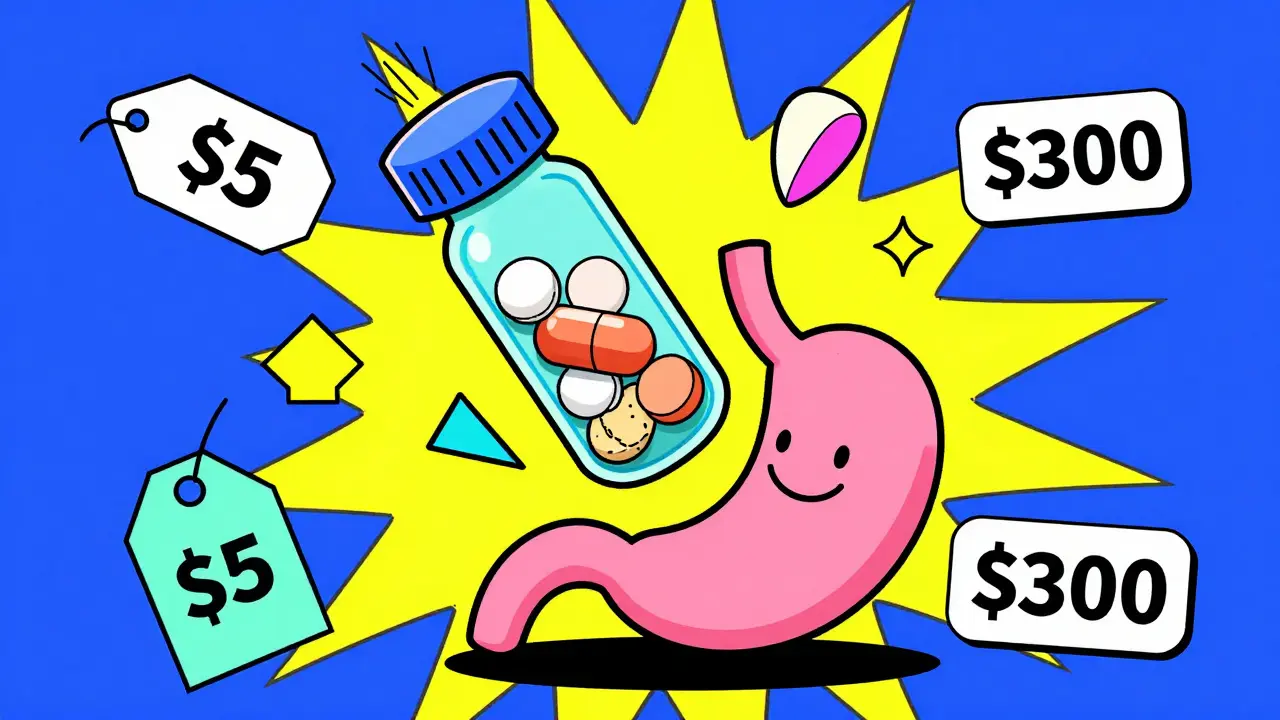
When you’re dealing with digestive issues like acid reflux, ulcers, or irritable bowel syndrome, doctors often prescribe gastrointestinal combination products - pills that pack two or more active ingredients into one tablet. These aren’t just convenience drugs. They’re designed to work together, targeting multiple parts of the problem at once. For example, one pill might reduce stomach acid while also killing H. pylori bacteria, or ease pain while protecting your stomach lining from damage. But here’s the real question: are these combo drugs available as cheap generics, or are you stuck paying brand-name prices?
What Are Gastrointestinal Combination Products?
Gastrointestinal combination products are fixed-dose medications that combine two or more active ingredients to treat digestive conditions more effectively than single drugs alone. Think of them as a team: one ingredient handles the main symptom, while the other prevents side effects or boosts the effect. Common examples include:
- H. pylori eradication regimens: A proton pump inhibitor (like omeprazole) + two antibiotics (amoxicillin and clarithromycin) to kill the bacteria causing ulcers.
- Ibuprofen-famotidine (Duexis): 800 mg of the pain reliever ibuprofen + 26.6 mg of famotidine, an acid reducer. This combo helps manage arthritis pain without wrecking your stomach.
- Vonoprazan-based combinations: Newer drugs like Voquezna, approved in July 2024, use a potassium-competitive acid blocker to shut down stomach acid more effectively than older PPIs.
- Linaclotide (Linzess): Approved in generic form in 2021, this treats constipation-predominant IBS by increasing fluid in the intestines.
These aren’t random mixes. Each combo has been clinically tested to prove the ingredients work better together. The FDA only approves them after reviewing data showing improved outcomes, reduced side effects, or better patient adherence compared to taking separate pills.
Generic Availability: What’s Available and What’s Not
Here’s the good news: many older gastrointestinal combination products now have generic versions. The bad news? Not all of them - and timing matters.
The FDA approved the first generic version of ibuprofen-famotidine (Duexis) in August 2021. Par Pharmaceutical and Alkem Laboratories Limited now make it. That means instead of paying $300+ for a 30-day supply of the brand, you can get the same pill for under $50 - if your pharmacy stocks it.
Similarly, linaclotide (Linzess) became available as a generic in February 2021. Mylan Pharmaceuticals started selling it, and prices dropped sharply. If you’re on Linzess for chronic constipation or IBS-C, your doctor can likely switch you to the generic without losing effectiveness.
But some combos are still protected. Vonoprazan (Voquezna), approved in July 2024, is brand-new. It’s a next-gen acid blocker that works faster and lasts longer than traditional PPIs like omeprazole. Because it’s new, patents are still active. You won’t see a generic version until at least 2030 - maybe later if the manufacturer extends exclusivity.
Other combos are on the horizon. Janumet (sitagliptin + metformin), used for type 2 diabetes but often prescribed for metabolic issues linked to gut health, is expected to go generic in 2026. Xifaxan (rifaximin), used for traveler’s diarrhea and IBS-D, lost exclusivity in 2024, so generics are rolling out now.
Important note: Just because the individual ingredients are available as generics doesn’t mean the combo is. For example, you can buy omeprazole and amoxicillin separately - but the FDA doesn’t consider that the same as the fixed-dose H. pylori combo. Insurance often requires prior authorization for the branded combo unless you’ve tried and failed the generic alternatives.
Why Some Combos Still Cost a Fortune
Why aren’t all combo drugs generic yet? It’s not just about patents. Drugmakers use clever strategies to delay competition.
One trick is “product hopping”: when a brand’s patent is about to expire, they release a slightly modified version - maybe a new coating, a different pill shape, or a combo with a slightly different dose - and get a new patent. That resets the clock.
Another factor is Medicare’s drug negotiation rules. The Centers for Medicare & Medicaid Services (CMS) treat each unique combination as a separate drug. So Janumet (sitagliptin + metformin) is negotiated separately from Januvia (sitagliptin alone). That means even if one drug in the combo is cheap, the combo as a whole can still carry a high price tag.
Also, some combos are used for rare conditions - like Livmarli (maralixibat) for PFIC, a rare liver disease. These drugs are expensive because the patient pool is small, and development costs are high. Even when generics arrive, they may not be widely stocked because demand is low.

Alternatives to Combination Products
What if your combo drug isn’t generic yet, or your insurance won’t cover it? You have options.
Option 1: Take the ingredients separately
For many patients, taking two pills instead of one is perfectly fine - and way cheaper. For example:
- Instead of Duexis (ibuprofen + famotidine), take 800 mg ibuprofen + 20 mg famotidine separately. Both are available as generics for under $5 per month.
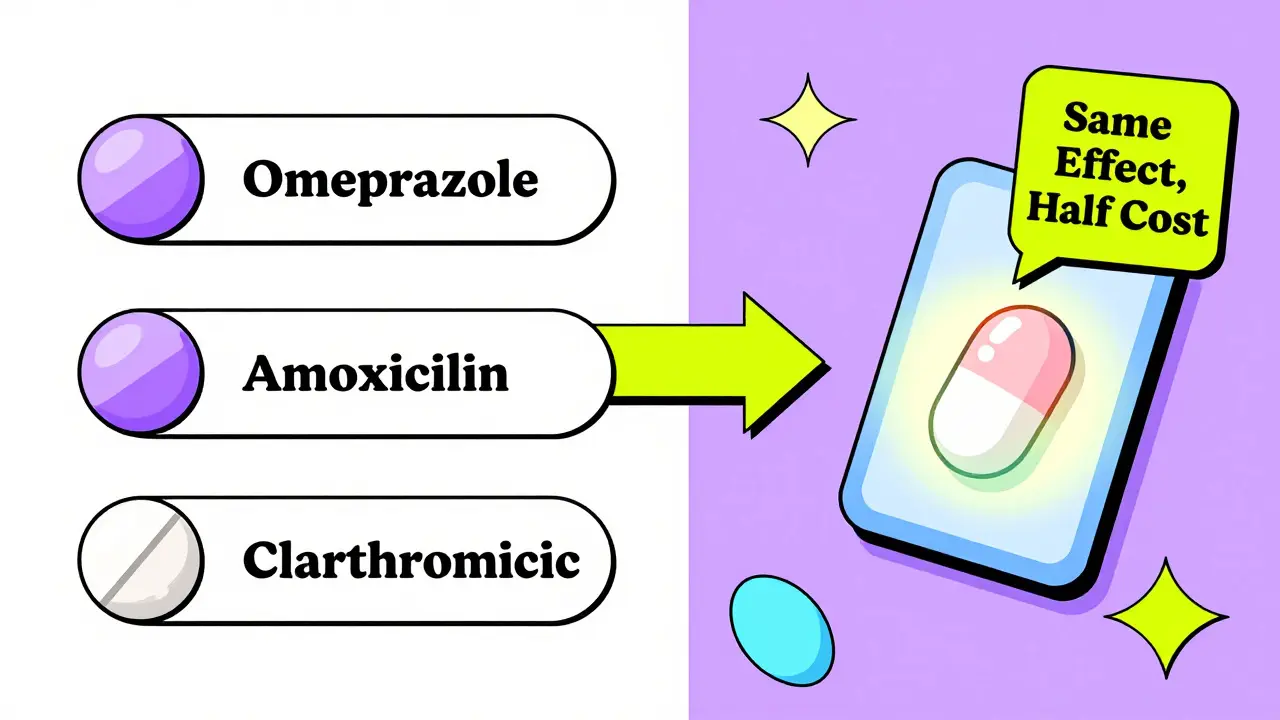
- For H. pylori, you can buy omeprazole, amoxicillin, and clarithromycin as individual generics. The total cost is often less than half the branded combo.
Doctors often recommend this approach, especially if you’re on Medicare or Medicaid. The MassHealth Drug List confirms that separate ingredients usually don’t require prior authorization - unlike the branded combo.
Option 2: Switch to a newer drug with better pricing
Vonoprazan (Voquezna) is expensive now, but it’s not the only acid blocker. If you’re on a high-dose PPI like esomeprazole or lansoprazole and still having heartburn, ask your doctor about switching to vonoprazan - especially if you’re not getting relief. It works differently and often clears symptoms faster.
For IBS-C, if Linzess is too pricey, you might try tegaserod (Zelnorm) or lubiprostone (Amitiza), though these aren’t combos. For diarrhea, over-the-counter loperamide (Imodium) is still a go-to - approved for OTC use since 2021 and available for pennies.
Option 3: Use biosimilars for inflammatory conditions
If you’re on biologics like Stelara (ustekinumab) for Crohn’s or ulcerative colitis, you now have a cheaper option: Pyzchiva, a biosimilar approved in July 2024. Biosimilars are nearly identical to the original biologic but cost 15-30% less. They’re not combos, but they’re a major step toward lowering treatment costs for chronic gut inflammation.
How to Get Your Combo Drug Covered
Insurance companies don’t always approve combination drugs right away. They often require you to try cheaper alternatives first.
If your insurer denies coverage for Duexis or Voquezna, here’s what to do:
- Ask your doctor to submit a prior authorization request.
- Include medical records showing you tried the generic versions and they didn’t work - or caused side effects.
- For PPI combos, document if you’ve had ulcers, Barrett’s esophagus, or Zollinger-Ellison syndrome - these qualify you for higher doses without extra paperwork.
- If you’re on Medicaid or Medicare, ask if your state’s drug list has exceptions for patients over 65 or under 13. Some rules are more flexible for kids and seniors.
Pharmacies sometimes don’t stock generic combos right away, even after FDA approval. If your pharmacy says they don’t have it, ask them to order it. Many generics are available through specialty distributors or mail-order pharmacies.
What to Watch Out For
Generic versions aren’t always perfect replacements. While they must meet FDA standards for safety and effectiveness, small differences in inactive ingredients can affect how the drug works in your body.
For example, some patients report that generic famotidine doesn’t last as long as the brand. Others find that generic linaclotide causes more bloating. If you switch to a generic and notice changes in your symptoms, tell your doctor. You may need to try a different manufacturer’s version - generics from different companies can vary slightly.
Also, don’t assume all combos are safe. Some older combinations, like those with aspirin and PPIs, can still cause bleeding risks in older adults. Always review your full medication list with your doctor or pharmacist.
What’s Coming Next
The gastrointestinal drug market is growing fast - projected to hit $96 billion by 2035. More combos are on the way:
- New PPI-antibiotic combos for resistant H. pylori strains
- Combos targeting gut-brain axis issues like functional dyspepsia
- Biologic combos for Crohn’s that combine immune modulators with anti-inflammatories
As patents expire, expect more generics to enter the market. But new drugs like vonoprazan will keep branded options alive for a while. The key is staying informed. Ask your doctor: “Is there a generic version of this? If not, can I take the ingredients separately?”
Most of the time, the answer is yes - and you’ll save hundreds a month.
Are generic gastrointestinal combination products as effective as brand-name ones?
Yes, FDA-approved generics must meet the same standards for strength, purity, and performance as brand-name drugs. For example, the generic version of ibuprofen-famotidine (Duexis) contains the exact same amounts of active ingredients - 800 mg ibuprofen and 26.6 mg famotidine. Most patients experience the same relief. However, some people notice minor differences in how quickly the pill dissolves or how it affects their stomach, which can be due to inactive ingredients. If you switch and feel worse, talk to your doctor about trying a different generic manufacturer.
Can I just take the two drugs separately instead of the combo pill?
Absolutely. In many cases, taking the individual drugs separately is cheaper and just as effective. For example, instead of Duexis, you can buy generic ibuprofen and famotidine pills and take them together. This is often the first step insurance companies require before approving the combo. Just make sure you’re taking the right doses - your doctor should confirm the exact amounts. Some people prefer the combo for convenience, but there’s no medical reason you can’t split them.
Why is vonoprazan so expensive, and when will a generic be available?
Vonoprazan (Voquezna) is a new type of acid blocker approved in July 2024. It works faster and lasts longer than older PPIs like omeprazole. Because it’s new, it’s still protected by patents - typically 20 years from the original filing date. That means you won’t see a generic version until at least 2030. Until then, it will remain expensive. If cost is an issue, ask your doctor about switching to a generic PPI like omeprazole or pantoprazole, which work well for most people.
Does Medicare cover gastrointestinal combination products?
Yes, but coverage varies by plan. Medicare Part D usually covers both brand and generic GI combos, but only after you’ve tried cheaper alternatives. For example, if you’re prescribed Duexis, your plan may require you to try generic ibuprofen and famotidine first. Some plans also require prior authorization, especially for newer drugs like vonoprazan. Always check your plan’s formulary and ask your pharmacist if there’s a preferred generic version.
What should I do if my insurance denies my combination drug?
If your insurance denies coverage, ask your doctor to file a prior authorization request. Include medical records showing you tried and failed the generic versions, or that you had side effects. For PPI combos, mention if you have a history of ulcers, Barrett’s esophagus, or Zollinger-Ellison syndrome - these conditions often qualify you for exceptions. If the denial still stands, you can appeal. Many patients win appeals by providing detailed documentation. Also, check if the manufacturer offers a patient assistance program - some provide free or discounted drugs to those who qualify.


December 18, 2025 AT 08:12 AM
generic my ass. they're just rebranded crap with different fillers. i switched to the generic Duexis and got stomach cramps for a week. brand name works. why? because big pharma doesn't want you to know they cut corners. #AmericaFirst
December 19, 2025 AT 02:05 AM
I’ve been on generic linaclotide for two years now. No issues. My doctor said the FDA requires the same active ingredient, same dose, same release profile. If you’re having side effects, it’s probably your gut adjusting - not the pill.
December 19, 2025 AT 19:04 PM
In India, we get all these medicines cheap. Omeprazole + amoxicillin + clarithromycin - total cost $5 for 10 days. No need to pay $300 for combo. Doctors here teach us to take separate pills. Simple. Effective.
December 20, 2025 AT 02:50 AM
The FDA? Ha. They’re on Big Pharma’s payroll. You think they’d approve a generic that actually works as well? No way. They wait until the brand has milked every dime from desperate patients... then they let the generics in - just enough to make you feel like you won the lottery.
December 20, 2025 AT 14:43 PM
Bro just take the two pills. I do it every day. Ibuprofen + famotidine. $3.50 a month. I don’t need a fancy pill that looks like a spaceship. My stomach doesn’t care what it looks like - it just wants to stop burning.
December 22, 2025 AT 08:15 AM
The pharmaceutical-industrial complex has engineered a dystopian paradox: the very innovations designed to simplify care are weaponized into profit engines. One pill, two molecules, three years of patent litigation - all while the patient bears the cost of their own physiological equilibrium. The tragedy is not the lack of generics; it is the normalization of this exploitation.
December 23, 2025 AT 19:22 PM
I’ve been helping my dad manage his acid reflux for years. He tried the combo, hated the cost, then switched to separate generics. He said he felt better because he wasn’t stressed about money anymore. Sometimes the real medicine isn’t in the pill - it’s in the peace of mind.
December 24, 2025 AT 01:11 AM
I took the generic Duexis. Felt fine. Then I switched brands. Felt worse. Then switched back. Point is: not all generics are equal. Try a few. Talk to your pharmacist. Your gut will tell you.
December 26, 2025 AT 00:50 AM
Vonoprazan? Never heard of it. Just take Tums.
December 26, 2025 AT 12:44 PM
The regulatory frameworks governing fixed-dose combinations are not uniformly applied across jurisdictions. In the UK, NICE guidelines often recommend monotherapy unless clinical evidence demonstrates superior outcomes - which, in many cases, they do not.
December 27, 2025 AT 06:54 AM
Hey man, I’m from India too. We get all these drugs super cheap. But you know what? Even if it costs more, if it helps you feel better, it’s worth it. Don’t stress. Your health matters more than the price tag.
December 29, 2025 AT 04:32 AM
You think this is about health? Nah. The FDA approves generics only after the brand has maxed out profits. Then they let the Chinese labs flood the market with pills made in unregulated factories. The real combo? Profit + deception + regulatory capture.
December 31, 2025 AT 02:50 AM
You’re overthinking it. If your doctor says take two pills, take two pills. If they say the combo’s better, get the combo. Life’s too short to stress over pill counts. Just make sure you’re not eating spicy food at 2 a.m.
January 1, 2026 AT 19:50 PM
The FDA’s bioequivalence thresholds for GI combos are statistically inadequate. The 80-125% Cmax/AUC range allows for pharmacokinetic divergence that can trigger non-linear mucosal responses - particularly in patients with altered gastric pH or motility. Most clinicians are unaware of this. The generic substitution paradigm is a regulatory illusion.