
When a company buys a portfolio of thousands of unpaid debts across multiple countries, it doesn’t file a separate court application for each one. That would cost millions and take years. Instead, it uses something called a Global Substitution Order - a legal shortcut that lets one entity replace another in hundreds or even thousands of cases at once. This isn’t science fiction. It’s happening right now in courts from London to Luxembourg, and it’s changing how global debt recovery works.
What Exactly Is a Global Substitution Order?
A Global Substitution Order (GSO) is a single court order that replaces one legal party with another across multiple ongoing cases. It was first created in 2010 by England’s High Court for Northern Rock (Asset Management) Plc after the bank collapsed during the 2008 financial crisis. The new company needed to take over over 2,000 debt claims from the old one. Filing each one individually would’ve been impossible. The court approved a single application - and the GSO was born. Today, GSOs are used by private equity firms, hedge funds, and debt buyers who acquire large portfolios of defaulted loans. In 2023, Oaktree Capital used a GSO to substitute itself in 2,457 debt collection cases after buying a portfolio from Deutsche Bank. The entire process took less than three months and cost under $15,000. Doing the same thing individually would’ve cost over $1.2 million.How It Works in the UK
England and Wales have the most mature GSO system. Under Part 23.7 of the Civil Procedure Rules, applicants file one motion with a designated High Court judge. They don’t need to notify every defendant upfront. Instead, they submit a detailed schedule listing every case number, the original creditor, the new owner, and proof the debt was legally transferred. The court checks the paperwork. If it’s clean, the order is granted in about 22 days on average. The approval rate? 92%. That’s high - but not because it’s easy. The rules are strict. If your list of case numbers has typos, or if you can’t prove you legally bought the debts, your application gets rejected. In 2024, 63% of rejections came from incomplete or inaccurate case listings. Another 28% failed because assignment documents were missing or unclear. The cost? Fixed. Whether you’re substituting in 10 cases or 5,000, the court fee is between £8,500 and £12,000. That’s why 87% of law firms using GSOs say it saves them “significant or substantial” money. One firm cut costs on a $450 million debt portfolio from $285,000 down to $11,500.How Other Countries Do It (And Why They’re Slower)
The U.S. has a similar rule - Federal Rule of Civil Procedure 25(c) - but it doesn’t allow bulk substitution. Every case needs its own motion. That means if you buy 1,000 debts across 10 states, you file 1,000 motions. Each costs $200-$500 in court fees, plus lawyer time. Total? Easily $500,000. No wonder U.S. firms often avoid buying large cross-border portfolios. Germany uses §56 of its Zivilprozessordnung (ZPO). It’s closer to the UK model but still requires individual filings for each case. Processing 100 claims takes 45 days and costs €22,000-€35,000. Japan doesn’t allow bulk substitution at all. Each case must be individually reassigned - no shortcuts. The EU tried to fix this. In November 2023, it passed Directive 2023/852 on Cross-Border Debt Recovery. Now, member states must process bulk substitution requests within 30 business days - down from an average of 78. But here’s the catch: the directive doesn’t create a single GSO system. It just forces faster handling of individual applications. So if you’re buying debt across 27 countries, you still need 27 separate filings. The cost? Around €18,000 for up to 500 claims. Still expensive. Still slow.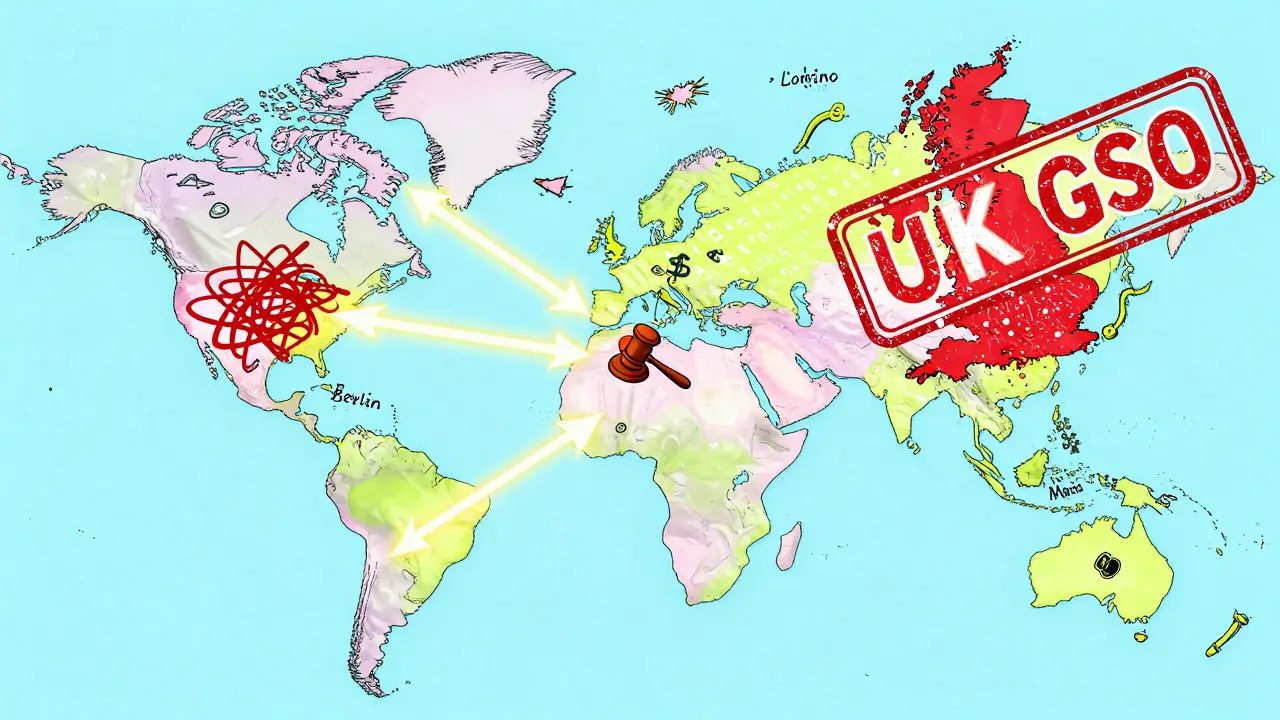
The Big Trade-Off: Speed vs. Fairness
GSOs are efficient. But they’re controversial. Critics say they hurt defendants’ rights. In 2022, a case called Patel v. Capital Receivables Europe revealed that 317 people were never properly notified after a GSO was granted. As a result, 187 of them got default judgments - meaning the court ruled against them without a hearing. Some didn’t even know they were being sued. The International Bar Association warned in 2024 that 12% of GSO applications in 2023-2024 didn’t include proof that defendants were notified after the order was granted. That’s a violation of UK court rules. But enforcement is patchy. Judges vary. Some are strict. Others are lenient. One lawyer on Reddit said, “I’ve had three GSOs approved by the same judge - each time, the paperwork requirements were totally different.” And then there’s enforcement. Just because a UK court grants a GSO doesn’t mean it’s valid in Spain, Canada, or Brazil. In 2024, Deutsche Leasing AG spent €38,000 and six months reapplying for substitution in Spain after their UK GSO was ignored. There’s no automatic cross-border recognition.What’s Changing in 2025?
The system is evolving fast. In July 2025, the UK launched the Digital Substitution Order (DSO) pilot. It uses blockchain to automatically update court records across multiple jurisdictions after a single GSO is approved. Early results show a 40% drop in processing time. No more manual updates. No more lost files. Meanwhile, the Hague Conference is working on a 2025 Draft Convention on Cross-Border Recognition of Substitution Orders. If adopted by December 2025, it could make GSOs enforceable in over 80 countries. That’s huge. The EU and U.S. also signed a Mutual Recognition Agreement in early 2025. It’s not perfect - GDPR still blocks automatic sharing of debtor data - but it’s a start. And AI is coming. Deloitte predicts 75% of major debt portfolios will use automated substitution systems by 2027. But there’s a risk. In March 2025, a UK litigation finance firm’s GSO platform was hacked. Over 12,000 debtor records were exposed.
Who Uses This, and Why?
The market is growing fast. In 2024, $317 billion in distressed debt was bought globally. Almost 9 out of 10 of those deals crossed borders. That’s why 68% of multinational debt buyers now prefer to file initial claims in England - even after Brexit. The GSO system is simply the most efficient tool on the planet. The legal services market for GSO preparation hit $185 million in 2024. It’s growing at 14.3% a year. Why? Because the debt buying industry is consolidating. The top 10 firms now control 67% of the market - up from 42% in 2020. These firms don’t buy one or two loans. They buy portfolios worth hundreds of millions. They need GSOs to survive.What You Need to Know If You’re Involved
If you’re a debt buyer, lawyer, or even a debtor caught in this system, here’s what matters:- For buyers: Get your assignment documents in order before filing. Verify every case number. Use the High Court’s updated GSO template (January 2025 version). Don’t skip the notice plan - it’s not optional.
- For lawyers: Mastering GSOs takes 6-8 months. Training courses from the Judicial College are now required for firms handling more than five applications a year.
- For debtors: If you get a letter saying your debt was sold and you’re now being sued by a new company, check if it’s linked to a GSO. You might have been served improperly. You still have rights - even if the court approved the substitution.
What’s Next?
The world is moving toward faster, cheaper, digital legal processes. GSOs are the leading example. But efficiency shouldn’t come at the cost of fairness. The next big challenge isn’t technology - it’s trust. Can courts balance speed with due process? Can governments agree on cross-border rules without sacrificing data privacy? The answer will shape how global finance works for the next decade. Right now, the UK leads. But if the Hague Convention passes and the DSO pilot succeeds, the whole system could become truly global. That’s not just a legal change. It’s a financial revolution.What is a Global Substitution Order (GSO)?
A Global Substitution Order (GSO) is a single court order that allows one legal entity to replace another across hundreds or thousands of ongoing court cases. It was created in England in 2010 to handle mass debt transfers after corporate restructurings. Today, it’s used by debt buyers to avoid filing individual substitution motions in every case.
Where are GSOs recognized?
GSOs are officially recognized only in England and Wales. Other countries like the U.S. and Germany allow substitution, but require individual filings for each case. The EU has rules to speed up bulk requests, but no unified GSO system. The 2025 Hague Draft Convention may change this by creating cross-border recognition.
How much does a GSO cost?
In England and Wales, the court fee for a GSO is between £8,500 and £12,000, no matter how many cases are involved. This contrasts sharply with individual substitutions, which can cost $500-$1,000 per case. For a portfolio of 2,500 claims, using GSOs can save over $1 million.
Why are GSOs controversial?
GSOs are criticized for potentially denying defendants their right to be heard. In 2022, 187 wrongful default judgments were issued because defendants weren’t properly notified after a GSO was granted. Critics argue the system favors big corporations over individuals. The International Bar Association recommends mandatory proof of post-substitution notice to prevent abuse.
Can a GSO be enforced outside the UK?
No, not automatically. A UK GSO has no legal force in other countries. In 2024, a German company had to pay €38,000 and refile in Spain because their UK GSO was ignored. Cross-border enforcement remains a major weakness - though new international agreements may fix this by 2027.
What’s the Digital Substitution Order (DSO)?
The DSO is a UK pilot program launched in July 2025 that uses blockchain to automatically update court records across jurisdictions after a GSO is approved. It reduces processing time by 40% and cuts human error. If successful, it could become the new global standard for legal substitution.
Is the GSO system growing?
Yes. The global distressed debt market hit $317 billion in 2024, and 89% of deals involved cross-border transfers. The legal services market for GSOs grew 14.3% in 2024 alone. Top debt buyers now prefer UK courts because GSOs are the fastest, cheapest way to take over large portfolios.



December 21, 2025 AT 12:42 PM
Interesting stuff. I’ve seen debt buyers in India try to enforce foreign judgments and it’s a nightmare. No one respects cross-border orders here unless there’s a treaty. We still do everything manually. Feels like the UK is building a legal superhighway while the rest of us are still on dirt roads.
December 22, 2025 AT 12:16 PM
It’s wild how efficiency can mask injustice. I get why firms love GSOs - money saved, time cut - but when people get default judgments without ever knowing they were sued, that’s not justice. It’s automation with a side of cruelty.
December 22, 2025 AT 13:11 PM
There’s a fundamental flaw here: due process isn’t a cost center. If you’re skipping notification requirements, you’re not streamlining justice - you’re undermining the rule of law. The IBA’s warning isn’t a suggestion; it’s a red alert.
December 23, 2025 AT 07:58 AM
DSO pilot using blockchain? That’s the real innovation. Automated, immutable, auditable. If this scales, it could replace 90% of the paralegal work in debt litigation. Legal tech is finally catching up to fintech.
December 24, 2025 AT 09:57 AM
so like... the government is letting big banks sell debt to shadowy funds and then the funds just magically become the new creditor? no one even tells the people they owe money? sounds like a plot from a cyberpunk game. i think this is all part of the new world order. they want us all in debt and confused.
December 26, 2025 AT 08:40 AM
Bro this is wild 😱 Imagine your debt just gets sold like a NFT and suddenly you’re being sued by some hedge fund you’ve never heard of. And no one even texts you? That’s not capitalism - that’s feudalism with lawyers. 🤯
December 27, 2025 AT 00:11 AM
It is incontrovertible that the proliferation of Global Substitution Orders constitutes a systemic erosion of procedural safeguards embedded in common law traditions. The absence of mandatory pre-substitution notice, coupled with the discretionary enforcement of post-substitution notification protocols, renders the entire mechanism legally precarious and ethically indefensible. One cannot, under any jurisprudential framework, legitimate the sacrifice of fundamental rights on the altar of cost-efficiency.
December 28, 2025 AT 00:58 AM
Of course, the UK leads - because they’ve always been the arbiters of legal elegance. But let’s not pretend this is innovation. It’s merely the triumph of corporate convenience over individual dignity. The fact that 63% of rejections stem from typos in case lists? That’s not a flaw in the system - it’s a feature. It filters out the amateurs. Only the elite with compliance teams survive.
December 29, 2025 AT 11:51 AM
As someone who works with debt collectors in Africa, I’ve seen how messy this gets. We don’t have GSOs, but we also don’t have the resources to file 500 motions. This system might be flawed, but it’s better than nothing. Maybe the real issue isn’t the GSO - it’s that the rest of the world hasn’t caught up yet.
December 29, 2025 AT 11:54 AM
so they just... change the name on the bill? no one calls? no letter? no nothing? wow. that’s so lazy. i bet they use robots to send the notices. like, ‘hi you owe money now to bob’s debt empire lol’ 🤡
December 29, 2025 AT 20:36 PM
Let me tell you something - this is not about efficiency. This is about control. The West has spent decades exporting its legal systems to the Global South, but now they’ve perfected a system that strips away the last vestiges of accountability. You think India or Nigeria could ever get a GSO? No. They get 1,000 separate filings and pay 10x more. This is colonialism dressed in legal jargon.
December 31, 2025 AT 14:25 PM
There’s something deeply human about the idea that a person deserves to know they’re being sued. This isn’t just about paperwork - it’s about dignity. The UK’s system is brilliant, but if it forgets that, it becomes just another machine. And machines don’t care if you lose your home.
January 2, 2026 AT 03:03 AM
I can’t believe how fast this is moving. Five years ago, this was sci-fi. Now? Blockchain-based substitution orders. AI-driven compliance checks. The legal world is being rewritten in real-time - and most people have no idea. This isn’t just a change in procedure. It’s a new legal epoch.
January 3, 2026 AT 08:22 AM
92% approval rate? That’s not a system. That’s a rubber stamp. If the bar is that low, then the entire process is rigged. And the fact that enforcement fails internationally? That’s not a bug - it’s a business model. They don’t want global recognition. They want to exploit jurisdictional gaps.
January 5, 2026 AT 02:33 AM
It’s fascinating how one court in England created a solution that now influences global finance. But I wonder - if this was invented in Brazil or Nigeria, would it be called ‘innovation’ or ‘exploitation’? The bias in how we label legal tools says more about power than justice.
January 6, 2026 AT 05:20 AM
US is so behind. We file 1,000 motions? For what? To keep lawyers rich? This is why we can’t have nice things. The UK got it right. We need to stop pretending our system is fair just because it’s slow.
January 7, 2026 AT 04:55 AM
Yeah, but what if you’re the person getting served after the fact? You’re already behind on rent, then you get a letter saying you lost a case you didn’t know existed. That’s not justice. That’s a trap.
January 8, 2026 AT 05:34 AM
It is a matter of profound concern that the commodification of legal process has reached such a degree that the rights of the individual are subordinated to the imperatives of financial aggregation. The absence of harmonized international standards for post-substitution notification constitutes a glaring lacuna in global legal governance.
January 8, 2026 AT 20:49 PM
so wait… if i owe money to chase and they sell it to some company in london, and they get a gso… do i still have to pay? or can i just ignore it? idk anymore.
January 10, 2026 AT 08:24 AM
Blockchain? Yeah right. That’s just the next scam. They’re using ‘tech’ to hide the fact that they’re stealing people’s rights. And don’t get me started on the Hague Convention - that’s just the UN trying to make the U.S. obey foreign courts. Wake up, sheeple.