Medication errors are no longer just a rare mistake-they’re a preventable crisis. In 2025, new safety data has forced healthcare systems to rewrite the rules. From community pharmacies to hospital wards, the way drugs are prescribed, handled, and given out has changed dramatically. These aren’t minor tweaks. They’re urgent updates backed by hard data, and they’re already saving lives.
What’s Actually Changed in 2025?
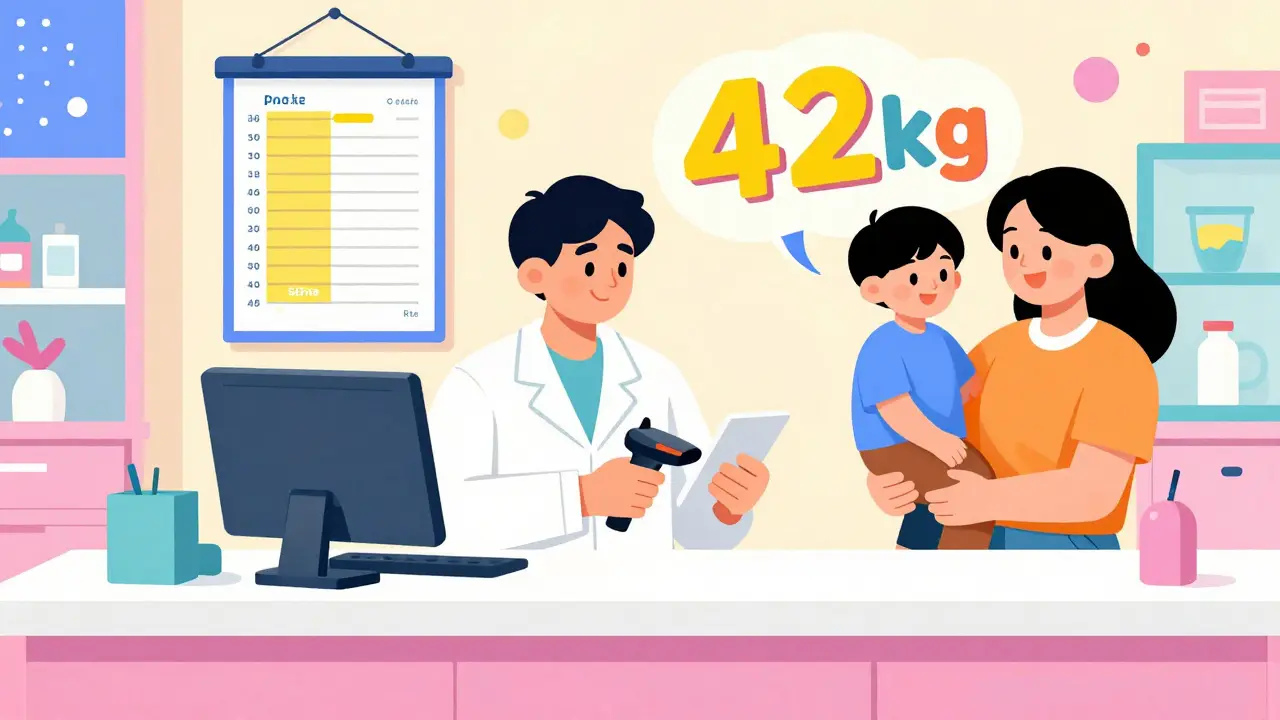
The biggest shift came from the ISMP Institute for Safe Medication Practices in March 2025. Their updated Targeted Medication Safety Best Practices for Community Pharmacy isn’t just another checklist. It’s a direct response to real-world harm. Fatal dosing errors in children, mix-ups with high-alert drugs, and failed communication between clinics and pharmacies kept showing up in reports. The new guidelines demand six concrete actions: using patient weight to calculate doses, double-checking high-risk meds, standardizing IV concentrations, scanning every medication before it’s given, improving how critical lab results are sent electronically, and fixing how returned drugs are restocked.
One pharmacy in Texas saw pediatric dosing errors drop by 63% in six months after enforcing weight-based verification. That’s not theory. That’s real numbers from real patients.
NIOSH Just Added Three New Hazardous Drugs
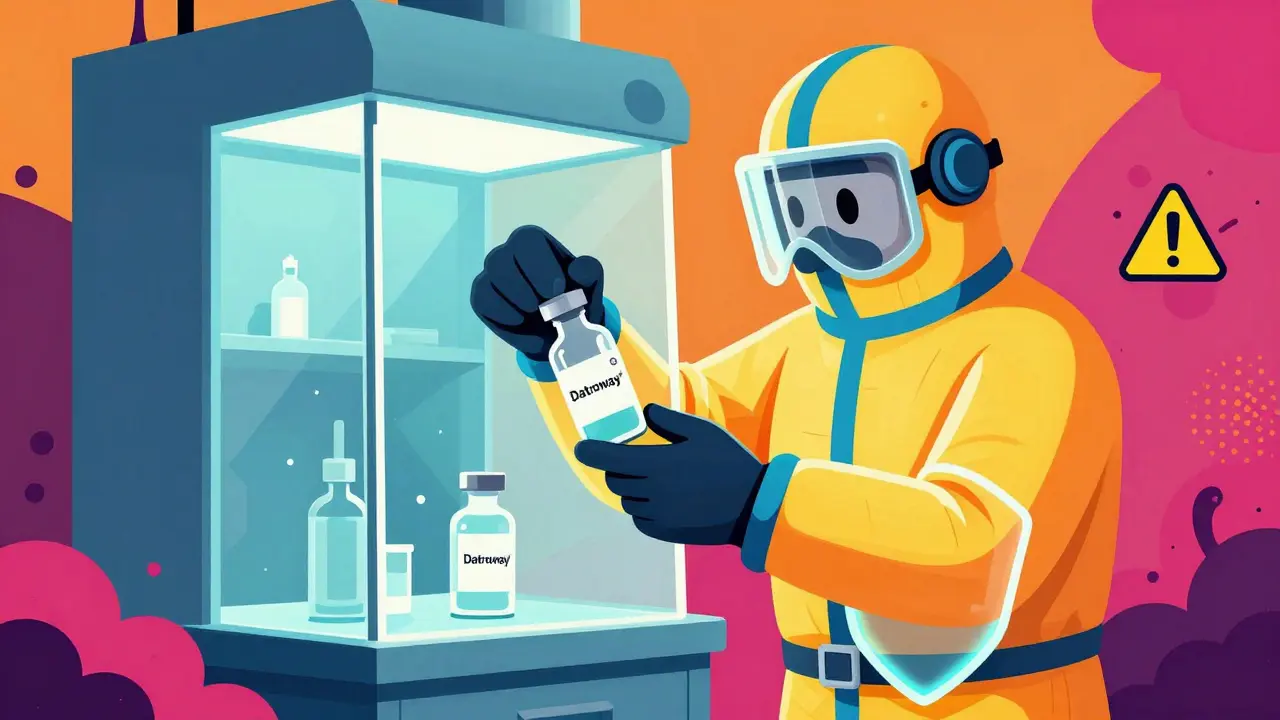
If you work with cancer drugs, this matters. In July 2025, the NIOSH National Institute for Occupational Safety and Health added three new drugs to its Hazardous Drugs list: Datopotamab deruxtecan (Datroway®), Treosulfan (Grafapex™), and Telisotuzumab vedotin (Emrelis™). All are antibody-drug conjugates-powerful, targeted cancer treatments that can be dangerous to handle if you’re not protected.
Pharmacists and nurses preparing these drugs now need new safety protocols. That means upgraded ventilation systems, special protective gear, and retraining staff. One hospital pharmacist on Reddit reported these updates helped prevent two potential exposure incidents mid-year. But it’s expensive. Setting up proper containment areas can cost between $15,000 and $50,000 per pharmacy. Many small clinics are struggling to keep up.
CMS Is Now Tracking Your Performance
The CMS Centers for Medicare & Medicaid Services didn’t just update guidelines-they turned safety into a financial scoreboard. Their 2025 Patient Safety measures are now tied to Medicare Part D Star Ratings. If your pharmacy or plan doesn’t hit targets like high statin adherence or low opioid use in non-cancer patients, you lose money. Plans with low ratings get fewer enrollees. That’s a powerful motivator.
To hit the 80%+ adherence rate for cholesterol meds, pharmacies are using automated refill reminders, medication synchronization, and direct outreach to patients who miss doses. Long-term care facilities saw a 72% improvement in dementia patients’ medication management after adopting the new APD measures-but staff spent 45% more time on documentation. It’s progress, but it’s heavy.
WHO’s Global Plan Is Bigger Than Any Single Country
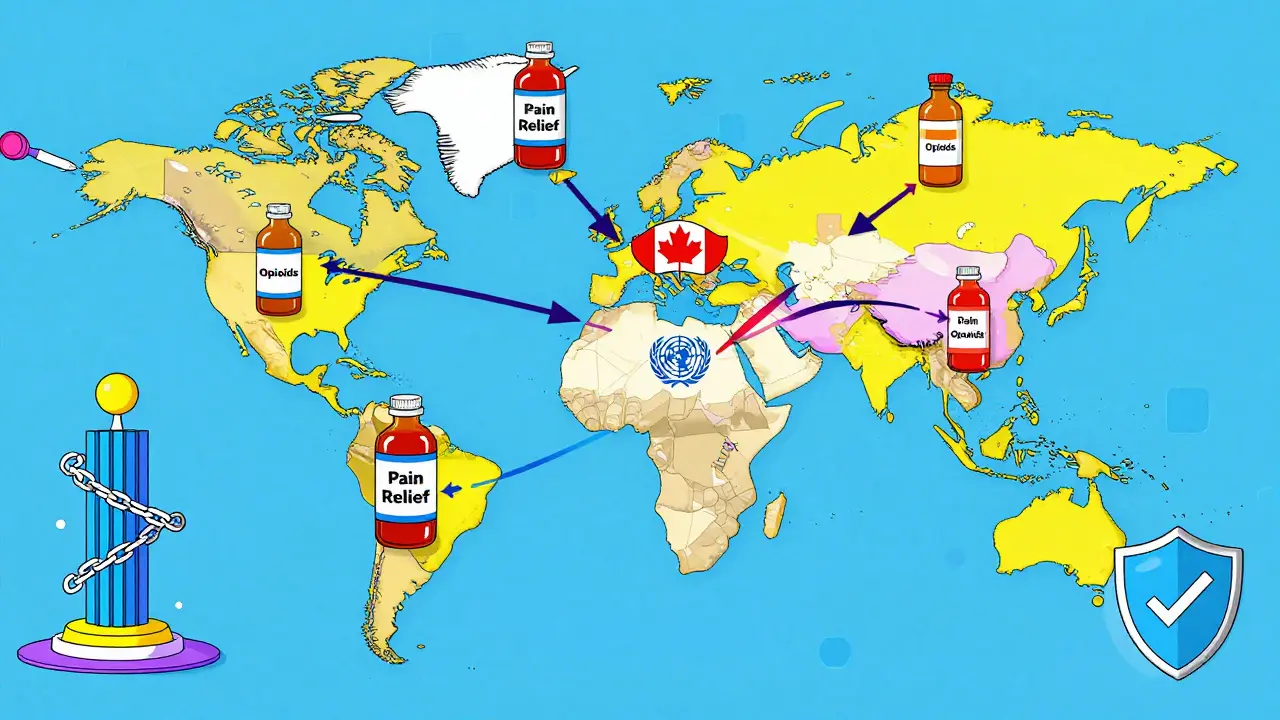
In September 2025, the WHO World Health Organization released its first-ever global framework for balanced access to controlled medicines. It’s not about banning drugs. It’s about making sure no one suffers because they can’t get pain relief-or because they get too much.
The framework lists eight pillars: digital tracking of drug supply chains, legal protections for patients to possess prescribed opioids or sedatives, training for doctors, public education, privacy-safe monitoring, integration with national insurance, and better addiction treatment. Countries like Australia and Canada are already adapting these ideas. But in low-income regions, the gap is wide. Only 12 countries have full national action plans. The WHO’s goal? Cut serious medication harm by 50% in five years. It’s ambitious. But the data shows it’s possible.
Why This Matters for Everyday Patients
You might not see the changes, but you’ll feel them.
- Your child’s weight is now checked before every dose-no more guessing.
- Your pharmacist scans your prescription before handing it over.
- If you’re on a cancer drug, the staff handling it wears new protective gear.
- Your refill reminders come automatically, not just when you call.
- Your doctor can’t prescribe high-dose opioids without justifying it.
These aren’t annoyances. They’re barriers built to stop mistakes before they happen. A 2024 study of 1,200 pharmacies showed a 37% drop in medication errors after adopting ISMP’s practices. That’s thousands of avoided hospital visits and lives saved.
The Hidden Cost: Staff, Time, and Tech
These updates aren’t free. They’re expensive, time-consuming, and exhausting for staff.
Independent pharmacies report that technology costs are the #1 barrier. Barcode scanners, electronic health record upgrades, and safety equipment add up. The average monthly cost for a small pharmacy to meet all 2025 standards? $1,200-$2,500. Many owners say they can’t afford it without outside funding.
Staff resistance is real. One survey found 52% of pharmacists feel overwhelmed by new protocols. Another 47% say they don’t have time for safety meetings. Hospitals are seeing the same issue: 14.7% of pharmacist positions are vacant nationwide. When you’re short-staffed, shortcuts creep in.
The solution? Dedicated safety officers. Biweekly safety huddles. Phased implementation. ISMP recommends starting with the easiest fixes first-like weight-based dosing-before tackling tech upgrades. Don’t try to do everything at once.
What’s Coming Next?
Change isn’t stopping. ISMP plans to release updated hospital guidelines in early 2026, with a focus on AI tools that predict medication errors before they happen. The FDA is stepping up too-23 drug safety alerts were issued in just the first eight months of 2025. Commissioner Robert Califf said we’ll see at least two per month through 2026.
AI-driven systems like MedAware are already showing a 41% reduction in serious errors. That’s the future. But it won’t replace people. It’ll help them work smarter.
The big picture? We’re seeing something rare: alignment. ISMP, WHO, CMS, NIOSH, and the FDA are all pushing in the same direction. That’s not luck. It’s the result of years of data, patient harm, and hard-won lessons. The goal isn’t perfection. It’s progress. And it’s already working.
Are these new medication safety rules mandatory?
Some are, some aren’t. CMS measures directly affect Medicare funding, so those are mandatory for participating plans. NIOSH guidelines are enforceable under OSHA rules for workplace safety. ISMP best practices are voluntary, but many insurers and health systems now require them as a condition of participation. Hospitals and pharmacies that ignore them risk losing accreditation, contracts, or funding.
How do I know if my pharmacy is following the new guidelines?
Look for visible signs: staff scanning barcodes before handing out meds, weight charts posted near the counter, protective gear in the dispensing area, and clear labeling on high-alert drugs. Ask your pharmacist if they’ve implemented ISMP’s 2025 best practices or updated their hazardous drug handling protocols. Most will be happy to explain what they’ve changed and why.
Do these updates apply to me if I’m not in the U.S.?
Yes, indirectly. The WHO’s 2025 global framework is being adopted by over 40 countries, including Australia, Canada, and the UK. Many international health systems are using the ISMP and NIOSH guidelines as models-even if they’re not legally binding. The core principles-double-checking doses, protecting staff from hazardous drugs, improving communication-are universal.
What should I do if I think a medication error happened to me?
Speak up immediately. Contact your pharmacist or doctor. Document what happened-what drug, dose, time, and symptoms. Report it to your local health authority or patient safety organization. In the U.S., you can file a report with ISMP’s error reporting system. These reports help improve guidelines and prevent others from being harmed.
Are there any free resources to help understand these updates?
Yes. ISMP offers a free 2025-2026 Best Practices Implementation Toolkit online. NIOSH provides downloadable hazardous drug handling training modules. CMS has a public User Guide for all 2025 Patient Safety measures. These are all publicly available and designed for both professionals and informed patients.
What’s Next for You?
If you’re a patient: ask questions. Know your meds. Double-check doses. If something feels off, speak up.
If you’re a provider: start small. Pick one ISMP practice to implement this month. Don’t wait for perfect tech. Use paper checklists if you have to. Progress beats perfection.
If you’re a policymaker or administrator: fund safety. Pay for training. Hire safety officers. The cost of not acting is far higher.
The rules have changed. The stakes are higher. But so is the chance to get it right.

December 26, 2025 AT 02:19 AM
I just had my kid's prescription filled and the pharmacist actually asked for his weight before giving the dose. I cried. Like, actually cried. This is what safety looks like. No more guessing games.
December 27, 2025 AT 20:40 PM
These changes are long overdue. The data speaks for itself. No more excuses for preventable errors. Implementation is the real challenge not the guidelines
December 28, 2025 AT 21:06 PM
So now we're treating pharmacists like air traffic controllers but paying them like fast food workers. Brilliant. The system is designed to fail and then blame the people trying to fix it
December 30, 2025 AT 05:28 AM
I work in a rural clinic. We got the new scanners last month. Cost us 8k. Insurance didn't cover a dime. Now we're doing 63% fewer errors but our staff is burning out. Progress is expensive and nobody talks about that part
December 31, 2025 AT 20:38 PM
The implementation of these safety protocols represents a significant advancement in patient-centered care. The alignment among ISMP NIOSH CMS and WHO is unprecedented and reflects a collective commitment to reducing harm through evidence-based practice. This is the future of healthcare
January 2, 2026 AT 16:21 PM
Oh great so now my pharmacist has to wear a hazmat suit just to give me my blood pressure med. Next they'll be making me sign a waiver before I take aspirin. This is what happens when bureaucracy gets a caffeine high
January 4, 2026 AT 12:06 PM
They call it safety but it's really just cost-shifting. The hospitals get the money the patients get the hassle and the pharmacists get the burnout. This isn't progress it's a performance review disguised as a lifesaving measure
January 5, 2026 AT 04:44 AM
I've seen this work firsthand. A friend's mother in a long-term care facility went from multiple ER visits a year to none after the new protocols were adopted. The paperwork is heavy but the lives saved are heavier
January 6, 2026 AT 23:02 PM
They say these changes are about safety but I've read the documents. The real goal is to control the population. Weight-based dosing? Scanning everything? It's all part of the surveillance state. Next they'll be implanting microchips to track your meds
January 7, 2026 AT 16:18 PM
We're not just talking about meds here. We're talking about the collapse of human trust in institutions. Every scan every checklist every form is a nail in the coffin of autonomy. We're becoming patients not people
January 9, 2026 AT 15:57 PM
In Nigeria we don't have the infrastructure for this. We don't have barcode scanners or electronic records. We use handwritten logs and verbal confirmation. But we still save lives. Sometimes the simplest systems work best when you have no other choice
January 10, 2026 AT 04:25 AM
I'm a pharmacy tech and I'll be honest I hated these changes at first. But after seeing a kid almost get the wrong dose because someone skipped the weight check I'm all in. Small steps big impact
January 10, 2026 AT 07:44 AM
I'm a nurse in India and we use a lot of these same principles even without the fancy tech. Double-checking dosing weight-based calculations even with paper charts. The core ideas are universal. We don't need Silicon Valley to save lives
January 10, 2026 AT 10:12 AM
You think this is about safety? Think deeper. The pharmaceutical companies pushed for these rules because they knew they could profit from the compliance industry. The scanners the training the software the consultants-all of it generates revenue for them. The real danger isn't medication errors. It's the profit machine that pretends to fix them
January 12, 2026 AT 02:01 AM
There's something beautiful about how this all came together. Not because of tech or money but because people kept saying enough. A child almost died. A nurse got sick from a drug. A family lost someone. And then the data said no more. It's not perfect but it's human
January 13, 2026 AT 12:55 PM
The data supporting these changes is robust and reproducible. The reduction in medication errors is statistically significant across multiple healthcare settings. Continued adherence to these protocols is essential for sustained improvement in patient outcomes
January 13, 2026 AT 18:33 PM
So now every time I get a prescription I have to sit through a 10 minute lecture on why I can't have my meds in a bag without a QR code. I'm not a lab rat I'm a person. This isn't safety this is control dressed up as care
January 15, 2026 AT 04:29 AM
I've been in this field for 25 years. We've seen trends come and go. This one sticks. Not because it's flashy but because it works. The quiet wins-the kid who didn't overdose the nurse who didn't get poisoned-they don't make headlines. But they matter
January 16, 2026 AT 17:47 PM
Costs are high. Staff are tired. But the alternative is worse. I've seen the reports. I've seen the families. We don't have to be perfect. We just have to be better than yesterday