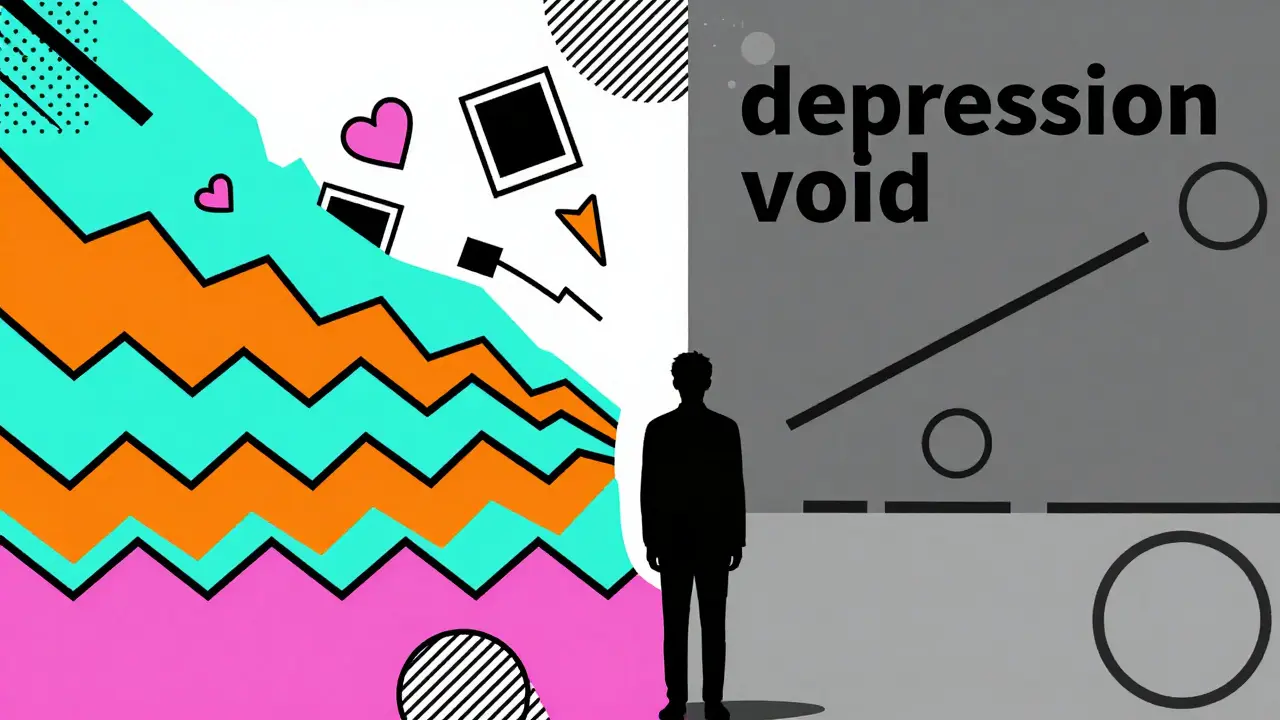
Losing someone you love feels like drowning in cold water. Your breath gets short, your chest tightens, and sometimes you can't find the energy to get out of bed. These feelings often look identical to clinical depression. It is natural to wonder if you are grieving a loss or suffering from a mental health condition. For years, experts debated whether sadness after death was simply "grief" or something more serious.
Now, we have clearer answers. Clinical guidelines updated in 2022 formally recognized Prolonged Grief Disorder as distinct from Major Depressive Disorder. While the emotions overlap, the brain mechanisms and recovery paths differ significantly. Understanding these differences isn't just academic-it changes how you treat the pain and who you call for help.
The Wave Pattern vs. The Void
If you have ever lost a parent, partner, or child, you know grief hits in waves. You can be laughing at a shared memory one minute, then collapsing into tears the next. Research by Dr. Katherine Shear at Columbia University highlights that this oscillation between positive memories and painful sorrow is the hallmark of healthy mourning. Even when the sadness is intense, there are moments of light.
Depression, on the other hand, feels like a heavy fog that refuses to lift. It lacks those silver linings. A study published in 2017 found that while 87.3% of individuals with prolonged grief reported persistent longing for the deceased as their main symptom, only 12.1% of those with depression felt this way. Instead, people with depression report a consistent emptiness where pleasure cannot penetrate, regardless of the situation.
This distinction matters because it dictates how you view your own timeline. If you are mourning, the goal is not to "stop feeling sad." If you are depressed, the goal is to regain a capacity for joy. Letting go of the expectation that you must be "better" immediately helps validate the unique nature of your pain.
| Symptom | Grief Response | Depression Response |
|---|---|---|
| Thought Content | Centered on the person lost | Generalized self-criticism/worthlessness |
| Mood Pattern | Waves of pain mixed with memories | Constant low mood without respite |
| Social Behavior | Seeking support from others | Withdrawing from social circles |
| Suicidal Thoughts | Thinking of joining the deceased | Feeling worthless/unworthy of life |
| Treatment Focus | Processing the loss (Complicated Grief Treatment) | Changing thought patterns (CBT/Meds) |
Dating the Pain: When Grief Becomes Chronic
Not all grief heals on its own. In fact, data suggests that approximately 7-10% of bereaved individuals develop Prolonged Grief Disorder (PGD). The World Health Organization's ICD-11 classification released in January 2022 sets specific markers for this. To qualify as PGD, symptoms must persist for at least six months after the loss (or twelve months for children).
These criteria include intense yearning, inability to accept the death, and emotional numbness that disrupts daily life. By comparison, Major Depressive Disorder requires five specific symptoms-like insomnia or appetite changes-for two consecutive weeks, regardless of any recent loss. This timing is crucial because it prevents misdiagnosis. You cannot treat chronic grief like standard depression, nor should you wait too long if a depressive episode has developed alongside the mourning.
Dr. Michael Miller from Harvard Medical School notes that physical symptoms often mirror each other: crying, sleeping issues, and lack of appetite happen in both. However, the internal dialogue differs. In grief, you might say, "I'm heartbroken." In depression, the voice becomes, "I am worthless." That shift from situational pain to global self-hatred is a critical red flag indicating a depressive diagnosis may be necessary.
Treating the Mind: CGT vs. Traditional Therapy
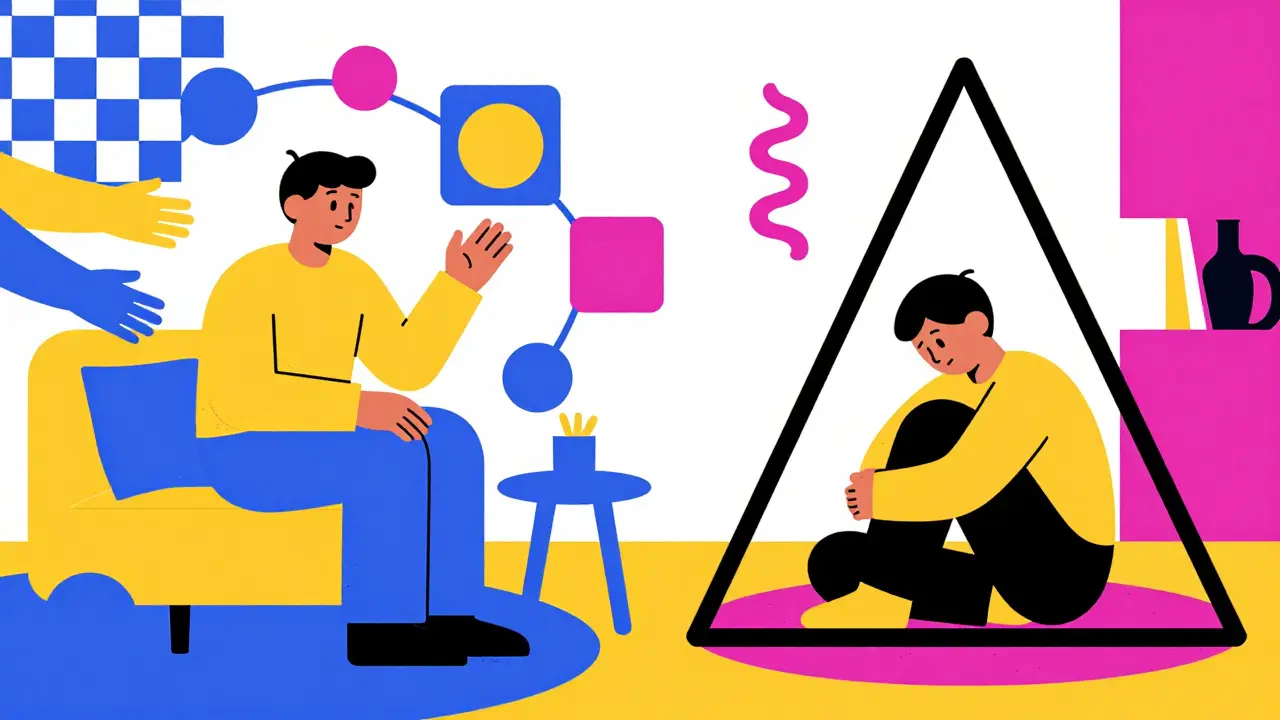
Choosing the right therapy depends entirely on identifying the root cause. A landmark study published in JAMA Psychiatry showed that complicated grief responds best to targeted psychotherapy called Complicated Grief Treatment (CGT). Developed by researchers at Columbia University, CGT focuses specifically on helping you process the relationship with the person you lost. It involves rewriting the story of the death and rebuilding a connection to life despite the absence of the loved one.
In contrast, depression typically requires a combination of medication and cognitive behavioral therapy (CBT). The STAR*D trial demonstrated that treating depression with sertraline plus CBT yielded better remission rates than therapy alone. Antidepressants regulate brain chemistry, whereas grief therapies regulate meaning-making. While some doctors prescribe antidepressants for acute grief to manage sleep, the National Institute for Health and Care Excellence advises against routine medication use for uncomplicated grief.
If you are unsure which path to take, a clinical assessment using tools like the UCLA Grief Reaction Scale can offer clarity. Validated in 2003, this 37-item checklist helps clinicians distinguish between the two conditions with 84.6% accuracy. It is important to seek professionals familiar with these scales, as general counseling may miss the nuance required for prolonged grief.
The Role of Connection and Withdrawal
Your behavior toward others is one of the most telling signs of which condition you are facing. A 2018 study in *Depression and Anxiety* tracked social interactions during these crises. They found that 68.4% of people in acute grief actively sought social support. We want to talk about our loved ones, share stories, and lean on friends.
Conversely, only 22.7% of depressed individuals without recent bereavement reached out. Withdrawal is often a symptom of the illness, not a choice. If you find yourself isolating, even though you desperately want company, that points toward depression. Recognizing this urge to isolate is vital; it tells you that standard self-care advice like "spend time with friends" might fail if your brain is signaling danger instead of comfort.
Future Tools and Digital Therapeutics
As we move into 2026, technology is bridging gaps in diagnosis. Machine learning algorithms can now analyze speech patterns to differentiate grief from depression with nearly 90% accuracy, according to research in *Nature Mental Health*. Furthermore, specialized apps like 'GriefShare' are reducing symptoms of prolonged grief by over 40%.
Telehealth platforms report significant growth in grief-specific sessions, with BetterHelp seeing a 127% increase in grief-related therapy between 2019 and 2022. This accessibility means you do not need to leave your home to access specialists in trauma or bereavement. While digital tools cannot replace human empathy, they provide structured interventions for the initial phases of recovery when traditional therapy appointments might be hard to secure.
Navigating the Journey Forward
Recovery looks different depending on your diagnosis. If you are grieving, your task is integration-finding a way to carry the memory of your loved one without letting it stop your life. If you are depressed, your task is restoration-rebuilding the neural pathways for hope and engagement. Knowing which door you are standing in front of determines how you open it.
You deserve care tailored to your specific reality. Whether you are riding the waves of grief or breaking free from the fog of depression, understanding the mechanics of your pain is the first step toward healing. Professional guidance remains the safest way to navigate these overlapping symptoms.
Can you have both grief and depression at the same time?
Yes, studies show that about 2.6% of bereaved individuals experience both conditions simultaneously. This co-morbidity is rare compared to having one or the other, but it does occur. If you struggle with self-worth issues in addition to missing someone, it is possible you are dealing with a dual diagnosis that requires integrated treatment addressing both the loss and the mood disorder.
How long does normal grief last before it becomes concerning?
There is no fixed deadline for grief, but clinical guidelines suggest looking at the six-month mark. If six months after the loss you still feel unable to function, experience severe functional impairment, and feel stuck in intense yearning without relief, you may meet the criteria for Prolonged Grief Disorder. For children, this window extends to 12 months.
Are antidepressants effective for grief?
Generally, no. Unless the grief has spiraled into major depression, antidepressants alone usually do not help the core pain of loss. Guidelines from the National Institute for Health and Care Excellence recommend against them for uncomplicated grief because 73.4% of bereaved individuals improve naturally within six months without medication. Medication is reserved for cases where depression symptoms dominate.
Why do I feel guilty in my grief but not in my depression?
Feelings of guilt are common in both, but the source differs. In grief, guilt usually centers on the relationship (e.g., "I wish I had visited more"). In depression, the guilt is often excessive and unrelated to specific events, manifesting as a deep sense of worthlessness or a belief that you are a burden to others regardless of your actual actions.
When should I see a specialist versus a general counselor?
General counselors can offer support, but specialists in Trauma or Bereavement are trained to recognize Prolonged Grief Disorder specifically. If you have been struggling for more than six months or feel your functioning is severely impaired, seek a clinician who uses evidence-based treatments like Complicated Grief Treatment (CGT) rather than generic talk therapy.

April 2, 2026 AT 03:15 AM
The neurobiological distinctions between prolonged grief and major depressive disorder are critical to understand. Clinical guidelines updated in 2022 formally recognized Prolonged Grief Disorder as distinct from Major Depressive Disorder. While the emotions overlap, the brain mechanisms and recovery paths differ significantly. Understanding these differences isn't just academic-it changes how you treat the pain and who you call for help.
We need more awareness regarding Complicated Grief Treatment specifically targeting the bereaved population. Standard CBT protocols often fail to address the specific attachment injury present in acute mourning scenarios.
It is imperative we stop conflating normal mourning with pathological mood disorders in clinical settings.
April 2, 2026 AT 05:18 AM
Your insights regarding the clinical distinctions are profoundly illuminating and certainly deserve widespread attention within our healthcare infrastructure :) .
I would argue that the nuanced differences in symptomatology require a much more sophisticated approach from practitioners who may not be specialized in trauma.
It is essential that we recognize the deep validity of grief without immediately pathologizing the natural response to loss, especially when considering the extended duration permitted by recent diagnostic criteria updates.
Thank you for bringing such clarity to this complex intersection of mental health care :)
April 3, 2026 AT 20:00 PM
This is absolutely SHOCKING!!! The way they differentiate the internal dialogue is mind-blowing!!!!
From "I am heartbroken" to "I am worthless"!!! That shift is terrifying!!
How could anyone miss that nuance??? It feels like the medical community is finally catching up to what we know deep down!!!!
I wish more people saw this sooner!!!
WOW!!!
April 5, 2026 AT 09:07 AM
totally agree with the point about social behavior differences
seeking support vs withdrawing is such a clear sign
i found the table really useful for explaining things to family members who dont get it
we should share more resources like this
April 6, 2026 AT 19:57 PM
People read too much into charts and tables anyway. Most folks cant distinguish feelings properly. It sounds nice but practical application is lacking. Why bother with all these scales when common sense dictates healing takes time?
April 8, 2026 AT 12:41 PM
That perspective is a bit harsh honestly 😟 Everyone heals differently and some need those tools 🛠️
It’s not about judging people just trying to find the right help ❤️
Hope you find peace wherever you are in your journey 🌈✨
April 9, 2026 AT 05:19 AM
The average person simply lacks the cognitive bandwidth to understand the nuances of psychiatric classification systems. It is amusing that laypeople discuss diagnoses with such fervor.
Clearly, most readers do not comprehend the clinical weight of the ICD-11 markers referenced in the text. One expects a certain level of intellectual discipline that is rarely observed in online forums.
April 10, 2026 AT 03:15 AM
I appreciate your take on the complexity though I think accessibility matters too.
Knowing these signs saves lives even if someone isnt a doctor.
Its great that we are sharing knowledge freely.
Keep spreading the good vibes!
April 10, 2026 AT 15:35 PM
The reliance on digital therapeutics is questionable given current efficacy data.
April 10, 2026 AT 19:58 PM
This reallly hits home for me persanally. I noticed that my own experiance mirrored the distinction made in teh text. Specifically regarding the timeline mentioned eariler. You see how the six month mark is crucial for diagnossition. Many people ignore that specefic benchmark completley. It changes everything about seekng profesionnal help. You cannot force your self to heal before you are ready. The biological mechanisims differ vastly in depression cases. Understading this helps remove shame from the proces. We ofen blame oursleves for feeling stuck too long. Knwoing it mighht be prolonged grief disoder is valdating. Therapy optionns like CGT are much less known. More cliniciens should be trainned in these specific metheds. Genneric talk therapy does not always adress the loss directly. Integration of memory is the real goall here. It is about carring the weight rather than dropping it.
April 11, 2026 AT 16:36 PM
Thanks for sharing your story man.
It is brave to put these thoughts out there.
Hope you find the treatment that works best for you.
Take it one day at a time.
April 12, 2026 AT 20:09 PM
The statistical accuracy of the UCLA scale is truly remarkable!!! One hundred percent precision would be ideal but eighty-four point six percent is incredibly reliable.
It is fascinating how technology continues to evolve alongside our understanding of human emotion!!
We must remain vigilant about the integration of these tools into mainstream care!!!