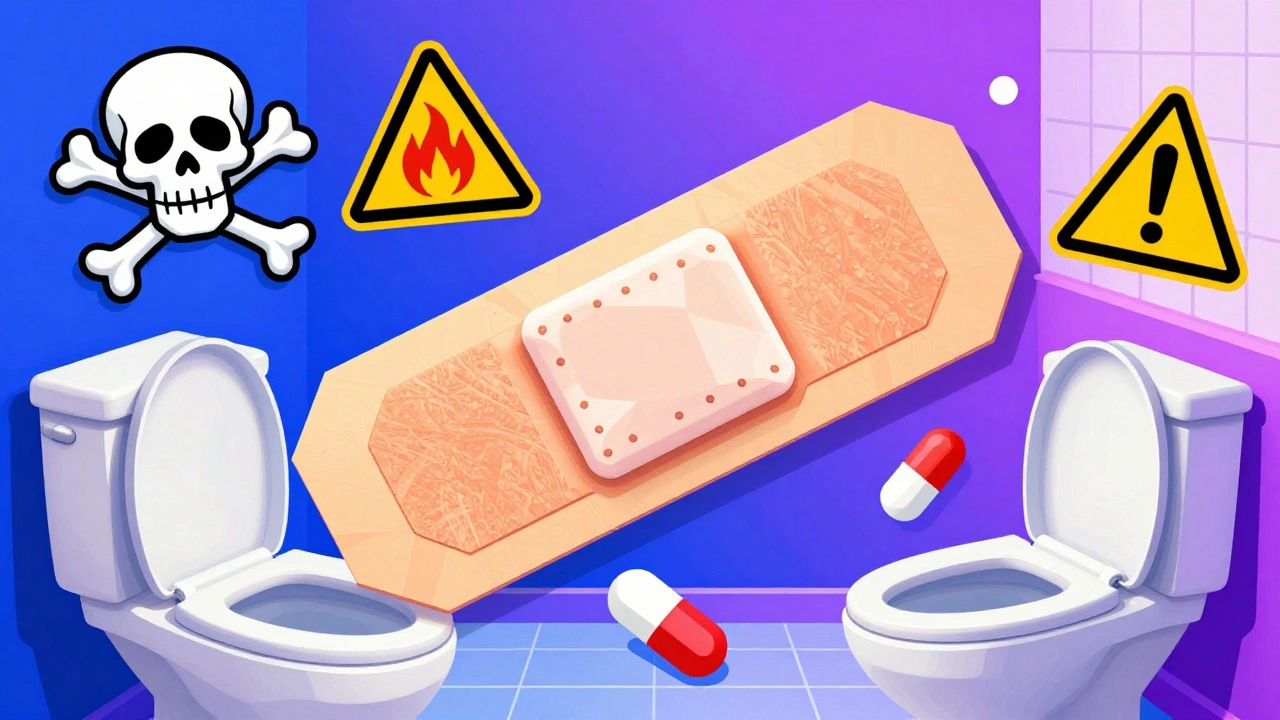
Overdose deaths from prescription medications aren’t random. They often happen because someone didn’t know how dangerous these specific forms can be. A fentanyl patch isn’t just a sticky bandage-it’s a slow-release drug device that can kill if handled wrong. A bottle of liquid morphine looks like cough syrup, but one extra drop can stop breathing. Extended-release pills like OxyContin aren’t meant to be crushed-they’re designed to release opioids over hours, not all at once. When people misunderstand how these medications work, the results can be deadly.
Why Patches Are More Dangerous Than They Look
Fentanyl patches are prescribed for chronic pain, but they’re not like nicotine patches. They contain enough drug to kill someone who’s never used opioids. The patch slowly releases medication through the skin over 72 hours. But if you cut it, chew it, or heat it with a heating pad, you’re forcing the full dose into your system all at once. That’s how people die-even those who’ve used opioids before.One common mistake: sharing patches. Someone might take a used patch off a loved one’s skin, thinking it’s "still good." But even a used patch holds enough fentanyl to overdose someone. Another risk? Applying it to damaged skin or hot areas like the neck or armpits. Heat speeds up absorption. A patch that’s safe on a calm arm can become lethal on a warm chest.
Always store patches in their original packaging, out of reach of kids and pets. Used patches should be folded in half with the sticky sides together and flushed down the toilet-never thrown in the trash. Many pharmacies offer take-back programs. If you’re unsure, ask your pharmacist. There’s no such thing as a "safe" leftover patch.
Liquid Medications: The Hidden Danger of Measuring
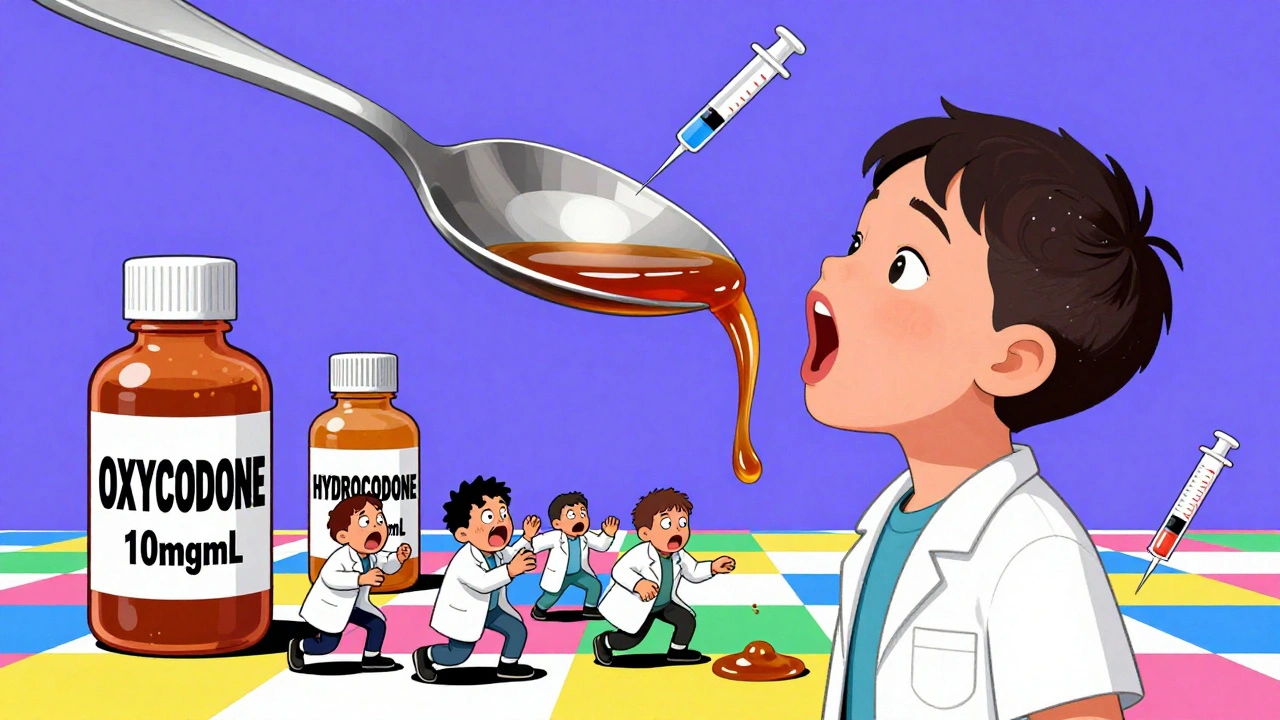
Liquid opioids like morphine, methadone, or codeine syrup are often prescribed for children or people who can’t swallow pills. But measuring them wrong is one of the most common causes of accidental overdose.Household spoons aren’t accurate. A teaspoon from your kitchen can hold anywhere from 3 to 7 milliliters. A proper oral syringe holds exactly 1 mL. If you’re told to take 5 mL and use a spoon, you might accidentally take 8 mL-and that could be a lethal dose.
Another risk: mixing up similar-looking bottles. A bottle of liquid oxycodone might look just like liquid hydrocodone. Labels fade. Kids grab the wrong one. Even adults get confused after a long hospital stay. Always double-check the name, strength, and dosage on the label. Keep liquids in their original containers. Never pour them into other bottles.
Some people mix liquid opioids with alcohol or benzodiazepines to get higher. That’s a deadly combo. These drugs all slow breathing. Together, they can stop it completely. Even if you’ve used them separately before, mixing them changes everything.
Extended-Release Pills: Crushing Is a Death Sentence
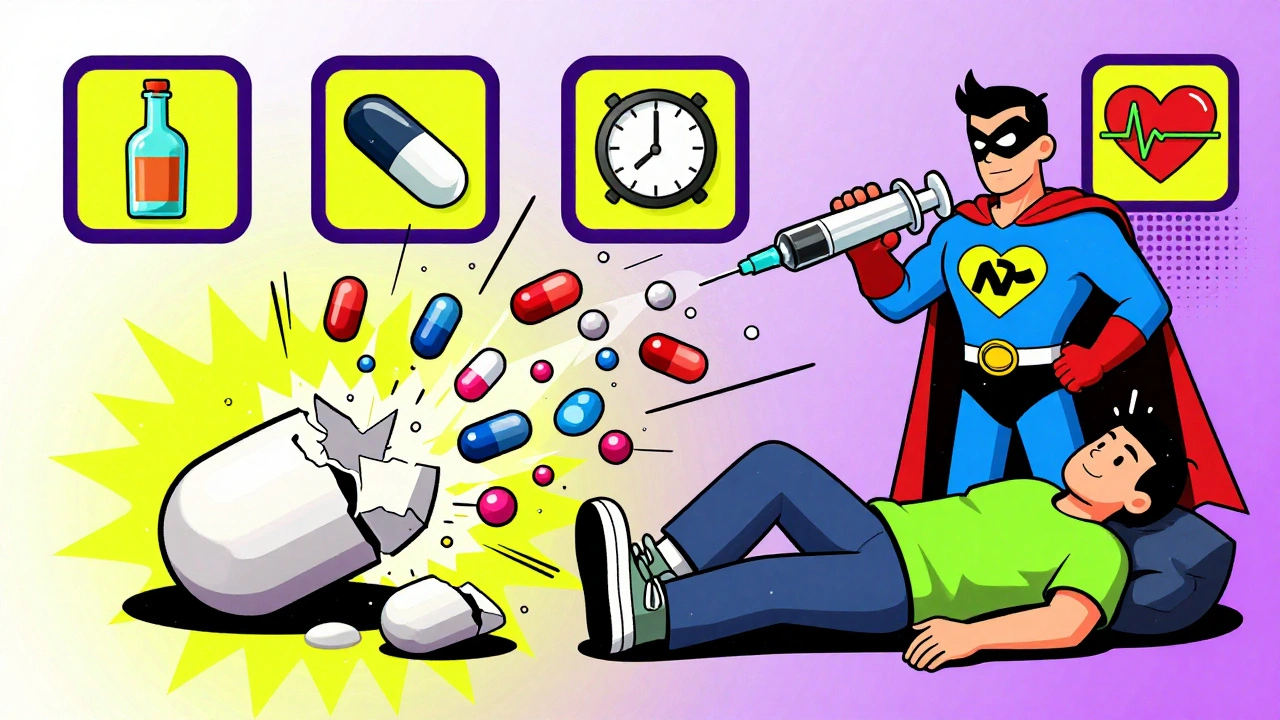
Extended-release pills are made to release medicine slowly over 12 or 24 hours. They have special coatings or cores that control how fast the drug enters your bloodstream. If you crush, chew, snort, or dissolve them, you’re bypassing that safety. You’re getting the full dose at once-like injecting a whole day’s worth of painkillers in seconds.People do this to get high. Or because they think it works faster for pain. But it doesn’t. It just kills faster. One study found that over 60% of opioid overdose deaths involving extended-release oxycodone happened after the pill was tampered with.
Never break, crush, or dissolve these pills. If you can’t swallow them, talk to your doctor. There are other forms-liquid, patches, or immediate-release versions-that might work better. If you’re using them for pain, stick to the schedule. Taking extra doses because the pain returns? That’s how dependence turns into overdose. Talk to your provider. Don’t adjust the dose yourself.
Naloxone: Your Lifeline, But Not a Cure-All
Naloxone saves lives. It reverses opioid overdoses by kicking the drug off brain receptors. But it doesn’t work forever. Its effects last 30 to 90 minutes. Extended-release opioids? They keep releasing for hours. That means after naloxone wears off, the person can slip back into overdose. This is called "renarcotization."That’s why calling 911 is non-negotiable. Even if naloxone brings someone back, they need medical care. Stay with them. Watch their breathing. If they stop breathing again, give another dose of naloxone. Most kits come with two doses. Keep the second one ready.
Keep naloxone where you can reach it fast-your wallet, purse, car, or next to your bed. If you’re using patches, liquids, or extended-release pills, make sure someone you trust knows where your naloxone is and how to use it. Teach them. Practice with a training kit. The more people who know how to use it, the more lives are saved.
Other Critical Steps to Stay Safe
- Don’t use alone. If you’re taking any of these medications, even as prescribed, have someone nearby. Text them when you take it. Set a timer. If you don’t respond in 30 minutes, they call 911.
- Use fentanyl test strips. Even if you’re prescribed medication, street drugs can be contaminated. Test strips cost less than $2 each. Dip a small amount of liquid or dissolve a crushed pill in water. If it shows fentanyl, don’t use it. You didn’t know it was there-and now you do.
- Know your tolerance. If you haven’t used opioids in a while, your body forgets how to handle them. That’s when overdose risk spikes. Start low. Go slow.
- Don’t mix drugs. Alcohol, sleep aids, anxiety meds-all of them slow your breathing. Combine them with opioids, and you’re playing Russian roulette.
- Use prescription monitoring programs. Many states track who’s getting opioids. If you’re seeing multiple doctors, your prescriptions might be flagged. This isn’t punishment-it’s protection.
What to Do If Someone Overdoses
If someone is unresponsive, not breathing, or has blue lips:- Call 911 immediately. Say "opioid overdose." Mention if they took a patch, liquid, or extended-release pill.
- Give naloxone. Use the nasal spray or injection. Even if you’re unsure, give it.
- Start rescue breathing if they’re not breathing. Tilt head back, pinch nose, give one breath every 5 seconds.
- Stay with them. Monitor breathing. If they wake up, keep talking. Keep them awake.
- Give a second dose of naloxone if they don’t respond in 3-5 minutes.
- Wait for EMS. Don’t leave them alone.
Many states have Good Samaritan laws. If you call 911 for someone overdosing, you won’t get arrested for having drugs. The law exists to save lives, not punish them.
Final Thought: This Isn’t About Willpower
People don’t overdose because they’re careless. They overdose because the system doesn’t prepare them for the real risks. Patches, liquids, and extended-release pills are medical tools-but they’re also time bombs if used wrong. The solution isn’t shame. It’s knowledge. It’s access. It’s having naloxone in your pocket and someone who knows how to use it.If you’re taking one of these medications, talk to your doctor. Ask: "What happens if I take too much?" "What if I miss a dose?" "Can I switch to something safer?" Don’t wait for a crisis to ask. Prevention starts with questions, not regrets.
Can I reuse a fentanyl patch?
No. Even if the patch still looks sticky, most of the medication has been used up. Reusing it won’t help your pain, and it could expose you to unpredictable doses. Used patches still contain enough fentanyl to kill a child or pet. Fold it in half, sticky sides together, and flush it down the toilet or return it to a pharmacy take-back program.
Is it safe to drink alcohol while on liquid opioids?
No. Alcohol and opioids both depress your central nervous system. Together, they can slow or stop your breathing completely-even at low doses. This combination is one of the leading causes of fatal overdose in people prescribed liquid opioids. Never mix them.
What if I accidentally crush an extended-release pill?
If you’ve already taken it, call 911 or go to the ER immediately. You’ve received a full dose all at once, which can be lethal. Even if you feel fine now, the drug is still entering your system. Medical staff may need to monitor you for 24 hours or give multiple doses of naloxone. Don’t wait for symptoms.
Can naloxone reverse an overdose from a fentanyl patch?
Yes, naloxone can reverse an overdose from a fentanyl patch. But because patches release fentanyl slowly over days, naloxone’s effects may wear off before the patch stops releasing the drug. That’s why you must stay with the person and call 911-even after naloxone works. They may need multiple doses and hospital monitoring for up to 24 hours.
How do I safely dispose of unused liquid opioids?
Never pour liquid opioids down the sink or toilet unless the label says it’s safe. Many pharmacies have drug take-back bins. If none are available, mix the liquid with an unappealing substance like kitty litter or coffee grounds, seal it in a plastic bag, and throw it in the trash. Keep it away from children and pets. Always remove personal info from the bottle before discarding.
Should I carry naloxone if I’m only taking prescribed medication?
Yes. Prescription opioids are responsible for thousands of overdose deaths each year. Even if you’re taking them exactly as directed, mistakes happen-measuring errors, mixing with other drugs, or changes in your tolerance. Naloxone is not just for people who misuse drugs. It’s a medical safety tool, like an EpiPen. Keep it accessible and teach someone how to use it.
Next Steps: What to Do Today
- If you use patches, liquids, or extended-release pills: Check your supply. Are you storing them safely? Are you measuring doses correctly?
- Ask your doctor or pharmacist: "Do I have naloxone on file? Can I get a free kit?" Many clinics provide them at no cost.
- Teach one person how to use naloxone. Practice with a training device.
- Download a free fentanyl test strip guide from a public health site. Keep a few in your wallet.
- If you’re caring for someone on these meds: Write down their dosing schedule and emergency contacts. Keep it on your phone and on the fridge.
Overdose isn’t inevitable. It’s preventable. But only if we stop pretending these medications are harmless. They’re powerful. They need respect. And they need people who know how to handle them safely.

December 8, 2025 AT 21:28 PM
This post literally saved my life. My grandma was on fentanyl patches and I had no idea a used one could kill a dog-now I fold them and flush 'em. Thank you for making this so clear.
December 9, 2025 AT 17:13 PM
omg i just realized i was storing my moms patch on the nightstand next to my little cousins toys… i just threw it in the trash 😭 i’m so dumb. going to the pharmacy right now to get naloxone. thanks for the wake up call.
December 11, 2025 AT 06:29 AM
i’ve been on extended-release oxycodone for 5 years and never knew crushing it was like injecting a whole day’s dose. 😳 i always thought it just made it work faster. i’m switching to liquid now and using a syringe. also got my naloxone kit today-life changing advice. 🙏
December 12, 2025 AT 16:53 PM
THIS IS ALL GOVERNMENT PROPAGANDA. They want you scared of your own meds so you’ll take their ‘safe’ alternatives. Fentanyl patches? They’re just slow-release. If you’re dumb enough to cut one open, that’s your fault. Stop blaming the medicine and start blaming the weak-minded. Also, why are we flushing pills? That’s polluting the water supply. #BigPharmaLies
December 13, 2025 AT 18:54 PM
In India, we don’t have access to naloxone easily. But the part about not mixing alcohol with liquid opioids? Absolutely true. My uncle died last year because he drank whiskey after his morphine dose. No one told him. This information should be in every clinic, every pharmacy, every school.
December 14, 2025 AT 18:13 PM
There’s a deeper philosophical layer here: we treat pain as a problem to be solved, not a signal to be understood. These medications are tools of last resort, yet we’ve normalized them like aspirin. The real issue isn’t misuse-it’s the medical system’s failure to prioritize non-pharmacological pain management. We medicate instead of listening.
December 15, 2025 AT 17:36 PM
Just got my free naloxone from the clinic today!! 🎉 I kept it next to my toothbrush so I won’t forget. Also showed my roommate how to use it. He laughed at first, then said ‘damn, I’m glad you did that.’ 🙌
December 15, 2025 AT 22:50 PM
Wow. Another ‘be careful with your meds’ post. Next they’ll tell me not to drink coffee while taking Adderall. I mean, really? This is what we’re doing now? Parenting adults through their prescription bottles? 😴
December 16, 2025 AT 02:36 AM
i just read this and cried. my bro overdosed last year on a crushed oxy. he’s okay now but still struggles. i keep naloxone in my purse. i even told my coworkers about it. we need more people like this. 💪❤️
December 18, 2025 AT 01:49 AM
There’s a moral distinction here between negligence and systemic failure. People don’t overdose because they’re lazy-they overdose because the system gives them tools without context. This post doesn’t just inform-it restores dignity. We don’t need more warnings. We need better education.
December 18, 2025 AT 15:36 PM
Let’s be real-most people who use opioids are just looking for a quick fix. This post is well-intentioned but overly simplistic. Naloxone isn’t a ‘medical safety tool’-it’s a Band-Aid on a hemorrhage. Real solutions involve dismantling the pharmaceutical-industrial complex and addressing root causes of chronic pain: trauma, poverty, loneliness. But no one wants to talk about that.
December 19, 2025 AT 21:38 PM
I’m a nurse in ER. Last week, a 22-year-old came in after crushing his extended-release morphine. He was fine after two naloxone doses-but his mom didn’t know what he took. She thought it was just ‘pain pills.’ We had to explain it like he was a toddler. This post? It should be mandatory reading for every family member of someone on opioids. Seriously. Print it. Hang it on the fridge.
December 19, 2025 AT 21:49 PM
Who really controls what’s in these patches? I’ve heard rumors that the government adds chemicals to make them more addictive so people stay hooked and keep buying. And why do they flush them? To poison the water? It’s all connected. Big Pharma, the FDA, the DEA-they’re all one big machine. Naloxone? It’s just to keep the body count low so they don’t get sued. Wake up.
December 20, 2025 AT 22:04 PM
Thank you for sharing this. I’ve been caring for my partner who’s on a fentanyl patch, and I never realized how dangerous heat was-like wearing a heating pad. We’ve stopped that immediately. I’m also keeping the naloxone in the bathroom now, next to the toothpaste. Simple, but it works. You made me feel less alone in this.