
Two million Americans wake up each day feeling exhausted, cold, and heavy-like their body is stuck in slow motion. Another half million feel jittery, hot, and like their heart is racing even when they’re sitting still. Both groups have the same gland acting up: the thyroid. But what’s happening inside them? Hypothyroidism and hyperthyroidism aren’t just opposites-they’re completely different diseases with matching symptoms that trick even doctors.
What’s Actually Going On in Your Thyroid?
Your thyroid is a small butterfly-shaped gland at the base of your neck. It makes two hormones: T4 and T3. These aren’t just for energy-they control how fast every cell in your body works. Think of them like the gas pedal for your metabolism. Too little? Everything slows down. Too much? Everything speeds up-and can start to break. Hypothyroidism means your thyroid isn’t making enough hormones. It’s the most common thyroid problem, affecting about 4.6% of U.S. adults. Hyperthyroidism means it’s making too much. It’s rarer, hitting around 1.2% of people. But here’s the catch: women are five to eight times more likely to get either one. And most people don’t realize they have it until things get bad.How Do You Know If You Have Hypothyroidism?
If your thyroid is underactive, your body feels like it’s running on fumes. You might think you’re just getting older, stressed, or lazy. But it’s not. Here’s what actually happens:- Your heart rate drops below 60 beats per minute-even when you’re awake and moving.
- You gain 10 to 30 pounds without changing what you eat.
- You’re always cold, even in a warm room. Eighty-seven percent of patients say this is their worst symptom.
- Your skin gets dry, your hair falls out, and your nails crack.
- You’re constipated, even if you drink water and eat fiber.
- You feel depressed, foggy, or like you can’t remember simple things.
- Women get heavier, longer periods-or stop having them altogether.
What Does Hyperthyroidism Feel Like?
If your thyroid is overactive, your body feels like it’s stuck in overdrive. You might think you’re just anxious, or that you’re losing weight because you’re eating less. But you’re not. Here’s what’s really happening:- Your heart races-over 100 beats per minute-even when you’re resting.
- You lose weight even if you’re eating more than usual.
- You sweat constantly, even in air conditioning.
- Your hands shake. You can’t hold a cup without spilling.
- You have diarrhea or need to go to the bathroom way more often.
- You feel nervous, panicked, or on edge-even when nothing’s wrong.
- Women get lighter, shorter periods-or none at all.
How Do Doctors Diagnose These Conditions?
You can’t guess this. You need a blood test. The first one is TSH-thyroid-stimulating hormone. It’s made by your brain to tell your thyroid to work harder.- In hypothyroidism, TSH is high (over 4.5 mIU/L). Your brain is screaming, “Work harder!” but your thyroid won’t respond.
- In hyperthyroidism, TSH is low (under 0.4 mIU/L). Your brain says, “Stop!” but your thyroid ignores it.

How Are They Treated?
Hypothyroidism has one simple fix: levothyroxine. That’s synthetic T4. You take one pill a day, on an empty stomach, 30 to 60 minutes before breakfast. Coffee, calcium, iron, and even soy can block it. So don’t take it with your morning routine. Take it alone. Dosing is based on weight: about 1.6 micrograms per kilogram. A 70kg person takes around 112 mcg daily. It takes 6 to 8 weeks to feel better. Your doctor will check your TSH every 6 to 8 weeks until it’s stable. Then once a year. But here’s the problem: 15% of people still feel awful even with normal TSH. Why? Their bodies can’t convert T4 to T3 well. That’s genetic. Some need T3 added. But most doctors won’t prescribe it. It’s off-label. And insurance won’t cover it. That’s why so many patients feel broken-even when their labs look perfect. Hyperthyroidism? That’s messier. Three options:- Antithyroid drugs: Methimazole or propylthiouracil. They stop your thyroid from making hormones. You take them for 12 to 18 months. But they can hurt your liver or lower your white blood cells. Monthly blood tests are required.
- Radioactive iodine: You swallow a pill. The radiation destroys your thyroid. It’s permanent. But 80% of people become hypothyroid after this. That’s not a side effect-it’s the goal. You’ll then need levothyroxine for life.
- Surgery: Remove the thyroid. Used if the gland is huge, if cancer is suspected, or if drugs and radiation won’t work. Also permanent. Also requires lifelong hormone replacement.
What Happens If You Don’t Treat Either One?
Untreated hypothyroidism can lead to heart disease, high cholesterol, depression, and even a rare but deadly condition called myxedema coma. Your body shuts down. You go into a coma. Death rate is 30-50% if not treated fast. Untreated hyperthyroidism can cause atrial fibrillation, bone loss, and thyroid storm. That’s when your body goes into full meltdown. Heart rate over 140. Fever. Vomiting. Confusion. It’s a medical emergency. Death rate is 10-20%. Both conditions are treatable. But delay costs lives.Who Gets These Conditions-and Why?
Women. Always women. Why? It’s tied to immune system genes on the X chromosome. You have two. Men have one. That makes women more vulnerable to autoimmune diseases. Age matters too. Hypothyroidism hits harder after 50. One in 10 women over 50 has it. Hyperthyroidism hits twice: once in your 20s to 40s (Graves’), and again after 60 (toxic nodules). And yes-thyroid cancer risk goes up with age too. Family history? Big risk. If your mom or sister has Hashimoto’s, you’re 10 times more likely to get it. And here’s a hidden trigger: iodine. Too much (from supplements or seaweed) can trigger both conditions in people with hidden thyroid problems. That’s why most multivitamins now avoid iodine unless labeled for thyroid support.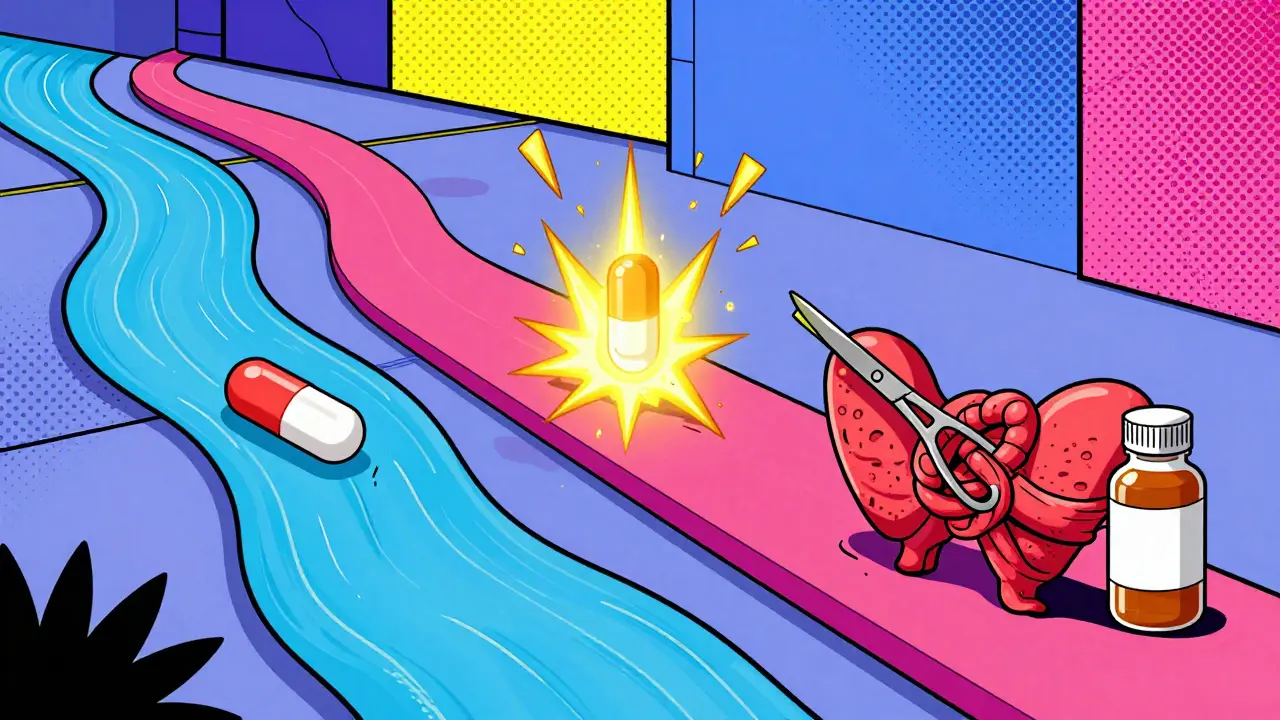

January 12, 2026 AT 18:53 PM
This article is textbook-level accurate but completely ignores the real issue: doctors are lazy. They order TSH, see it's 'normal' (like 5.2), and send you home with a pat on the head. Meanwhile, your free T3 is in the toilet and you're drowning in fatigue. No one talks about the 15% of people who are genetically stuck in T4-to-T3 conversion hell. You're not broken. The system is.
And don't get me started on insurance refusing T3 because it's 'off-label.' Like, what, we're supposed to suffer because Big Pharma doesn't profit from it? Wake up.
January 12, 2026 AT 21:33 PM
bro. i had hyperthyroidism and thought i was just a caffeine addict. lost 25lbs in 3 months, couldnt sleep, hands shook like i was in a earthquake. doc said 'stress.' i cried in the parking lot. then i found a doc who actually listened. got the test. turned out my TSH was 0.02. i was basically a human nuclear reactor. this post? 10/10. if you feel off and your doc says 'it's just anxiety' - go get a blood test. it's $30. your life depends on it.
January 13, 2026 AT 17:05 PM
Y’know what’s worse than having hypothyroidism? Being told you’re just 'depressed' or 'lazy' by someone who’s never had their metabolism frozen in a block of ice. I was 32, working 60-hour weeks, eating clean, and still gaining weight. My hair was falling out in clumps. My therapist asked if I was 'motivated.' I wanted to scream. I was already screaming inside. Then I got my TSH: 18.8. Levothyroxine changed my life. Not because I'm weak. Because my thyroid was dead. And that’s not a character flaw. It’s biology.
Stop blaming people for being tired. Test them first.
January 13, 2026 AT 23:19 PM
As someone who’s been managing Hashimoto’s for 12 years, I want to emphasize: the lab numbers are only part of the story. TSH normal? Great. But if your free T3 is low-normal and your reverse T3 is elevated? You’re still hypothyroid at the cellular level. Many endocrinologists still don’t test for these. Ask for them. Push for them. Your body isn’t lying - it’s just being ignored.
Also: selenium and vitamin D matter. Not cures, but supportive players. And yes - soy, gluten, and excess iodine can trigger flares in susceptible folks. You’re not being dramatic. Your immune system is just very, very sensitive.
January 15, 2026 AT 13:10 PM
This is why medicine is broken. People are being prescribed levothyroxine like it’s aspirin. No one tests for antibodies. No one asks about family history. No one considers that maybe you have a silent autoimmune condition that’s been brewing since your teens. You’re not 'just tired.' You’re being failed by a system that treats symptoms like inconveniences, not red flags. And now we’re all just supposed to be grateful for a pill that doesn’t fix the root cause? Pathetic.
January 16, 2026 AT 15:55 PM
Stop overcomplicating it. TSH high? Take levothyroxine. TSH low? Treat hyperthyroidism. No magic. No conspiracy. Just science. If you still feel bad after treatment, it’s not the medication. It’s you. Maybe you’re depressed. Maybe you’re sleep-deprived. Maybe you’re just lazy. Don’t blame the thyroid for your life choices.
January 16, 2026 AT 22:36 PM
Thank you for writing this - with such clarity. I’ve been fighting for years to get my T3 levels checked. My GP said, 'You’re fine.' I cried in his office. Then I went to a functional medicine doc who tested my reverse T3, antibodies, and selenium levels. My reverse T3 was sky-high. That’s why I felt like a zombie on levothyroxine. I started adding Cytomel. Within 3 weeks, I could think again. Please, if you’re reading this and still feel awful - ask for the full panel. Don’t let anyone dismiss you. You’re not imagining it.
January 18, 2026 AT 01:09 AM
Just wanted to say: I was diagnosed with Graves’ at 24. I lost my hair, my job, my confidence. Radioactive iodine was terrifying - but it saved me. Now I’m on levothyroxine, and I’m okay. Not perfect. But okay. It took years to find the right dose. I still have days where I feel off. But I know why. And that’s everything. You’re not alone. This isn’t your fault. You’re not broken. You’re just… recalibrating.
January 18, 2026 AT 18:23 PM
Oh wow. Another 'thyroid is everything' post. Let me guess - you also believe your gut health is causing your anxiety, your adrenal fatigue is why you’re tired, and your chakras are misaligned? Please. This isn’t a wellness blog. It’s medicine. TSH is the gold standard. If you’re not improving on levothyroxine, maybe you need a therapist, not a naturopath. Stop turning medical conditions into identity crises.
January 19, 2026 AT 19:15 PM
the article is fine but why do people think thyroid is the only reason they feel bad? i had both. i also had sleep apnea, depression, and drank too much coffee. thyroid was one piece. stop making it your whole story. also typo in 'levothyroxine' - you missed an e. lol.
January 20, 2026 AT 01:20 AM
Interesting how the U.S. treats thyroid like a pharmacy problem - pop a pill, call it a day. Meanwhile, in Germany, they routinely test for T3, reverse T3, and thyroid antibodies as part of standard panels. In Japan, they screen newborns for congenital hypothyroidism. We’re treating a systemic issue like a vending machine malfunction. And we wonder why people are still exhausted.
January 20, 2026 AT 10:27 AM
Let me just say this: if you’re on levothyroxine and still feel like you’re moving through molasses - you’re not crazy. Your body might need T3. Period. And if your doctor says, 'It’s not FDA-approved,' tell them to read the Endocrine Society guidelines. They explicitly say T3 can be added in refractory cases. Insurance won’t cover it? Find a clinic that does compounding. Or pay out of pocket. Your quality of life is worth more than a copay.
Also - avoid soy milk with your pill. It’s not a suggestion. It’s a rule.
January 21, 2026 AT 14:31 PM
While the article is technically accurate, it lacks epistemological nuance. The thyroid is not a standalone endocrine organ - it is a dynamic node within a complex neuroendocrine-immune axis. To reduce the condition to TSH levels and pharmaceutical substitution is a reductive anthropocentric fallacy. The body is not a machine to be calibrated, but a sentient ecosystem. Until we acknowledge the phenomenological experience of fatigue as ontologically valid - not merely biochemically quantifiable - we will continue to pathologize the suffering of those who do not fit the statistical norm.
January 21, 2026 AT 16:15 PM
Let us not forget the broader context. The thyroid is not merely a gland; it is a mirror reflecting the cumulative stress of modern existence - environmental toxins, chronic inflammation, sleep deprivation, and the erosion of social cohesion. The rise in autoimmune thyroid disease parallels the decline in community, the increase in processed foods, and the normalization of burnout. To treat this as a simple hormone replacement problem is to mistake the symptom for the disease. We must ask: Why are so many of us, especially women, being asked to carry the weight of a broken system - and then told to just take a pill?
Resmetirom is promising, yes - but it is not a panacea. What we need is a paradigm shift: from pharmacological band-aids to systemic, preventative, and compassionate care. The thyroid is the canary in the coal mine. We must listen - not just to the labs, but to the lives behind them.
January 23, 2026 AT 01:44 AM
Hey, just wanted to say thanks for this. I showed it to my mom - she’s 58 and just got diagnosed with hypothyroidism. She cried. Said no one ever listened. Now she’s getting tested properly. You made a difference. Seriously. Thank you.
January 24, 2026 AT 05:10 AM
I’ve been living with Hashimoto’s for 15 years, and I’ve tried everything: gluten-free, keto, iodine-free, selenium, magnesium, acupuncture, meditation, biohacking, you name it. The only thing that actually stabilized me? Finding the right dose of levothyroxine - and then, finally, switching from generic to brand-name Synthroid. My body just didn’t absorb the generic well. My TSH went from 8.2 to 1.8 in 6 weeks. No other change. Just the pill. So if you’re still tired - don’t assume it’s your diet or your mindset. Try the brand name. It’s not magic. It’s just chemistry. And sometimes, chemistry needs the right version of the same molecule.
January 25, 2026 AT 13:00 PM
They say thyroid disease is 'common.' But what they don’t tell you is that it’s the silent epidemic of women who were told they were 'too emotional' - when really, their hormones were screaming. I was labeled 'hysterical' at 22. At 28, I was diagnosed with Graves’. At 34, I lost my thyroid to radiation. Now I’m on a pill. But the trauma? That never left. The gaslighting. The dismissal. The way men looked at me like I was dramatic when I said I was cold. I didn’t need a therapist. I needed a blood test. And now? I’m not just surviving. I’m screaming it from the rooftops.
January 25, 2026 AT 23:32 PM
I’m a nurse. I’ve seen it. Patients come in with TSH at 15, eyes glazed, skin like parchment. They say, 'I just need to sleep more.' I order the test. They cry when they get the results. Not because they’re sick. Because they finally have a name for the weight they’ve been carrying for years. This post? It’s not just medical. It’s human. Thank you.
January 26, 2026 AT 10:39 AM
Okay so like… I think the real issue here is that we’ve turned our bodies into machines that need fixing, instead of seeing them as sacred vessels of spiritual energy. The thyroid isn’t just a gland - it’s your throat chakra, man. When you suppress your voice, when you don’t speak your truth, your thyroid shuts down. That’s why women get it more - they’re taught to be quiet. So the solution isn’t pills - it’s journaling, breathwork, and saying NO to toxic people. I’ve been off meds for 3 years now. My TSH is 2.1. I’m healed. Not by science. By soul.
January 27, 2026 AT 15:36 PM
People are so dramatic. You take one pill. You feel better. End of story. Stop making everything a conspiracy. If you’re still tired, maybe you’re just fat. Or lazy. Or don’t get enough sleep. Stop blaming your thyroid for your bad life choices.
January 29, 2026 AT 13:50 PM
That’s the thing - even when you’re on the right dose, the emotional toll lingers. I still panic when I miss a pill. I still check my temperature three times a day. I still feel guilty for needing medication. That’s the invisible burden. The thyroid isn’t just a gland. It’s a reminder that your body betrayed you. And society doesn’t give you space to grieve that.