
Cancer treatment has changed dramatically in the last decade. We used to rely mostly on chemotherapy and radiation to kill tumor cells. Now, we have a powerful new tool: Immunotherapy, which is a type of cancer treatment that uses your own immune system to fight cancer. It doesn't attack the cancer directly like chemo does. Instead, it helps your body’s natural defenses recognize and destroy malignant cells. Two of the most promising forms are Checkpoint Inhibitors and Immune Checkpoint Blockade and CAR-T Cell Therapy, also known as Chimeric Antigen Receptor T-Cell Therapy. Both work with the immune system, but they do it in very different ways.
If you or a loved one is facing a cancer diagnosis, understanding these options can feel overwhelming. You might wonder which one is right for your specific situation. Are they safe? Do they work for solid tumors like lung or breast cancer? What about the side effects? This guide breaks down how these treatments work, who they help, and what challenges remain.
How Checkpoint Inhibitors Work
To understand checkpoint inhibitors, you first need to know how your immune system normally stops itself from attacking healthy tissue. Your immune cells, specifically T cells, have "brakes" called checkpoints. These brakes prevent overactive immune responses that could damage your body. Cancer cells are clever. They hijack these brakes to hide from your immune system.
Checkpoint Inhibitors are drugs that block these inhibitory signals, releasing the brakes on the immune system so it can attack cancer cells. The most common targets are proteins called PD-1, PD-L1, and CTLA-4. When a drug blocks these proteins, your T cells can see the cancer again and start destroying it.
The first checkpoint inhibitor, ipilimumab, was approved by the FDA in 2011 for metastatic melanoma. Since then, drugs like pembrolizumab and nivolumab (which target PD-1) and atezolizumab (which targets PD-L1) have become standard treatments for many cancers, including lung, kidney, and bladder cancer. They are usually given through an IV infusion.
However, they don’t work for everyone. Only about 20% to 40% of patients respond well to these drugs. This is often because the tumor lacks enough immune cells nearby to begin with-a condition sometimes called "cold" tumors. Without those cells, there’s nothing for the drug to activate.
Understanding CAR-T Cell Therapy
If checkpoint inhibitors release the brakes, CAR-T Cell Therapy is like engineering supercharged soldiers to hunt down cancer. This treatment involves taking T cells from your own blood, genetically modifying them in a lab, and putting them back into your body.
Here is the step-by-step process:
- Collection: Doctors use a procedure called leukapheresis to collect your T cells.
- Engineering: In a specialized lab, scientists use a viral vector to insert a gene that creates a Chimeric Antigen Receptor (CAR). This receptor acts like a GPS, guiding the T cell to a specific protein on the surface of cancer cells.
- Expansion: The modified cells are grown in large numbers over several weeks.
- Preparation: You receive chemotherapy to lower your existing white blood cell count, making room for the new cells.
- Infusion: The CAR-T cells are infused back into your bloodstream.
The first CAR-T therapy, tisagenlecleucel, was approved in 2017 for acute lymphoblastic leukemia (ALL). It has shown incredible success in blood cancers, with complete response rates of 60% to 90% in some cases. However, it has struggled with solid tumors like breast or lung cancer. The complex environment inside solid tumors makes it hard for the engineered cells to survive and function.
Key Differences: A Side-by-Side Look
While both are immunotherapies, their practical application differs significantly. Here is a comparison to help clarify the distinctions.
| Feature | Checkpoint Inhibitors | CAR-T Cell Therapy |
|---|---|---|
| Administration | Intravenous (IV) infusion | Customized cell infusion after manufacturing |
| Availability | Off-the-shelf (ready to use) | Made-to-order (takes 3-5 weeks) |
| Best For | Solid tumors (lung, melanoma, kidney) | Blood cancers (leukemia, lymphoma) |
| Response Rate | 20% - 40% | 60% - 90% (in eligible blood cancers) |
| Cost | High, but variable | Very high ($373,000 - $475,000 per dose) |
Side Effects and Safety Concerns
Both treatments are powerful, which means they come with significant side effects. Understanding these risks is crucial for informed decision-making.
Checkpoint Inhibitors can cause immune-related adverse events (irAEs). Because the drug wakes up the immune system, it might attack healthy organs too. Common issues include:
- Skin rashes (30-40% of patients)
- Fatigue (35-50%)
- Gastrointestinal inflammation or colitis (10-15%)
- Hypothyroidism (5-10%)
CAR-T Cell Therapy has different, often more acute, risks. The two biggest concerns are:
- Cytokine Release Syndrome (CRS): Occurs in 50-70% of patients. This happens when the immune cells release too many inflammatory chemicals, causing high fevers, low blood pressure, and organ stress.
- ICANS: Immune effector cell-associated neurotoxicity syndrome affects 20-40% of patients, leading to confusion, speech difficulties, or seizures.
Managing these side effects requires specialized care. Hospitals need experienced teams to handle CRS, which is why CAR-T therapy is mostly available at major academic medical centers.
The Challenge of Solid Tumors
One of the biggest hurdles in oncology today is treating solid tumors with CAR-T cells. While blood cancers float freely in the circulation, solid tumors create a hostile physical barrier. The tumor microenvironment is often immunosuppressive, meaning it actively shuts down immune activity.
Additionally, finding the right target is difficult. Blood cancers often share unique markers (like CD19) that aren’t found on healthy cells. Solid tumors lack such clear-cut targets. If CAR-T cells attack a marker present on healthy tissue, it causes "on-target, off-tumor" toxicity, which can be life-threatening.
Current clinical trials show objective response rates of less than 10% for CAR-T in most solid tumors. Researchers are working on solutions, such as engineering "armored" CAR-T cells that secrete cytokines to resist suppression, or targeting alternative checkpoints like LAG-3 and TIM-3.
Combining Therapies: The Future Frontier
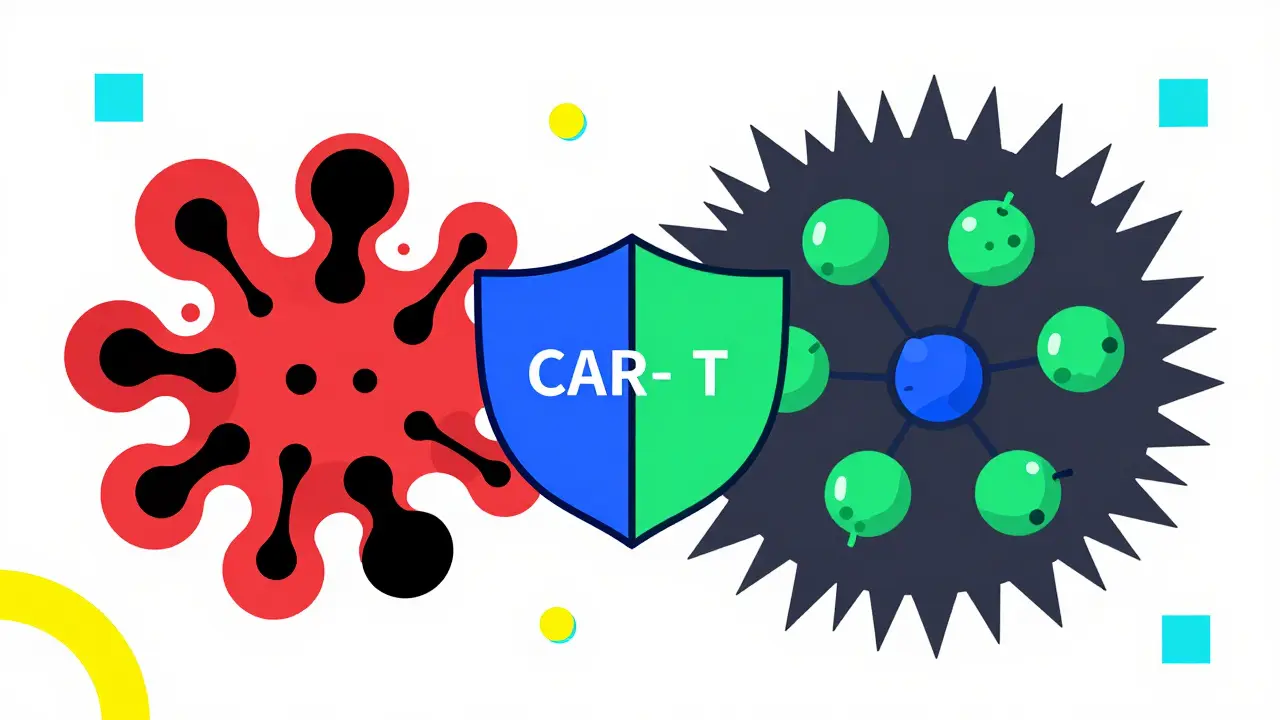
Since each approach has weaknesses, scientists are looking at combining them. The idea is simple: use CAR-T cells to provide the targeted attack force, and use checkpoint inhibitors to keep them active and persistent.
A novel approach involves engineering CAR-T cells to secrete checkpoint-blocking molecules locally within the tumor. Preclinical studies suggest this could reduce systemic toxicity by up to 42% while maintaining anti-tumor efficacy. As of early 2024, there were 47 active clinical trials testing combinations of CAR-T and checkpoint blockade, with 68% focused on solid tumors.
This combination addresses two key needs: getting enough immune cells into the tumor and keeping them functional long enough to do the job. It represents the next frontier in making immunotherapy effective for a wider range of cancers.
Access and Cost Barriers
Even if a treatment works, getting it can be hard. The global immunotherapy market reached $128.4 billion in 2022, with checkpoint inhibitors making up the majority. However, access is unequal.
Studies show that Medicaid patients are 23% less likely to receive checkpoint inhibitors compared to privately insured patients. For CAR-T therapy, Black patients are 31% less likely to receive treatment than White patients. The high cost-nearly half a million dollars for a single CAR-T dose-and the need for specialized manufacturing facilities limit availability. Most CAR-T treatments in the US are administered at just 15% of cancer centers, despite these centers treating only a fraction of all patients.
What is the main difference between checkpoint inhibitors and CAR-T therapy?
Checkpoint inhibitors are drugs that block proteins preventing your immune system from attacking cancer, essentially "releasing the brakes." CAR-T therapy involves collecting your own T cells, genetically modifying them in a lab to target cancer, and infusing them back into you. ICIs are off-the-shelf drugs, while CAR-T is a personalized living drug.
Which cancers respond best to CAR-T cell therapy?
CAR-T therapy is currently most effective against blood cancers, particularly B-cell acute lymphoblastic leukemia (ALL) and certain types of lymphoma. It has shown limited success in solid tumors like lung, breast, or pancreatic cancer due to the complex tumor microenvironment.
Are checkpoint inhibitors safe?
They are generally well-tolerated but can cause immune-related adverse events (irAEs) where the immune system attacks healthy organs. Common side effects include skin rashes, fatigue, and thyroid issues. Serious complications like colitis or pneumonitis occur in a smaller percentage of patients and require prompt medical attention.
How much does CAR-T cell therapy cost?
The cost is very high, typically ranging from $373,000 to $475,000 per treatment. This covers the collection, genetic engineering, manufacturing, and infusion process. Insurance coverage varies, and out-of-pocket costs can still be significant depending on your plan.
Can checkpoint inhibitors and CAR-T therapy be used together?
Yes, researchers are actively studying combinations of these therapies. Combining them aims to improve efficacy in solid tumors and enhance the persistence of CAR-T cells. However, this combination can increase the risk of severe side effects, so it is primarily done in clinical trials under strict monitoring.