Most people throw away expired medications without thinking twice. But what if you could safely keep those pills, capsules, or liquids usable for years beyond their printed date? It’s not magic-it’s science. And it’s happening right now in hospital stockpiles, military warehouses, and even some pharmacies. The truth? Properly stored medications often stay effective long after their expiration date. The question isn’t whether they work-it’s whether you’re storing them right.
Expiration Dates Aren’t Death Dates
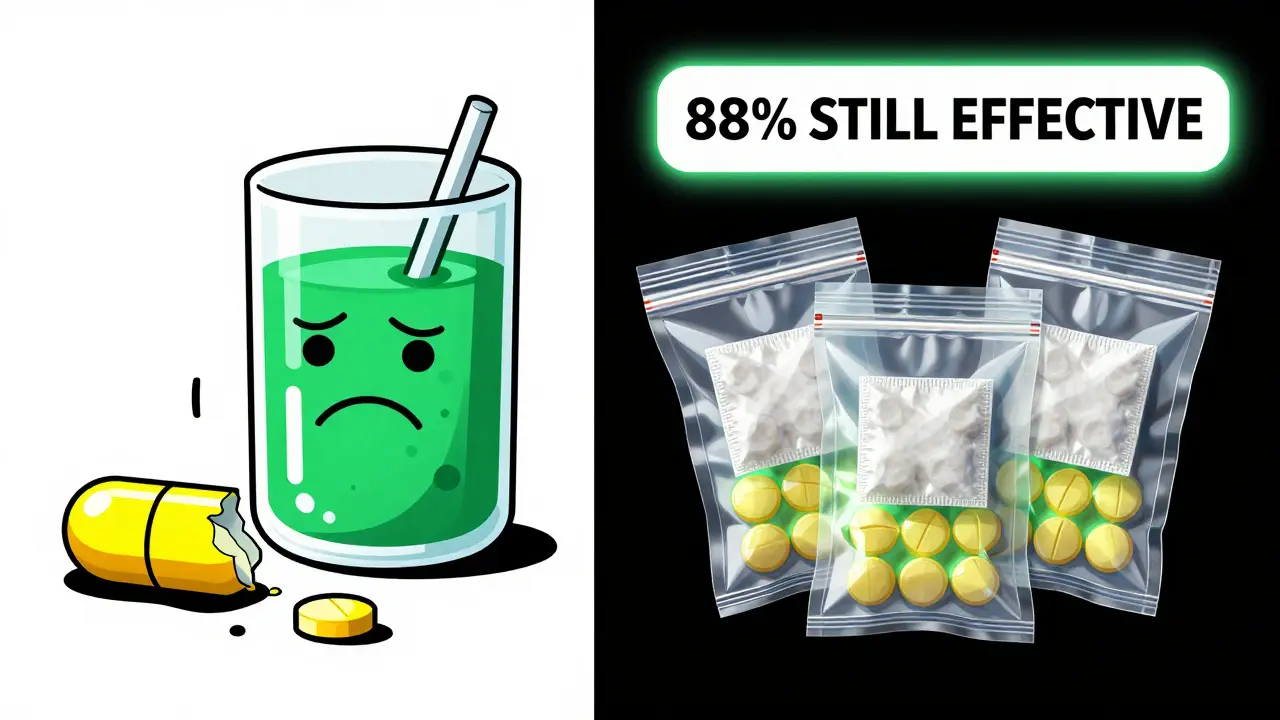
The date on your medicine bottle isn’t a hard cutoff. It’s a manufacturer’s guarantee that the drug will be at least 90% potent up to that point. After that? It doesn’t suddenly turn toxic. The U.S. government’s Shelf-Life Extension Program (SLEP), run by the FDA and Department of Defense since 1986, tested over 3,000 lots of drugs. The results? 88% of them were still safe and effective-some for more than five years past expiration. Drugs like naloxone, fentanyl, and halothane showed 100% stability. Even Tamiflu, during the 2009 flu scare, was cleared for use up to 10 years past its label date when stored correctly.Where You Store It Matters More Than When You Bought It
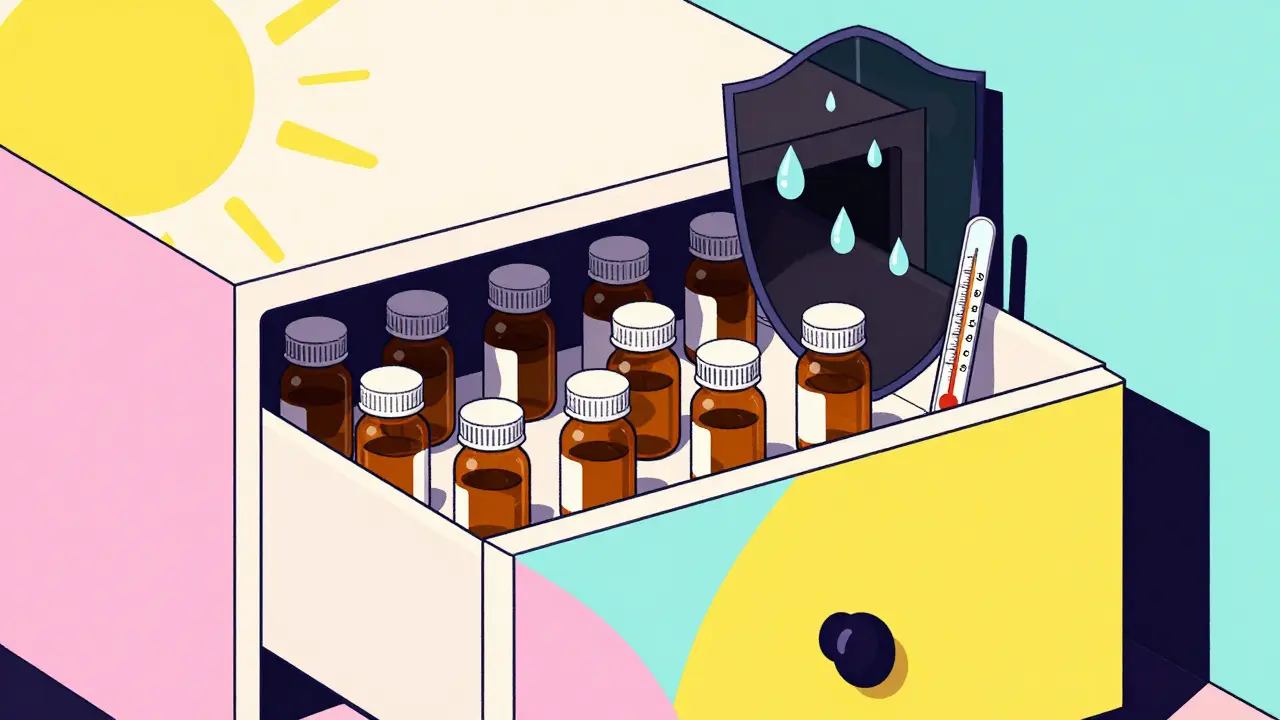
The biggest reason meds lose potency isn’t time-it’s environment. Heat, moisture, and light are the real enemies. A bathroom cabinet? Bad idea. The steam from your shower can ruin pills in weeks. A kitchen drawer near the stove? Even worse. The ideal spot for most solid medications-pills, capsules, tablets-is a cool, dry place, like a bedroom drawer or closet shelf. Keep them away from windows. Sunlight breaks down active ingredients. Some meds need refrigeration. Insulin, certain antibiotics, eye drops, and some vaccines must stay between 2°C and 8°C. But don’t freeze them unless the label says so. Freezing can destroy the structure of liquid medications. If you’re storing insulin, keep it in the main part of the fridge-not the door, where temperatures swing. A thermometer inside the fridge helps you catch spikes before they ruin your meds.Containers Are Part of the Equation
That plastic bottle your pills came in? It’s not just for convenience. It’s designed to protect. The original packaging often includes moisture barriers, child-resistant caps, and light-blocking materials. Never transfer pills to a pill organizer unless you’re using them within a week. Long-term storage in plastic containers with loose lids lets in air and humidity. If you must use an organizer, pick one with a tight seal and store it in a cool, dry place. For long-term storage, amber glass bottles or blister packs with aluminum backing are best. They block UV light and seal out moisture. If you’re keeping meds for emergencies-like natural disasters or travel-invest in vacuum-sealed bags with desiccant packs. These are commonly used in military and disaster stockpiles to extend shelf life by months or even years.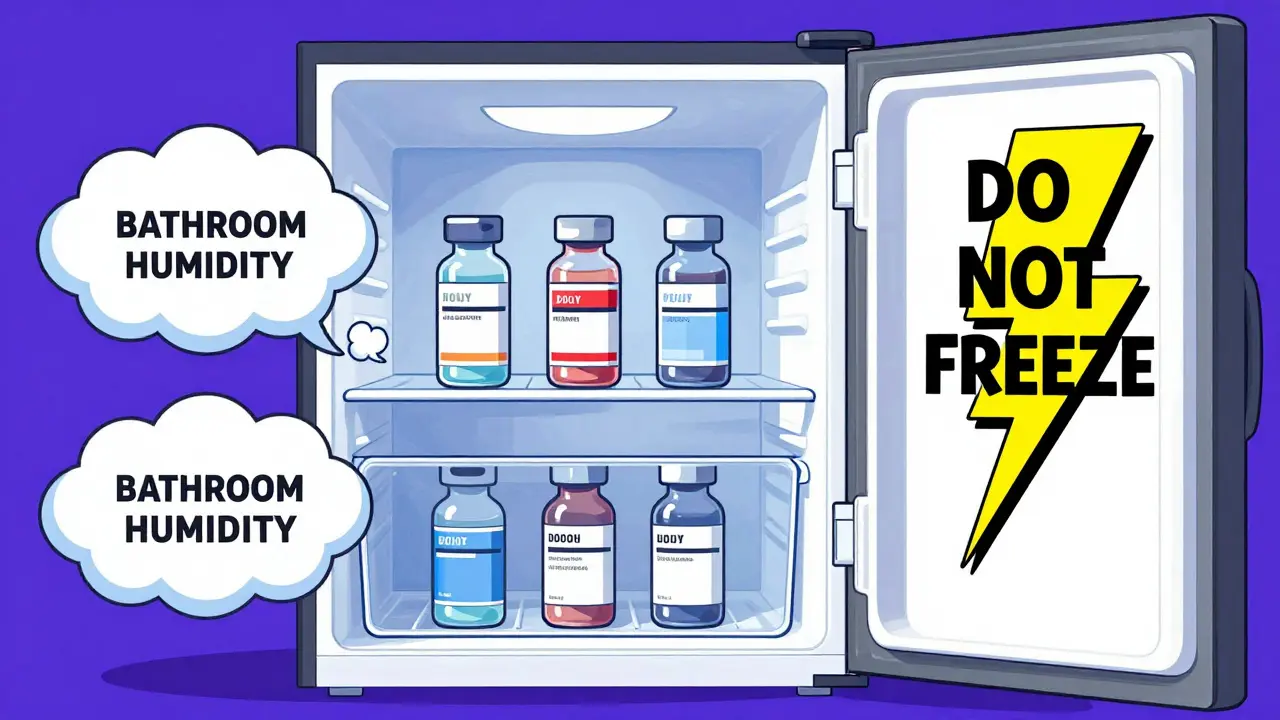
Not All Medications Are Created Equal
Some drugs are more forgiving than others. Solid oral tablets and capsules-like aspirin, ibuprofen, or blood pressure pills-tend to hold up well. Liquid antibiotics, insulin, nitroglycerin, and reconstituted powders? Not so much. Once opened or mixed, they degrade fast. Liquid tetracycline, for example, can break down into toxic compounds. Don’t risk it. Biologics-like mRNA vaccines or monoclonal antibodies-are the trickiest. Even under perfect cold chain conditions, most can’t go far beyond their labeled date. Moderna’s mRNA vaccines, for instance, show only 5-7% stability beyond expiration, even when kept at ultra-cold temps. These aren’t the kind of meds you want to stretch.What the Experts Say
Dr. John Jenkins, former head of the FDA’s drug evaluation office, put it plainly: “The vast majority of properly stored medications remain effective well beyond their expiration dates.” But he also warned: “Potency may decline slowly.” That’s key. Your painkiller might still work, but maybe not as strongly. Your blood pressure med? A slight drop in potency could matter. Dr. Lee Cantrell from UCSF adds a crucial caution: “Liquid formulations, reconstituted products, and certain antibiotics like tetracycline can degrade into potentially toxic compounds.” So if you’re thinking about using an old liquid antibiotic or eye drop-don’t. The risk isn’t worth it.How to Know If Your Medication Is Still Good
Before using an expired drug, check for signs of damage:- Change in color or texture (pills crumbling, turning yellow or sticky)
- Unusual odor (sour, chemical, or rancid smell)
- Separation in liquids or clumping in suspensions
- Moisture inside the bottle or condensation on the cap
Real-World Savings and Practical Tips
The SLEP program has saved the U.S. government over $2.1 billion by extending the life of stockpiled drugs. That’s not just about saving money-it’s about keeping critical meds available during crises. You can apply the same logic at home. - Buy in bulk only if you’ll use it before it expires. Don’t stockpile 12 months of blood pressure pills if you only need 3. - Keep a small log: write the date you opened a bottle or started a new pack. - Use a digital reminder app to alert you when meds are nearing their date. - Store meds out of reach of kids and pets-even if they’re expired. - Never share medications, even if they’re “still good.”What’s Coming Next
The future of expiration dates is changing. Some companies are testing “intelligent packaging”-bottles with tiny sensors that change color if exposed to too much heat or humidity. These could one day replace printed dates with real-time indicators. The FDA is also reviewing whether to allow expiration date extensions for stockpiled drugs like doxycycline in emergency situations. Right now, that’s only for federal use. But the trend is clear: expiration dates are becoming more flexible, more data-driven, and less arbitrary.Bottom Line
You don’t need to panic every time a pill hits its expiration date. If you’ve kept it cool, dry, and dark, chances are it’s still fine. But don’t assume everything lasts forever. Liquid meds, biologics, and anything that looks or smells off? Toss it. For most solid pills, proper storage can add years to their life. That’s not just smart-it’s responsible. Save money. Reduce waste. And keep your family safe.Can I still use medication after its expiration date?
Yes, many medications remain safe and effective well past their expiration date if stored properly. The FDA’s Shelf-Life Extension Program found that 88% of tested drugs retained potency for years beyond their labeled date. Solid oral medications like pain relievers and blood pressure pills are especially stable. But liquids, antibiotics, insulin, and biologics are exceptions-they degrade faster and can become unsafe.
Where is the best place to store pills at home?
A cool, dry, dark place like a bedroom drawer or closet shelf is ideal. Avoid bathrooms and kitchens-they’re too humid and hot. Never store meds in the car or near windows. If your medication requires refrigeration, keep it in the main compartment of the fridge, not the door, where temperature swings can damage it.
What happens if I store medicine in a hot or humid place?
Heat and moisture can cause pills to break down, lose potency, or even form harmful byproducts. Tablets may crumble, capsules can stick together, and liquids may separate or grow bacteria. A study by the WHO found that 23% of medication failures happen due to temperature spikes during transport or storage. Always follow the manufacturer’s storage instructions.
Can I transfer pills to a pill organizer for long-term storage?
Only for short-term use-like a week or two. Pill organizers expose medications to air and humidity, which can reduce potency over time. For long-term storage, keep pills in their original bottles with the desiccant pack inside. If you use an organizer, choose one with a tight seal and store it in a cool, dry place.
Are expired medications dangerous?
Most expired pills aren’t toxic-they just lose strength. But some, like tetracycline antibiotics or reconstituted liquids, can break down into harmful substances. Never use expired insulin, epinephrine, nitroglycerin, or eye drops. If a medication looks discolored, smells odd, or feels sticky, throw it out. When in doubt, consult a pharmacist.
How do I safely dispose of expired meds?
Don’t flush them or toss them in the trash. Many pharmacies and hospitals offer take-back programs. If none are available, mix pills with coffee grounds or cat litter in a sealed bag before throwing them away. This prevents accidental ingestion by kids or pets. Always remove personal info from the bottle before recycling it.

January 18, 2026 AT 01:32 AM
So let me get this straight-we’re being told it’s okay to keep old pills around like they’re heirloom tomatoes? I’ve seen people hoard expired Xanax like it’s gold in a post-apocalyptic world. This isn’t survival prep, it’s a pharmacy version of hoarding syndrome. And don’t even get me started on those ‘emergency stockpiles’-if you’re relying on a 7-year-old insulin vial during a crisis, you’ve already lost.
January 18, 2026 AT 23:51 PM
Actually, the FDA’s SLEP data is legit. I work in a rural clinic-we’ve had to stretch meds during supply chain disasters. Solid tablets like metformin or lisinopril? Still good 5+ years out if stored right. But yeah, liquids? Don’t even think about it. I’ve seen insulin turn cloudy and smell like vinegar-nasty stuff. Keep your meds in a sealed glass jar in a dark drawer, not the bathroom. Simple.
January 20, 2026 AT 14:48 PM
I just lost my dad last year, and he kept all his meds in a little box by his bed. No heat, no humidity, just quiet. He never threw anything away until the pill turned yellow. I didn’t realize until now how smart he was. I’m gonna do the same for my mom. Thank you for this.
January 21, 2026 AT 00:18 AM
Oh great. So now we’re supposed to trust Big Pharma’s ‘expiration dates’ as arbitrary nonsense? Next you’ll say vaccines are just sugar water and fluoride in the water is a government mind-control plot. This article is dangerous. People die from taking degraded meds. The expiration date exists for a reason-because you’re not a pharmacist, and you don’t know what’s really in that bottle.
January 22, 2026 AT 15:51 PM
Yesss!! 🙌 I’ve been doing this for years-my grandma taught me to store pills in a mason jar with silica packs in the closet. Took my blood pressure med 3 years past expiry last winter-still worked like a charm. Also, never trust those plastic pill organizers for more than a week. They’re basically little humidity ovens 😅
January 23, 2026 AT 09:48 AM
You people are so naive. The FDA doesn’t care if you live or die. They let drugs expire early so you’ll keep buying them. That’s why they push the ‘1-year expiration’ myth. Big Pharma makes billions off this. You think they want you to save money? Please. The real enemy isn’t humidity-it’s corporate greed. And now you’re helping them by believing this ‘safe storage’ fairy tale.
January 24, 2026 AT 02:33 AM
While the SLEP data is statistically significant, it is not generalizable to civilian populations. Military-grade storage conditions-climate-controlled, inert-atmosphere packaging, and rigorous batch tracking-are not replicable in domestic environments. The claim that ‘most pills are fine’ is a dangerous oversimplification. I have seen three cases of tetracycline degradation in Southeast Asia-each led to nephrotoxicity. This is not a DIY science project.
January 25, 2026 AT 16:44 PM
Look, I get it-people want to save money, and I’m all for that. But let’s not romanticize this. My cousin in Mumbai took expired amoxicillin because ‘it looked fine’-ended up with a resistant infection and a $5,000 hospital bill. The science says some meds last longer? Cool. But the real-world data says people suck at storage. Your bathroom isn’t a lab. Your drawer isn’t a cold chain. Don’t gamble with your liver.
January 27, 2026 AT 08:19 AM
Oh my god I just realized-I’ve been keeping my Xanax in the glove compartment of my car since 2021. It’s been 110 degrees outside 80% of that time. I’m not just a drug user-I’m a walking biohazard. I’m throwing them out right now. Also, why does no one talk about how much this stuff costs?? I paid $400 for a 30-day supply. If I can stretch it to 3 years? I’m basically a financial genius now.
January 27, 2026 AT 18:58 PM
thank you for this. i’ve been scared to use anything past the date but now i’m gonna check my blood pressure pills-i store them in a little tin in my nightstand. no sun, no steam. fingers crossed they’re still good. i’ll update if they are 😊
January 29, 2026 AT 13:24 PM
While I appreciate the intent of this article, I must emphasize that the FDA does not endorse off-label use of expired pharmaceuticals for civilian populations. The Shelf-Life Extension Program is a government initiative under controlled, documented conditions-and it does not constitute a public health recommendation. Furthermore, the term 'potency may decline slowly' is a euphemism for 'you might not get the dose you need.' This could lead to catastrophic outcomes in hypertensive or cardiac patients. Please consult your pharmacist before making any decisions.
January 30, 2026 AT 17:19 PM
Interesting. So the same agency that approved Vioxx, OxyContin, and the COVID vaccine rollout is now the authority on ‘safe’ drug storage? The FDA is a regulatory capture puppet of Big Pharma. The expiration date is a marketing tool, not a scientific one. They want you to panic, buy new bottles, and keep the profit machine spinning. The truth? Most drugs are stable. The system is rigged. And you’re being played.
January 31, 2026 AT 06:27 AM
While the empirical evidence presented in the original post is compelling and supported by peer-reviewed data from the SLEP program, I must respectfully underscore the ethical and legal responsibilities inherent in the dispensation and use of pharmaceuticals. Even if potency retention is statistically probable, the absence of verified batch-specific stability data for individual consumer-held medications renders any extension of use inherently non-compliant with the standard of care. One must weigh potential benefit against liability-not only medical, but also fiduciary and moral. For the layperson, the prudent course remains adherence to labeled expiration dates.