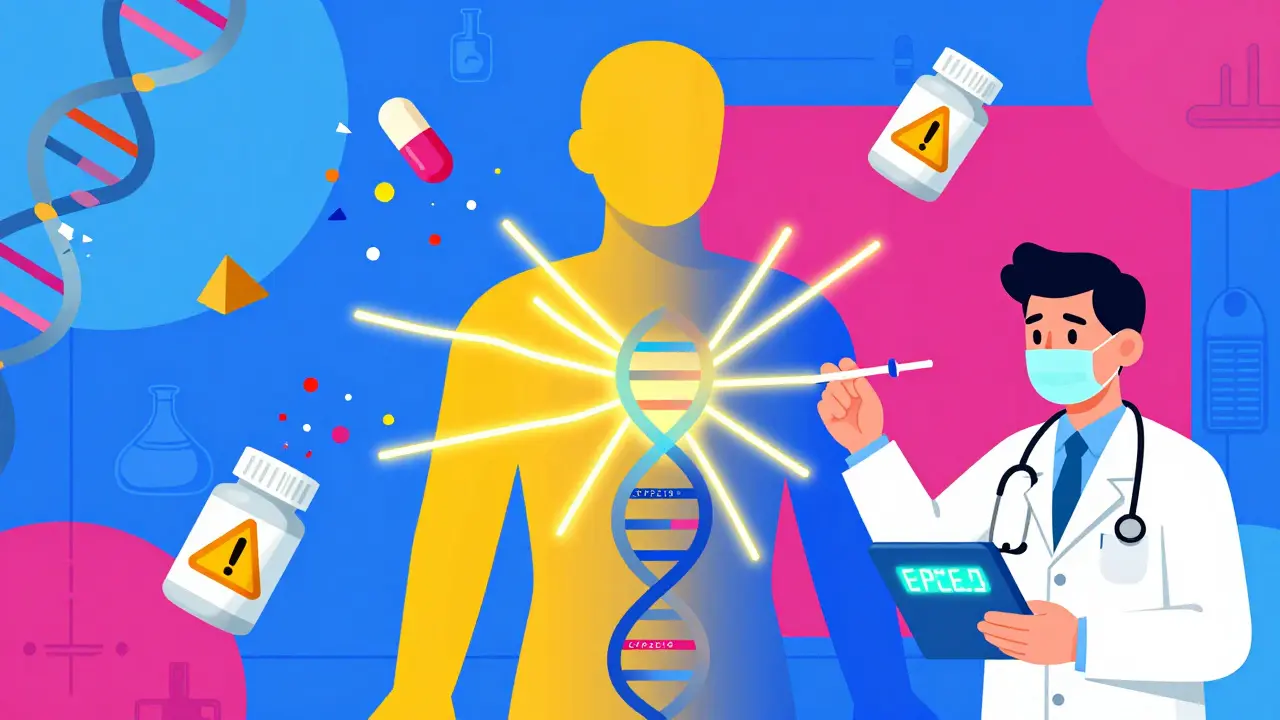
Every year, hundreds of thousands of people end up in hospitals not because of their original illness, but because of how their body reacted to a medication they were prescribed. These are called adverse drug reactions-unexpected, harmful responses to drugs that can range from a rash to life-threatening organ damage. For many, it’s not bad luck. It’s genetics.
Why Your Genes Matter When You Take Medicine
Not everyone reacts to the same drug the same way. Two people can take the exact same dose of the same medication, and one might feel fine while the other ends up in the ER. That’s because your genes control how your body breaks down drugs. Some people metabolize drugs too quickly, so the medicine never works. Others break them down too slowly, causing toxic buildup. These differences aren’t random-they’re written into your DNA. Pharmacogenetic testing looks at specific genes that affect drug metabolism and response. It doesn’t predict if you’ll get sick. It tells your doctor whether a certain drug is likely to work, cause side effects, or even be dangerous for you before you take it. This isn’t science fiction. It’s happening now in hospitals across Europe, the U.S., and Australia.The Landmark Study That Changed Everything
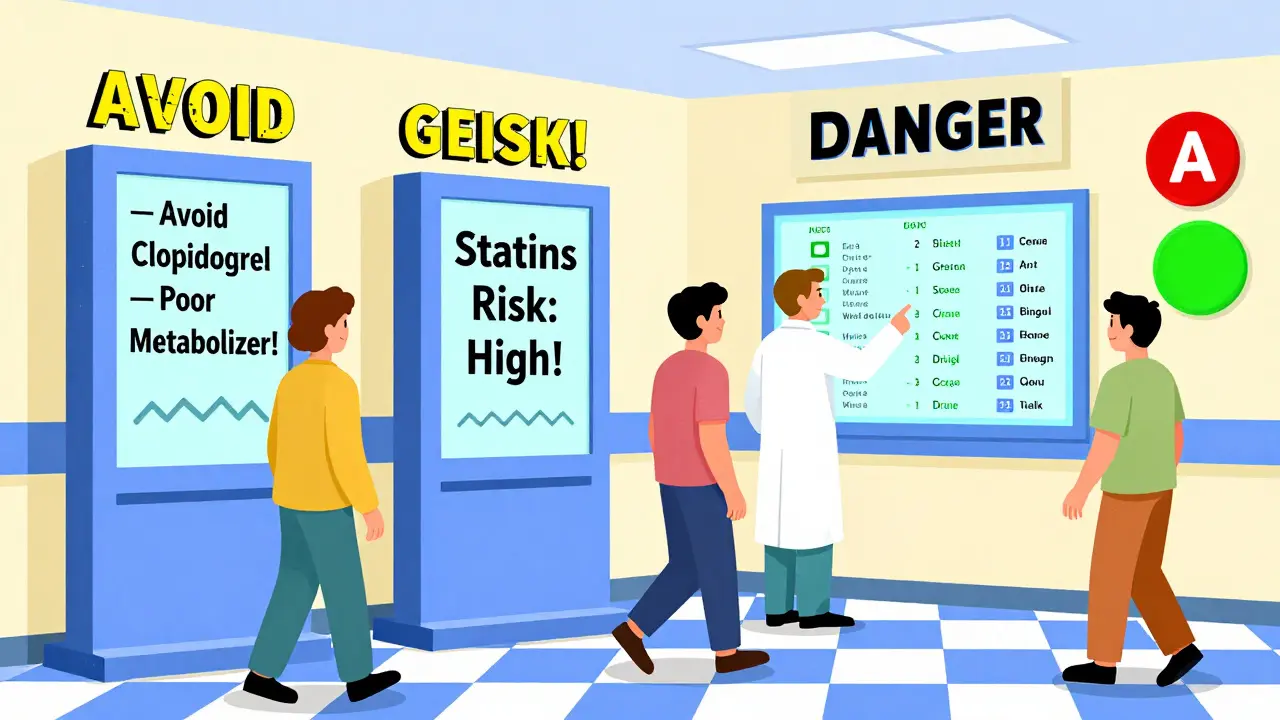
In 2023, the PREPARE study published its results in The Lancet, and it was a game-changer. Researchers followed nearly 7,000 patients across seven European countries. Half got standard care. The other half had their DNA tested before any new medication was prescribed. The test looked at 12 key genes-including CYP2C19, CYP2D6, TPMT, and HLA-B-that influence how the body handles over 100 common drugs. The results? A 30% drop in serious adverse drug reactions. That’s not a small number. That’s 3 in every 10 people who avoided hospitalization, emergency visits, or worse. And it wasn’t just luck. The study was designed to be real-world: patients were tested before their first prescription, and results were automatically flagged in their electronic health records. Doctors got alerts: “This patient is a poor metabolizer of clopidogrel. Avoid this drug.” This was the first time a large, real-world trial proved that preemptive testing-testing before you even take the drug-works better than waiting for a reaction to happen.What Genes Are Tested and Why
Not every gene matters for every drug. But for some, the link is crystal clear:- HLA-B*1502: If you carry this variant and take carbamazepine (used for epilepsy and nerve pain), your risk of Stevens-Johnson syndrome-a deadly skin reaction-goes up 100-fold. Testing reduces that risk by 95% in people of Asian descent.
- TPMT: Before giving azathioprine (used for autoimmune diseases and cancer), doctors check this gene. If you’re a slow metabolizer, even a normal dose can wipe out your bone marrow. Testing cuts severe side effects by 78%.
- CYP2C19: This gene affects clopidogrel (Plavix), a blood thinner given after heart attacks. About 25% of people have variants that make the drug useless. Without testing, they’re left unprotected from another heart attack.
- SLCO1B1: This one tells you if you’re at risk for muscle damage from statins. A simple test can help your doctor choose a safer alternative.
How It Works in Real Clinics
Getting tested isn’t complicated. A saliva swab or blood sample is sent to a lab. Results come back in 24 to 72 hours. In places like the University of Florida Health system, which has been doing this since 2012, results are automatically added to the patient’s electronic record. When a doctor tries to prescribe a drug that clashes with the patient’s genes, the system pops up a warning. The trick isn’t just the test-it’s the system around it. Doctors need training. Pharmacists need to understand the reports. Nurses need to know when to flag a result. The Clinical Pharmacogenetics Implementation Consortium (CPIC) publishes updated guidelines every quarter for 34 gene-drug pairs. These aren’t guesses-they’re based on decades of research. But adoption is uneven. Oncology and psychiatry lead the way. In cancer care, preemptive testing has prevented more than 100 adverse reactions per 1,000 patients. In primary care? Only 18% of clinics use it. Why? Many doctors don’t feel confident interpreting the results. One survey found only 37% of physicians felt comfortable using pharmacogenetic data.Costs, Benefits, and the Bottom Line
The test itself costs between $200 and $500. That sounds expensive-until you compare it to what happens when things go wrong. Adverse drug reactions cause 7% of all hospital admissions in the UK. That’s about £500 million a year in avoidable costs. In the U.S., one study found that for every dollar spent on pharmacogenetic testing, $2.70 was saved in reduced hospitalizations and emergency care. Medicare and Medicaid in the U.S. already cover testing for high-risk cases like clopidogrel and thiopurines. In Europe, the EU is investing €150 million to roll out preemptive testing nationwide by 2027. The market for pharmacogenomics is expected to hit $22 billion by 2028. And the cost is falling. New point-of-care PCR tests are being developed that could bring the price down to $50-$100 within two years. That’s less than a routine blood test.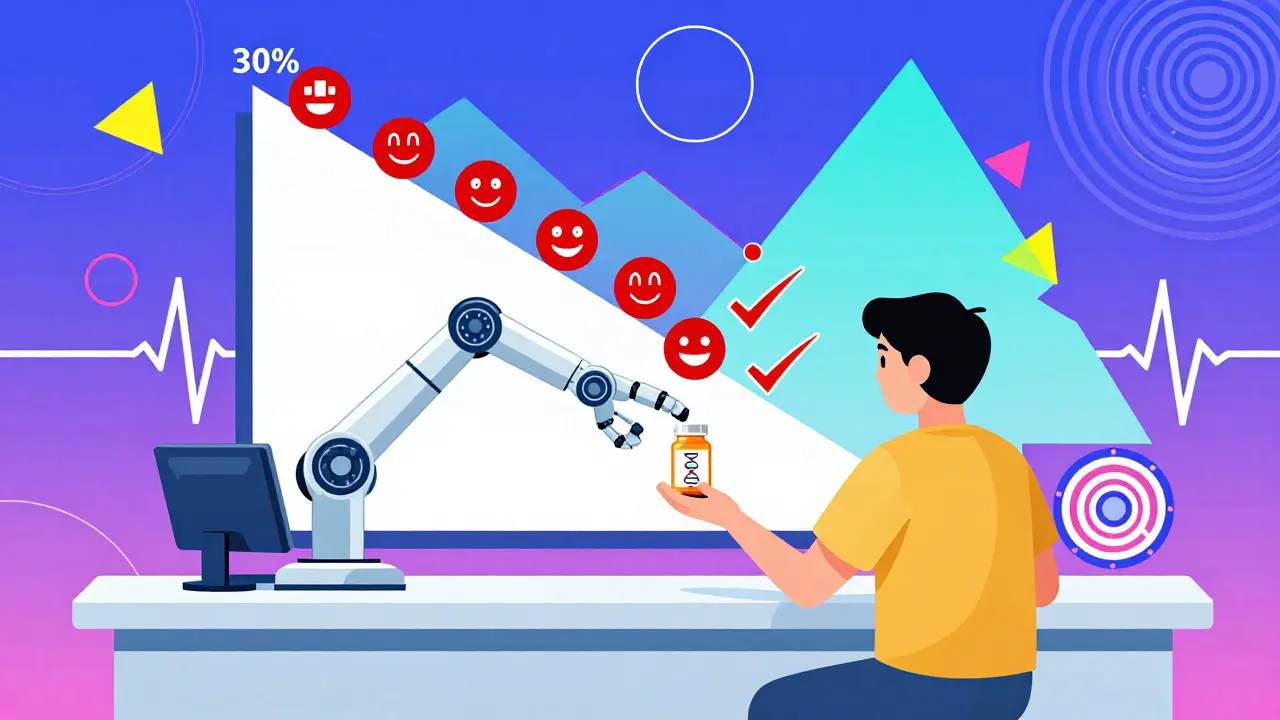
What’s Holding It Back?
The science is solid. The data is clear. So why isn’t everyone doing it? One big barrier: diversity. Most genetic studies have been done in people of European descent. That means the interpretation of variants in African, Indigenous, or Asian populations has been less accurate. But that’s changing. In 2024, the NIH added 126 new gene-drug links from underrepresented groups. The FDA updated its list of gene-drug pairs to 329-up from 287 in 2022. Another issue: polypharmacy. If you’re on five or six drugs, the interactions get messy. A gene variant that’s harmless with one drug might be dangerous when combined with another. That’s why testing is most powerful when done early-before multiple prescriptions pile up. Patient concerns also exist. About one-third worry about genetic privacy. But surveys show 85% of patients are willing to get tested if their doctor recommends it. That’s a strong signal: people want to be safer.What Comes Next
The future isn’t just single genes. Researchers are now looking at polygenic risk scores-combining dozens of small genetic signals to predict how you’ll respond to a drug. Early results show these scores are 40-60% more accurate than single-gene tests. By 2026, 87% of major U.S. hospitals plan to offer preemptive pharmacogenetic testing. Europe is following. Australia is starting pilot programs in Perth and Melbourne. This isn’t about replacing doctors. It’s about giving them better tools. It’s about stopping harm before it starts. It’s about treating people as individuals-not as averages.Frequently Asked Questions
Is pharmacogenetic testing right for everyone?
It’s most useful for people taking multiple medications, especially those with chronic conditions like heart disease, depression, epilepsy, or autoimmune disorders. If you’ve had a bad reaction to a drug before, or if a medication didn’t work even at the right dose, testing can explain why. It’s also valuable before starting high-risk drugs like clopidogrel, azathioprine, or carbamazepine. For healthy people with no prescriptions, it’s not urgent-but it can be a proactive step for future care.
Does insurance cover pharmacogenetic testing?
In the U.S., Medicare and Medicaid cover testing for specific high-risk drug-gene pairs like CYP2C19 before clopidogrel and TPMT before azathioprine. Private insurers are catching up, but coverage varies. In Australia, testing is not yet publicly funded, but some private health funds offer rebates. In the UK, the NHS is piloting testing in select hospitals. Always check with your provider before testing.
How long do test results last?
Your genes don’t change. Once you’ve been tested, the results are valid for life. You don’t need to retake the test. That’s why preemptive testing is so powerful: one test can guide your care for decades. If you’ve already been tested, share those results with every new doctor you see.
Can pharmacogenetic testing tell me if I’ll get cancer from a drug?
No. Pharmacogenetic testing looks at how your body processes drugs, not your risk of developing cancer or other diseases. It won’t tell you if you’re genetically prone to cancer. It tells you whether a drug you’re prescribed will be safe and effective for you. For cancer risk, you’d need a different kind of genetic test.
What if my doctor doesn’t know about pharmacogenetic testing?
Many doctors haven’t been trained in it yet. If you’re interested, ask if they’re familiar with CPIC guidelines or if they’ve used pharmacogenetic testing before. You can also request a referral to a pharmacist specializing in pharmacogenomics. Some hospitals have dedicated pharmacogenetics clinics. Don’t be afraid to bring up the topic-it’s your right to know how your genes might affect your treatment.



December 28, 2025 AT 20:19 PM
this is why canada needs to stop letting americans tell us how to do medicine. we got our own system, and it works fine. why are we paying for dna tests when we could just use common sense?
also, typo: 'premptive' lol
December 30, 2025 AT 20:10 PM
Thank you for this incredibly thoughtful and scientifically rigorous post. I am deeply moved by the potential of pharmacogenomics to reduce human suffering. As a healthcare professional, I believe we have a moral imperative to integrate these practices with dignity and care.
Let us not forget that behind every genetic variant is a person who deserves to be heard. 🙏
December 30, 2025 AT 21:23 PM
30% reduction? That’s statistically significant only if you ignore the fact that 90% of these reactions are caused by doctors prescribing like they’re playing roulette.
Genetics isn’t the problem. The system is. Stop putting bandaids on a broken wheel and fix the damn driver.
December 31, 2025 AT 05:26 AM
india already doing this in pune hospital since 2020 and no one cares because its not america
January 1, 2026 AT 23:19 PM
I’ve been saying this for years. My grandma almost died from a statin because no one checked her genes. This isn’t futuristic-it’s basic human decency. If your doctor doesn’t know about this, find a new one.
January 3, 2026 AT 07:08 AM
So let me get this straight. We’re going to spend $500 to avoid a reaction that happens to 1 in 100 people… and this is a win?
Next you’ll tell me we should test for which socks make you sneeze.
January 5, 2026 AT 01:38 AM
The US spends $400B on healthcare waste. This test costs $200.
Math isn’t your strong suit, is it? 😅
January 6, 2026 AT 19:37 PM
One must question the epistemological foundations of this so-called 'preemptive testing.' The reductionist paradigm of single-gene determinism ignores the profound interplay of epigenetics, microbiome, and environmental factors.
Are we not reducing human biology to a crude algorithm? The arrogance of believing we can 'predict' drug response through a saliva swab is… unsettling.
January 8, 2026 AT 02:38 AM
This is exactly the kind of care we should be pushing for everywhere. If you’ve ever been on multiple meds or had a bad reaction, this isn’t optional-it’s essential.
And if your doctor says 'we don’t do that here,' ask them why. You’re worth the effort.
January 10, 2026 AT 00:47 AM
I mean… sure, it’s cool that your DNA tells you not to take clopidogrel, but what about the 70% of people who don’t have insurance?
Also, who’s gonna pay for the 2000 gene variants we’ll need to test next year? This is just another way for Big Pharma to upsell you on a subscription to your own body.
January 11, 2026 AT 17:24 PM
I got tested last year after my anxiety meds made me feel like a zombie. Turns out I’m a CYP2D6 ultra-rapid metabolizer. My doctor switched me and I haven’t felt this good in years. 🥹
If you’re on meds and it’s not working-or you’re feeling weird-ask for this. It’s life-changing.
January 12, 2026 AT 03:39 AM
You know what’s really scary? That this data is stored in corporate databases. Who’s to say the government won’t use it to deny you insurance? Or that insurers won’t charge you more because you carry 'high-risk' alleles?
This isn’t progress-it’s a surveillance trap dressed up as science.
January 12, 2026 AT 05:46 AM
I’m so glad this is getting attention. My sister’s doctor didn’t even know about TPMT testing before she nearly lost her bone marrow. This isn’t a luxury-it’s a safety net we’ve been ignoring for decades.
January 13, 2026 AT 17:46 PM
I think about how we used to bleed people to cure headaches… and now we’re doing DNA tests before giving pills.
Kinda wild, right? We’re not just treating symptoms anymore-we’re trying to understand the whole person. That’s… kind of beautiful.
January 14, 2026 AT 05:20 AM
Oh great. More expensive tests for people who can’t afford them. Meanwhile, the real problem? Doctors who don’t listen.
Test my DNA all you want, but if you still prescribe me 7 drugs and call it 'management,' I’m still gonna end up in the ER.
January 16, 2026 AT 03:54 AM
My cousin took a drug and got super sick. They found out later his body just didn’t process it. This could’ve saved him. Simple test. Big difference.
January 17, 2026 AT 05:27 AM
in india we dont have money for this. we use generic drugs and pray. your fancy dna test wont help us when we cant even afford insulin
January 18, 2026 AT 22:44 PM
I’m not mad… I’m just disappointed. We have the tools to prevent suffering, and we’re still treating people like lab rats.
It’s not about cost. It’s about whether we value human life enough to do better.
January 20, 2026 AT 20:42 PM
I just got my results and my doctor didn’t even know what CYP2C19 meant. I had to print out the CPIC guidelines and hand them to him. 😑
January 22, 2026 AT 10:14 AM
I’m getting tested next week!! 🎉 I’ve had bad reactions to 3 different meds and I’m so done guessing. If it saves me one ER trip, it’s worth it.