Have you ever stepped off a plane feeling bloated, sluggish, and like you’ve already failed your dietary goals before the trip even started? You are not alone. Travel is one of the biggest hurdles for anyone trying to manage their weight. Between long layovers, confusing restaurant menus, and the temptation of cheap, high-calorie snacks, it is easy to lose track. But here is the good news: the landscape of airport food has changed dramatically. According to recent data, over 71% of U.S. airports now offer high-fiber, plant-based options. The days of being forced to choose between a greasy burger or nothing are largely behind us.
The key to successful weight management while traveling isn’t about deprivation; it’s about strategy. It is about knowing what to look for, how to build a balanced meal on the fly, and which "healthy" traps to avoid. Let’s break down exactly how to navigate airports and restaurants without blowing your calorie budget or your energy levels.
The Golden Rule: Protein, Fiber, and Fat
When you are rushing through security or waiting for a delayed flight, your brain wants quick energy. That usually means grabbing something sugary or carb-heavy. This leads to a blood sugar spike followed by a crash, leaving you hungrier an hour later. Registered dietitian Hernandez emphasizes a simple formula that works wonders: pair carbohydrates with protein and fiber.
This combination keeps your blood sugar stable and provides sustained satisfaction. Think of it as building a foundation. If you eat just a bagel, you’re done in 45 minutes. If you eat a bagel with peanut butter and an apple, you’re full for hours. Here is what that looks like in practice:
- Protein Target: Aim for 15-20 grams per meal or snack. This could be two hard-boiled eggs (6g each), a cup of Greek yogurt (10-20g depending on the brand), or a specific protein bar.
- Fiber Goal: Look for at least 3 grams of fiber. Fresh fruit cups are great here, offering about 3-4 grams per serving. Fiber slows digestion and helps control appetite.
- Carb Control: Keep snack carbs under 25 grams. This prevents the insulin spike that triggers fat storage and hunger pangs.
Dr. Lisa Young, a nutrition professor at NYU, puts it bluntly: airports are battlegrounds for healthy eating. Her advice? Identify the protein source first. Once you have your chicken, tofu, or eggs, build the rest of your meal around vegetables and controlled portions of carbs. This simple shift in mindset changes everything.
Navigating Airport Food Options
Airports are no longer just fast-food deserts. Major hubs like JFK, LaGuardia, and Newark have implemented strict nutritional guidelines since 2015. However, not all "healthy" labels are created equal. You need to know where the hidden calories are hiding.
| Food Item | Calories | Protein | Fiber | Pitfall to Watch |
|---|---|---|---|---|
| Sausage-Egg-Cheese Biscuit | 500+ | Low | 2g | High saturated fat, low fiber |
| Starbucks Oatmeal w/ Fruit & Nuts | 300-350 | 8g | 5g | Add extra nuts for more satiety |
| Grilled Chicken Salad (Au Bon Pain) | ~350 | 15-25g | Varies | Dressing adds 140+ calories if creamy |
| Mexican Burrito Bowl (Mod Market) | 900+ (loaded) | High | High | Rice and beans can double the calories |
| Trail Mix (Handful) | 300 | Medium | Low | Easy to overeat; stick to 100-cal packs |
Salads are often seen as the safe bet, but they can be tricky. A standard ranch dressing contains 14 grams of fat and 140 calories per two-tablespoon serving. Switch to oil and vinegar, which cuts those numbers in half. Also, beware of pre-made grab-and-go salads. They often contain 600-900mg of sodium, which is 25-40% of your daily limit, leading to water retention and bloating.
If you are heading to a burrito bowl spot, customization is your friend. Order double vegetables and half rice. This keeps the meal in the 500-600 calorie range while preserving volume and satisfaction. For breakfast, skip the biscuit. Plain oatmeal with fruit and nuts from places like Starbucks offers significantly better nutrient density than processed pastries.
The "Healthy" Snack Traps
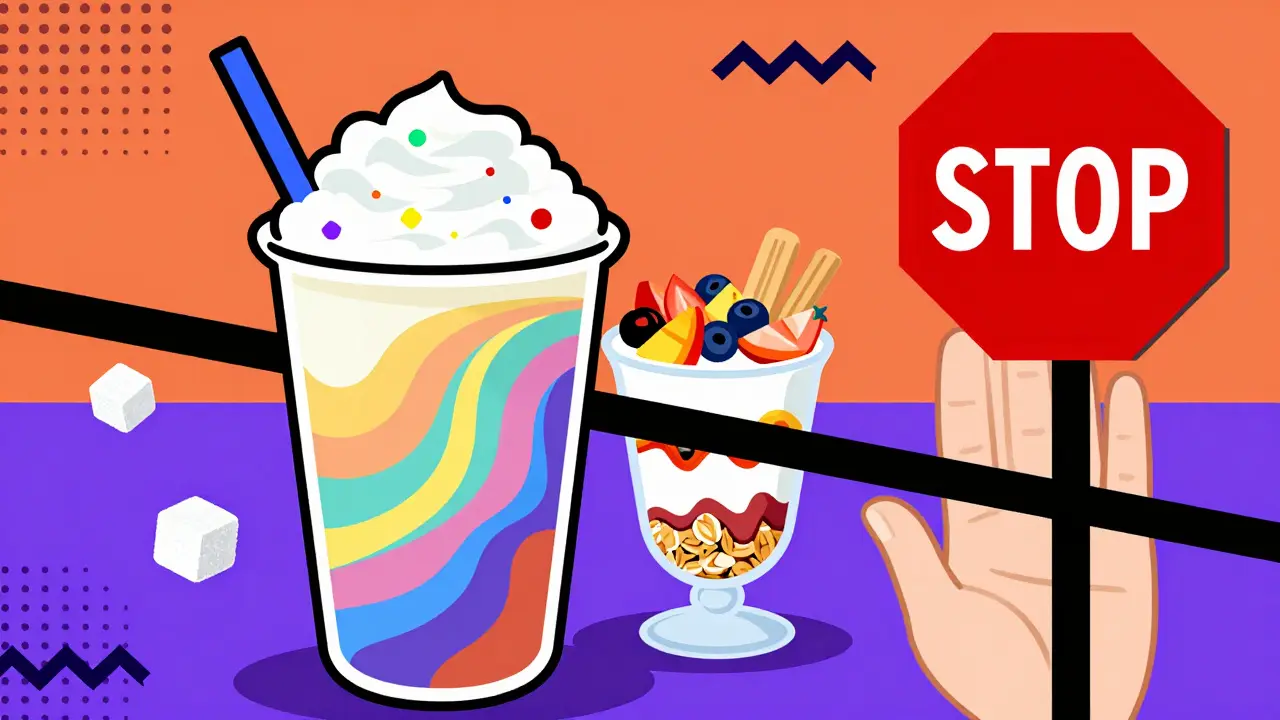
Just because it says "green" or "fresh" doesn’t mean it fits your macros. Smoothies are a major culprit. A single serving of Jamba Juice’s "Green Greens" smoothie contains 48 grams of sugar. That exceeds the American Heart Association’s recommended daily limit of 36 grams for men. When you drink your calories, you don’t feel as full, making it easy to consume excess energy.
Yogurt parfaits are another minefield. Many travelers report finding 35-45 grams of sugar in a single parfait container. One traveler documented a 48-gram sugar count in a "healthy" parfait at JFK Terminal 4. Instead, look for plain Greek yogurt and add your own fresh berries if available, or stick to whole fruits like apples or bananas which come with their own packaging and fiber.
Nut butters are excellent sources of healthy fats and protein, but portion control is critical. Justin’s 1.15-ounce nut butter packets provide 190 calories, 16g of fat, and 2g of protein. Pair this with an apple or celery sticks for a balanced snack. Similarly, Trader Joe’s 2-ounce hummus cups offer 70 calories and 2g of protein, perfect for dipping with carrot sticks or whole-grain crackers.
Eating Out: Restaurant Strategies
Once you leave the airport, the challenge shifts to restaurants. Menus are designed to upsell high-margin, high-calorie items. Here is how to hack the system:
- Scan for Protein First: Look for grilled chicken, fish, steak, or tofu. Avoid anything fried, breaded, or sauced heavily.
- Veggie Volume: Fill half your plate with non-starchy vegetables. If the side salad comes with heavy dressing, ask for it on the side or swap it for steamed broccoli or green beans.
- Watch the Sauce: Sauces are calorie bombs. Alfredo sauce, teriyaki glaze, and sweet chili sauce can add hundreds of calories. Ask for sauces on the side so you can control the amount.
- Be Specific with Orders: Don’t just order "a salad." Order "a mixed green salad with grilled chicken, olive oil and vinegar dressing, and no croutons." Be assertive. Most chefs appreciate clear instructions.
For example, at casual dining chains like Buffalo Wild Wings, the "Fiesta Taco Salad" might seem healthy, but it actually contains 1,190 calories compared to the menu’s implied lighter profile. Always check online reviews or nutrition guides beforehand if possible. Reddit users frequently share these insights, noting that grilled chicken salads at Potbelly in Chicago-Midway are consistently rated highly for being both satisfying and within calorie limits.
Preparation: The 24-Hour Head Start
The best travel nutrition strategy starts before you pack your bags. Researching your airport’s food options can save you time and calories. Websites like dfwairport.com/food-beverage list every vendor and their menus. Spending ten minutes looking up "protein sources at [Airport Name]" can prevent impulse buys.
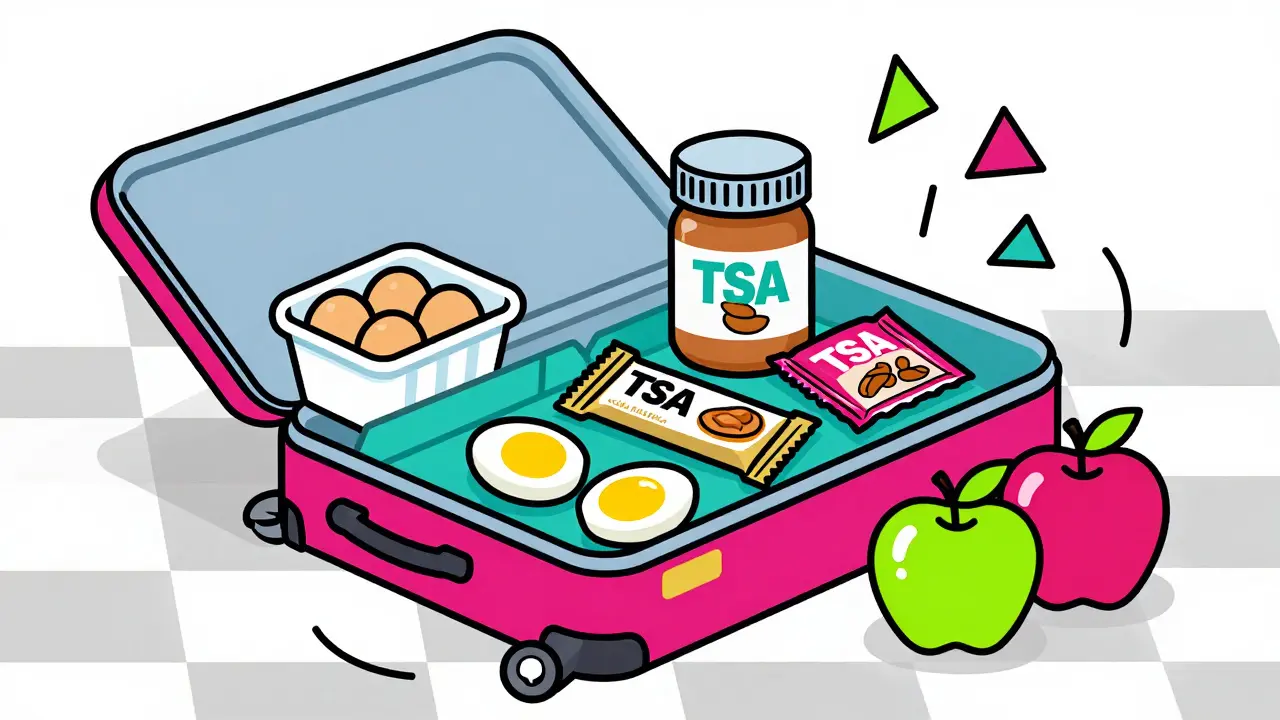
Packing smart is equally important. TSA allows solids, so bring non-perishable items that won’t melt or spoil. GoMacro protein bars (10g protein, 18g carbs) are a solid choice. Justin’s nut butter packets are also TSA-friendly as long as they are under 3.4 ounces. If you have checked luggage, consider bringing hard-boiled eggs. Peel them and store them in a container with a teaspoon of water to keep them moist. According to USDA guidelines, they remain safe for 4-5 hours at room temperature.
Apps like Lose It! and MyFitnessPal have features specifically for travel planning. Research published in the *Journal of Travel Medicine* showed that travelers using these apps reduced their caloric intake by nearly 19% compared to those who didn’t plan. Dallas Fort Worth International Airport even launched "Nutrition Navigator" digital kiosks in 2024 to help passengers make informed choices in real-time.
Hydration and Timing
Dehydration mimics hunger. On a plane, the air is incredibly dry, causing your body to crave fluids and sometimes misinterpret thirst as hunger. Drink water consistently throughout your journey. Avoid alcohol and sugary sodas, which dehydrate you further and add empty calories.
Timing matters too. Try to eat a balanced meal before you get to the airport so you aren’t starving when you arrive. Starvation mode leads to poor decision-making. If you miss a meal, opt for a small, protein-rich snack rather than a large, carb-heavy one. It’s better to be slightly hungry and make a smart choice later than to overeat now and regret it.
What is the healthiest thing to eat at an airport?
The healthiest options typically combine lean protein, fiber, and healthy fats. Look for grilled chicken salads with oil and vinegar dressing, plain oatmeal with nuts and fruit, or hard-boiled eggs paired with an apple. Avoid sugary smoothies and creamy dressings.
Can I bring homemade food through airport security?
Yes, you can bring solid foods through TSA security. Items like sandwiches, fruit, nuts, and protein bars are allowed. Liquids, gels, and spreads (like peanut butter or yogurt) must be in containers of 3.4 ounces or less if carried on.
How do I avoid gaining weight while traveling for business?
Plan ahead by researching restaurant menus near your hotel and airport. Prioritize protein and vegetables at meals, limit alcohol consumption, stay hydrated, and pack healthy snacks to avoid vending machine temptations. Consistency in sleep and movement also helps regulate metabolism.
Are airport smoothies really bad for weight loss?
Many airport smoothies are high in added sugars, often exceeding daily recommended limits in a single serving. Because liquid calories don’t trigger satiety signals as effectively as solid food, they can lead to overconsumption. Opt for whole fruits or protein shakes with minimal sugar instead.
What should I eat on a plane to stay full?
Bring snacks that require chewing and contain protein and fiber. Good options include almonds, beef jerky, cheese sticks, or a protein bar. These take longer to eat and keep you satisfied longer than chips or candy. Stay hydrated with water to prevent false hunger cues.