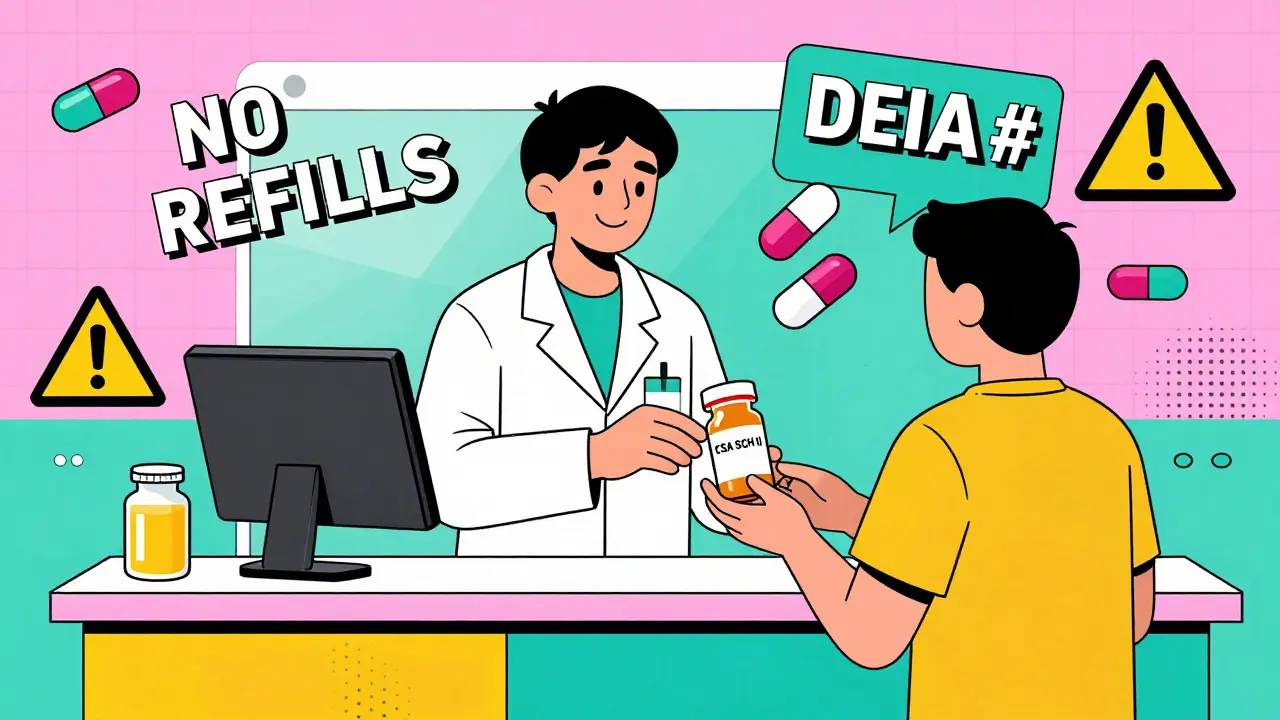
When you pick up a prescription at the pharmacy, you might not notice the small print on the label that says CSA SCH II or NARC. But those codes matter-deeply. They tell the pharmacist, the doctor, and even law enforcement how dangerous the drug is, how strictly it’s controlled, and how many times you can refill it. This isn’t just bureaucracy. It’s a federal system designed to stop abuse, prevent addiction, and keep people safe. And if you’re taking medications like oxycodone, Xanax, or even a codeine cough syrup, you’re already living inside this system.
What Are Controlled Substances?
Not every drug is treated the same under U.S. law. A vitamin pill? No restrictions. Insulin? Minimal controls. But drugs like fentanyl, Adderall, or hydrocodone? They’re controlled substances. That means the federal government has decided they carry a risk of abuse or dependence-and they’ve put rules in place to track them from the factory to your medicine cabinet. The legal foundation is the Controlled Substances Act (CSA), passed in 1970. It created a five-tier system called schedules, each with its own rules. The DEA (Drug Enforcement Administration) manages this system. They don’t make the decisions alone. The FDA and the Department of Health and Human Services weigh in based on science: How addictive is it? Does it have any medical value? How much harm does it cause? The goal? A closed system. Every manufacturer, pharmacy, and doctor who handles these drugs must be registered with the DEA. Every pill, every vial, every prescription is logged. If something goes missing, they can trace it.The Five Schedules: What They Mean
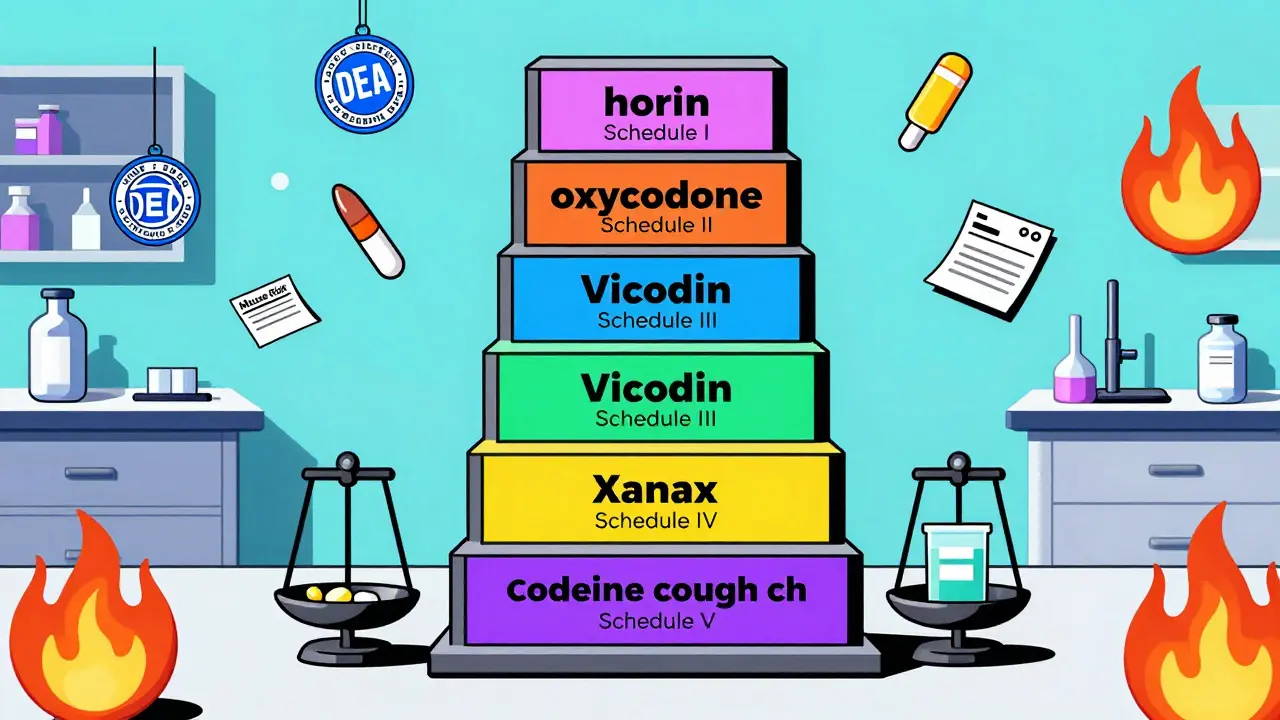
The schedules aren’t arbitrary. They’re based on real data about abuse potential and medical usefulness. Here’s how they break down:- Schedule I: No accepted medical use. High abuse potential. Examples: heroin, LSD, marijuana (federally). You can’t legally prescribe these. Even though 38 states allow medical marijuana, the federal government still lists it as Schedule I-creating a legal gray zone.
- Schedule II: High abuse risk, but accepted medical use. These are the heavy hitters: oxycodone, fentanyl, morphine, Adderall, methamphetamine, and cocaine. Prescriptions can’t be refilled. You need a new paper prescription every time (in most states). Electronic prescriptions are allowed in some cases, but they’re tightly tracked.
- Schedule III: Moderate to low abuse potential. These include hydrocodone combined with acetaminophen (like Vicodin), ketamine, and anabolic steroids. You can refill these up to five times in six months. Electronic prescriptions are common.
- Schedule IV: Low abuse potential. Benzodiazepines like Xanax, Valium, and sleep aids like Ambien fall here. Refills allowed up to five times in six months. Mostly electronic prescriptions.
- Schedule V: Lowest abuse risk. Think cough syrups with tiny amounts of codeine, or antidiarrheal meds with diphenoxylate. Some can be bought over-the-counter in limited quantities, but only with pharmacist approval.
Notice how the same drug can be in different schedules? Codeine is a perfect example. Pure codeine? Schedule II. Codeine with acetaminophen in tablet form? Schedule III. A cough syrup with less than 200mg of codeine per 100ml? Schedule V. The formulation changes everything.
What You See on the Label
When you get your prescription, look closely at the label. You’ll often see one of these:- CSA SCH II - Controlled Substances Act, Schedule II
- CSA SCH IV - Schedule IV
- NARC - Narcotic (usually means Schedule II or III opioid)
- DEA # - The prescriber’s DEA registration number (starts with two letters, then 6-7 digits)
These aren’t just for show. They’re legal requirements. If the label doesn’t have them, the pharmacy can’t legally fill it. The DEA requires this labeling so anyone handling the drug-pharmacist, nurse, police officer-knows exactly what they’re dealing with.
For Schedule II drugs, the label might also say “No refills” in bold. That’s not a suggestion. It’s the law. If you run out, you need a new prescription-even if your doctor thinks you’re fine. This is why so many patients with chronic pain struggle: They can’t just call in for more.
Why the System Is Both Necessary and Flawed
There’s no doubt the system saves lives. Opioid prescriptions dropped sharply after tighter scheduling rules were enforced in the 2010s. Pharmacists say it helps them spot suspicious behavior-like someone showing up at five different pharmacies for the same drug. But the system isn’t perfect. Take cannabis. It’s still Schedule I-classified as having no medical value and high abuse potential. Yet over 2 million Americans use it legally under state laws. Studies show it helps with chronic pain, nausea from chemotherapy, and muscle spasms in MS. The DEA’s own scientists have acknowledged its medical potential. The disconnect between science and law here is glaring. Another issue? Schedule II drugs require a paper prescription in 47 states. That means patients have to physically go to the doctor’s office, wait for a signed form, then bring it to the pharmacy. For someone with mobility issues or living in a rural area, that’s a barrier to care. And then there’s the time cost. Oncology nurses report that processing a single Schedule II prescription takes 15 minutes longer than a regular one. Pharmacists say 92.7% of controlled substance prescriptions they fill are Schedules III-V-but the rules are still dominated by the strictest category: Schedule II. Experts like addiction counselor Benjamin Zelinsky say the system “can give people an understanding of the risks, but it’s not really an effective tool.” The DEA’s own data shows that most opioid misuse starts with pills prescribed legally. The scheduling system didn’t stop that.What’s Changing? The Future of Scheduling
Big changes are coming. In August 2023, the Department of Health and Human Services recommended moving cannabis from Schedule I to Schedule III. If the DEA approves it-which looks likely by 2026-millions of patients will see fewer restrictions. Doctors could prescribe it like any other Schedule III drug. Refills allowed. Electronic prescriptions accepted. Insurance might even cover it. That’s just the start. Experts predict the DEA will eventually add more schedules-maybe six or seven-to better separate drugs by actual risk. Right now, a powerful opioid like fentanyl and a mild sleep aid like trazodone are both Schedule IV. That doesn’t make sense scientifically. The DEA’s 2023 Strategic Plan says it wants to cut the time it takes to schedule a new drug-from 24 months to 12. That’s critical as synthetic drugs like fentanyl analogs and synthetic cannabinoids keep popping up. And compliance? The pharmaceutical industry spends $2.3 billion a year just to follow the rules. That money goes to software, training, audits, and paperwork. If the system becomes smarter, it could save billions-and more importantly, reduce delays in patient care.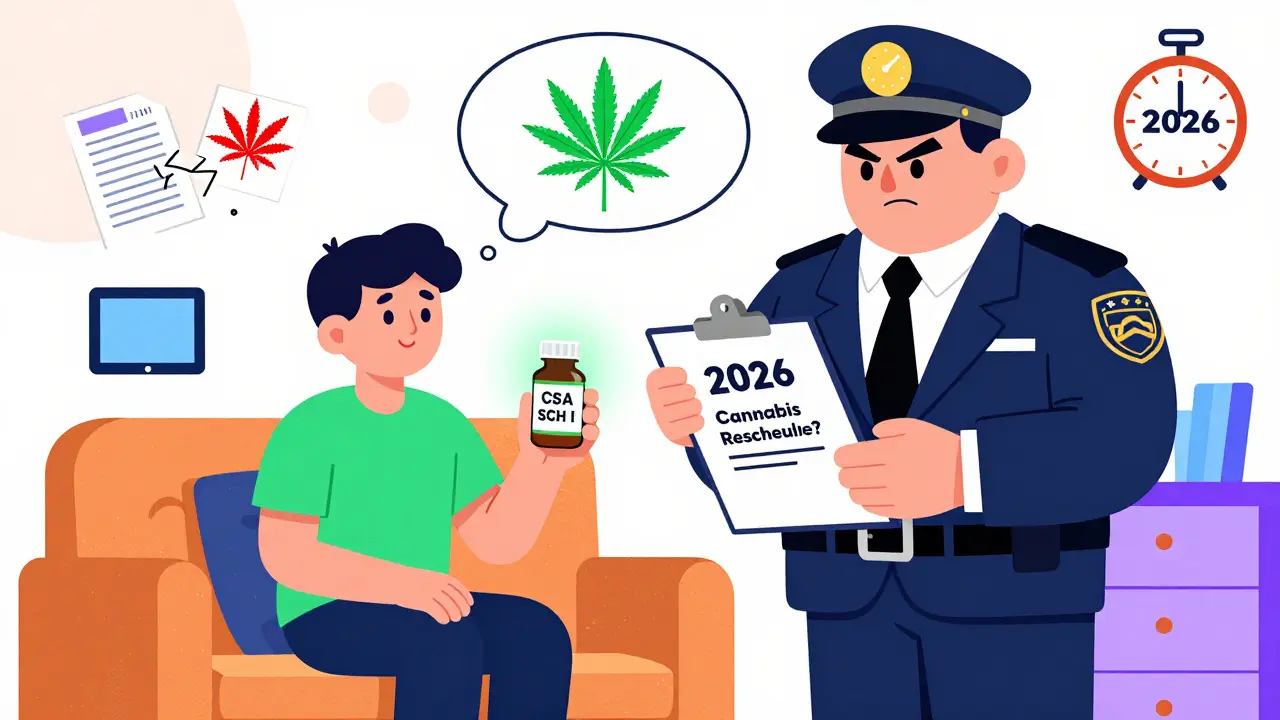
What You Need to Know as a Patient
If you’re prescribed a controlled substance, here’s what you should do:- Check the label. If it says CSA SCH II, you won’t get refills. Plan ahead.
- Keep your prescriptions secure. Schedule II drugs are targets for theft. Don’t leave them in your car or on the counter.
- Ask your pharmacist: “What schedule is this?” They’re trained to explain it.
- If you’re having trouble getting your meds, it’s not just you. The system is slow, and paperwork is heavy. But you’re not breaking the rules by asking for help.
- Know your rights. You can’t be denied a refill just because your doctor is on vacation. The DEA allows for emergency prescriptions in certain cases.
Remember: These labels aren’t there to punish you. They’re there because someone once overdosed on a drug that wasn’t tracked. Someone once got addicted after a simple surgery. The system is messy, outdated, and sometimes unfair-but it’s trying to prevent harm.
And if you’re on a Schedule II opioid? Don’t feel guilty. You’re not alone. Millions are. But be honest with your doctor. If you’re taking more than prescribed, or if you’re running out early-say something. That’s how the system works best: when patients and providers work together.
Frequently Asked Questions
Why do some controlled substances require a paper prescription?
For Schedule II drugs, federal law requires original, signed paper prescriptions in most states to reduce fraud and diversion. While electronic prescriptions are allowed in some states under strict conditions, the paper rule remains because it’s harder to forge or alter a physical document. This extra layer helps pharmacies and the DEA track prescriptions more accurately.
Can I get a Schedule II drug refilled if I run out early?
No. Schedule II medications cannot be refilled under any circumstances. If you need more, your doctor must write a new prescription. This is a federal rule, not a pharmacy policy. Even if you’re in pain or your doctor agrees you need it, they can’t call in a refill. Plan ahead, especially if you’re traveling or your doctor is away.
Is marijuana still a Schedule I drug?
As of now, yes-federally. Despite medical marijuana being legal in 38 states and recreational use legal in 24, the DEA still classifies marijuana as Schedule I: no accepted medical use and high abuse potential. However, in August 2023, the Department of Health and Human Services recommended rescheduling it to Schedule III. A final decision from the DEA is expected in 2026. If approved, it would allow doctors to prescribe it and insurers to cover it.
Why is codeine sometimes Schedule II and sometimes Schedule V?
The schedule depends on the concentration and combination. Pure codeine is Schedule II because it’s potent and highly addictive. But when mixed with other ingredients-like acetaminophen in pills or very small amounts in cough syrup-it becomes less addictive. A cough syrup with less than 200mg of codeine per 100ml is Schedule V, and in some states, you can buy it without a prescription if you’re over 18 and the pharmacist approves it.
How do I know if my doctor is DEA-registered?
Your doctor’s DEA number must appear on every controlled substance prescription. It starts with two letters (like “AB” or “MC”), followed by six or seven digits. If your prescription doesn’t have it, the pharmacy can’t fill it. You can ask your doctor’s office for their DEA number-it’s public information. All licensed prescribers who handle controlled substances must be registered with the DEA, and the process takes 4-6 weeks.
Are there penalties for mislabeling controlled substances?
Yes. Pharmacies and prescribers who mislabel or fail to include required schedule codes can face fines, loss of DEA registration, or even criminal charges. The DEA conducts regular audits. In 2022, 43% of compliance violations involved missing or incorrect Schedule II documentation. Labels aren’t optional-they’re legal documents.
Can I travel with controlled substances across state lines?
You can, but you must follow federal rules. Carry your medication in its original container with the pharmacy label showing your name, the drug name, and the schedule code. Keep your prescription with you. Some states have stricter rules-for example, certain states limit the quantity of Schedule II drugs you can carry. If you’re flying, the TSA allows controlled substances in your carry-on or checked bag as long as they’re properly labeled. Never put them in a pill organizer without the original label.

January 27, 2026 AT 04:13 AM
Just saw CSA SCH II on my script yesterday. No refills. Got it. No drama.
January 28, 2026 AT 07:27 AM
Love how this breaks it down. I used to think these labels were just red tape-turns out they’re lifesavers. My aunt’s pain med got flagged because she was getting it from three pharmacies. They caught a dealer before he hit the street. That’s not bureaucracy. That’s community.
January 30, 2026 AT 04:51 AM
They say Schedule II is about safety but honestly? It’s just making life harder for people who actually need it. I’ve got sciatica. No refills means I’m either in pain or begging a doctor who’s never seen me before. Meanwhile, my neighbor gets Xanax like candy. Double standards.
January 31, 2026 AT 02:33 AM
As someone from India, I never realized how much the U.S. system mirrors our own opioid crisis-but with more paperwork. My cousin got addicted after a back surgery. The script was legal. The addiction wasn’t. This system doesn’t fix people. It just tracks them.
January 31, 2026 AT 10:20 AM
Oh please. The DEA doesn’t care about patients. They care about stats. They’d rather lock up a kid with a prescription bottle than fix the pharma companies that pushed these drugs. This whole thing is performative control.
February 1, 2026 AT 12:18 PM
Let me tell you what I saw in an oncology ward last month. Nurses spending 15 minutes on a single Schedule II script? While patients cry in the corner because their chemo pain is flaring and they can’t get the next dose? This isn’t safety-it’s cruelty dressed up as policy. And yes, I’m angry. I’ve been there.
February 1, 2026 AT 15:19 PM
People don’t realize how much time and money this system eats. Pharmacies spend hours verifying DEA numbers, printing paper scripts, storing logs. It’s not just inconvenient-it’s expensive. And that cost gets passed to you in higher premiums and co-pays. We need automation, not paper trails.
February 2, 2026 AT 10:49 AM
There’s a metaphysical irony here: the system meant to prevent harm is itself a source of alienation. The label ‘CSA SCH II’ isn’t just a code-it’s a stigma carved into the pharmacopeia of modern suffering. We quantify addiction like it’s a tax bracket. What does that say about us?
February 3, 2026 AT 10:33 AM
Let’s be real. The DEA doesn’t even know what they’re doing. Fentanyl analogs pop up every week, but they’re still stuck on 1970s logic. Schedule V cough syrup gets more scrutiny than some synthetic opioids. It’s like locking your front door but leaving the window open-and then suing the burglar for not using the key. Pathetic.
February 4, 2026 AT 10:56 AM
Im not sayin this system is perfect but like… people dont realize how many overdoses were prevented by these labels? My bro died cause he got a fake oxy from a friend. If the script had been tracked? Maybe he’d still be here. Dont hate the system hate the people who abuse it
February 4, 2026 AT 17:13 PM
As a pharmacist in Mumbai, I can confirm: the U.S. system is more structured than ours. But structure without empathy is just bureaucracy. We don’t have schedules here-just trust. And sometimes, that trust is broken. But sometimes, it saves lives too.
February 4, 2026 AT 17:52 PM
Let’s not pretend this is about safety. The DEA’s real agenda is control. Schedule I marijuana? A political tool. Schedule II opioids? A revenue stream for the prison-industrial complex. The science is irrelevant. The fear is the product.
February 6, 2026 AT 01:04 AM
So… I just got my Schedule IV script filled. The pharmacist looked at me like I was stealing a car. I didn’t even say a word. Just handed over the script. He sighed. I sighed. We both knew the drill. It’s not the drug. It’s the stigma. 🤦♂️
February 7, 2026 AT 13:35 PM
They say the system prevents abuse but the data shows most abuse starts with prescriptions. So why punish the patient? Why not fix the prescribers? The real problem isn’t the schedule-it’s the doctors who write too many scripts and never follow up
February 9, 2026 AT 05:08 AM
I appreciate the clarity here. I used to think these labels were just noise. Now I see them as quiet warnings. Like a smoke alarm. Annoying? Yeah. Necessary? Absolutely. I’ve got a Schedule III med. I keep it locked. I don’t share it. I don’t hoard it. That’s the deal.
February 10, 2026 AT 12:25 PM
Anyone who says Schedule II should be electronic is either naive or has never worked in pharmacy. Paper is harder to forge. Electronic systems get hacked. You think criminals don’t know how to spoof a digital signature? Wake up. The system isn’t perfect but it’s not broken either
February 11, 2026 AT 05:53 AM
The DEA’s 24-month scheduling timeline is a national embarrassment. Synthetic cannabinoids? Fentanyl analogs? They emerge in weeks. The system’s lag time is a public health liability. We need agile classification-dynamic tiers based on real-time abuse metrics, not congressional hearings.
February 11, 2026 AT 15:07 PM
My mom takes a Schedule IV for anxiety. She’s scared to talk about it. Even with her own family. These labels make people feel guilty for needing help. That’s the real tragedy-not the pills. The shame.