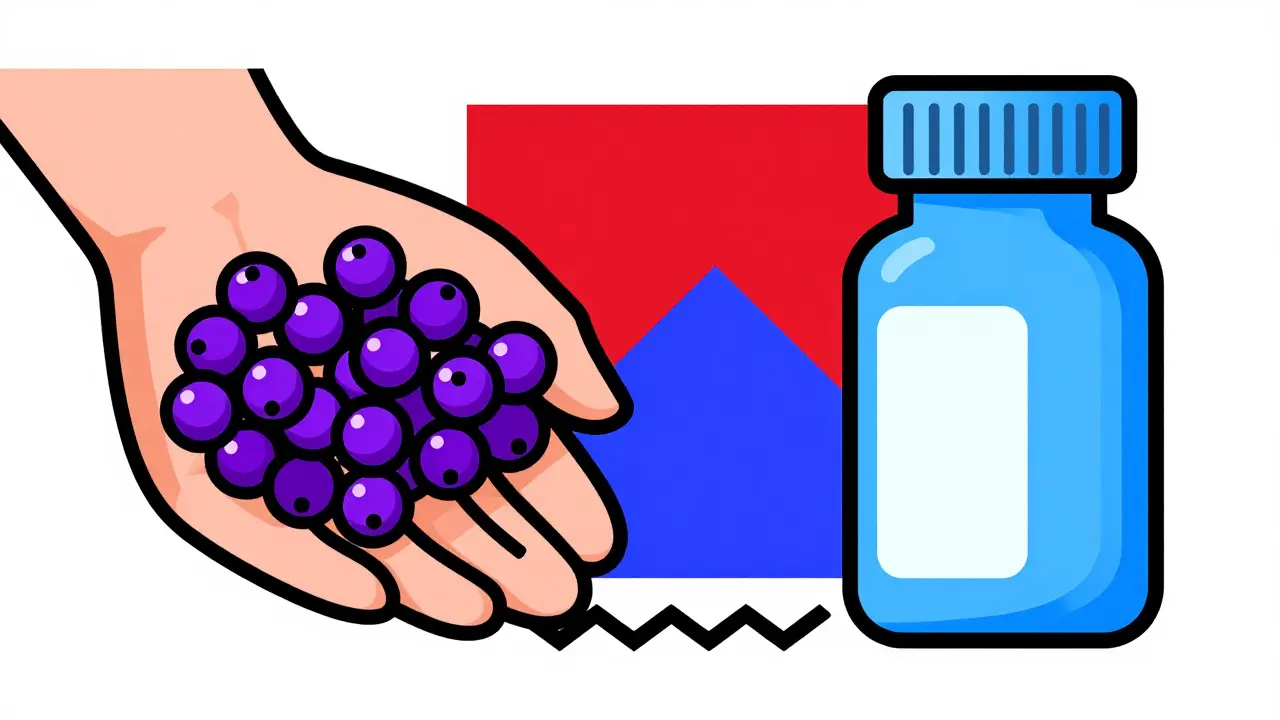
If you're taking immunosuppressantsmedications that reduce immune system activity, your doctor might have warned you about Elderberrya plant-based supplement traditionally used for immune support. But why? Let's break it down.
Why Elderberry Can Be Risky with Immunosuppressants
Elderberrya plant-based supplement traditionally used for immune support has long been a go-to for cold and flu season. Many people take it to boost immunity. But here's the problem: immunosuppressants work by reducinglowering immune activity. Elderberry does the opposite-it stimulates the immune system. This creates a dangerous conflict. For example, if you're on cyclosporinea drug used to prevent organ rejection after a transplant, elderberry could make your body attack the new organ.
According to a 2021 review by CSIRO PublishingAustralian research organization, elderberry increases cytokines like interleukin-6 and tumor necrosis factor. These are the very signals immunosuppressants try to suppress. The study found up to a 30% increase in these cytokines in immune cells exposed to elderberry compounds. This isn't just theoretical-it's happened in real patients. A kidney transplant recipient reported to Mayo Clinic Connect that their tacrolimus levels dropped 25% after taking elderberry. That's a serious risk for rejection.
How Elderberry Affects Your Immune System
Elderberrya plant-based supplement traditionally used for immune support contains active compounds called anthocyaninspigments that give berries their dark color. These make up about 1-2% of dried elderberries. Research shows anthocyanins boost immune activity. A 2016 study in Nutrients found elderberry increases cytokine production. cytokinessignaling proteins that regulate immune responses are signaling proteins that tell your immune system to fight infections. But if you're on immunosuppressants, this is exactly what you don't want.
Here's how it works: when you take elderberry, anthocyanins interact with immune cells. This triggers the release of cytokines. For most people, this is helpful-it helps fight colds. But for someone with a transplanted organ or autoimmune disease, it can cause harm. Imagine your immune system is a car. Immunosuppressants are the brakes. Elderberry is like pressing the gas pedal. The result? A potential crash.
Studies show elderberry can increase interleukin-6 by up to 30% in lab tests. Interleukin-6 is a key player in inflammation. For autoimmune conditions like rheumatoid arthritis, this could trigger flare-ups. The CSIRO PublishingAustralian research organization review warns that elderberry "may exacerbate symptoms in patients with autoimmune diseases."
Which Immunosuppressant Medications Are Affected?
Not all immunosuppressants react the same way to elderberry. But several high-risk drugs have been documented. Here's a breakdown:
| Medication | Used For | Risk Level | Notes |
|---|---|---|---|
| cyclosporine | organ transplants, autoimmune diseases | High | May reduce effectiveness; levels can drop significantly |
| tacrolimus | organ transplants | High | Reported drops in blood levels leading to rejection |
| mycophenolate | organ transplants, lupus | Moderate | Potential interference with immune suppression |
| prednisone | autoimmune diseases | Moderate | Elderberry may counteract anti-inflammatory effects |
| azathioprine | autoimmune diseases | Low | Less documented interaction, but still caution advised |
This table shows which drugs are most at risk. The cyclosporinea drug used to prevent organ rejection and tacrolimusa drug used for organ transplants have the highest risk. Patients on these medications should avoid elderberry completely. Even a small amount can cause problems. For example, a liver transplant patient on Reddit reported a rejection episode after starting elderberry syrup. This isn't rare-medical forums show consistent warnings from doctors.
Real Patient Experiences
Thousands of people share their stories online. On Mayo Clinic Connect, a kidney transplant recipient wrote: "My immunologist immediately told me to stop elderberry supplements after my annual checkup because my tacrolimus levels had dropped 25%." Another user in the r/Transplant community described a similar situation: "My rejection episode coincided with starting elderberry syrup for cold prevention."
But it's not all bad news. A lupus patient on the American Autoimmune Related Diseases Association forum said, "I've taken elderberry for three winters while on CellCept with no issues." However, this is rare. A 2022 sentiment analysis by Health Union found 87% of forum posts about this interaction advised avoiding elderberry. Most patients and doctors agree it's better to be safe than sorry.
For autoimmune conditions like ulcerative colitis, Medical News Today reported a patient who experienced "increased flare-ups after taking elderberry supplements while on Remicade (infliximab)." These real-world cases highlight why healthcare providers take this interaction seriously.
What Should You Do Instead?
If you're on immunosuppressants, you still need immune support. But elderberry isn't the answer. Here's what experts recommend:
- Vitamin Da nutrient that supports immune health without immune activation: A 2022 survey of 150 rheumatologists found 78% preferred suggesting vitamin D over elderberry for immune support in autoimmune patients. Vitamin D helps regulate the immune system without overstimulating it.
- Zinca mineral that supports immune function: In moderate doses, zinc can help fight colds without the risks of elderberry. But don't overdo it-too much zinc can cause side effects.
- Probioticsbeneficial bacteria that support gut health: Gut health is linked to immune function. Probiotics may help maintain a balanced immune response without the risks of herbal supplements.
The Arthritis Foundation's 2023 guidelines state: "If you're taking medication for rheumatoid arthritis, lupus, multiple sclerosis, or Hashimoto's thyroiditis, it's best to skip elderberry." Instead, work with your doctor to find safe alternatives. For organ transplant patients, Sweet's Elderberry's safety guide (2023) states: "Anyone who has received an organ transplant should avoid elderberry."
Can I take elderberry if I'm on a low dose of immunosuppressants?
No. Even low doses of immunosuppressants still require careful management. Elderberry's immune-activating effects can interfere regardless of dosage. Always consult your doctor before taking any supplement.
What about elderberry tea? Is it safer?
No. Elderberry tea contains the same active compounds as supplements. The risk depends on concentration, not form. If you're on immunosuppressants, avoid all elderberry products, including tea.
Should I stop elderberry before surgery?
Yes. Doctors typically recommend stopping herbal supplements like elderberry at least two weeks before surgery. This reduces the risk of immune complications during recovery.
Are there any safe alternatives to elderberry?
Yes. Vitamin D, zinc (in moderation), and probiotics are safer options for immune support. These don't overstimulate the immune system like elderberry does. Always discuss alternatives with your healthcare provider.
How do I know if elderberry is interacting with my medication?
Watch for signs like increased inflammation, unexplained fatigue, or changes in medication effectiveness. If you experience symptoms, contact your doctor immediately. Regular blood tests can also monitor drug levels for accuracy.

February 5, 2026 AT 13:41 PM
I've been on cyclosporine for my kidney transplant for years. My doctor warned me about elderberry supplements. It's dangerous because elderberry boosts immune activity while immunosuppressants suppress it. For example, a study showed tacrolimus levels dropping 25% after taking elderberry. Always check with your healthcare provider before adding supplements.
February 6, 2026 AT 17:26 PM
I agree with the previous comment. The research clearly shows elderberry can interfere with immunosuppressants. A 2021 CSIRO review found a 30% increase in cytokines. It's not worth the risk.
February 7, 2026 AT 20:18 PM
Reflecting on the immune system's delicate balance is crucial.
When we take immunosuppressants, we're essentially asking our body to dial down its defenses to prevent autoimmune attacks or transplant rejection.
But introducing something like elderberry, which is known to upregulate cytokines like interleukin-6 and TNF-alpha, creates a conflict.
Imagine your immune system as a car: immunosuppressants are the brakes, and elderberry is the accelerator.
This isn't just theoretical; there are documented cases where patients on tacrolimus saw significant drops in drug levels after consuming elderberry, leading to rejection episodes.
In fact, a 2021 CSIRO review highlighted a 30% increase in these cytokines in immune cells exposed to elderberry compounds.
For someone with an autoimmune condition like rheumatoid arthritis, this could trigger severe flare-ups.
Even if you're on a low dose of immunosuppressants, the risk remains because the interaction isn't dose-dependent-it's about the fundamental mechanism.
The Arthritis Foundation's 2023 guidelines explicitly state to avoid elderberry if you're on medications for RA, lupus, MS, or Hashimoto's.
While some might argue that small amounts are safe, the evidence points to caution.
Real-world cases, like the kidney transplant recipient on Mayo Clinic Connect who had a 25% drop in tacrolimus levels, underscore this.
It's not just about avoiding the supplement; it's about understanding the science behind why it's risky.
The anthocyanins in elderberry interact with immune cells to promote inflammation, which is exactly what immunosuppressants are designed to suppress.
For those who rely on these drugs, the consequences can be life-threatening.
So, while elderberry has its place in wellness for some, it's a no-go for anyone on immunosuppressants.
Always consult your healthcare provider before adding anything to your regimen.
This isn't fearmongering-it's science-based advice.
February 8, 2026 AT 13:52 PM
Elderberry is totally safe! My doctor says so. People are making a big deal out of nothing. It's been used for centuries without issues.
February 10, 2026 AT 01:48 AM
I think this is all a big scam by Big Pharma to sell more drugs.
February 11, 2026 AT 11:18 AM
I agree with the previous comment. Oh my god!!! This is so important! I can't believe people don't know this!!! Elderberry can literally kill you if you're on immunosuppressants. My brother had a transplant and they told him to avoid it. It's crazy how many people ignore this!!!
February 13, 2026 AT 03:54 AM
This is why Americans are so stupid. They take supplements without consulting doctors. Elderberry is dangerous-period. The government should ban it.
February 14, 2026 AT 22:08 PM
Wow, that was really insightful! 🌟 I'm from India and we use elderberry in some traditional remedies, but I had no idea about this interaction. Thanks for explaining. 😊
February 15, 2026 AT 13:51 PM
I agree with the comment about India's traditional remedies. Elderberry is popular for colds there, but I never knew about the risks with meds. My friend's on cyclosprine and she's been taking elderberry tea-she needs to stop ASAP. Also, 'cyclosprine' is spelled 'cyclosporine'-oops, typo! 😅
February 16, 2026 AT 12:09 PM
The pharmaceutical industry is manipulating data on elderberry to protect their profits. Real science shows it's harmless. They want you to believe it's dangerous so you'll buy their expensive drugs. This is a classic tactic.
February 18, 2026 AT 11:46 AM
The previous comment is uninformed. The evidence is clear-elderberry is dangerous. Anyone who takes it while on immunosuppressants is risking their life. Stop spreading misinformation.