
Most people think of Vitamin D as a bone-builder. But in the world of endocrine disorders involving hormone regulation and metabolic balance, it acts more like a master switch. It’s a secosteroid hormone that doesn’t just help your body absorb calcium; it influences how your immune system, pancreas, and blood vessels function. If you’ve ever wondered why your doctor checks your levels when you have diabetes or high blood pressure, this is why.
The core problem isn’t just getting enough sunlight. It’s understanding how this nutrient moves through your body and where it actually works. We’ll break down the real targets, the confusion around testing, and what actually happens when you take supplements.
How Vitamin D Works as a Hormone
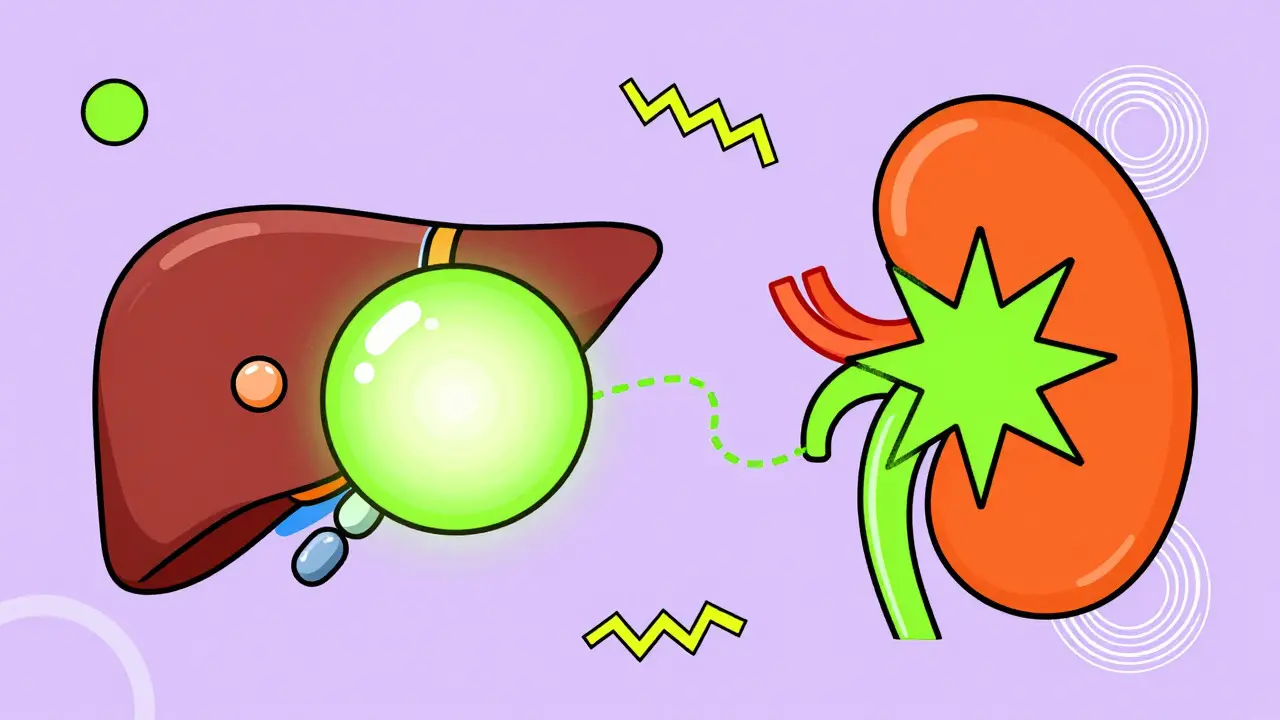
Unlike typical vitamins, Vitamin D behaves like a hormone. When UVB rays from the sun hit your skin, your body produces Vitamin D3 (cholecalciferol). This raw form is inactive. To work, it has to go on a two-stop trip. First, your liver converts it into 25-hydroxyvitamin D [25(OH)D]. This is the version doctors measure in blood tests because it stays in your bloodstream for weeks. Second, your kidneys convert it into 1,25-dihydroxyvitamin D (calcitriol), the biologically active form that does the heavy lifting.
This conversion is tightly controlled. Your parathyroid gland releases parathyroid hormone (PTH) to signal the kidneys to make more active vitamin D when calcium levels drop. This feedback loop keeps your serum calcium within a narrow range of 8.5-10.5 mg/dL. If this system fails, you get secondary hyperparathyroidism, where the glands overwork to compensate for low calcium, leading to bone loss.
| Metabolite | Primary Function | Circulation Time | Measured In Blood? |
|---|---|---|---|
| Vitamin D3 (Cholecalciferol) | Pre-hormone precursor | Hours | No |
| 25-Hydroxyvitamin D [25(OH)D] | Storage and transport form | Weeks | Yes (Standard Test) |
| 1,25-Dihydroxyvitamin D (Calcitriol) | Active hormone binding to VDR | Hours | Rarely (Specialized Labs) |
The Main Targets: Beyond Bones
While bones are the classic target, the Vitamin D Receptor (VDR) is found in nearly every cell type in your body. An ontology analysis published in Endocrine Reviews (2024) identified over 11,000 genes regulated by the VDR. Here’s where it matters most for endocrine health:
- Intestine: Active vitamin D increases the production of TRPV6 channels and calbindin-D9k. This boosts intestinal calcium absorption efficiency from 10-15% (when deficient) to 30-40% (when sufficient).
- Pancreatic Beta Cells: The VDR helps regulate insulin secretion. Low levels are associated with higher risks of Type 2 Diabetes, though causality is still being debated.
- Immune Cells: Macrophages and T-cells use local vitamin D production to modulate inflammation. During infection, these cells can increase their own active vitamin D production by up to 100-fold, independent of your blood levels.
- Kidneys: Regulates phosphate excretion and activates PTH responses to maintain mineral balance.
A key distinction here is the difference between endocrine and autocrine pathways. The endocrine pathway uses the kidney-produced calcitriol to affect the whole body (like raising blood calcium). The autocrine pathway allows tissues to make their own active vitamin D locally. This explains why a normal blood test doesn’t always tell the whole story about how your immune system or pancreas is functioning.
Understanding Levels and Deficiency
So, what counts as “low”? The Endocrine Society defines deficiency as 25(OH)D levels below 20 ng/mL (50 nmol/L). Insufficiency sits between 21-29 ng/mL. Sufficient levels are generally considered 30-100 ng/mL. However, there is ongoing debate. The Institute of Medicine argues that 20 ng/mL is enough for 97.5% of the population to prevent rickets and osteomalacia.
Why do so many people fall short? In Perth, Australia, we get plenty of sun, but lifestyle factors change the game. Office jobs, sunscreen use, and darker skin pigmentation all reduce natural synthesis. Furthermore, obesity significantly impacts vitamin D status. Because vitamin D is fat-soluble, it gets sequestered in adipose tissue. Studies show that individuals with a BMI ≥30 often require 2-3 times higher doses to achieve the same blood levels as those with a normal weight.
Supplementation Strategies and Dosage
If you’re deficient, simply taking a standard multivitamin won’t cut it. The goal is to raise your 25(OH)D levels safely. Here is a practical approach based on current clinical guidelines:
- Get Tested First: Don’t guess. A simple blood test measures 25(OH)D. This is the only reliable way to know your starting point.
- Determine Your Baseline:
- Deficient (<20 ng/mL): Often requires higher initial doses, such as 50,000 IU weekly for 8 weeks, followed by maintenance.
- Insufficient (21-29 ng/mL): Daily dosing of 1,000-2,000 IU is usually effective.
- Choose the Right Form: Vitamin D3 (cholecalciferol) is generally preferred over D2 (ergocalciferol) because it is more potent at raising blood levels.
- Take With Fat: Since it’s fat-soluble, take your supplement with a meal containing some dietary fat (like avocado, nuts, or olive oil) to maximize absorption.
- Re-test After 3 Months: Blood levels lag behind supplementation. It takes time to reach steady state. Retesting too early gives false negatives.
For most healthy adults under 70, a maintenance dose of 600-800 IU/day is the standard recommendation. For those over 70, or if you have risk factors like malabsorption (e.g., Celiac disease) or obesity, you may need 1,000-2,000 IU/day or more. Always consult your healthcare provider before exceeding 4,000 IU/day without monitoring, as toxicity (hypercalcemia) becomes a risk above 150 ng/mL.

Common Myths and Clinical Controversies
You’ve probably heard that Vitamin D prevents cancer, heart disease, and even depression. The data is mixed. Large-scale trials like the VITAL trial (n=25,871) found no significant reduction in major cardiovascular events or invasive cancer with daily supplementation in healthy adults. This doesn’t mean Vitamin D is useless for these conditions, but it suggests that correcting a *deficiency* is different from using it as a *preventative medicine* for everyone.
Another myth is that you can get enough from food alone. While fatty fish like salmon and mackerel contain Vitamin D, it’s difficult to reach therapeutic levels through diet alone. One serving of salmon provides about 450 IU. To hit 2,000 IU, you’d need to eat four servings daily. Supplements remain the most efficient delivery method for maintaining optimal levels.
Finally, don’t ignore the genetic factor. Polymorphisms in the CYP2R1 gene (liver processing) and DBP gene (protein binding) explain 25-30% of the variation in how people respond to supplementation. Some people are “fast responders” who spike their levels quickly; others are “slow responders.” If your levels aren’t rising despite consistent dosing, genetics might be playing a role.
Frequently Asked Questions
What is the best time of day to take Vitamin D?
There is no strict rule, but because Vitamin D is fat-soluble, it is best absorbed when taken with a meal containing fat. Many people prefer morning or lunch to align with circadian rhythms, as some studies suggest evening intake might interfere with sleep in sensitive individuals, though evidence is limited.
Can you overdose on Vitamin D from sunlight?
No. Unlike supplements, your body self-regulates Vitamin D production from sunlight. Once your stores are full, further UVB exposure degrades the pre-vitamin D in your skin rather than creating more. Toxicity is almost exclusively caused by excessive oral supplementation.
Do I need to take K2 with Vitamin D?
Vitamin K2 helps direct calcium into bones and teeth rather than soft tissues. While not strictly required for everyone, some clinicians recommend pairing them, especially if you are taking high doses of Vitamin D, to support proper calcium utilization. However, high-quality evidence for this specific synergy in healthy populations is still emerging.
How long does it take for Vitamin D supplements to work?
It typically takes 8-12 weeks to see a significant change in blood levels. Symptoms like fatigue or muscle weakness may improve sooner, but biochemical normalization takes time. Consistency is key; missing doses frequently will slow down the process.
Is Vitamin D important for thyroid health?
Yes. There is a strong association between low Vitamin D levels and autoimmune thyroid diseases like Hashimoto’s thyroiditis. Maintaining sufficient levels may help modulate the immune response, though it is not a cure. Patients with thyroid disorders are often advised to monitor their levels closely.