
You might have heard it called the "silent killer" of the modern era. Non-Alcoholic Fatty Liver Disease (NAFLD), now increasingly referred to as Metabolic Dysfunction-Associated Steatohepatitis (MASH), is a condition where fat builds up in your liver without alcohol being the culprit. It’s not just a minor inconvenience; if left unchecked, it can spiral into cirrhosis or even liver cancer. The good news? You don’t necessarily need a transplant to fix it. For most people, losing weight is the single most effective way to reverse the damage. But how much weight do you actually need to lose? And with new drugs like Wegovy hitting the market, does lifestyle change still matter?
Let’s cut through the noise. We’re going to look at exactly what the science says about diet, movement, and the new wave of medications that are changing the landscape of liver health.
The Magic Numbers: How Much Weight Do You Need to Lose?
It’s tempting to think you need to drop 50 pounds to see results. That’s not true. Research consistently shows that smaller amounts of weight loss yield significant benefits for your liver. According to guidelines from the American Association for the Study of Liver Diseases (AASLD), here is the breakdown of what happens as you shed pounds:
- 3-5% body weight loss: This reduces the amount of fat in your liver. It’s a great start, but often isn’t enough to stop inflammation.
- 7-10% body weight loss: This is the sweet spot. Losing this amount has been shown to reduce liver inflammation and, crucially, begin reversing fibrosis (scarring) in many patients.
- >10% body weight loss: Significant regression of advanced fibrosis is possible here. However, maintaining this level of loss is challenging for many.
A three-year study highlighted a sobering reality: fewer than one-third of people achieved more than 5% weight loss, and only a quarter of those who did managed to keep it off. This tells us two things. First, the goal is achievable but difficult. Second, sustainability matters more than speed. Crash diets that leave you hungry usually fail long-term, which means the fat comes right back to your liver.
Diet Strategies That Actually Work for Your Liver
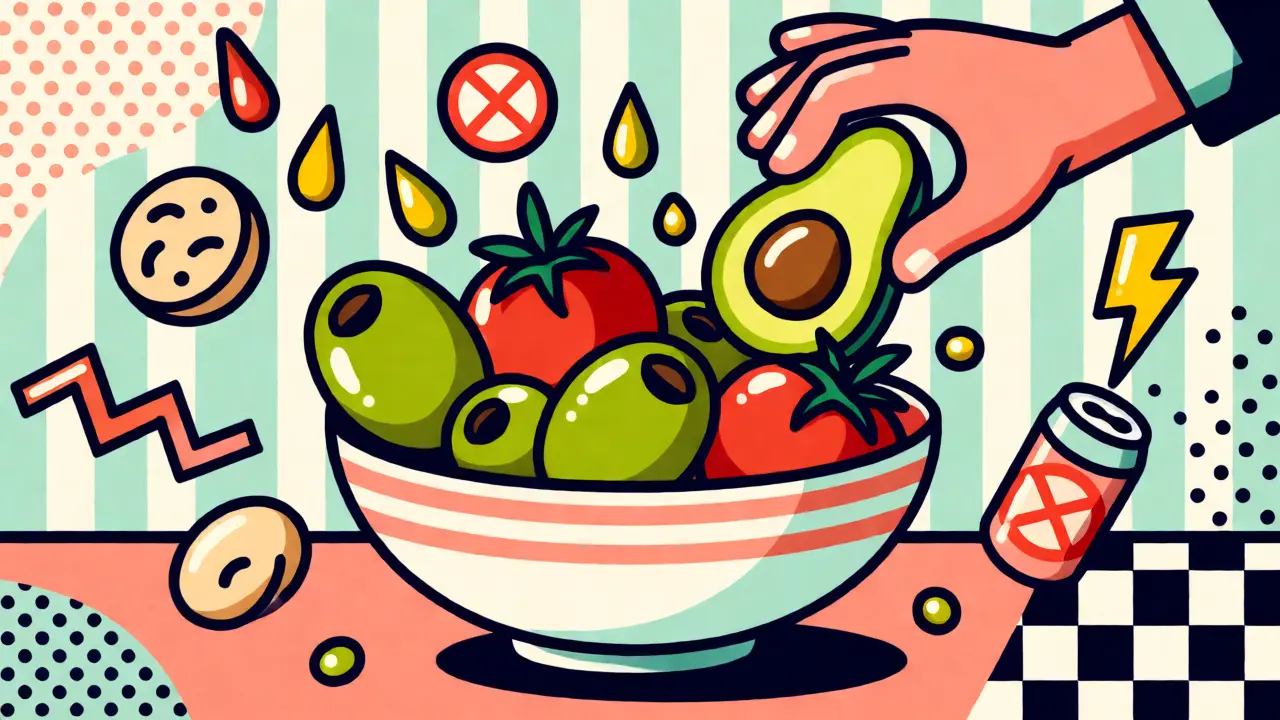
There is no single "liver diet," but there is one pattern that keeps popping up in clinical trials: the Mediterranean diet. Why? Because it’s rich in healthy fats, fiber, and antioxidants while being low in processed sugars and saturated fats.
A meta-analysis referenced by AASLD found that following a Mediterranean-style eating plan led to statistically significant reductions in ALT levels (a marker of liver stress), hepatic steatosis (fat buildup), and liver stiffness. So, what does this actually look like on your plate?
- Swap fats: Replace butter and margarine with extra virgin olive oil. Use avocado instead of heavy cream sauces.
- Fiber focus: Eat whole grains like quinoa, oats, and brown rice rather than white bread or pasta. Fiber helps regulate blood sugar, which directly impacts liver fat storage.
- Cut the fructose: High-fructose corn syrup and sugary drinks are particularly bad for the liver because the liver processes fructose differently than other sugars, turning excess directly into fat. Water, black coffee, and unsweetened tea are your best friends.
- Protein moderation: Choose lean proteins like fish, chicken, and legumes. Red meat should be an occasional treat, not a daily staple.
You don’t need to live in Greece to eat this way. It’s about shifting your baseline. If you currently drink soda daily, swapping it for water is a massive win. If you eat fried foods twice a week, grilling them instead makes a difference. Small, consistent changes compound over time.
Exercise: Moving More Than Just Calories
Here is a common misconception: you need to run marathons to help your liver. You don’t. While weight loss drives most improvements, exercise provides independent benefits. Physical activity improves insulin sensitivity, which is key because insulin resistance is a major driver of NAFLD/MASH.
The Mayo Clinic recommends at least 150 minutes of moderate-intensity exercise per week. That breaks down to 30 minutes a day, five days a week. But what counts as moderate? Brisk walking, cycling, swimming, or dancing. The goal is to raise your heart rate enough that you’re breathing harder but can still hold a conversation.
Resistance training is also powerful. Building muscle increases your resting metabolic rate, meaning you burn more calories even when you’re sitting on the couch. Studies suggest that combining aerobic exercise with strength training yields better results for liver enzymes than either alone. If you hate the gym, try bodyweight exercises at home-squats, push-ups, and lunges require no equipment and can be done in short bursts.
| Intervention | Primary Benefit | Implementation Difficulty | Sustainability |
|---|---|---|---|
| Mediterranean Diet | Reduces liver fat & inflammation | Moderate (requires cooking skills) | High (palatable, flexible) |
| Aerobic Exercise | Improves insulin sensitivity | Low-Moderate (time commitment) | Moderate (risk of injury/boredom) |
| Resistance Training | Boosts metabolism & muscle mass | Moderate-High (learning curve) | High (visible progress motivates) |
| Caloric Deficit | Direct weight loss | High (constant hunger management) | Variable (depends on support) |
Medication Options: The New Frontier
For years, doctors told patients to just "eat less, move more." Now, we have tools that work alongside those efforts. The biggest shift came in August 2025, when the FDA approved semaglutide (marketed as Wegovy) specifically for treating MASH in adults with moderate-to-advanced fibrosis.
Semaglutide is a GLP-1 receptor agonist. It mimics a hormone that regulates appetite, insulin, and digestion. Clinical trials showed impressive results: nearly 90% of patients stayed on the drug for over a year, indicating good tolerability. About two-thirds saw reduced liver inflammation, and more than one-third experienced decreased fibrosis.
However, let’s talk about cost and access. Wegovy lists for approximately $1,349 per month without insurance. Insurance coverage varies widely, often requiring a BMI of 30 or higher, or 27 with comorbidities. Compare this to older options like metformin, which costs $4-$40 a month but offers only modest benefits for liver-specific outcomes.
Are these drugs better than lifestyle changes? Not necessarily. Head-to-head studies often fail to show clear superiority of medication over effective lifestyle modification. The consensus among experts is that medication should complement, not replace, diet and exercise. If you struggle with adherence due to biological factors like intense cravings, medication can provide the bridge you need to stick with healthier habits.

Pitfalls and Practical Tips for Success
Losing weight with NAFLD isn’t linear. You will hit plateaus. In fact, about 60% of patients experience a stall after six months. Don’t panic. This is normal physiology adjusting to lower energy intake.
Here are some practical tips to navigate the journey:
- Track your intake honestly: Use an app for the first few weeks. Most people underestimate calorie consumption by 20-30%. Seeing the data can be eye-opening.
- Don’t skip meals: Skipping lunch often leads to bingeing at dinner. Consistent, balanced meals keep blood sugar stable, preventing the insulin spikes that drive fat storage in the liver.
- Manage expectations: Aim for 1-2 pounds of weight loss per week. Faster loss can sometimes worsen liver inflammation temporarily. Slow and steady wins the race.
- Seek support: Whether it’s a dietitian, a workout buddy, or an online community, accountability helps. Trying to go it alone is hard.
- Monitor liver enzymes: Regular blood tests (ALT, AST) give you objective feedback. Sometimes the scale doesn’t move, but your liver is healing. Trust the data.
Also, avoid alcohol completely. Even if your disease is "non-alcoholic," adding alcohol stresses an already compromised liver. Think of it as giving your organ a break so it can repair itself.
When to See a Specialist
If you’ve tried lifestyle changes for six months with little result, or if you have signs of advanced fibrosis, consult a hepatologist or gastroenterologist. They can assess whether you’re a candidate for newer therapies like semaglutide or clinical trials. Remember, early intervention is key. Once cirrhosis sets in, reversal becomes much harder.
Can I reverse NAFLD completely?
Yes, especially in the early stages (steatosis). With sustained weight loss of 7-10%, many people see complete resolution of fat and inflammation. Even advanced fibrosis can improve, though full reversal to a perfectly healthy state may take longer or require medical assistance.
Is coffee good for fatty liver?
Surprisingly, yes. Multiple studies suggest that drinking 2-3 cups of regular, caffeinated coffee per day is associated with lower liver enzyme levels and slower progression of fibrosis. Just avoid loading it with sugar and heavy cream.
Do I need to lose weight if I'm not overweight?
You can have NAFLD at a normal BMI (sometimes called "lean NAFLD"). In these cases, focusing on visceral fat reduction through exercise and improving insulin sensitivity via diet (cutting refined carbs) is more important than overall weight loss on the scale.
What is the difference between NAFLD and MASH?
NAFLD is the umbrella term for fat in the liver. MASH (formerly NASH) is the more severe form involving inflammation and cell damage. All MASH is NAFLD, but not all NAFLD progresses to MASH. The reclassification emphasizes the metabolic roots of the disease.
How long does it take to see results?
Blood markers like ALT can improve within weeks of starting a healthier diet. Ultrasound-visible fat reduction typically takes 3-6 months. Histological improvement (biopsy-proven) usually requires 6-12 months of sustained effort.



September 3, 2026 AT 11:47 AM
The delineation between NAFLD and MASH is crucial for clinical prognosis, yet the public discourse often conflates the two entities. While the Mediterranean diet demonstrates robust efficacy in reducing hepatic steatosis through anti-inflammatory mechanisms, one must consider the socioeconomic determinants that limit access to high-quality olive oil and fresh produce. Furthermore, the introduction of GLP-1 receptor agonists like semaglutide represents a paradigm shift, but we must remain vigilant regarding the long-term safety profiles and the potential for muscle mass reduction if resistance training is not concomitantly prescribed. It is imperative that patients understand that pharmacological intervention is an adjunct to, rather than a substitute for, metabolic health optimization.
September 3, 2026 AT 16:01 PM
meds are just big pharma cash grab dont believe the hype lifestyle is king period
September 4, 2026 AT 22:23 PM
Good overview. The 7-10% weight loss target is key.
September 6, 2026 AT 02:38 AM
It is frankly disgraceful that society allows these preventable conditions to fester due to sheer laziness. We have all the knowledge required to maintain a healthy liver, yet people choose convenience over longevity. One must take personal responsibility for their biological vessel; otherwise, they burden the healthcare system with consequences of their own indulgence. It is a moral failing, really.
September 7, 2026 AT 21:21 PM
Listen up!! This whole 'silent killer' narrative is just another way for the elites to scare us into buying expensive supplements and drugs. In America we built this country on hard work not pills. If you cant control your diet then what good are you?? Stop whining about your liver and start lifting heavy iron like our forefathers did. The government wants you weak and dependent so they can sell you Wegovy at $1300 a month while taxing your paycheck to death. Wake up sheeple!!!
September 9, 2026 AT 20:43 PM
Perhaps the 'silence' of the disease is merely nature's way of whispering before it screams? 🤔 It’s interesting how we view the liver as a mere filter, when it is actually the alchemist of our internal world. Losing weight isn't just about aesthetics or numbers; it’s about reclaiming agency over your own biology. Don’t be discouraged by plateaus-they are just pauses in the song, not the end of the music. You’ve got this, even if progress feels invisible sometimes. 🌿✨
September 10, 2026 AT 15:37 PM
love the breakdown on fructose honestly its such a sneaky villain in our modern diets
also the coffee tip is gold ☕️ i always feel guilty drinking it but apparently its protecting my liver so cheers to that lol
September 12, 2026 AT 15:19 PM
I appreciate the detailed breakdown of the percentage-based weight loss goals. Could you elaborate on whether intermittent fasting protocols have been studied specifically for fibrosis regression in MASH patients?
September 14, 2026 AT 13:44 PM
While the data is sound, one must question the applicability of Western-centric dietary models globally. The Mediterranean diet is culturally specific and economically exclusive. True metabolic health requires a holistic approach that respects local agricultural traditions rather than imposing a singular ideal. Moreover, the reliance on pharmaceuticals suggests a failure of societal education rather than a medical triumph.
September 14, 2026 AT 16:52 PM
exercise and diet are free meds cost money simple truth
September 14, 2026 AT 17:55 PM
Hey everyone! Great post. Just wanted to add that consistency beats intensity every time. Don't stress about perfect workouts, just keep moving. Your liver will thank you! 😊
September 15, 2026 AT 02:55 AM
The intersection of metabolic dysfunction and hepatic pathology is indeed complex. I believe that addressing the root causes, such as insulin resistance, through both lifestyle modification and targeted therapy offers the most prudent path forward. We must balance optimism with realistic expectations regarding recovery timelines.
September 16, 2026 AT 18:26 PM
This is so helpful! 🥺 I was scared after my diagnosis but seeing that small weight loss helps makes me feel better. Also love the coffee fact ☕️❤️
September 17, 2026 AT 17:53 PM
They don't tell you the full story do they? 🧐 These 'new' drugs are just repurposed diabetes meds with a fancy marketing budget. And why is the focus only on weight loss? What about environmental toxins? Heavy metals? The liver processes everything we touch, breathe, and eat. They want you to think it's just about calories in vs calories out, but it's much more sinister. Keep your eyes open. 👁️📉💊
September 18, 2026 AT 18:16 PM
I know how overwhelming this can feel especially when you're staring down a diagnosis that seems to require a complete overhaul of your life. But please remember that you are not alone in this journey and there is a community here supporting you every step of the way. It takes courage to make changes and even small victories deserve celebration. Be patient with yourself and trust the process because your body has an incredible capacity for healing if you give it the right tools. 💪🌟❤️
September 20, 2026 AT 11:56 AM
The assertion that medication should complement lifestyle changes is a diplomatic euphemism for the fact that most patients fail at lifestyle changes. The data shows poor adherence rates for diet and exercise. Therefore, the 'consensus' is essentially admitting that without pharmaceutical intervention, the majority of the population will progress to cirrhosis. It is a failure of individual willpower, exacerbated by a food environment designed to cause addiction. We are fighting a war against our own biology with inadequate weapons.