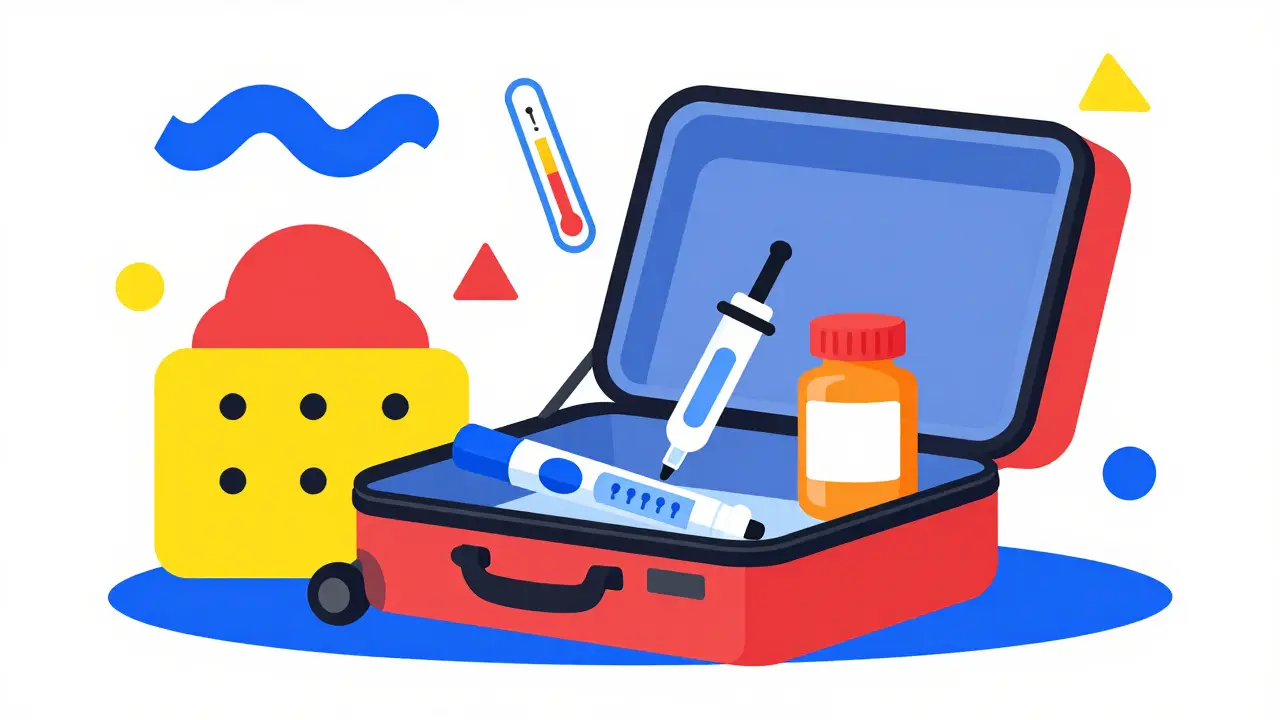
You pack your clothes, charge your devices, and double-check your passport. But what about the medicine in your bag? If you’ve ever worried that a hot car or a humid airplane cabin might ruin your prescription, you’re not alone. Improper storage is the silent killer of drug efficacy. In fact, studies show that just 30 minutes outside recommended temperature ranges can reduce the potency of certain biologics by up to 25%. For travelers, this isn’t just an inconvenience; it’s a health risk.
Keeping your travel medications within their shelf life requires more than just tossing them in a backpack. It demands understanding how heat, light, and humidity interact with pharmaceutical compounds. Whether you are carrying insulin for diabetes, epinephrine for allergies, or daily heart medication, the goal is the same: maintain chemical stability from departure to arrival. This guide breaks down exactly how to protect your meds, what tools work best, and how to navigate security checkpoints without losing your stash.
Understanding Temperature Sensitivity
Not all medications are created equal when it comes to storage. The first step in protecting your supply is knowing which category your drugs fall into. Most people assume everything needs refrigeration, but that’s rarely true. According to the American Pharmacists Association, approximately 78% of prescriptions require only room temperature storage, defined as 68°F to 77°F (20°C to 25°C). These drugs can usually tolerate short excursions between 59°F and 86°F (15°C to 30°C) without significant loss of efficacy.
However, the remaining 22% are far more fragile. Cold chain medications, such as insulin, certain antibiotics, and biologic injectables like adalimumab, must stay between 36°F and 46°F (2°C to 8°C). Exposing these to temperatures above 86°F for more than 24 hours can render them useless. Then there are light-sensitive drugs like epinephrine. Direct sunlight for just 15 minutes can degrade epinephrine concentration by nearly 18%. Knowing your specific drug’s limits is the foundation of safe travel.
| Medication Type | Ideal Temperature Range | Excursion Limit (Max Time) | Common Examples |
|---|---|---|---|
| Room Temperature | 68°F - 77°F (20°C - 25°C) | Up to 86°F for short periods | Antibiotics, blood pressure pills, statins |
| Cold Chain (Refrigerated) | 36°F - 46°F (2°C - 8°C) | Varies; often 12-48 hours at room temp | Insulin, Humalog, certain biologics |
| Light Sensitive | Varies by drug | Avoid direct sunlight entirely | EpiPens, nitroglycerin, some eye drops |
| Freezer Stable | -4°F to 5°F (-20°C to -15°C) | Do not freeze unless specified | Certain specialty vaccines, rare biologics |
Packing Strategies for Different Environments
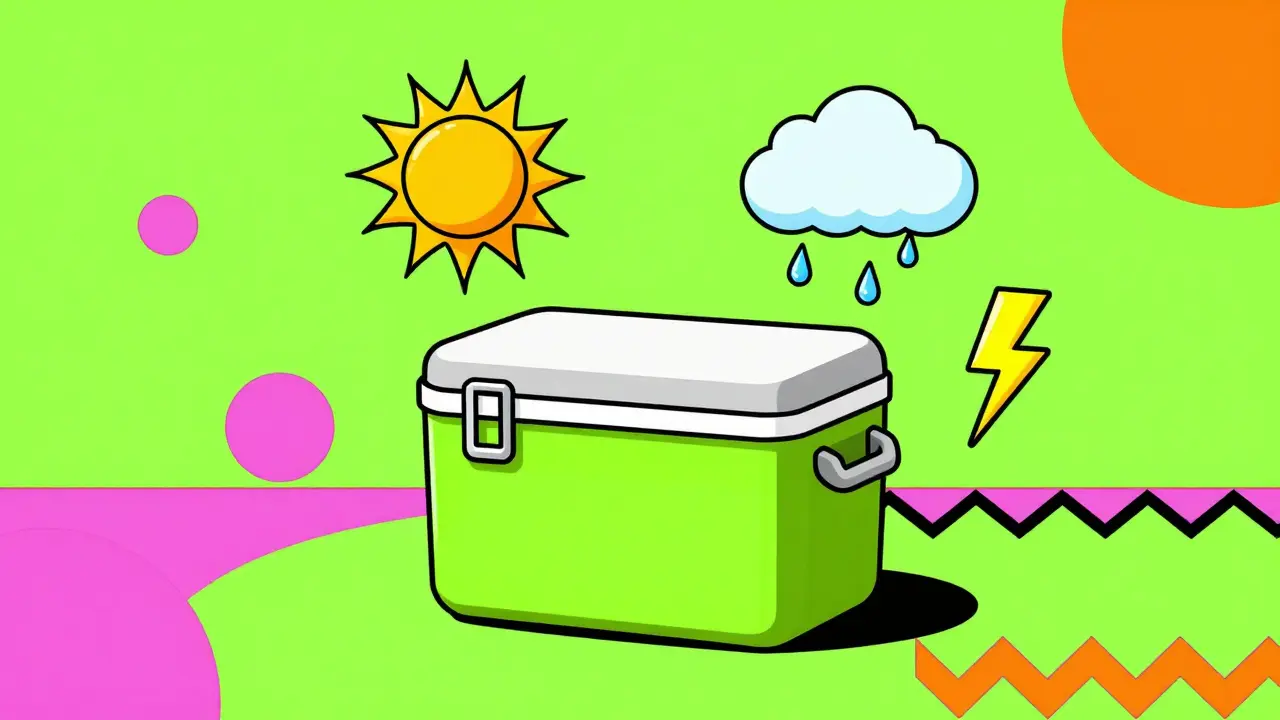
Your packing method depends heavily on where you are going. A trip to London requires different precautions than a trek through Southeast Asia. For warm climates, passive cooling solutions are your best friend. Medical-grade coolers, such as those tested by the Bocapharmacy Group, can maintain stable temperatures for 48 to 72 hours. Standard insulated bags, by contrast, typically fail after 12 to 24 hours.
If you are flying, avoid using standard ice packs. They can freeze your medication, which damages the molecular structure of many drugs. Instead, use gel packs that have been partially thawed so they sit right at 36°F. The Transportation Security Administration (TSA) found that gel packs outperform ice packs by 37% in temperature consistency because they provide steady cooling without freezing risks. Always wrap your medication in a towel inside the cooler to prevent direct contact with the cold source.
For humidity-prone destinations, moisture control is critical. Bathroom storage in hotels is a common mistake. Thirty-four percent of travelers who stored meds in bathrooms reported issues due to humidity. Keep your medications in your bedroom closet or a dry drawer. Use silica gel packets if you’re storing oral solids in tropical environments, but ensure they never touch the medication directly.
Navigating Airport Security and Customs
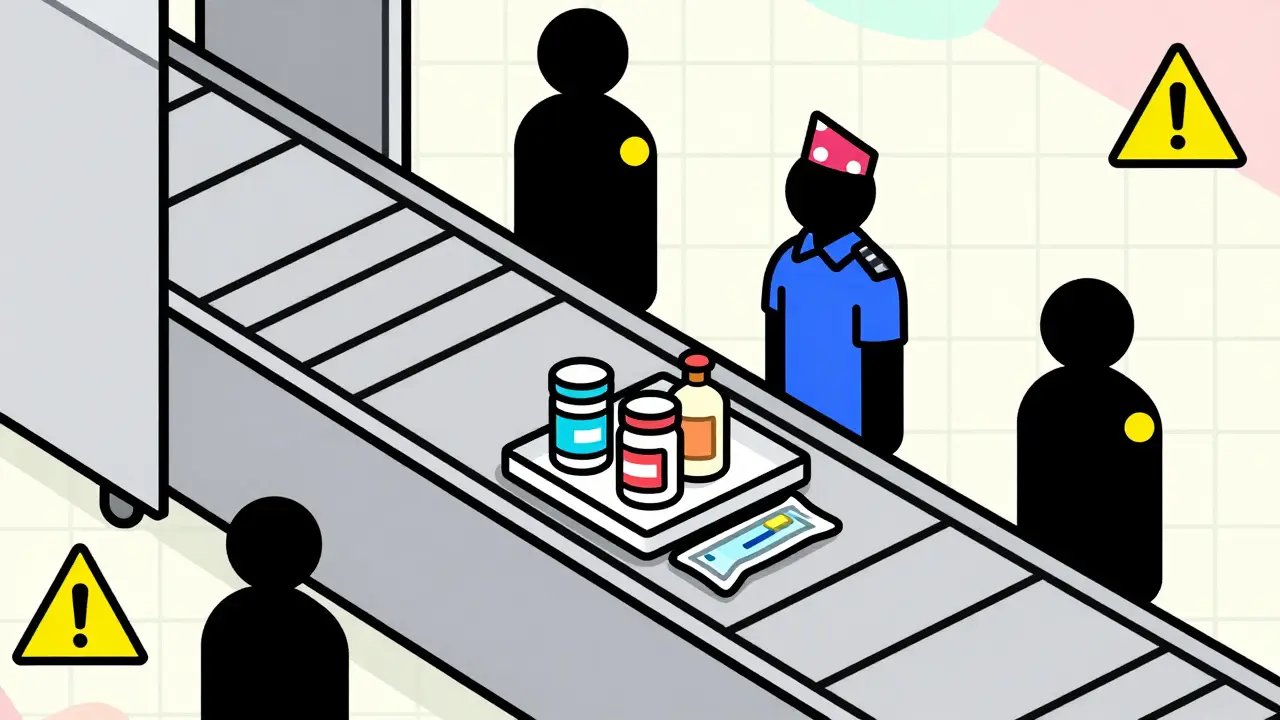
Getting your medication through airport security shouldn’t be stressful, but it requires preparation. The TSA allows passengers to carry medically necessary liquids, gels, and aerosols in reasonable quantities exceeding 3.4 ounces. You do not need to put these in the quart-sized bag. However, you must declare them at the checkpoint. Arrive two hours early for domestic flights and three hours for international ones to allow time for inspection.
Always keep your medications in their original containers with pharmacy labels intact. This is non-negotiable for international travel. In one documented case, a traveler had their entire supply confiscated in Thailand because the pills were in unlabeled pill organizers, violating local customs regulations. Original packaging proves ownership and legitimacy. Carry a printed letter from your doctor detailing your condition, the medication names, and dosage. While not always requested, having this document ready speeds up the process significantly.
Remember that security officers may need to test liquid medications. You can request that they do not open the bottle if it contains needles or syringes, but you cannot refuse screening. X-rays are generally safe for most medications, but if you are concerned about radiation exposure to sensitive biologics, ask for a visual inspection instead. Most airports accommodate this request if you communicate clearly.
Monitoring Temperature During Transit
You can’t manage what you don’t measure. Relying on guesswork is dangerous. Investing in a temperature monitoring device like a TempTraq sensor is a small price to pay for peace of mind. These sensors log temperature data every few minutes and alert you via smartphone app if conditions go out of range. Studies show these devices detect over 98% of temperature excursions when placed adjacent to the medication.
For a low-tech alternative, consider temperature-indicating labels. Recently approved by the FDA, these stickers change color permanently if exposed to temperatures outside a specified range. They are cheap, disposable, and provide immediate visual feedback. Place one on the outside of your cooler bag and another inside next to the drug. If the sticker changes color, you know immediately that the medication may be compromised.
Check your cooler frequently. Don’t wait until you arrive at your destination. Set alarms on your phone to check the temperature every four to six hours during long hauls. If you notice the internal temperature rising, replace gel packs immediately. In extreme heat, seek air-conditioned spaces like cafes or hotel lobbies to rest your cooler before continuing your journey.
What to Do If Medication Is Compromised
Despite your best efforts, things can go wrong. If your temperature logger indicates a prolonged excursion, or if your medication looks different-discolored, clumped, or leaking-do not take it. Taking ineffective medication is worse than taking none at all, especially for critical conditions like asthma or heart disease.
Contact your pharmacist or healthcare provider immediately. Many pharmacies now offer telehealth services that can help assess whether the drug is still viable based on the temperature data you collected. If you are abroad, locate a local pharmacy that stocks your medication. Bring your original prescription and doctor’s note to facilitate a refill. Some countries require a formal prescription translation, so prepare this in advance if traveling internationally.
Keep a backup supply. Always pack more medication than you think you’ll need. Aim for at least a three-day extra buffer. Store this backup separately from your main supply. If your primary cooler fails, you have a secondary option that has remained in a stable environment, perhaps in your checked luggage (if allowed and properly packed) or in a hotel mini-fridge that you have verified is working.
Preparing Before You Leave
Start planning 14 to 21 days before your trip. Consult with your pharmacist about travel-friendly formulations. Some manufacturers offer versions of drugs that are more stable at higher temperatures. Ask specifically about "excursion times"-how long the drug can safely remain out of refrigeration. For example, some insulins can last up to 28 days at room temperature once opened, while others degrade much faster.
Verify your travel insurance covers medical emergencies related to medication loss or spoilage. Check if your policy includes coverage for purchasing replacement drugs abroad. Finally, research local regulations regarding controlled substances. Even legal prescriptions in your home country may be illegal or restricted in your destination. The U.S. State Department provides detailed guides for each country, outlining what is permitted and what documentation is required.
Can I put my medication in checked luggage?
It is generally not recommended. Checked luggage is subject to extreme temperature fluctuations in the cargo hold, which can easily exceed safe limits for most medications. Additionally, bags can get lost or delayed. Always carry essential medications in your carry-on bag where you can monitor them directly.
How long can insulin stay out of the fridge while traveling?
Unopened insulin vials or pens can typically remain at room temperature (below 86°F) for up to 28 days, depending on the brand. Once opened, they should be used within 28 days regardless of storage. However, in high heat, this window shrinks. Using a cooler with gel packs extends this safety margin significantly.
Will airport security X-rays damage my medication?
Most experts agree that standard airport X-ray machines do not harm solid medications. However, some patients prefer to request a visual inspection for sensitive biologics or liquid medications to avoid any potential risk. You have the right to request this, but you cannot refuse screening entirely.
What should I do if my EpiPen turns pink?
If the liquid in an EpiPen appears pink, brown, or has particles in it, it has degraded and is no longer effective. This is often caused by exposure to heat or light. Do not use it. Replace it immediately with a new one. Clear or slightly yellowish liquid is normal.
Do I need a doctor's note for international travel?
While not always legally required, carrying a doctor's note is highly recommended. It should include your diagnosis, medication names, dosages, and the doctor’s contact information. For controlled substances, some countries require official translations or notarized copies. Check the embassy website of your destination country for specific requirements.