
Medication Safety & Polypharmacy Risk Checker
Answer these questions to see if you fall into a high-risk category for medication errors.
Your Assessment Result
Select your options and click Assess to see your risk level.
That nagging headache, the sudden dizziness when you stand up, or the fatigue that just won't go away-chances are, you might be blaming it on aging. But what if the real culprit is sitting in your medicine cabinet? For millions of people, especially those managing multiple health conditions, the medications meant to help them are often the source of new problems. This is where an Annual Medication Review comes in. It is not just a quick check-up; it is a systematic clinical service designed to evaluate every pill, supplement, and cream you use to identify hidden risks and resolve medication-related problems before they land you in the hospital.
In Australia and many other healthcare systems, pharmacists are increasingly stepping out from behind the counter to act as primary medication experts. With approximately 90% of people living within five miles of a pharmacy, these professionals offer one of the most accessible lines of defense against adverse drug events. The goal is simple: reduce side effects, stop unnecessary drugs, and ensure that what you are taking actually helps you live better, not harder.
What Exactly Happens During a Medication Review?
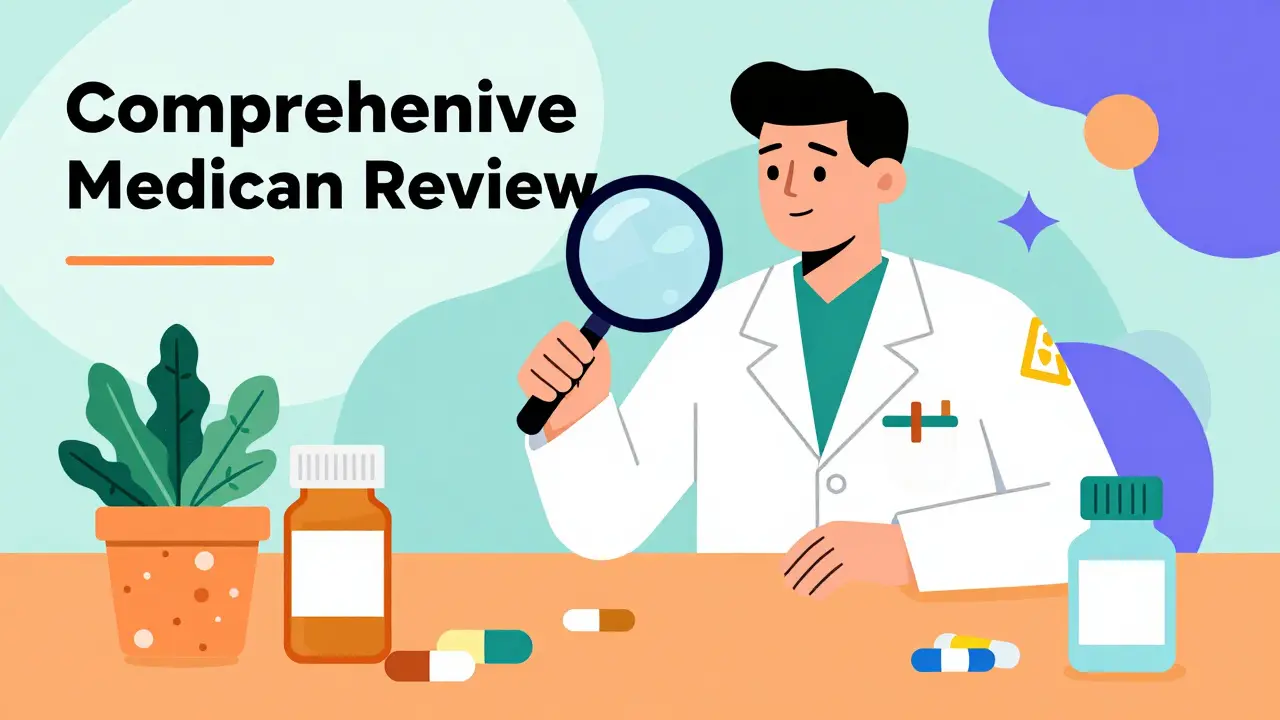
A Comprehensive Medication Review (CMR) is far more detailed than the two-minute chat you might have when picking up a prescription. According to guidelines from bodies like the National MTM Advisory Board, this process is a structured deep-dive into your entire health regimen. It typically lasts about 30 minutes and follows a clear three-step path.
Step 1: The Complete Inventory
You bring everything. That means prescription drugs, yes, but also over-the-counter painkillers, vitamins, herbal supplements, and even topical creams. Many patients forget that interactions can happen between a prescribed blood thinner and a bottle of fish oil, or between an antidepressant and St. John’s Wort. The pharmacist catalogs every single substance entering your body.
Step 2: The Assessment
Here, the pharmacist acts as a detective. They assess each medication to answer critical questions: Why was this prescribed? Is it still necessary? Is the dose correct for your current kidney or liver function? Are there dangerous interactions between Drug A and Drug B? This step specifically targets polypharmacy, which is defined as taking four or more long-term medications-a scenario common in seniors and a leading cause of unplanned hospital admissions.
Step 3: The Action Plan
The review ends with specific recommendations. This might mean adjusting the timing of a dose to avoid nausea, discontinuing a medication that no longer provides benefit, or switching to a safer alternative. Crucially, this plan is developed *with* you, ensuring you understand the changes and agree to them.
Why Pharmacists Are the Best Fit for This Job
You might wonder why you don't just ask your doctor. While physicians are excellent at diagnosing diseases and initiating treatments, they often lack the time to conduct a holistic review of complex drug regimens during short appointments. Pharmacists, by contrast, specialize in pharmacology-the study of how drugs interact with the body.
Consider the data: The American Pharmacists Association estimates that up to 1.5 million adverse drug events occur annually in the United States alone, costing billions in healthcare expenses. In Australia, similar trends are observed, with medication errors contributing significantly to hospital readmissions. Pharmacists are trained to spot these patterns. They know that a common antibiotic might spike the levels of a heart medication in your system, turning a safe dose into a toxic one. They also understand that "side effects" like confusion or falls in older adults are frequently misdiagnosed as dementia or frailty, when they are actually reactions to sedatives or painkillers.
| Feature | Standard Doctor Visit | Pharmacist Medication Review |
|---|---|---|
| Primary Focus | Disease diagnosis & treatment initiation | Medication safety & optimization |
| Time Spent | Typically 10-15 minutes | Typically 30+ minutes dedicated to meds |
| Scope | Often focuses on one condition per visit | Holistic view of all prescriptions, OTCs, & supplements |
| Interaction Check | Computer-generated alerts (often ignored) | Clinical assessment of real-world impact |
Who Needs an Annual Medication Review Most?
While anyone can benefit from a clean bill of health regarding their pills, certain groups face higher risks and see greater returns from these reviews. If you fall into any of these categories, scheduling a review should be a priority.
- Seniors on Multiple Meds: If you take four or more medications, you are in the polypharmacy zone. As we age, our bodies metabolize drugs differently. A dose that was fine ten years ago might now be too high.
- People with Chronic Conditions: Those managing diabetes, hypertension, or heart disease often have overlapping treatments. A review ensures these treatments work together rather than against each other.
- Those Experiencing Unexplained Symptoms: Persistent dizziness, stomach upset, or brain fog could be drug-induced. A pharmacist can help isolate the cause.
- Newly Diagnosed Patients: Starting a new complex regimen is a vulnerable time. An early review can prevent adherence issues before they start.
Conversely, if you only take a single medication for a straightforward condition like seasonal allergies, a full formal review might be overkill. However, even then, a quick chat with your pharmacist can catch potential interactions with new supplements you might try.
How to Prepare for Your Review
The success of a medication review depends heavily on the information you provide. Here is how to make the most of your appointment.
- Bring All Your Bottles: Do not rely on memory. Bring every prescription, over-the-counter drug, vitamin, and herbal supplement. Include inhalers, eye drops, and skin creams. Studies show that 40-50% of patients fail to mention OTC medications, which are major sources of hidden interactions.
- List Your Goals: What bothers you most? Is it the cost? The number of pills? Side effects like dry mouth or insomnia? Write these down so you can discuss them openly.
- Note Any Changes: Have you missed doses recently? Did you switch brands? Has your diet changed significantly? These factors affect how drugs work in your body.
- Ask About Costs: Pharmacists can often suggest generic alternatives or different formulations that are equally effective but cheaper, reducing financial strain.
Real-World Impact: Beyond the Pill Box
The benefits of an annual medication review extend beyond just avoiding side effects. Research indicates that these reviews improve medication adherence. When patients understand *why* they are taking a drug and how it works, they are more likely to take it correctly. The NIH has documented that only about 50% of long-term medicines are taken as directed, a gap that widens over time. Education bridges this gap.
Furthermore, these reviews empower patients. Instead of feeling passive recipients of medical orders, you become an active partner in your care. You gain confidence in managing your health. Many patients report discovering they were taking duplicate medications-for example, two different brands of ibuprofen-or identifying side effects they had mistakenly accepted as normal parts of aging.
From a systemic perspective, reducing medication-related problems lowers healthcare costs. Fewer hospitalizations due to adverse drug events mean less strain on emergency services and lower bills for everyone. As the population ages-with all baby boomers turning 65 or older by 2030-the demand for these services will only grow, making them a cornerstone of sustainable healthcare.

Overcoming Common Barriers
Despite the clear benefits, some people hesitate to book a review. Common concerns include the belief that "if it ain't broke, don't fix it," or worry about offending their doctor if the pharmacist suggests stopping a medication. It is important to remember that pharmacists and doctors are teammates. A good pharmacist will communicate any significant changes to your prescriber, ensuring continuity of care. The goal is not to undermine your doctor, but to support them with specialized expertise.
Another barrier is accessibility. Not all pharmacies offer comprehensive, private consultations. Look for pharmacies that advertise "Medication Therapy Management" (MTM) or "Clinical Services." In Australia, many community pharmacies participate in government-subsidized medication review programs, making them free or low-cost for eligible patients. If your local pharmacy does not offer this, ask your GP for a referral to a specialist pharmacy or a home-based review service.
Next Steps for Better Medication Safety
Taking control of your medication safety starts with a single conversation. If you have not had a thorough review in the past year, schedule one today. Use the preparation tips above to ensure you get the most out of the session. Remember, your pharmacist is a resource available to you year-round, not just when you need a refill. Building a relationship with them can lead to earlier detection of problems and a higher quality of life.
Is an Annual Medication Review covered by insurance?
Coverage varies by country and provider. In the US, Medicare Part D requires coverage for eligible beneficiaries under the MTM program. In Australia, the Home Medicine Review (HMR) and General Practice Medicines Review (GPMR) schemes subsidize these services for eligible patients. Always check with your specific insurer or pharmacy to confirm eligibility and any potential out-of-pocket costs.
Can a pharmacist change my prescription?
In most jurisdictions, pharmacists cannot independently prescribe new controlled substances, but they can recommend changes to your doctor. During a review, they may suggest dosage adjustments, discontinuation of unnecessary drugs, or therapeutic substitutions. They will then contact your physician to approve these changes, ensuring a collaborative approach.
How often should I have a medication review?
Annually is the standard recommendation for most adults, especially those on multiple medications. However, if you experience new symptoms, start a new chronic medication, or undergo a significant health change, you should request an interim review sooner.
Do I need to bring my doctor's notes?
It is helpful but not always required. Bringing a list of your diagnoses and recent lab results (like kidney or liver function tests) can enhance the accuracy of the review. The pharmacist will primarily focus on the medications themselves, but context about your health conditions aids in determining appropriateness.
What is polypharmacy?
Polypharmacy refers to the concurrent use of multiple medications, typically defined as five or more drugs. It is common in older adults and increases the risk of drug-drug interactions, side effects, and reduced adherence. An annual medication review aims to simplify regimens and eliminate unnecessary drugs to mitigate these risks.