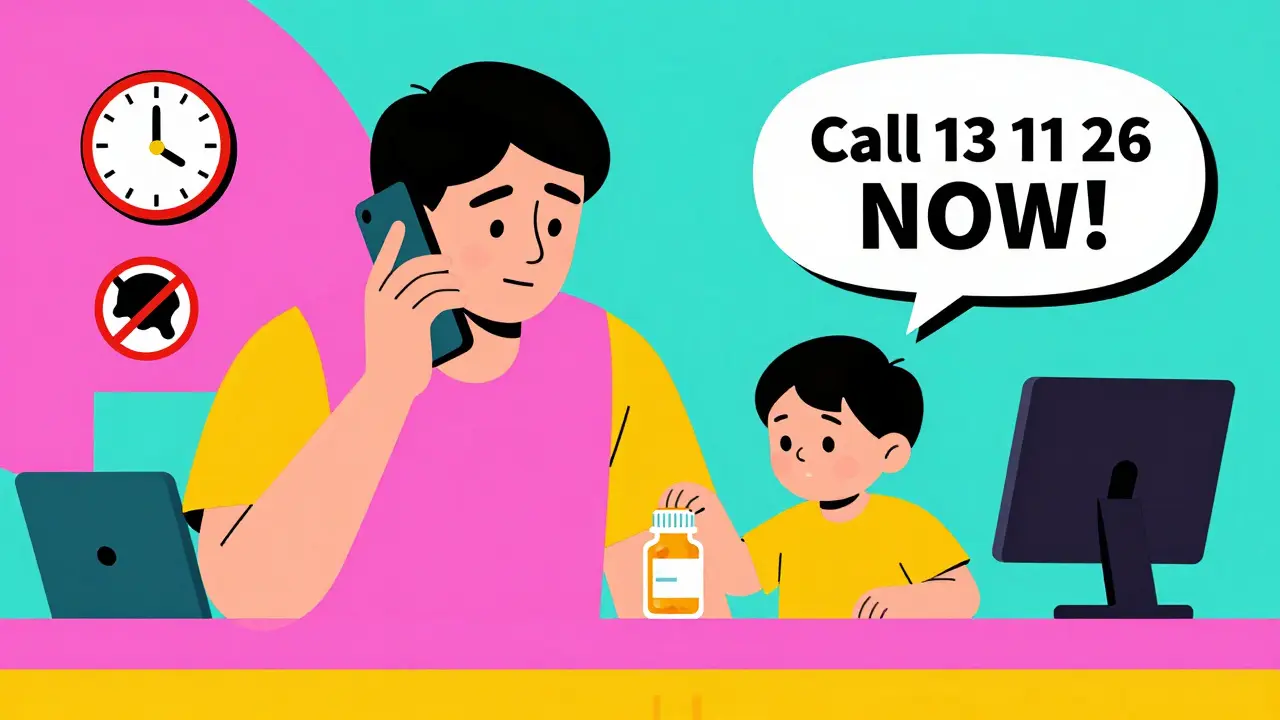
If your child swallows the wrong medication, time is everything. Not minutes. Not even seconds. Every second counts. You don’t need to panic, but you do need to act-fast and correctly. The wrong move can make things worse. The right move can save their life.
Call Poison Control First-Before Anything Else
Don’t call 911. Don’t rush to the hospital. Don’t try to make your child vomit. First, call Poison Control. In Australia, that’s 13 11 26. This number is free, available 24/7, and staffed by trained toxicology nurses who know exactly what to do. They’ve handled thousands of cases like yours. They’ll ask you for details: what was swallowed, how much, when, and your child’s age and weight. Write it down if you can, but don’t waste time. Speak clearly. They’ll tell you whether to wait, monitor at home, or head straight to the ER.Why call them before the hospital? Because 43% fewer children end up hospitalized when Poison Control is involved. They can guide you through safe steps right then and there. A parent in Perth once waited 45 minutes trying to find the pill bottle before calling. Their 2-year-old ended up in intensive care after swallowing a single blood pressure pill. Another parent called immediately after their child swallowed three antihistamine tablets. The nurse told them to watch for drowsiness and keep them awake. No hospital visit needed.
Remove the Medication-Carefully
If the pill or liquid is still in your child’s mouth, gently wipe it out with your finger. Don’t stick your finger down their throat. Don’t force anything. If it’s a patch-like a pain relief or nicotine patch-check their skin, gums, and even the roof of their mouth. Patches stick where you least expect them. Peel it off carefully. Wash your hands after. Wear gloves if you have them. If the medicine got on their skin, take off their clothes and rinse the area with cool water for at least 15 minutes. Don’t scrub. Just rinse.Never Induce Vomiting-It’s Dangerous
You might have heard old advice: give them syrup of ipecac. Don’t. It hasn’t been recommended since 2004. In fact, trying to make your child vomit can cause more harm than good. About 7% of kids who are made to vomit end up with aspiration pneumonia-when the substance goes into their lungs. That’s worse than the original poisoning. The American College of Medical Toxicology says vomiting changes outcomes in less than 1% of cases. Poison Control will tell you if anything needs to be removed from the stomach. They might recommend activated charcoal, but only if it’s been less than an hour since ingestion-and only if it’s safe for that specific drug.
Watch for These Warning Signs-Call 000 Immediately
Some symptoms mean you need to call emergency services right away. Don’t wait. Don’t second-guess. Call 000 if your child has:- Difficulty breathing or stops breathing
- Loss of consciousness or can’t wake up
- Seizures or shaking
- Pupils that are unusually large or tiny
- Extreme drowsiness that lasts more than 20 minutes
- Excessive drooling or foaming at the mouth
- Pale, cold, or bluish skin
These signs show the body is shutting down. Heart medications like beta-blockers can drop blood pressure below 70/40 mmHg in under 30 minutes. Acetaminophen overdoses can cause liver failure within hours. If your child swallowed a painkiller, antidepressant, or heart pill, treat it like an emergency-even if they seem fine now.
What Happens at the Hospital?
If you’re told to go to the ER, bring the medication container-even if it’s empty. The label has the active ingredients, dosage, and expiration date. That’s critical. The hospital will monitor vital signs every 15 minutes for the first hour. They’ll check heart rate, breathing, blood pressure, and oxygen levels. Blood sugar will be tested every 30 minutes if there’s any chance they swallowed a diabetes pill (like sulfonylurea), because those can cause dangerous low blood sugar.They may give activated charcoal if it’s been less than an hour since ingestion. It binds to the drug and stops it from being absorbed. But it won’t work for everything. It’s not used for acids, bleach, or gasoline. For opioid overdoses, they’ll give naloxone-a fast-acting antidote. For certain antidepressants, they’ll use sodium bicarbonate. For rare cases of insulin or diabetes pill overdose, they’ll give glucose or octreotide. You won’t need to know these names. The doctors will.
Most kids who swallow a small amount of medication are observed for at least 12 hours. Even if they seem okay, some drugs take hours to show effects. Don’t leave early just because they’re smiling. Wait for the doctors to say it’s safe.
Prevention Is the Best Medicine
The best way to handle a medication accident? Avoid it altogether. Here’s what actually works:- Lock up all meds-even vitamins and supplements-in a high cabinet with a childproof latch. Not on the counter. Not in a purse. Not in a drawer your child can reach.
- Use containers with flow restrictors. Since 2022, all liquid medications sold in Australia must have them. They reduce accidental swallowing by 58%.
- Never take medication in front of kids. If they see you pop a pill, they’ll copy you.
- Don’t call medicine “candy.” Even if it’s flavored. That confuses kids.
- Check your home monthly. Old prescriptions, leftover antibiotics, or grandma’s blood pressure pills can still be lying around.
Smart pill boxes like Hero Health can help. They lock, remind you when to give doses, and alert you if someone opens them. But they cost $90 a month-and only 12% of at-risk homes use them. A simple lockbox under $20 works just as well.
What You Need to Remember
- Call 13 11 26 first. Always. Even if you’re unsure. - Don’t induce vomiting. It’s outdated and dangerous. - Watch for breathing problems, drowsiness, or seizures. If they happen, call 000 immediately. - Bring the container to the hospital. It saves time and lives. - Lock it up. 85% fewer accidents happen in homes with locked storage.You’re not alone. Every year, 60,000 children under five end up in emergency rooms because of medication mistakes. But most of these cases are preventable. And when they happen, knowing the right steps makes all the difference.
What should I do if my child swallows a pill but seems fine?
Call Poison Control at 13 11 26 immediately-even if they seem fine. Many dangerous medications don’t show symptoms right away. A single adult-strength painkiller can cause liver failure in a toddler hours later. Poison Control will tell you whether to monitor at home or go to the hospital.
Can I use syrup of ipecac to make my child vomit?
No. Syrup of ipecac is no longer recommended and hasn’t been for over 20 years. It doesn’t reliably remove poison, and it can cause serious side effects like aspiration pneumonia, seizures, or heart rhythm problems. Never use it. Poison Control will give you safe, effective instructions instead.
Is it safe to wait and see if my child gets sick?
No. Waiting is one of the most dangerous things you can do. Some medications, like heart pills or antidepressants, can cause sudden, life-threatening changes within minutes. Others, like acetaminophen, may not cause symptoms for 12-24 hours-but damage is already happening. Always call Poison Control right away.
What if I don’t know what my child swallowed?
Call Poison Control anyway. They can still help. Tell them what you saw-color, shape, size, any packaging left behind. Even vague details help. They have databases that match descriptions to possible drugs. If you find the container later, bring it to the hospital or send a photo to the poison center.
How can I prevent this from happening again?
Lock all medications in a high cabinet with a childproof latch. Use containers with flow restrictors. Never leave pills on counters, in bags, or in unlocked drawers. Check your home monthly for old or unused meds. Educate older siblings not to share medicine. And make sure everyone who cares for your child knows the Poison Control number: 13 11 26.
Does child-resistant packaging really work?
Yes-but not perfectly. Child-resistant packaging reduces accidental ingestions by about 30%, according to FDA projections. But determined toddlers can still open some bottles. That’s why locking storage is still essential. The new standard requires two separate safety mechanisms, which will help even more by 2025. But no packaging replaces supervision and secure storage.


December 20, 2025 AT 11:48 AM
Just saw this and had to drop everything - my niece swallowed a half-pill of my dad’s blood pressure med last week. Called 13 11 26 on the spot. Nurse said keep her upright, give water, watch for drowsiness. No ER. She’s fine. This info saves lives. Period.
December 20, 2025 AT 23:44 PM
OMG I CRIED READING THIS 😭 I’M A MOM OF TWINS AND I JUST REALIZED MY MEDS ARE STILL ON THE BEDSIDE TABLE. I’M MOVING THEM RIGHT NOW. THANK YOU FOR THIS. I’M SO SCARED BUT ALSO SO GRATEFUL.
December 22, 2025 AT 05:25 AM
Most parents don’t even know Poison Control exists. They panic, rush to the ER, waste hours, and risk making things worse. This is basic public health literacy. Why isn’t this taught in schools? Why isn’t it on every prescription bottle? The system is broken.
And don’t get me started on ‘child-resistant’ packaging. My 18-month-old opened a bottle in 12 seconds. It’s a joke. Lock boxes aren’t optional. They’re mandatory.
December 23, 2025 AT 20:02 PM
Let me be clear - if you’re reading this and haven’t locked up your meds you’re one bad moment away from a nightmare. I’ve worked ER for 17 years. I’ve seen the kids. The ones who got help fast? They walk out. The ones who waited? They don’t. Call Poison Control. Don’t Google it. Don’t ask your aunt. Call 13 11 26. Now.
And if you think your kid is fine after swallowing something? You’re wrong. Acetaminophen doesn’t care how cute they are. It kills silently. Hours later. You won’t see it coming. That’s why you call before you think.
December 24, 2025 AT 19:05 PM
I’m from India and I’ve seen this happen too often - grandparents leave their pills on the kitchen counter, kids think they’re candy. I keep all meds in a locked metal box on the top shelf. Even my vitamins. My daughter is 3. I don’t take risks. Simple. Effective. No drama.
Also - flow restrictors? Yes. But they’re not in every bottle here yet. So lock it anyway. And teach older siblings: never give medicine to a little one. Not even a ‘tiny bit’.
December 25, 2025 AT 12:12 PM
Let’s be real - 85% fewer accidents with locked storage? That’s not a statistic it’s a indictment of parental negligence. You think your kid is too smart to open a cabinet? They’re not. They’re toddlers. They climb. They explore. They imitate. You’re not being paranoid. You’re being responsible. The rest of you? You’re just lucky so far.
And the ‘don’t induce vomiting’ thing? Yeah that’s been known since 2004. Why are people still asking? Because they read outdated blogs. Stop trusting internet myths. Trust Poison Control. Trust science. Not your cousin’s Facebook post.
December 26, 2025 AT 07:00 AM
Been a paramedic in Perth for 12 years. This is 100% accurate. We get 3-4 calls a week from parents who waited. Always the same story - ‘I thought they’d be okay’ or ‘I didn’t know what it was’. You don’t need to know. Call 13 11 26. They’ll ask the right questions. You just need to answer.
And bring the bottle. Even if it’s empty. The label tells us the exact strength. That’s half the battle. Without it? We’re guessing. And guessing kills.
December 27, 2025 AT 21:47 PM
thank you for writing this i was so scared last year when my son grabbed a pill off the counter and i didnt know what to do i called poison control and they were so calm and clear i felt like i could breathe again
December 29, 2025 AT 11:48 AM
My cousin’s kid swallowed a whole bottle of children’s ibuprofen. Called poison control. They said give him water and watch for vomiting. He threw up 20 mins later. No hospital. Saved $5k and a nightmare. Lock your meds. Seriously.
December 30, 2025 AT 05:19 AM
I keep all meds in a locked box under the sink. I even lock my supplements. My daughter is 2 and she’s a ninja with drawers. I used to think I was being excessive. Now I know I was being cautious. This post made me cry - not because I’m scared, but because I’m relieved I already did this.
December 31, 2025 AT 12:44 PM
There’s a deeper philosophical layer here that rarely gets discussed - the assumption that we can control chaos through preparation. We lock cabinets, we install childproof caps, we memorize poison control numbers. We build systems to shield our children from the invisible dangers of modern life. But what if the danger isn’t the pill? What if it’s the quiet erosion of vigilance? The belief that ‘it won’t happen to me’? That’s the real poison. Not the acetaminophen. Not the beta-blocker. The complacency. The assumption that because we love our kids, we’re immune to catastrophe. We’re not. We’re just lucky. And luck runs out. This post isn’t just instruction. It’s a wake-up call wrapped in practicality. We are not caretakers by instinct. We are caretakers by choice. And every time we choose to lock the box, to call the number, to not wait - we choose life. Over fear. Over denial. Over hope. Over certainty. We choose life.
January 2, 2026 AT 01:36 AM
I read this at 3am after my daughter almost got into my nightstand. I’m shaking. I’m crying. I’m moving every pill right now. I used to think I was careful. Turns out I was just lucky. This isn’t just advice. It’s a lifeline. Thank you for writing it. I’m sharing this with every parent I know. No exceptions.