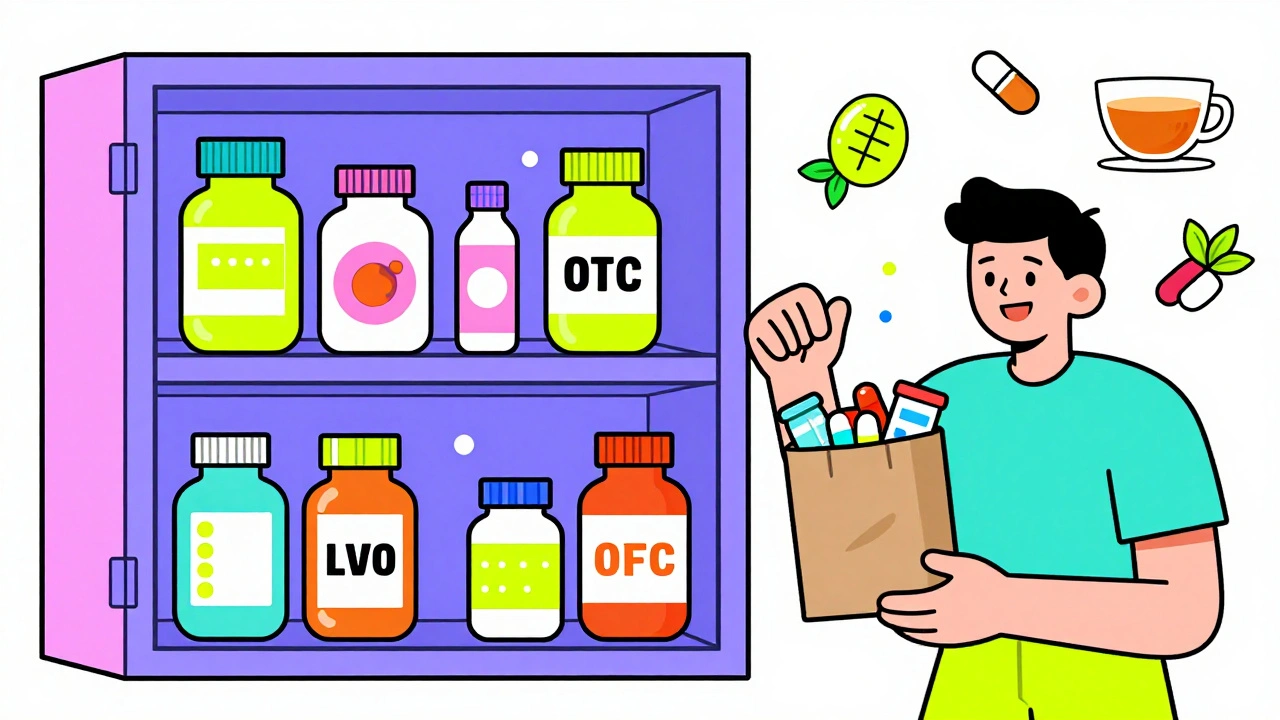
Why Bringing Pill Bottles to Appointments Saves Lives
Every year, thousands of people end up in the hospital because of medication errors. Many of these mistakes happen not because doctors prescribe wrong doses, but because no one knows what the patient is actually taking. You might think you remember all your pills - the blood pressure med, the cholesterol pill, the painkiller you take only when needed. But studies show that 60-70% of patients get at least one medication wrong when they try to list them from memory.
Bringing your actual pill bottles to your appointment isn’t just a good idea - it’s the most reliable way to prevent dangerous mistakes. When your doctor or pharmacist holds your bottle in their hand, they see the exact name, dose, instructions, and expiration date printed by the pharmacy. That’s something no list, no app, and no memory can match.
What Exactly to Bring
You don’t need to bring just your prescription meds. Bring everything. That includes:
- All prescription medications, even ones you stopped taking
- Over-the-counter pills like ibuprofen, antacids, or sleep aids
- Vitamins, minerals, and supplements - yes, even the ones you think are "harmless"
- Herbal remedies, teas, or tinctures you use regularly
Why include pills you no longer take? Because if you still have them in your medicine cabinet, your body might still be exposed to them. A 2023 study found that 56% of potentially harmful medications in older adults were only caught when doctors saw the physical bottles - not from patient reports.
Don’t toss empty bottles. Even if the bottle is empty, keep it. Pharmacists and doctors need to see what was prescribed, not just what’s left. If you’ve already thrown some away, take a photo of the label before you do. Apps like Medisafe or MyTherapy can help you save digital copies.
Why Pill Organizers Don’t Cut It
Many people, especially older adults, use those colorful weekly pill boxes. They’re convenient - but they’re also dangerous for medication reconciliation.
Here’s why: A 2023 study showed that 77% of older patients store their meds in organizers instead of original bottles. Of those, 41% use single-compartment weekly boxes. That means seven different pills are mixed into one slot. No label. No dosage. No pharmacy info. Just a mystery pill.
When you bring a pill organizer to an appointment, your provider can’t tell what’s inside. They can’t check for interactions, expired drugs, or duplicate prescriptions. One nurse in Perth told me she once had a patient bring a box with 15 pills in it - and turned out to be taking two different blood thinners at the same time. Neither the patient nor the doctor knew until they checked the original bottles.
Bring your pill organizer, yes - but also bring the original bottles it was filled from. That way, your provider can match what’s in the box to what was prescribed.
How to Prepare the Night Before
Don’t wait until the morning of your appointment to gather your meds. Set aside 15 to 20 minutes the night before. Here’s how:
- Empty your medicine cabinet, bathroom drawer, purse, or car glovebox.
- Collect every bottle, box, or packet - even if it’s half-full or looks old.
- Don’t sort them by type or frequency. Just put them all in one bag - a brown paper bag works great.
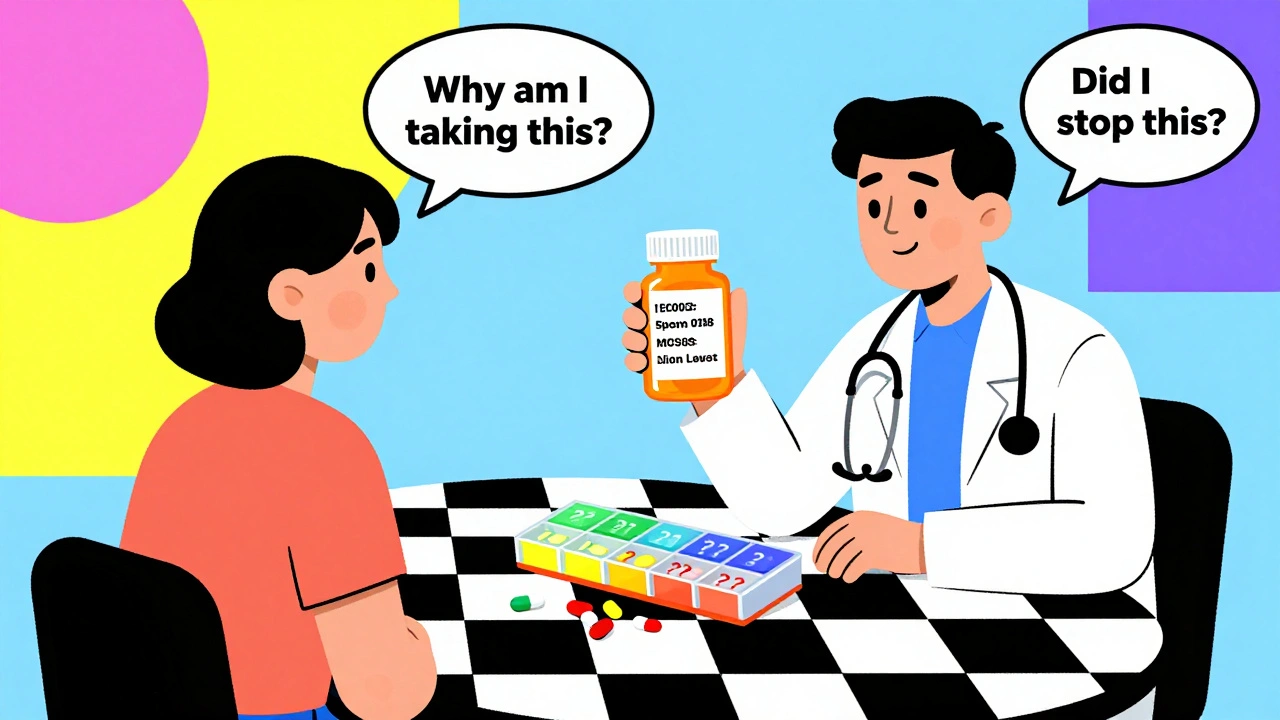
- If you use a pill organizer, lay it out next to the original bottles so you can compare them.
- Write down any questions: "Why am I taking this?" "Is this still needed?" "I haven’t used this in months - should I stop?"
This simple step - called the "brown bag review" - cuts the time your provider spends on medication review by 38%, according to the American Academy of Family Physicians. It also makes you feel more in control. Instead of guessing, you’re showing the truth.
What Happens During the Appointment
Your provider will likely sit down with your bag and go through each bottle one by one. They’ll check:
- Drug name and strength
- Dosage instructions (e.g., "take one tablet twice daily")
- Prescribing doctor and pharmacy
- Expiration dates
- Any differences between what’s prescribed and what you’re actually taking
They might ask questions like:
- "Do you take this every day, or only when you feel pain?"
- "Have you skipped any doses because of side effects?"
- "Did your specialist tell you to stop this one?"
Be honest. If you didn’t take a pill for three weeks because it made you dizzy, say so. If you started taking melatonin because you couldn’t sleep, tell them. You’re not being judged - you’re helping them keep you safe.
Some providers will update your electronic record right then. Others will send a note to your pharmacy. Either way, you’re creating a living, accurate record - not a guess.
What Doesn’t Work (And Why)
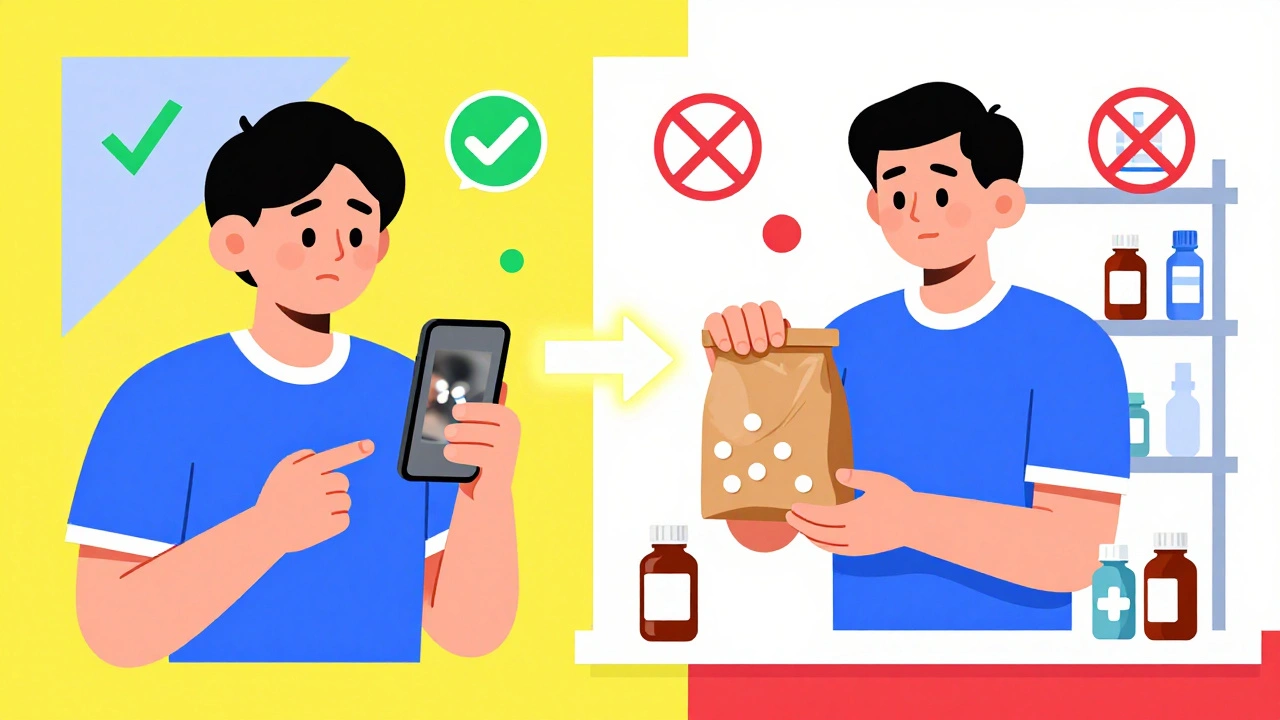
People try shortcuts. They bring a list they wrote on their phone. They snap a photo of their pill organizer. They say, "I think I take three pills a day." None of these are reliable.
Here’s what the data says:
- Self-reported lists miss 60% of medication errors.
- Phone photos of pills miss 22% of discrepancies - especially with pills that are crushed, split, or taken inconsistently.
- Apps that sync with pharmacy records are helpful, but they don’t show what you’re actually holding in your hand.
Even AI tools like WebMD’s pill identifier only work correctly 78% of the time - and they can’t tell if you’re taking a pill you stopped two months ago.
The only thing that gives the full picture? The original bottle with the pharmacy label. It has the FDA-required info: drug name, strength, lot number, expiration date, and prescriber details. Nothing else has all that.
What to Do If You’re Embarrassed
Some people feel ashamed to bring their meds. Maybe they’ve stopped taking a drug because it made them sick. Maybe they have 15 bottles and feel overwhelmed. Maybe they don’t even know what half of them are for.
Here’s the truth: Your provider has seen this before. In fact, 28% of patients who don’t take their meds as prescribed say they hide it because they’re embarrassed. But here’s what happens when they do bring the bottles:
- Doctors find dangerous interactions they didn’t know about.
- They stop unnecessary prescriptions.
- They adjust doses to reduce side effects.
- They help you get rid of expired or unused meds safely.
One patient in Perth told me she brought 12 bottles to her appointment and cried because she felt like a failure. Her doctor looked at them, smiled, and said: "Thank you. This is exactly what we need to keep you safe."
You’re not failing. You’re helping.
What Comes After the Appointment
After your visit, your provider should give you an updated list of medications - or send it to you electronically. Keep it. Compare it to your bottles. If something doesn’t match, call the clinic.
Also, ask:
- "Which of these can I stop?"
- "Is there a cheaper version?"
- "Can I reduce the number of pills I take daily?"
Many people are on medications they don’t need anymore - especially after surgery, hospital stays, or changes in health. A 2024 study found that 45% of patients were still taking drugs they’d been told to discontinue - because no one ever checked.
Bring your bottles again next year. Or sooner, if you start or stop any meds. Medication reconciliation isn’t a one-time task. It’s an ongoing safety habit.
Final Tip: Make It a Routine
Set a reminder on your phone: "Gather meds for appointment." Do it every six months, or before any specialist visit. If you’re on Medicare, you’re eligible for a free Medication Therapy Management session once a year - use it. Ask your pharmacist if they offer a "brown bag review" - many do, for free.
Medication errors are preventable. But they won’t fix themselves. You have to show up - with your bottles in hand.
Do I need to bring every pill bottle, even if it’s empty?
Yes. Empty bottles tell your provider what you were prescribed, even if you stopped taking it. This helps them spot discontinued drugs that might still be in your system or interactions you’re unaware of. If you’ve thrown one away, take a photo of the label before disposal.
Can I just show a photo of my pills on my phone instead?
Photos help, but they’re not enough. Phone images miss details like expiration dates, lot numbers, and whether you’re taking the pill as directed. In-person verification catches 22% more errors than photos alone, especially with pills that are split, crushed, or taken inconsistently.
What if I use a pill organizer? Should I bring that too?
Yes, bring the organizer - but also bring the original prescription bottles it was filled from. Pill organizers hide the drug names and dosages. Your provider needs to see both to verify what’s inside and match it to your medical record.
Why do I need to bring over-the-counter meds and supplements?
Many OTC drugs and supplements interact with prescriptions. For example, taking ibuprofen with blood thinners can cause bleeding. St. John’s Wort can cancel out antidepressants. These aren’t always listed in your medical record - but they’re in your body. Bringing them helps your provider see the full picture.
Is this only for older adults?
No. While older adults are at higher risk due to multiple medications, anyone taking more than three prescription drugs benefits. Even people on just one or two meds can have dangerous interactions with supplements or new prescriptions. Medication reconciliation is for everyone.
What if I don’t know what some pills are for?
That’s okay. Bring them anyway. Your provider can look up the pill by its imprint, color, or shape - but only if they have the bottle. Many patients don’t know why they’re on a medication because no one ever explained it. This is your chance to find out.
Can my pharmacy help me prepare?
Yes. Many pharmacies offer free "brown bag reviews" where you bring all your meds and a pharmacist reviews them with you. They can spot duplicates, interactions, and expired drugs. Ask your pharmacist - it’s a service they’re trained to provide.
How often should I do this?
At least once a year, and before every specialist visit or hospital stay. Also do it anytime you start or stop a medication, change doses, or switch pharmacies. Medication needs change - so should your list.


December 9, 2025 AT 03:06 AM
It's not about the bottles. It's about trust. If you can't remember what you're taking, maybe you shouldn't be taking it. The body doesn't need half the stuff we shove into it.
Simple truth.
December 10, 2025 AT 18:42 PM
I’ve been doing this for years. My GP once said, 'You’re the only patient who walks in with their medicine cabinet.' I told her I wasn’t trying to impress anyone-I was trying not to die.
It’s not a chore. It’s a survival skill.
December 11, 2025 AT 23:45 PM
I brought my bottles once... and my doctor spent 45 minutes asking why I had 7 different painkillers. I cried. She hugged me. Now I do it every time. 🥲
December 12, 2025 AT 08:32 AM
So... you're telling me the entire healthcare system is built on the assumption that patients are lying, forgetful, or incompetent? And the solution is... to make them carry glass bottles? Brilliant. Just brilliant. No wonder people don't trust doctors.
December 13, 2025 AT 15:25 PM
I used to think this was overkill. Then my mom had a stroke because she was mixing blood thinners with herbal tea she got from 'that nice lady at the farmers market.' Now I bring everything. Even the expired aspirin from 2017. She’s alive. That’s the win.
December 15, 2025 AT 11:15 AM
In India, we don't have pill bottles. We have packets. We have loose tablets in ziplock bags. We have labels written in Hindi by the local chemist. You think your pharmacy label is sacred? Try explaining to a doctor in Delhi that your 'blood pressure medicine' is a small white pill with 'S' on it. No bottle. No barcode. Just faith and a prayer. This whole system is a Western luxury. We adapt or die.
December 16, 2025 AT 02:23 AM
I’m a nurse. I’ve seen people bring 20 bottles. I’ve seen people bring nothing. The ones who bring bottles? They live longer. They ask better questions. They feel less scared. It’s not about the bottles. It’s about showing up. That’s the real medicine.
December 16, 2025 AT 07:15 AM
I just throw everything in a bag and call it a day. If my doctor can’t figure it out, that’s their problem. I’m not a pharmacist.
December 17, 2025 AT 11:34 AM
The real issue isn’t the bottles. It’s that we treat medication like a checklist instead of a conversation. We don’t ask why someone stopped taking a drug. We don’t ask if they can afford it. We just check boxes. The bottle is just a symptom of a broken system.
December 17, 2025 AT 13:55 PM
60-70% of patients get it wrong? That’s not incompetence. That’s negligence. Doctors don’t ask. They don’t listen. They just assume. And now we’re supposed to carry bottles like toddlers? Pathetic.
December 18, 2025 AT 20:28 PM
Medication reconciliation is one of the most underutilized safety protocols in clinical practice. The WHO lists it as a top-10 patient safety intervention. Yet, only 12% of primary care practices have standardized protocols for brown bag reviews. The bottle isn’t the solution-it’s the starting point. What we need are institutional mandates, EHR integration, and pharmacist-led reconciliation workflows. The rest is just performative compliance.
December 20, 2025 AT 11:20 AM
I appreciate the effort, but this feels like a public health PSA written by someone who’s never had to manage 14 medications while working two jobs and caring for a disabled spouse. You don’t get to tell people to bring their bottles when they’re too exhausted to remember their own name. Compassion > compliance.
December 22, 2025 AT 00:23 AM
I used to think this was ridiculous. Then I had a heart attack. Turns out, I’d been taking a supplement that canceled out my beta-blocker. My doctor found it because I brought the bottle. I didn’t know it was a problem. I thought it was 'natural.' Turns out, 'natural' doesn't mean safe. Thanks for the reminder. I’ll keep bringing the bottles.
December 24, 2025 AT 00:01 AM
I brought my pills once. My doctor didn’t even look at them. She just asked if I was taking my blood pressure med. I said yes. She nodded. I left. I still don’t know if she checked. Maybe the bottle thing is just theater. But I keep doing it. Because maybe, just maybe, next time, someone will look.
December 25, 2025 AT 03:27 AM
The notion that patients are incapable of accurately reporting their medication regimens is both patronizing and scientifically unsound. The data cited is cherry-picked from studies conducted in elderly, low-literacy populations. This is not a universal problem-it is a systemic failure of communication, not patient incompetence. To reduce human agency to the presence or absence of a pharmaceutical container is to misunderstand the very nature of medical adherence.
December 27, 2025 AT 03:26 AM
I don’t bring bottles. I bring a list. I update it every week. I use an app. I sync it with my pharmacy. Why should I carry glass? It’s 2024. We have QR codes. We have blockchain. We have AI. Stop asking me to be a walking pharmacy.
December 28, 2025 AT 03:17 AM
In my village we dont have bottles we have sachets and we give them to the doctor and he writes on paper what to take and we go to the chemist and he gives us what we need and no one dies so why this big fuss about bottles
December 30, 2025 AT 01:48 AM
I brought my bottles once. My doctor spent 20 minutes asking why I had a bottle of testosterone cream I’d stopped taking 6 months ago. I said I forgot to throw it out. She said, 'Good thing you brought it.' I cried. Then I threw out every bottle I hadn’t used in 3 months. Felt like a weight lifted.
December 30, 2025 AT 15:11 PM
I bring my bottles. But I also take a picture of them and upload to my health app. And then I send the link to my doctor. And then I text her a selfie with the bottles. And then I call her if she doesn’t reply in 2 days. I’m not just being careful-I’m being proactive. 😎
December 31, 2025 AT 23:42 PM
I’m sorry, but this entire post reads like a corporate wellness pamphlet written by a pharmaceutical lobbyist. The real problem isn’t that patients forget their pills-it’s that doctors prescribe too many, don’t review them regularly, and don’t listen when patients say, 'This makes me feel awful.' You’re blaming the victim for a system that’s broken. Bring your bottles? Fine. But fix the prescribing culture first.