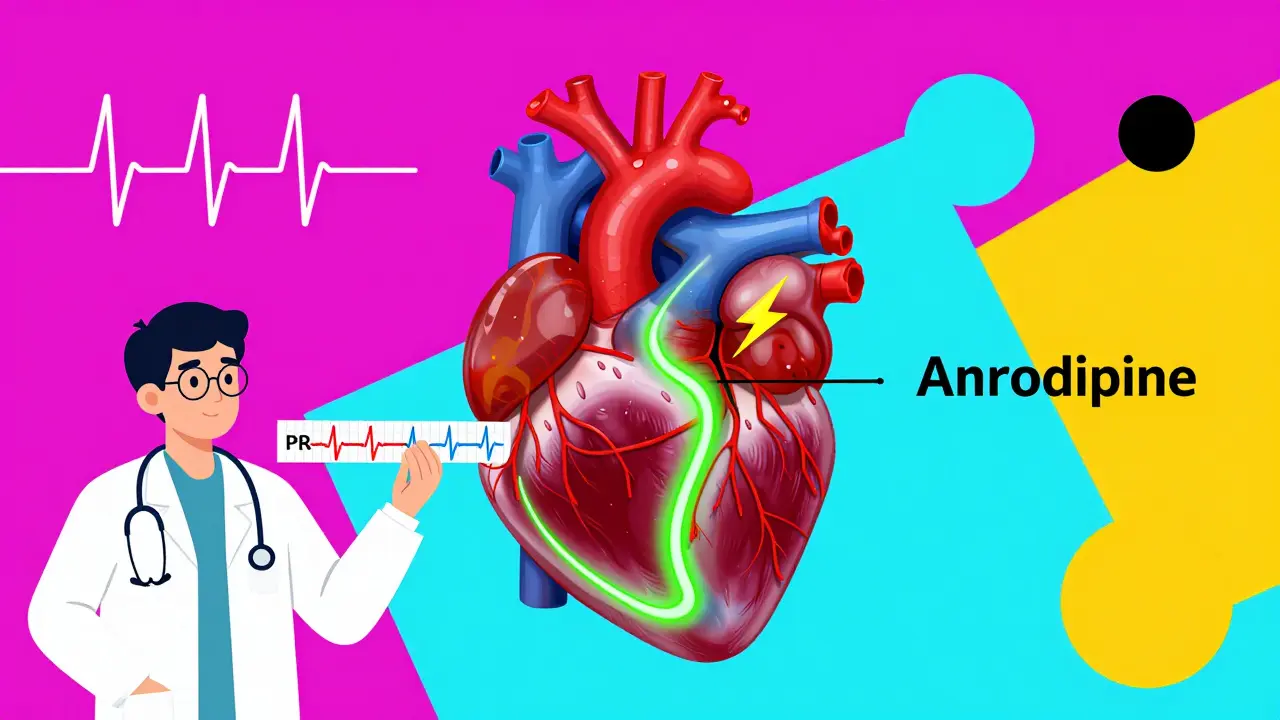
Beta-Blocker & Calcium Channel Blocker Safety Checker
Is Your Medication Combination Safe?
This tool helps you understand the risks of combining beta-blockers with calcium channel blockers based on the specific types of medications you're taking. Always consult your doctor before making any changes to your medication regimen.
Combining beta-blockers and calcium channel blockers might sound like a smart move to control high blood pressure or chest pain-after all, they work in different ways. But this combo isn’t as simple as just adding two pills together. In fact, the wrong pairing can slow your heart too much, trigger dangerous heart blocks, or even worsen heart failure. Not all calcium channel blockers are the same. And not every patient is safe to take them together. If you or someone you know is on this combination, understanding the risks and benefits isn’t optional-it’s life-saving.
How These Drugs Work (And Why They’re Sometimes Used Together)
Beta-blockers, like metoprolol or carvedilol, reduce heart rate and force of contraction by blocking adrenaline signals. This lowers blood pressure and eases the heart’s workload. Calcium channel blockers, such as amlodipine or diltiazem, relax blood vessels by stopping calcium from entering muscle cells. This also lowers blood pressure and can relieve angina.
When used together, they can be powerful. For someone with high blood pressure and angina, one drug might not be enough. Adding a second can give better control without needing a third or fourth medication. The 2018 European Society of Cardiology guidelines specifically support this combo for patients with both conditions-especially when other drugs haven’t worked.
But here’s the catch: the type of calcium channel blocker matters a lot. There are two main groups. One group-dihydropyridines like amlodipine and nifedipine-mostly affect blood vessels. The other-non-dihydropyridines like verapamil and diltiazem-also slow down the heart’s electrical system. That’s where things get risky.
The Dangerous Pair: Beta-Blockers + Verapamil or Diltiazem
Combining beta-blockers with verapamil or diltiazem is like stepping on the brake and the clutch at the same time. Both drugs slow the heart’s electrical signals. Together, they can cause your heart rate to drop dangerously low-or worse, cause a complete heart block where the heart’s upper and lower chambers stop communicating.
A 2023 study of nearly 19,000 Chinese patients found that verapamil with a beta-blocker led to serious bradycardia or heart block in 10-15% of cases. That’s not rare. That’s common enough to be a red flag. In older patients-especially those over 65-the risk of needing a pacemaker jumps 3.2 times compared to those on beta-blockers with amlodipine.
Even if you don’t have symptoms, your heart’s electrical timing can be damaged. The PR interval on an ECG measures how long it takes for an electrical signal to travel from the top to the bottom of the heart. A normal PR interval is under 200 milliseconds. If it’s already borderline when you start this combo, adding verapamil can push it past 300ms. That’s a warning sign. Many doctors now avoid this combo entirely in patients over 70 or anyone with a history of slow heart rhythms.
The Safer Option: Beta-Blockers + Amlodipine
Not all calcium channel blockers are dangerous with beta-blockers. Amlodipine, the most common dihydropyridine, barely affects the heart’s rhythm. It works on arteries, not the heart’s internal wiring. That makes it a much safer partner for beta-blockers.
Studies show that patients on metoprolol or bisoprolol with amlodipine have fewer side effects and better outcomes. A 2023 analysis of over 18,000 patients found that this combo reduced stroke risk by 22% and heart failure risk by 28% compared to other dual therapies. It also lowered overall heart events by 17%.
Doctors in the U.S. and Europe are shifting toward this pairing. A 2022 survey of over 1,200 clinicians showed 78% prefer beta-blocker + amlodipine for hypertension. Only 12% would even consider verapamil with a beta-blocker. Why? Because the safety profile is far better.
Side effects still happen-mostly ankle swelling from amlodipine. But that’s usually manageable by lowering the dose. It’s not life-threatening. That’s the difference between a nuisance and a medical emergency.
Who Should Avoid This Combo Altogether?
Some patients should never get this combination. The guidelines are clear:
- People with sinus node dysfunction (sick sinus syndrome)
- Those with second- or third-degree heart block (unless they have a pacemaker)
- Patients with heart failure with reduced ejection fraction (HFrEF)
- Anyone with a PR interval over 200ms on ECG
- Older adults (75+) with undiagnosed conduction issues
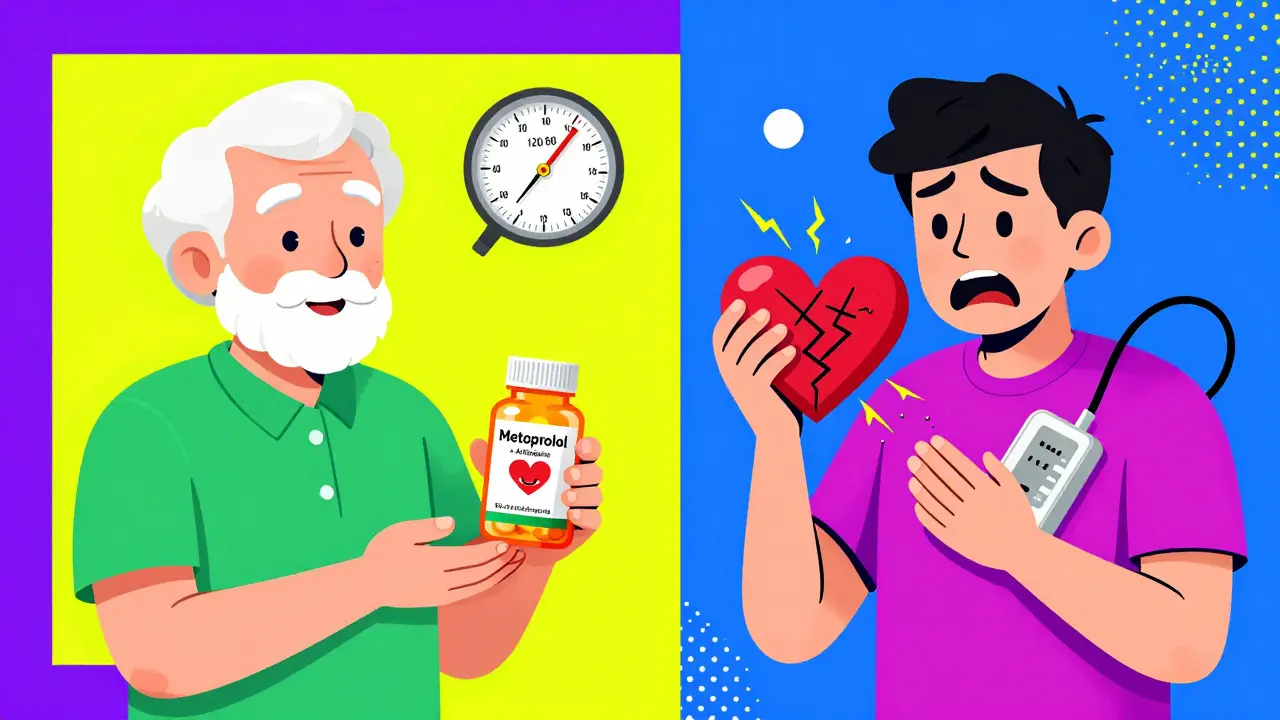
One cardiologist on a medical forum shared a heartbreaking story: a healthy 82-year-old man was started on metoprolol and verapamil for high blood pressure. He had a slightly prolonged PR interval-just 190ms. His doctor didn’t think it was a problem. Within three weeks, he went into complete heart block and needed emergency pacing. He survived, but barely. Now, that doctor refuses to prescribe this combo unless an electrophysiologist signs off.
What Doctors Should Check Before Prescribing
If your doctor is considering this combo, they should do these checks first:
- ECG-Look at the PR interval, heart rate, and rhythm. Anything over 200ms? Don’t proceed.
- Echocardiogram-Check your ejection fraction. If it’s below 45%, avoid non-dihydropyridine CCBs.
- Medication review-Are you on other drugs that slow the heart? Like digoxin or amiodarone? That adds up.
- Age and history-If you’re over 65, have had fainting spells, or have diabetes, extra caution is needed.
After starting the combo, you’ll need close follow-up. Weekly check-ins for the first month. Watch for dizziness, fatigue, fainting, or unusually slow pulse. If your heart rate drops below 50 bpm and you feel unwell, call your doctor immediately.
Why This Combo Isn’t First-Line Anymore
Even though it works well for some, beta-blocker + calcium channel blocker combos make up only about 12% of dual therapy prescriptions in the U.S. That’s far behind ACE inhibitors with CCBs (35%) or ACE inhibitors with diuretics (28%). Why? Because safer, equally effective options exist.
For most people with high blood pressure, an ACE inhibitor or ARB with a diuretic or CCB does the job without the cardiac risks. Beta-blockers are no longer first-line for hypertension alone-they’re reserved for patients with angina, post-heart attack, or very high resting heart rates (over 80 bpm).
That’s why the combo is shrinking. The FDA added a boxed warning in 2021 for verapamil + beta-blockers in patients with conduction problems. The European Medicines Agency now requires an echocardiogram before starting this combo in high-risk groups.

Real Patient Experiences
On patient forums, the stories are split.
One woman in her 60s wrote: “I was on metoprolol and amlodipine for 5 years. My BP stayed under 120/80. I had no swelling, no fatigue. I feel great.”
Another, older man, said: “I was on metoprolol and verapamil. I started feeling dizzy. My pulse was 42. They had to take me off both. I needed a pacemaker. I wish they’d checked my ECG first.”
These aren’t outliers. They’re warnings.
What’s Next for This Therapy?
The future of beta-blocker + calcium channel blocker therapy is narrowing-but not disappearing. Experts agree: it has value, but only for the right patient.
By 2028, prescriptions for beta-blocker + amlodipine are expected to grow 5.7% annually, driven by aging populations and better awareness of safety. Meanwhile, verapamil combos are declining. New tools are being developed-a risk calculator from the European Society of Hypertension, expected in late 2024, will help doctors predict who’s likely to have a slow heart rate before prescribing.
For now, the message is simple: if you’re on this combo, know which drug you’re taking. Ask your doctor: Is it amlodipine? Or verapamil/diltiazem? If it’s the latter, why? Are there safer alternatives? Don’t assume it’s fine because your doctor prescribed it. Ask for the ECG results. Ask about your heart function. Your life might depend on it.
Can beta-blockers and calcium channel blockers be taken together safely?
Yes-but only under strict conditions. Combining beta-blockers with dihydropyridine calcium channel blockers like amlodipine is generally safe and effective for hypertension and angina. However, combining them with non-dihydropyridines like verapamil or diltiazem carries serious risks, including dangerous drops in heart rate and heart block. Always confirm which type of calcium channel blocker you’re taking.
What are the signs that this combination is causing problems?
Watch for dizziness, extreme fatigue, fainting, shortness of breath, or a pulse below 50 beats per minute. If you feel unusually weak or your heart feels like it’s skipping beats, these could be signs of bradycardia or heart block. These are medical emergencies. Stop the medication and seek help immediately.
Why is amlodipine safer than verapamil with beta-blockers?
Amlodipine is a dihydropyridine calcium channel blocker that mainly relaxes blood vessels without affecting the heart’s electrical system. Verapamil is a non-dihydropyridine that directly slows the heart’s internal signals. When paired with a beta-blocker-which also slows the heart-the combined effect can cause life-threatening bradycardia or heart block. Amlodipine doesn’t do this.
Should I get an ECG before starting this combo?
Absolutely. An ECG is required before starting beta-blockers with non-dihydropyridine calcium channel blockers. It checks your PR interval and heart rhythm. If your PR interval is over 200 milliseconds, you’re at high risk for heart block. Even if you feel fine, an ECG can reveal hidden problems. Many doctors skip this step-don’t let yours.
Are there alternatives to this combination?
Yes. For high blood pressure, ACE inhibitors or ARBs with a diuretic or calcium channel blocker (like amlodipine) are preferred. For angina, beta-blockers alone or with amlodipine are first-line. If you have both conditions, your doctor may consider a different class of drug like a long-acting nitrate or ranolazine instead of combining two heart-slowing agents.
Is this combination still used in 2026?
Yes, but only in specific cases. Beta-blocker + amlodipine is still used for patients with hypertension and angina who don’t respond to single agents. Beta-blocker + verapamil or diltiazem is now rarely used and only when all other options have failed-and even then, only after detailed cardiac testing. Guidelines have tightened significantly since 2020 due to safety concerns.
Final Thoughts
This combo isn’t inherently bad. But it’s not a one-size-fits-all solution. The difference between a life-saving treatment and a life-threatening one often comes down to one detail: which calcium channel blocker you’re taking. Amlodipine? Fine. Verapamil? High risk. Always know the name of your drug. Always ask about your heart’s rhythm. And never assume your doctor knows every interaction-because sometimes, they don’t.


January 27, 2026 AT 11:41 AM
The PR interval threshold of 200ms is such a critical marker-so many clinicians still overlook it. I’ve seen ECGs where the PR is 215ms and the doc just shrugs like it’s a typo. Non-dihydropyridine CCBs + beta-blockers is a Class III contraindication in ACC/AHA guidelines, yet it still pops up in prescriptions like it’s a combo meal at McDonald’s. We’re not talking about mild side effects here-we’re talking about pacemaker implants in patients who were asymptomatic last month. It’s systemic. The 2023 Chinese cohort study? That’s not noise, that’s a siren.
January 27, 2026 AT 16:48 PM
Let’s be real-this isn’t medicine, it’s Russian roulette with a stethoscope. You give someone verapamil and metoprolol like it’s a smoothie, then wonder why they’re flatlining in the waiting room. Amlodipine? Clean. Safe. Works like a charm. Verapamil? That’s the guy who shows up to your barbecue with a chainsaw and says, ‘I heard you needed to trim the hedges.’ No thanks. I’d rather have a banana and a nap than risk my heart becoming a slow-motion traffic jam.
January 29, 2026 AT 13:38 PM
Guys, I just want to say-this is why we need to stop treating meds like they’re interchangeable LEGO bricks. Beta-blockers and calcium channel blockers? They’re not just two pills you toss in a cup and shake. They’re like two conductors leading the same orchestra. If one’s slowing down the violins and the other’s muting the timpani, you’re gonna end up with silence-and not the good kind. Amlodipine? It’s the background hum that keeps everything in tune. Verapamil? It’s the guy who suddenly stops the whole band mid-song because he thinks he knows better. Don’t be that guy. Ask for the ECG. Know your drug. Your heart’s not a lab experiment-it’s your life.
January 30, 2026 AT 14:57 PM
There’s a quiet tragedy in modern cardiology: we’ve turned pharmacology into a game of Jenga, pulling blocks out one by one until the tower collapses. Beta-blockers were once the backbone of hypertension management. Now? They’re the last resort. And yet, we still let verapamil sneak in like a ghost in the machine. It’s not that we don’t know better-it’s that we’re too tired to care. The 2021 FDA boxed warning? A footnote. The 3.2x pacemaker risk in elders? A statistic. But for the 82-year-old who woke up in the ICU with wires in his chest? That’s a story. And stories don’t fit in guidelines. They fit in obituaries.
January 31, 2026 AT 14:00 PM
Let me cut through the fluff. This isn’t ‘personalized medicine’-it’s lazy prescribing. If your doctor can’t tell the difference between amlodipine and verapamil, they shouldn’t be writing scripts. The fact that 12% of docs still consider verapamil + beta-blocker is a national disgrace. We have ECGs, we have guidelines, we have data. Yet here we are, letting grandmas get cardiac arrest because someone didn’t read the damn footnote. This isn’t a debate. It’s malpractice waiting to happen. And if you’re on this combo and you haven’t had a recent ECG? You’re already one step from the ER.
January 31, 2026 AT 19:14 PM
I’ve been reading up on this because my dad’s on metoprolol and amlodipine after his angioplasty. The contrast between the two CCB types is staggering. Dihydropyridines like amlodipine are vascular-selective-minimal effect on AV node conduction. Non-dihydropyridines? They’re like molecular handcuffs on the sinoatrial node. The 2023 meta-analysis showing 28% lower heart failure risk with amlodipine combos? That’s not just statistically significant-it’s clinically transformative. But what’s more telling is how few patients even know which drug they’re on. If your pharmacist can’t explain it in 30 seconds, your doctor’s not doing their job. Knowledge isn’t power here-it’s survival.
February 1, 2026 AT 21:44 PM
my brother got put on verapamil + metoprolol for bp and he just kept saying he felt ‘off’-like his body was underwater. doc said it was ‘just adjusting.’ three weeks later, he’s in the hospital with a pacemaker. i still don’t know why they didn’t check his ekg first. like… it’s a 5 minute test. why skip it? now he’s fine but he’s scared to take anything. i just wish docs would listen more and prescribe less. sometimes the safest med is the one you don’t take.
February 2, 2026 AT 07:43 AM
bro why are you even taking meds? just eat less salt and run. i did it. lost 40 lbs. no pills. your heart’s fine. you’re just lazy.
February 3, 2026 AT 01:08 AM
It is a lamentable abdication of medical prudence that we permit pharmacological synergies to be governed by convenience rather than by the immutable laws of electrophysiology. The non-dihydropyridine calcium channel blockers, by virtue of their direct negative chronotropic and dromotropic effects, constitute an existential threat to the cardiac conduction system when co-administered with beta-adrenergic antagonists. To prescribe this combination without rigorous pre-emptive electrophysiological assessment is not merely negligent-it is a violation of the Hippocratic Oath’s most sacred tenet: Primum non nocere. The data are unequivocal. The guidelines are unambiguous. And yet, the institutional inertia persists. This is not science. This is systemic decay.
February 5, 2026 AT 00:58 AM
I’ve been on metoprolol + amlodipine for 6 years now and I just want to say… thank you for this post. 💙 I used to get so anxious about every little flutter or dizziness, but knowing the difference between amlodipine and verapamil made me feel so much more in control. I even printed out the ECG PR interval chart and showed it to my cardiologist last visit-he was impressed. It’s wild how just knowing the name of your drug can feel like armor. I also started doing monthly pulse checks and logging them in my phone. Small things, but they help. If you’re on this combo, please don’t just trust the script-ask questions. You deserve to understand your body. ❤️
February 6, 2026 AT 13:02 PM
People are dying because doctors are too lazy to read the guidelines. This isn’t a ‘gray area.’ It’s a black-and-white medical emergency. If you’re over 65 and on verapamil with a beta-blocker, you’re playing Russian roulette with your life. And if your doctor didn’t check your ECG? They’re not a doctor-they’re a liability. Stop being polite. Demand the test. Demand the alternative. Your life isn’t a suggestion. It’s a mandate.