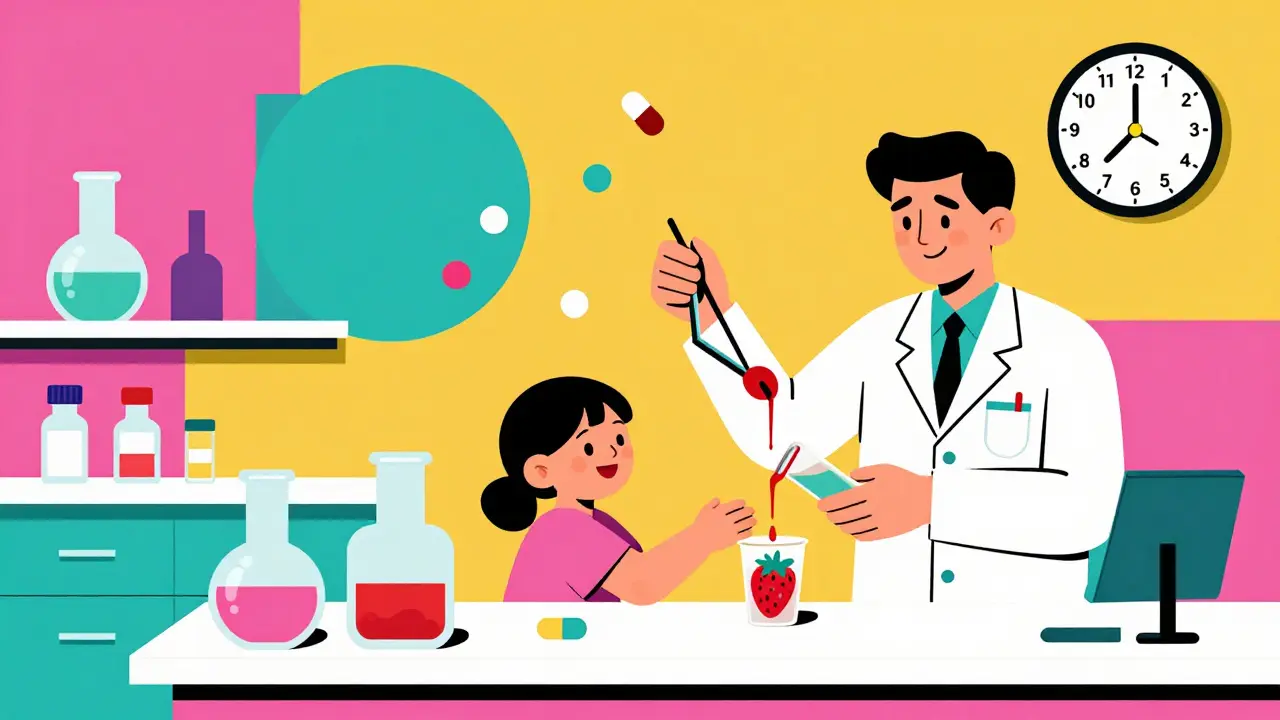
When a life-saving medication runs out and you can’t get a refill, what do you do? For many patients, the answer isn’t waiting for a supply chain to fix itself-it’s turning to compounding pharmacies. These aren’t your local CVS or Walgreens. They’re specialized labs where pharmacists mix, adjust, and create medications from scratch to meet needs that mass-produced drugs simply can’t cover.
Why standard drugs aren’t always enough
Every year, 300 to 400 drugs go out of stock in the U.S. Some are antibiotics, others are hormone therapies, or even basic blood pressure pills. These shortages aren’t rare glitches-they’re routine. And when they happen, patients are left with no way to take their medicine. Some switch to alternatives that don’t work as well. Others skip doses. A few end up in the hospital. The problem isn’t just scarcity. Sometimes, the available drug is the wrong form. A child can’t swallow a pill. An elderly patient chokes on capsules. Someone is allergic to the dye, filler, or preservative in the commercial version. These aren’t edge cases-they’re common. About 15-20% of people have sensitivities to common additives like lactose, gluten, or FD&C dyes. For them, even a perfectly stocked pharmacy offers no real solution.What compounding pharmacies actually do
Compounding pharmacies take raw pharmaceutical ingredients and build medications tailored to one person. They don’t make copies of brand-name drugs. They make what no one else can: custom strengths, alternative delivery methods, and allergen-free versions. Think about it this way: if you need 10 mg of a drug, but the only pill available is 50 mg, you can’t just cut it into fifths. That’s risky. Compounding pharmacists can make that exact 10 mg dose. Or if you need a liquid version because you can’t swallow pills, they can turn a tablet into a flavored suspension. For someone with eczema, they can create a topical cream instead of an oral pill that causes side effects. They work with USP <795> and <797> standards-strict rules for cleanliness and accuracy. Sterile compounds, like injections or IV solutions, are made in clean rooms that look like hospital operating theaters. Non-sterile ones, like creams or capsules, still require precise measuring tools and contamination controls. This isn’t guesswork. It’s science.Who benefits the most?
Not everyone needs a compounded medication. But for certain groups, it’s the only way to stay healthy.- Pediatric patients: About 40% of kids can’t swallow pills. Compounding pharmacies make medicines taste like bubblegum, strawberry, or grape. One study found adherence jumped 73% when kids got flavored liquids instead of bitter pills.
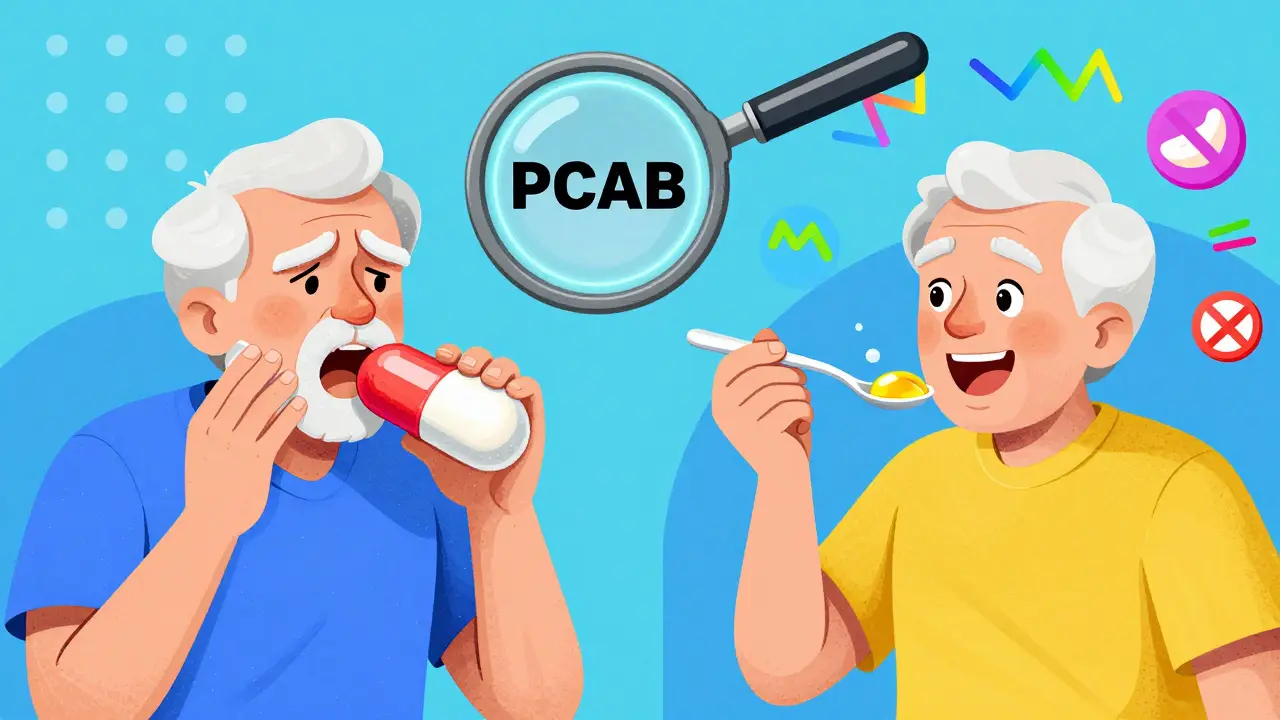
- Elderly patients: Around 30% of older adults struggle with swallowing. A simple switch from a capsule to a gel or liquid can prevent choking and ensure treatment continues.
- Allergy-sensitive patients: If you’re allergic to dyes, gluten, or lactose, standard pills can cause rashes, stomach pain, or worse. Compounded versions remove those triggers entirely.
- Chronic condition patients: Hormone replacement, pain management, and dermatology treatments make up nearly two-thirds of all compounded prescriptions. A patient on thyroid medication might need a dose that’s not commercially available. A person with chronic pain might need a topical gel that delivers relief without stomach damage.
How it works: from prescription to delivery
It doesn’t happen overnight. Here’s the real process:- A doctor identifies a problem: the commercial drug isn’t working, isn’t available, or causes side effects.
- The doctor writes a prescription with specific instructions: dose, form, ingredients to avoid.
- The prescription goes to a compounding pharmacy-usually one that’s PCAB accredited. Only about 1,200 of the 7,500 specialized compounding pharmacies in the U.S. have this seal of quality.
- The pharmacist reviews the formula, sources pure ingredients, and prepares the medication under controlled conditions.
- It takes 24 to 72 hours to prepare. Some sterile compounds take longer due to testing.
- The patient picks it up or gets it shipped.
Costs and insurance: the hidden hurdle
Here’s the tough part: insurance doesn’t always cover compounded meds. About 45% of patients pay out-of-pocket, compared to just 15% for regular prescriptions. Why? Because insurers see them as "non-standard." They don’t have a National Drug Code (NDC), so they’re harder to track. Some insurers will cover them if the doctor provides a letter explaining why no FDA-approved alternative exists. Others require prior authorization. A few won’t touch them at all. That’s why it’s critical to check with your pharmacy before you start. Ask: "Will this be covered?" and "What’s my estimated cost?" Some compounding pharmacies offer payment plans or work with discount programs like GoodRx.
When compounding isn’t the answer
Compounding isn’t magic. It can’t replace every missing drug. There are limits:- Biologics: Insulin, vaccines, monoclonal antibodies-these are too complex to compound. They require bioreactors and advanced labs.
- Highly regulated drugs: Opioids, controlled substances, and certain psychiatric meds often can’t be compounded due to legal restrictions.
- When the FDA drug is available: Experts warn that about 15% of compounded prescriptions are unnecessary. If a standard drug works, there’s no reason to risk a compounded version that hasn’t been through full FDA testing.
What to look for in a compounding pharmacy
Not all compounding pharmacies are equal. Some operate out of small clinics. Others are high-tech labs with rigorous quality controls. Here’s how to pick the right one:- Check PCAB accreditation. Only about 1,200 pharmacies have this. It means they’ve passed independent audits for safety, training, and documentation.
- Ask about ingredients. Do they use USP-grade raw materials? Are they sourced from FDA-registered suppliers?
- Ask about testing. Do they do stability testing? Do they check for potency and contamination?
- Look at reviews. Patients often share experiences online. Look for patterns: consistent delivery, clear communication, accuracy.
The future of personalized medicine
This isn’t just about shortages. It’s about the future of care. More doctors are using genetic tests to tailor treatments. Compounding pharmacies are stepping in to make those custom regimens real. One survey found that 68% of compounding pharmacists are seeing more requests based on genetic profiles. New tech is helping too. Digital formulation tools reduce errors by 37%. Improved stability testing extends shelf life by up to 40%. These aren’t small wins-they’re game-changers. As drug shortages continue and personalized medicine grows, compounding pharmacies will become even more vital. They’re not a backup plan. For thousands of patients, they’re the only plan.Are compounded medications safe?
Yes, when made by accredited pharmacies following USP standards. Compounded drugs aren’t FDA-approved, but they’re made under strict quality controls. PCAB-accredited pharmacies undergo independent audits for safety, accuracy, and cleanliness. Always choose a pharmacy with this accreditation.
Can any pharmacy compound medications?
Technically, any pharmacy can try, but not all should. Only about 7,500 of the 56,000 U.S. pharmacies specialize in compounding. Most others lack the equipment, training, or sterile environments needed. Stick with pharmacies that advertise compounding services and have PCAB accreditation.
How long does it take to get a compounded medication?
Most take 24 to 72 hours. Sterile preparations, like injections or IV solutions, may take longer due to additional testing. This is slower than a regular prescription, but it’s necessary to ensure safety and accuracy.
Why won’t my insurance cover compounded drugs?
Insurers often don’t cover compounded medications because they don’t have a National Drug Code (NDC), making them harder to track and compare to standard drugs. Some insurers will cover them if your doctor provides a letter explaining why no FDA-approved alternative exists. Always ask your pharmacy to help you submit prior authorization.
Can compounding pharmacies make any drug I need?
No. They can’t make biologics like insulin or vaccines, nor can they replicate complex drugs that require advanced manufacturing. They also can’t legally compound drugs that are still under patent or that have FDA-approved equivalents available. Their role is to fill gaps-not replace standard treatments.


March 15, 2026 AT 07:04 AM
I had to use a compounding pharmacy for my kid's ADHD med because the regular ones made him nauseous. They made a liquid version with raspberry flavor. He actually asks for it now. Game changer. No more tears at 6am.
March 17, 2026 AT 06:18 AM
In India we dont have this luxury. Many patients just go without or use unregulated local labs. The gap between rich and poor in healthcare is not just about money its about access to even basic customization. Compounding should be a right not a privilege
March 18, 2026 AT 02:50 AM
This whole thing is a scam. Big Pharma lets drugs go out of stock so they can push expensive compounded versions. Insurance wont cover it so you pay out of pocket. Its a profit scheme dressed up as patient care
March 19, 2026 AT 14:29 PM
Let me drop some truth bombs. Compounding pharmacies are the unsung heroes of medical individuality. While the FDA sleeps on its bureaucratic throne these labs are crafting bespoke lifelines for real humans. Think of them as the hipster baristas of pharmacology - artisanal precision with zero corporate BS. The fact that insurance hates them is the only proof theyre doing something right
March 21, 2026 AT 11:31 AM
I work in a hospital pharmacy. We refer patients to PCAB-accredited compounding labs all the time. The difference in adherence rates for elderly patients on customized formulations is staggering. Its not magic. Its science. And it works.
March 22, 2026 AT 01:26 AM
Did you know the FDA has been quietly shutting down compounding pharmacies since 2012? And that most of the tainted steroid injections came from unlicensed labs? This whole system is one outbreak away from another national disaster. I dont trust them. Not one bit.
March 23, 2026 AT 05:52 AM
I am absolutely astounded by the profound implications of this paradigm shift in pharmaceutical accessibility. The fact that a single pharmacist, working in a meticulously calibrated environment, can transform the very essence of therapeutic delivery - altering dosage, form, and excipient composition - is nothing short of revolutionary. This is not merely a workaround. This is the dawn of a new era in personalized medicine. The implications for geriatric, pediatric, and immunocompromised populations are not just significant - they are transcendent.
March 24, 2026 AT 10:19 AM
In my village in Tamil Nadu we make our own herbal blends for diabetes and hypertension. Not fancy labs. Just trained elders with mortar and pestle. Same idea. Custom. Local. Safe. The West overcomplicates everything. Sometimes simple works better
March 24, 2026 AT 12:38 PM
If you need a compounding pharmacy you're probably already on the wrong meds.
March 26, 2026 AT 00:10 AM
I appreciate the depth of this piece. It's easy to dismiss compounding as a fringe solution, but the data speaks clearly - for patients with sensitivities, pediatric needs, or chronic conditions, it's often the only viable path to adherence and safety. The real issue isn't the pharmacy - it's the systemic failure of mass production to account for human diversity. We need policy changes, not just awareness.
March 26, 2026 AT 05:44 AM
I've been a pharmacist for 22 years and have worked with over 300 compounded prescriptions. The level of precision required is extraordinary. One misstep in measuring a hormone base can mean a patient's entire regimen collapses. These pharmacists aren't just technicians - they're clinical collaborators. The fact that they're underpaid and underappreciated is a tragedy.
March 27, 2026 AT 12:01 PM
🚨 BIG PHARMA IS HIDING THIS 🚨 They don't want you to know that compounding pharmacies can make your meds 80% cheaper - AND eliminate all the toxic fillers they sneak into your pills. The FDA? They're in bed with the corporations. The real reason they don't cover it? Because if you knew how easy it is to make your own custom dose, you'd stop buying their overpriced junk. This is a medical freedom issue. 💉🔥 #FreeMedications #CompoundingRevolution