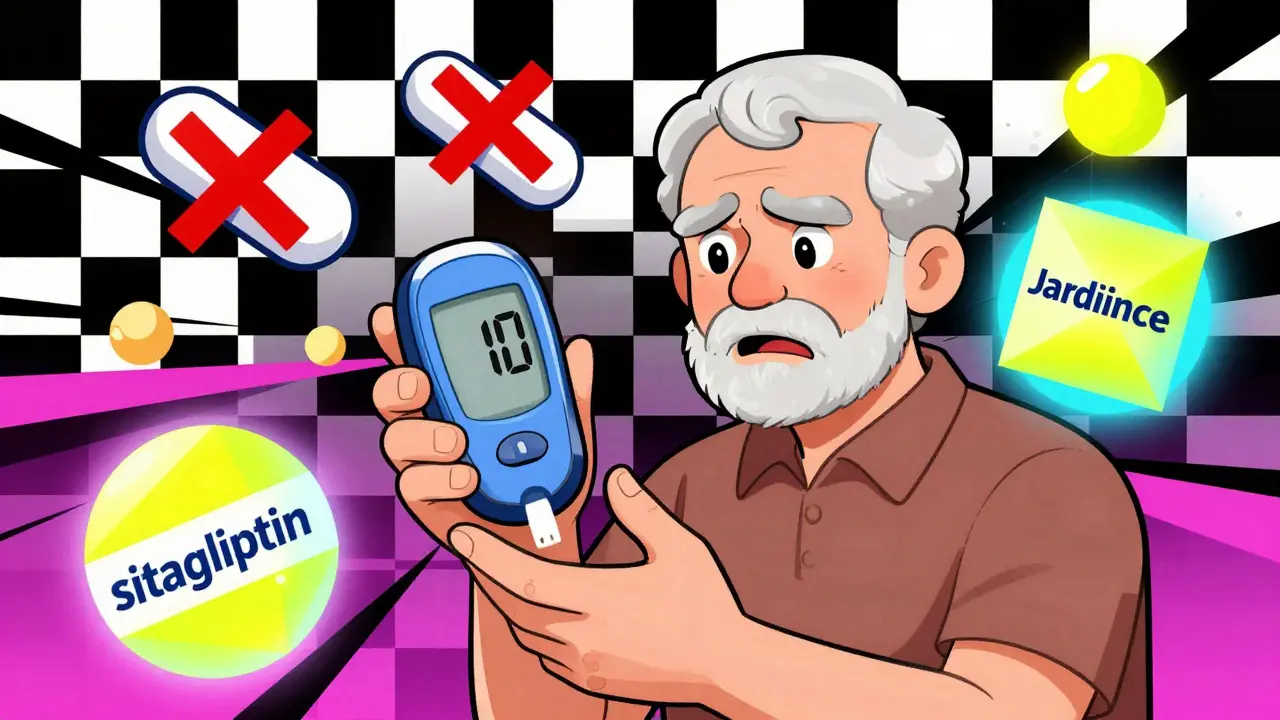
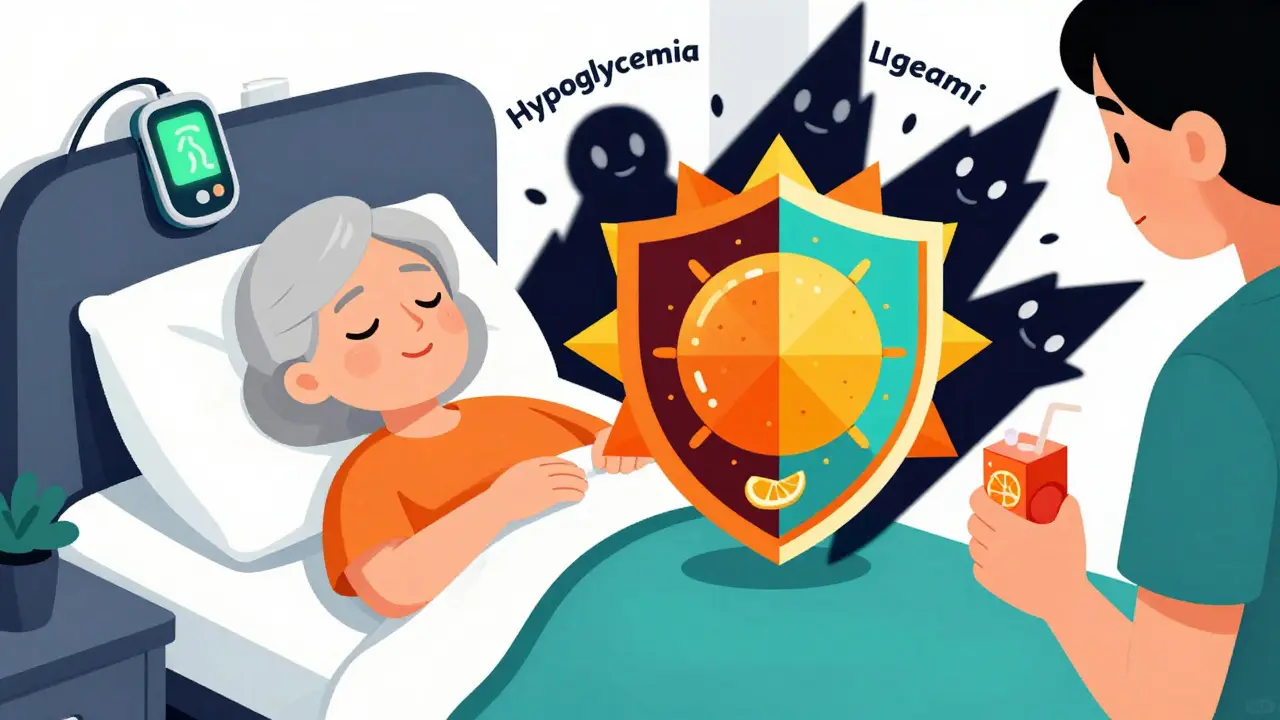
For seniors with diabetes, keeping blood sugar in range isn’t just about avoiding high numbers-it’s about avoiding the dangerous drops. Low blood sugar, or hypoglycemia, is one of the most serious risks for older adults on diabetes meds. It doesn’t just cause dizziness or shakiness. It can lead to falls, broken hips, confusion, heart problems, and even death. And here’s the hard truth: hypoglycemia is far more common and more dangerous in seniors than in younger people.
Why Seniors Are at Higher Risk
As we age, our bodies change in ways that make low blood sugar more likely and harder to detect. Kidneys don’t clear medications as well, so drugs like glyburide stick around longer. The body’s natural defenses-like releasing glucagon or adrenaline to raise blood sugar-don’t kick in as quickly. Seniors also often take multiple medications for other conditions, which can interact and worsen the problem.Studies show seniors experience hypoglycemia two to three times more often than younger adults. Even a single severe episode-where someone needs help from another person-raises the risk of dying within a year by 60%. And it’s not rare. In fact, nearly one in four Americans with diabetes is over 65, and hypoglycemia is the top reason seniors with diabetes end up in the emergency room.
Medications That Put Seniors at Risk
Not all diabetes drugs are created equal when it comes to safety for older adults. Some are much more likely to cause low blood sugar than others.Glyburide (brand name Glynase) is one of the worst offenders. It’s an old sulfonylurea that stays in the body too long, especially when kidney function declines-which is common in seniors. Research shows nearly 40% of elderly patients on glyburide have at least one hypoglycemic episode, and 19% have a severe one. Because of this, the American Geriatrics Society lists glyburide as a medication seniors should avoid.
Glipizide (Glucotrol) is a bit safer because it leaves the body faster, but it still carries risk. Many seniors on glipizide still get low blood sugar, especially at night or after skipping meals.
Insulin is another major concern. It’s powerful, but it doesn’t adjust itself. If a senior eats less than usual, moves around more, or takes it at the wrong time, blood sugar can crash. Studies show insulin use increases fall risk by 30% in older adults because of dizziness and weakness from low sugar.
Safer Alternatives for Seniors
The good news? There are much safer options now. These drugs lower blood sugar without triggering dangerous lows-especially when used alone.DPP-4 inhibitors like sitagliptin (Januvia), linagliptin (Tradjenta), and saxagliptin (Onglyza) are among the safest. They work by boosting the body’s own insulin only when blood sugar is high. Hypoglycemia rates? Just 2-5% with these drugs, compared to 15-40% with sulfonylureas. One 82-year-old man on glipizide kept waking up with dangerous lows. After switching to linagliptin, his blood sugar stabilized between 90 and 140 mg/dL-no more nighttime crashes.
SGLT2 inhibitors like empagliflozin (Jardiance) and dapagliflozin (Farxiga) also have very low hypoglycemia risk. They work by making the kidneys flush out extra sugar through urine. In clinical trials, hypoglycemia rates were only 4.5% with Jardiance-far below the 13.8% seen with placebo. They also help with heart and kidney protection, which matters a lot for older adults.
Tirzepatide (Mounjaro), a newer injectable approved in 2022, showed only a 1.8% hypoglycemia rate in elderly patients in trials-much lower than insulin. It’s not yet first-line for all seniors, but it’s a promising option for those who need stronger control without the danger.
Metformin is still widely used and generally safe, but it’s not for everyone. If kidney function is low (common after 80), doctors often reduce the dose or stop it. It doesn’t cause hypoglycemia on its own, but if combined with other drugs, the risk goes up.
What to Avoid and Why
Some medications should be taken off the list for seniors entirely.The American Geriatrics Society’s Beers Criteria-used by doctors nationwide-flags glyburide as a medication to avoid in older adults. Why? Because it’s unpredictable. A single dose can cause low blood sugar for 24 hours or more. One woman, 78, had three falls from low sugar on glyburide. After switching to sitagliptin, she went six months without a single episode. She now walks around her home without fear.
Also watch out for drug interactions. Beta-blockers (used for high blood pressure or heart issues) can hide the warning signs of low blood sugar-like a fast heartbeat. NSAIDs like ibuprofen can make sulfonylureas stronger, increasing hypoglycemia risk. Even some antibiotics and antifungals can interfere. That’s why a full medication review is critical.
How to Prevent Hypoglycemia in Daily Life
Medication choice is just one piece. Prevention also means changing habits and using tools.Check blood sugar regularly. Seniors should test before meals, before bed, and if they feel shaky or confused. Don’t wait for symptoms. Some seniors don’t feel low blood sugar coming-this is called hypoglycemia unawareness, and it’s dangerous.
Use continuous glucose monitors (CGMs). These devices track sugar levels all day and night. For seniors, they’re a game-changer. Studies show CGM users over 65 have 65% fewer hypoglycemic events than those using fingersticks. Many CGMs alert caregivers if sugar drops too low-even while sleeping.
Know the signs. Headache, dizziness, sweating, hunger, confusion, irritability, weakness, or a fast heartbeat can all mean low blood sugar. Teach family members too. A caregiver who recognizes these signs can act fast-give juice, glucose tablets, or call for help.
Don’t skip meals. Eating regularly helps prevent drops. Snacks with carbs and protein (like cheese and crackers) before bed can stop nighttime lows.
Review meds every 3-6 months. Doctors should regularly ask: Is this drug still necessary? Is it too strong? Could it be replaced with something safer? Many seniors take four or five prescriptions plus over-the-counter meds. A pharmacist-led review can cut hypoglycemia events by 28%.

What’s the Right Blood Sugar Goal?
For younger people, doctors aim for HbA1c under 7%. For seniors, that’s often too strict-and dangerous.The American Diabetes Association recommends individualized targets:
- 7.0-7.5% for healthy seniors with few other health problems
- 7.5-8.0% for those with moderate health issues
- Up to 8.5% for frail seniors, those with dementia, or who live in nursing homes
Why? Because tight control increases hypoglycemia risk without adding years to life. The goal isn’t perfect numbers-it’s safety, independence, and quality of life.
What Comes Next
Newer drugs are being developed with safety as the top priority. “Smart insulin” that only activates when blood sugar is high is in early trials-and could one day eliminate hypoglycemia entirely. But today, the best tools are already here: safer medications, CGMs, and thoughtful care.If you or a loved one is on diabetes meds, ask: Is this the safest choice? Are we checking for low blood sugar? Are we monitoring kidney function? Is the goal realistic? Small changes can prevent big emergencies.
What is the safest diabetes medication for seniors?
The safest options for seniors are DPP-4 inhibitors like sitagliptin (Januvia) and linagliptin (Tradjenta), and SGLT2 inhibitors like empagliflozin (Jardiance). These rarely cause low blood sugar when used alone. Metformin is also safe if kidney function is normal. Avoid glyburide and other long-acting sulfonylureas-they’re too risky for older adults.
Can seniors take insulin safely?
Insulin can be used safely in seniors, but only with close monitoring and careful dosing. It’s not the first choice because it increases fall risk and causes low blood sugar more often than newer drugs. If insulin is needed, use long-acting types like glargine or detemir, and pair them with a continuous glucose monitor. Always adjust doses based on food intake, activity, and kidney function.
Why is glyburide dangerous for older adults?
Glyburide stays in the body too long, especially when kidneys slow down with age. This causes prolonged low blood sugar that can last over 24 hours. Studies show nearly 40% of seniors on glyburide have hypoglycemia, and 19% have severe episodes requiring emergency care. The American Geriatrics Society advises avoiding it entirely in older adults.
How can caregivers help prevent low blood sugar in seniors?
Caregivers should learn the signs of low blood sugar-sweating, confusion, shakiness, dizziness-and keep fast-acting sugar (like juice or glucose tablets) on hand. Encourage regular meals and snacks. Help track blood sugar readings and share them with the doctor. If the senior uses insulin or sulfonylureas, consider a continuous glucose monitor with alerts. Never ignore a single episode-each one increases future risk.
Should seniors aim for a lower HbA1c to be healthier?
No. For most seniors, aiming for HbA1c below 7% increases hypoglycemia risk without improving lifespan or quality of life. The goal should be safety, not perfection. Targets of 7.5-8.5% are often better for frail or medically complex seniors. The American Diabetes Association says avoiding low blood sugar is more important than hitting tight numbers in older adults.
Do over-the-counter meds affect blood sugar in seniors?
Yes. NSAIDs like ibuprofen and naproxen can make sulfonylureas stronger, increasing hypoglycemia risk. Some cold and flu meds contain hidden sugars or stimulants that affect blood sugar. Always check with a pharmacist before taking any new OTC product, even if it seems harmless.
Next Steps for Seniors and Families
If you’re managing diabetes for an older adult, start here:- Ask the doctor: "Is my loved one on a high-risk medication like glyburide?" If yes, ask about switching.
- Request a full medication review with a pharmacist-especially if they take five or more pills.
- Ask about a continuous glucose monitor. Medicare often covers it for seniors with frequent lows.
- Teach family members the signs of low blood sugar and how to respond.
- Set a realistic HbA1c goal with the doctor-don’t chase perfection.
Diabetes care for seniors isn’t about doing more-it’s about doing smarter. The right meds, the right goals, and the right support can mean the difference between a fall and a walk, between confusion and clarity, between fear and freedom.

December 25, 2025 AT 15:02 PM
Oh wow, another article telling us what we already know. Glyburide bad, sitagliptin good. Groundbreaking. I’m sure the 82-year-old who still takes three aspirins and a handful of ‘natural supplements’ is just waiting for this wisdom to save him.
December 27, 2025 AT 02:14 AM
Let me tell you something, honey-glyburide is the devil’s own sugar trap, and if your grandma’s on it, she’s basically playing Russian roulette with her balance. 😭 I had an aunt who took it for years, ended up in the ER three times. Switched her to Jardiance? She’s now hiking in Arizona with her grandkids. 💪 No more ‘I feel dizzy’ texts at 3 a.m. That’s not medicine-that’s liberation.
December 28, 2025 AT 22:31 PM
It’s absolutely unacceptable that physicians still prescribe glyburide to seniors. This isn’t negligence-it’s malpractice dressed in white coats. The American Geriatrics Society has been screaming this from the rooftops since 2015, yet hospitals still churn out prescriptions like they’re candy. Shameful. And don’t get me started on the Medicare system that doesn’t enforce this. We’re literally letting our elders die from outdated pills.
December 30, 2025 AT 14:48 PM
It is imperative to underscore, with the utmost clinical precision, that the pharmacokinetic profile of sulfonylureas-particularly those with prolonged half-lives such as glyburide-presents a disproportionately elevated risk profile in geriatric populations with diminished renal clearance. In contrast, DPP-4 inhibitors exhibit a glucose-dependent mechanism of action, thereby minimizing hypoglycemic events. Furthermore, SGLT2 inhibitors confer cardio-renal benefits beyond glycemic control, which are statistically significant in longitudinal cohort analyses.
January 1, 2026 AT 02:52 AM
Stop being polite and start saving lives. If your doctor still prescribes glyburide to your mom, fire them. Now. I’ve seen too many seniors fall, break hips, end up in nursing homes-all because someone didn’t want to change a prescription. It’s not ‘traditional.’ It’s criminal. Switch them to Jardiance or Januvia. It’s not hard. It’s not expensive. It’s just common sense.
January 1, 2026 AT 16:45 PM
i just want to say thank you for writing this. my nan was on glyburide and i had no idea it was so dangerous. we switched her to linagliptin last month and she’s been so much more alert! no more midnight panics. you’re right-safety over perfect numbers. 💛
January 1, 2026 AT 23:28 PM
CGMs are literally magic for seniors!! 🎯 My dad used to test 6x a day and still missed lows. Got him a Dexcom-now I get alerts on my phone when his sugar dips. He thinks it’s a spy gadget but I’m just glad he’s alive. Also, no more ‘I’m fine’ lies. 😅
January 3, 2026 AT 03:29 AM
While the pharmacological alternatives presented are indeed superior in safety profile, it is equally critical to address the systemic underutilization of pharmacist-led medication reviews. Studies demonstrate a 28% reduction in hypoglycemic events when such interventions are implemented. This is not merely a clinical issue-it is an operational gap in geriatric care delivery.
January 4, 2026 AT 17:07 PM
I’m glad someone finally said this out loud. My husband’s doctor kept pushing insulin because ‘it’s the most effective.’ But ‘effective’ doesn’t mean ‘safe.’ We switched to sitagliptin after he nearly passed out at the grocery store. He’s walking again. No more panic attacks before meals. Thank you.
January 5, 2026 AT 05:15 AM
This is exactly the kind of clear, compassionate guidance our aging population needs. Thank you for highlighting not just the medications, but the human impact-the falls, the fear, the lost independence. It’s not just about HbA1c numbers. It’s about dignity. And yes, I’ve already shared this with my elderly neighbors. Let’s keep spreading awareness.