EMA vs FDA Regulatory Cost & Complexity Estimator
Submission Parameters
Key Differences Overview
| Aspect | EMA | FDA |
|---|---|---|
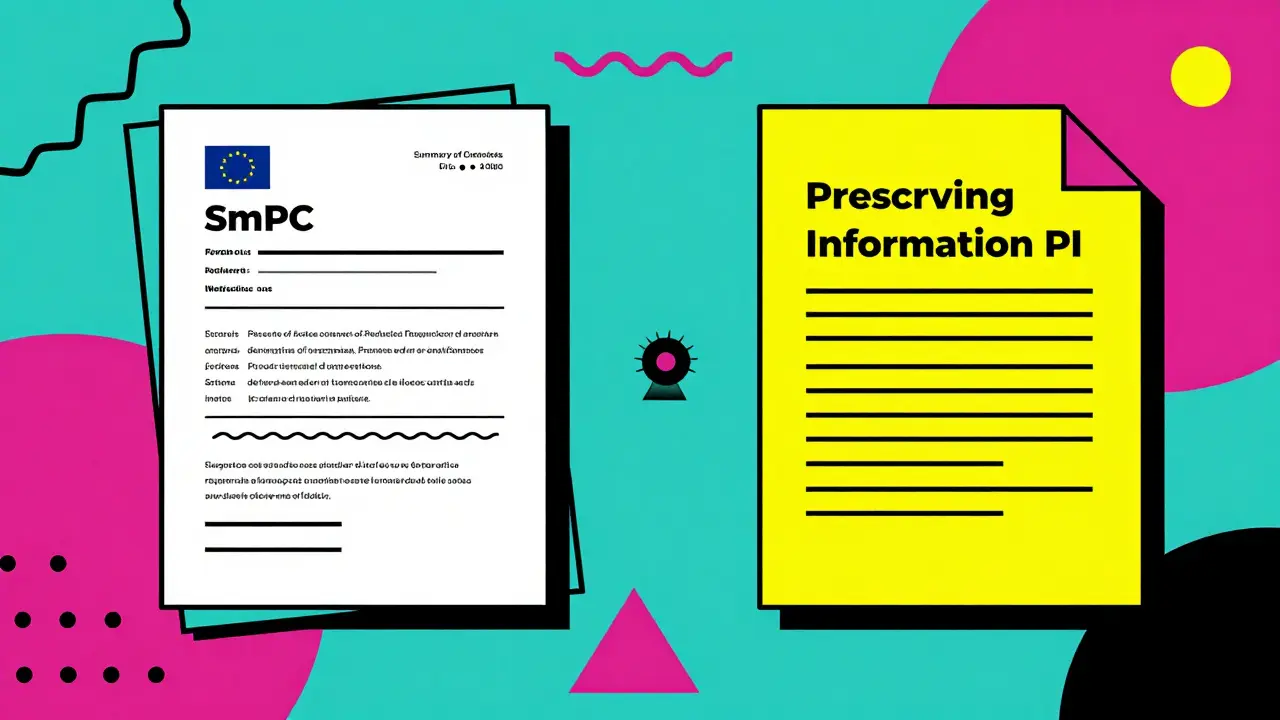
| Primary Document | SmPC | PI |
| Languages | 24 EU Languages | English Only |
| Risk Tool | RMP (Flexible) | REMS (Strict) |
| First Cycle Approval | 92% | 85% |
Regulatory Impact Analysis
Cost Breakdown
Timeline & Risk Impact
Imagine spending billions on clinical trials only to find your drug label looks completely different in Europe than it does in the United States. For pharmaceutical companies, this isn't a hypothetical nightmare-it's daily reality. The European Medicines Agency (EMA) is the regulatory body responsible for the scientific evaluation, supervision, and safety monitoring of medicines developed within the European Union and the U.S. Food and Drug Administration (FDA) is a federal agency of the United States Department of Health and Human Services charged with protecting public health by ensuring the safety, efficacy, and security of human and veterinary drugs are the two giants of global drug regulation. While they share the goal of patient safety, their approaches to drug labeling diverge significantly, creating complex challenges for manufacturers.
These differences aren't just bureaucratic nitpicking. They affect how doctors prescribe, how patients understand risks, and how much it costs to bring a medicine to market. With the global pharmaceutical market valued at nearly $1.5 trillion, understanding these nuances is critical for any company operating internationally.
The Core Documents: SmPC vs. Prescribing Information
To navigate these waters, you first need to know what you're looking at. In the EU, the technical document for healthcare professionals is the Summary of Product Characteristics (SmPC). In the US, it's the Prescribing Information (PI), often called the package insert. Both documents contain similar sections-indications, dosage, side effects-but the philosophy behind them differs.
The EMA operates under Regulation (EC) No 726/2004, functioning as a decentralized network that relies on national competent authorities across Europe. This structure influences labeling, which must be translated into all 24 official EU languages. The FDA, governed by the Federal Food, Drug, and Cosmetic Act, is a centralized federal agency. It accepts submissions solely in English. This language requirement alone adds significant operational complexity and cost for companies targeting both markets.
| Feature | EMA (EU) | FDA (US) |
|---|---|---|
| Primary HCP Document | Summary of Product Characteristics (SmPC) | Prescribing Information (PI) |
| Patient-Facing Label | Product Information Leaflet (PL) | Medication Guide / Patient Package Insert |
| Language Requirements | All 24 official EU languages | English only |
| Risk Management Tool | Risk Management Plan (RMP) | Risk Evaluation and Mitigation Strategy (REMS) |
| Approval Rate (First Cycle) | 92% | 85% |
Divergent Approaches to Evidence and Indications
You might assume that if a drug works in the US, it should have the same approved uses in Europe. The data suggests otherwise. A study by Kashoki et al. (2019) found that while approval decisions were highly concordant (91-98%), the approved indications often differed. In fact, 52% of these differences stemmed from the agencies drawing different conclusions about the strength of evidence for efficacy, even when reviewing identical clinical data.
This divergence is particularly stark in oncology. The FDA and EMA sometimes disagree on surrogate endpoints-markers used to predict clinical benefit. The EMA has granted approval under "exceptional circumstances" for ultra-rare diseases where comprehensive evidence cannot reasonably be expected, a pathway that has no direct equivalent in FDA regulations. Meanwhile, the FDA tends to require more complete data packages upfront, leading to a higher rate of initial nonapproval decisions (13% vs. EMA's 3%).
For patient-reported outcomes (PROs), the gap is also visible. An analysis by RTI Health Solutions (2011) showed that between 2006 and 2010, 47% of products approved by both agencies received at least one PRO claim from the EMA, compared to only 19% from the FDA. Only 11% had identical claim types. This means a drug might highlight quality-of-life improvements in its European label but not in its American one, influencing how physicians perceive the drug's value.

Risk Communication: Pregnancy and Safety
How agencies communicate risk reveals deep philosophical differences. Pregnancy labeling is a prime example. Historically, the FDA used letter categories (A, B, C, D, X), which were often misinterpreted. Although the FDA moved to narrative-based labeling under the Pregnancy and Lactation Labeling Rule (PLLR), studies by Kappel et al. (2023) show persistent differences. In cases with human data, the FDA and EMA still approach risk communication differently. For instance, the FDA may explicitly recommend against use during pregnancy based on specific risk thresholds, while the EMA might use standard cautionary statements, leaving more room for clinical judgment.
Vaccine labeling shows even less alignment. Seo et al. (2020) examined 12 vaccines approved by both agencies between 2006 and 2018 and found little harmonization. When comparing CDC Vaccine Information Statements (VISs) to EMA Product Labels (PLs), the lack of alignment was even more pronounced. There is no emerging pattern of convergence over time, contradicting the hope that globalization would naturally standardize these documents.
Risk Management Plans vs. REMS
When a drug carries serious risks, both agencies require mitigation strategies, but the execution differs. The FDA mandates Risk Evaluation and Mitigation Strategies (REMS). These can be rigid, requiring specific implementation systems like single-distributor networks, mandatory prescriber training, or patient registries. Failure to comply can halt distribution.
The EMA requires Risk Management Plans (RMPs). These are more principles-based and flexible. They outline how the company will monitor and minimize risks but rarely dictate specific operational constraints like the FDA does. This flexibility can speed up initial market access in Europe but may lead to longer-term obligations for post-marketing surveillance. For companies, navigating the stricter REMS requirements in the US often demands dedicated infrastructure and legal oversight.
The Cost of Complexity
What do these differences mean for your bottom line? Significant costs. Multilingual labeling for the EMA increases development costs by an estimated 15-20% compared to FDA-only submissions. Regulatory affairs professionals report that preparing dual submissions requires approximately 30% more documentation effort. You often need additional clinical data to address specific agency concerns, delaying launch timelines.
The IMS Institute for Healthcare Informatics reported that labeling differences contribute to an average 18-month delay in EU market access compared to the US for novel therapeutics. In an industry where patent cliffs loom large, an 18-month delay represents substantial lost revenue. However, cooperation is improving. Joint scientific advice procedures between the EMA and FDA increased by 47% between 2018 and 2022, helping companies streamline processes early in development.
Navigating the Future
Complete harmonization remains unlikely due to fundamental differences in legal frameworks and societal risk tolerance. The US tends toward a more precautionary, litigious environment, while Europe balances risk with broader access considerations. Emerging technologies like AI in pharmacovigilance may help bridge gaps, as both agencies are developing guidelines for AI/ML-enabled tools. But for now, companies must maintain robust regulatory intelligence teams to manage these parallel tracks effectively.
Why do EMA and FDA labels differ for the same drug?
Differences arise from distinct legal frameworks, varying interpretations of clinical evidence, and different cultural attitudes toward risk. The EMA and FDA often draw different conclusions about the strength of efficacy data or the severity of side effects, leading to divergent indications and warnings.
Is it cheaper to submit to the FDA or the EMA?
Submitting only to the FDA is generally cheaper due to single-language requirements and fewer translation costs. However, the FDA often requires more extensive upfront data, which can increase trial costs. Dual submissions typically increase overall regulatory expenses by 30%.
Do I need a REMS for my drug in Europe?
No. REMS is a specific FDA requirement. In Europe, you need a Risk Management Plan (RMP). RMPs are more flexible and focus on principles rather than strict operational mandates like those found in US REMS programs.
How long does it take to get a drug labeled in both regions?
While approval timelines vary, labeling differences can cause an average 18-month delay in EU market access compared to the US. Coordinating simultaneous submissions through joint scientific advice can help mitigate these delays.
Are EMA and FDA moving toward full harmonization?
Full harmonization is unlikely due to differing legal and social contexts. However, collaboration is increasing, with joint guidance documents and shared scientific advice becoming more common. Expect a "persistent but narrowing gap" rather than total alignment.

July 4, 2026 AT 17:40 PM
Oh my goodness, this is such a fantastic breakdown of the EMA vs. FDA labeling differences! It’s really eye-opening to see how much complexity pharmaceutical companies face when trying to bring drugs to both markets. I mean, who would have thought that something as seemingly straightforward as drug labeling could be so intricate? The fact that multilingual requirements can increase development costs by 15-20% is just mind-blowing! But hey, it’s all part of ensuring patient safety, right? And isn’t it wonderful that joint scientific advice procedures are increasing? That gives me hope for smoother processes in the future!
July 5, 2026 AT 11:50 AM
Let me tell you, folks, this whole situation with EMA and FDA labeling is nothing short of a massive conspiracy. Big Pharma doesn’t care about your health; they’re out here playing games with surrogate endpoints and REMS programs to keep us hooked on their products. The fact that the FDA requires more complete data upfront while the EMA grants approval under 'exceptional circumstances' for ultra-rare diseases? That’s not science-that’s manipulation. They’re using these divergent approaches to control what we know and don’t know about our medications. Wake up, people!
July 5, 2026 AT 21:08 PM
i get where everyone's coming from but honestly its just complicated stuff like this that makes you realize how important it is to have good communication between agencies sure there are differences in how they handle risk management plans versus rems or pregnancy labeling but at the end of day its all about keeping patients safe which is great even if it means extra costs and delays
July 7, 2026 AT 07:12 AM
Oh, please spare me the endless drivel about 'patient safety.' You think anyone actually reads these labels anyway? No, what we need is transparency-not some bureaucratic nonsense designed to protect corporations from lawsuits. And let’s not forget: the US has always been overly cautious because of its litigious culture, whereas Europe balances things better. So maybe instead of complaining about harmonization efforts failing, we should ask why one side keeps hogging all the attention.
July 7, 2026 AT 16:08 PM
man i love how this article breaks down the real deal with ema and fda labeling its wild how much money gets thrown around just cuz of language reqs and diff interpretations of clinical evidence but thats life ya gotta roll with it right and dont even get me started on remss those things are strict af compared to rmpps anyway keep pushing forward guys
July 7, 2026 AT 22:45 PM
Wow, talk about a sarcastic take on global pharma regulations! Like, seriously, who needs an 18-month delay in EU market access when you could just slap together a quick translation job and call it a day? Oh wait, no, apparently that’s too risky for Big Pharma’s bottom line. But hey, at least they’re trying-with joint scientific advice increasing by 47%, surely everything will magically fall into place soon enough. Right?
July 8, 2026 AT 06:26 AM
The distinction between EMA and FDA labeling frameworks is indeed significant. Multilingual requirements alone impose considerable operational burdens on manufacturers seeking dual submissions. Furthermore, the divergence in approved indications underscores the necessity for robust regulatory intelligence teams capable of navigating parallel tracks effectively. Harmonization remains unlikely due to fundamental legal and societal differences.
July 8, 2026 AT 21:52 PM
Great insights here! The cost implications of multilingual labeling are staggering, yet necessary for reaching broader audiences. Companies must adapt quickly to stay competitive. Keep pushing boundaries!
July 10, 2026 AT 09:49 AM
OMG this is SO confusing!!! Why do they make it so hard for regular ppl to understand??? Its like they want us to be lost in all these fancy words and acronyms!!! Who cares if its SmPC or PI?? Just give us straight answers already!!!
July 11, 2026 AT 03:27 AM
It appears that the discrepancies observed in drug labeling practices between the European Medicines Agency (EMA) and the U.S. Food and Drug Administration (FDA) may stem from deeper systemic issues rather than mere procedural variations. One might wonder whether certain entities stand to benefit financially from perpetuating such complexities, thereby undermining public trust in regulatory bodies. After all, why else would there be such pronounced differences in risk communication strategies?
July 12, 2026 AT 18:03 PM
Ah yes, another tedious exposition on the minutiae of pharmaceutical regulation-a topic best left to those whose intellectual capacities allow them to parse through endless jargon without succumbing to boredom. Clearly, individuals unfamiliar with the nuances of SmPC versus PI documentation lack the sophistication required to grasp the true magnitude of these challenges. Perhaps next time, someone could elucidate the philosophical underpinnings of such bureaucratic machinations rather than merely listing facts ad nauseam.