C. diff Risk Calculator
This tool estimates your risk of developing C. diff infection based on antibiotic use and other factors. It's not a medical diagnosis.
Your C. diff Risk Assessment
Key Recommendations
Wash hands with soap and water after bathroom use. Do not use anti-diarrheal medications without consulting your doctor.
Additional Information
People taking high-risk antibiotics for over 14 days have a 25-35% chance of developing C. diff infection.
When you take an antibiotic to fight an infection, you might expect to feel better. But for many people, the side effect isn’t just an upset stomach-it’s antibiotic-induced diarrhea, and in some cases, it can turn into a dangerous C. diff infection. This isn’t rare. About 1 in 5 people who take antibiotics develop diarrhea, and up to 25% of those cases are caused by Clostridioides difficile, a bacteria that takes over when antibiotics wipe out the good bugs in your gut. It’s not just uncomfortable-it can be life-threatening, especially for older adults or those with weak immune systems.
Why Antibiotics Cause Diarrhea
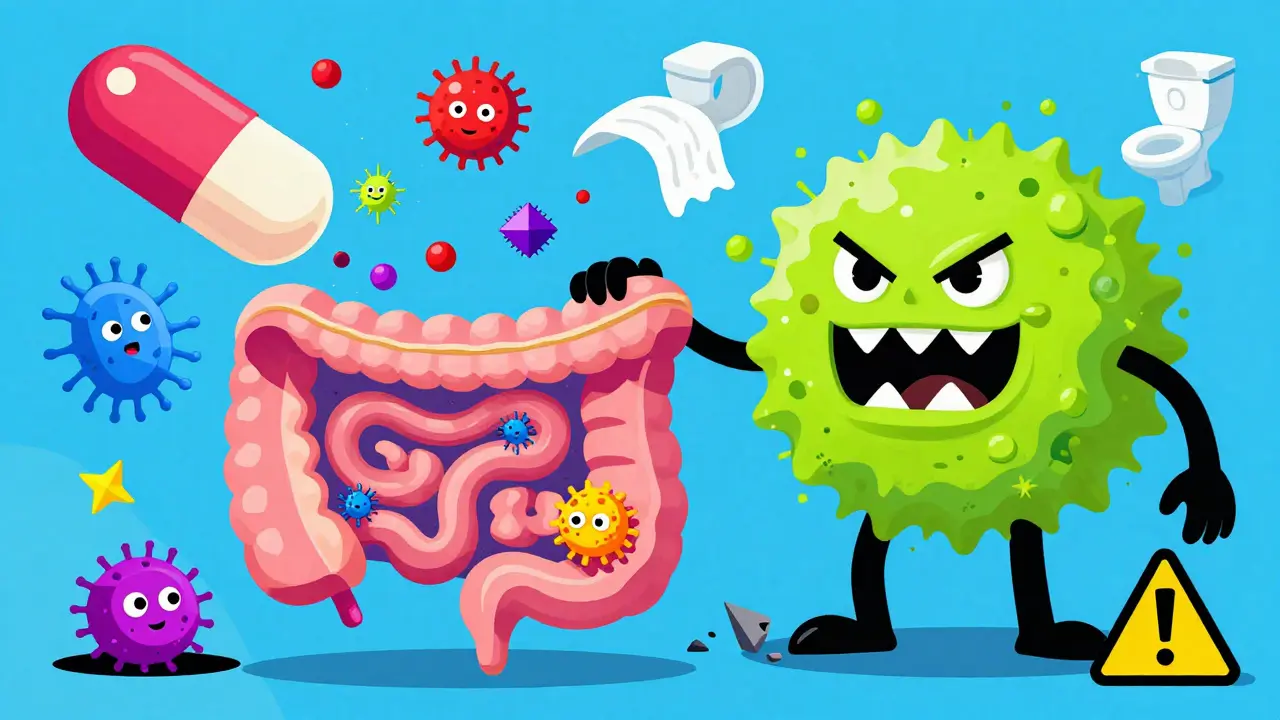
Antibiotics don’t just kill the bad bacteria. They also hit the good ones-trillions of microbes that live in your intestines and help you digest food, absorb nutrients, and keep harmful invaders in check. When those good bacteria are wiped out, it creates a vacuum. That’s when C. diff steps in. It’s already in your gut, lying low, but when the balance shifts, it multiplies fast and releases toxins that attack the lining of your colon. The result? Watery diarrhea, cramps, fever, and sometimes severe dehydration or even a ruptured colon.Which Antibiotics Are Most Likely to Cause C. diff?
Not all antibiotics carry the same risk. Some are more likely to trigger C. diff because they wipe out a wider range of gut bacteria. The highest-risk ones include:- Fluoroquinolones (like ciprofloxacin and levofloxacin)
- Third- and fourth-generation cephalosporins (like ceftriaxone and cefepime)
- Clindamycin
- Carbapenems (like meropenem)
How C. diff Spreads-And How to Stop It
C. diff doesn’t just live inside you. It forms spores-tough, invisible shells that can survive for months on doorknobs, bed rails, toilets, and even your phone. These spores spread through the fecal-oral route: if someone with C. diff doesn’t wash their hands properly after using the bathroom, they can leave spores behind. Then someone else touches the surface, touches their mouth, and gets infected. This is why hospitals and nursing homes are hotspots. But C. diff is no longer just a hospital problem. About a quarter of new cases now happen in people who haven’t been hospitalized in the past year. That means community transmission is rising. The key to stopping it? Handwashing with soap and water. Alcohol-based hand sanitizers don’t kill C. diff spores. Only soap and water do. If you’re in a hospital or caring for someone with C. diff, wash your hands every time you leave the room. Use bleach-based cleaners on surfaces. And if you’re sick, stay home until your diarrhea stops.How C. diff Is Diagnosed
If you develop diarrhea after taking antibiotics, your doctor won’t just assume it’s C. diff. Many things cause diarrhea-viruses, food poisoning, even stress. But if you’re over 65, have been in a hospital, or have a weakened immune system, they’ll test you. The test starts with a stool sample. It can’t be from someone who’s taken laxatives in the last 48 hours. The lab looks for C. diff toxins or its genetic material. But here’s the catch: no single test is perfect. Some tests detect the bacteria but not the toxins it produces. Others miss it entirely. That’s why doctors often use a two-step process: first a quick screening test, then a more specific one if needed. A 2022 study of patient forums found that nearly 4 in 10 people were first misdiagnosed with something like the stomach flu or IBS. That delay can be dangerous. If you’ve been on antibiotics and have diarrhea that lasts more than two days, ask your doctor to test for C. diff.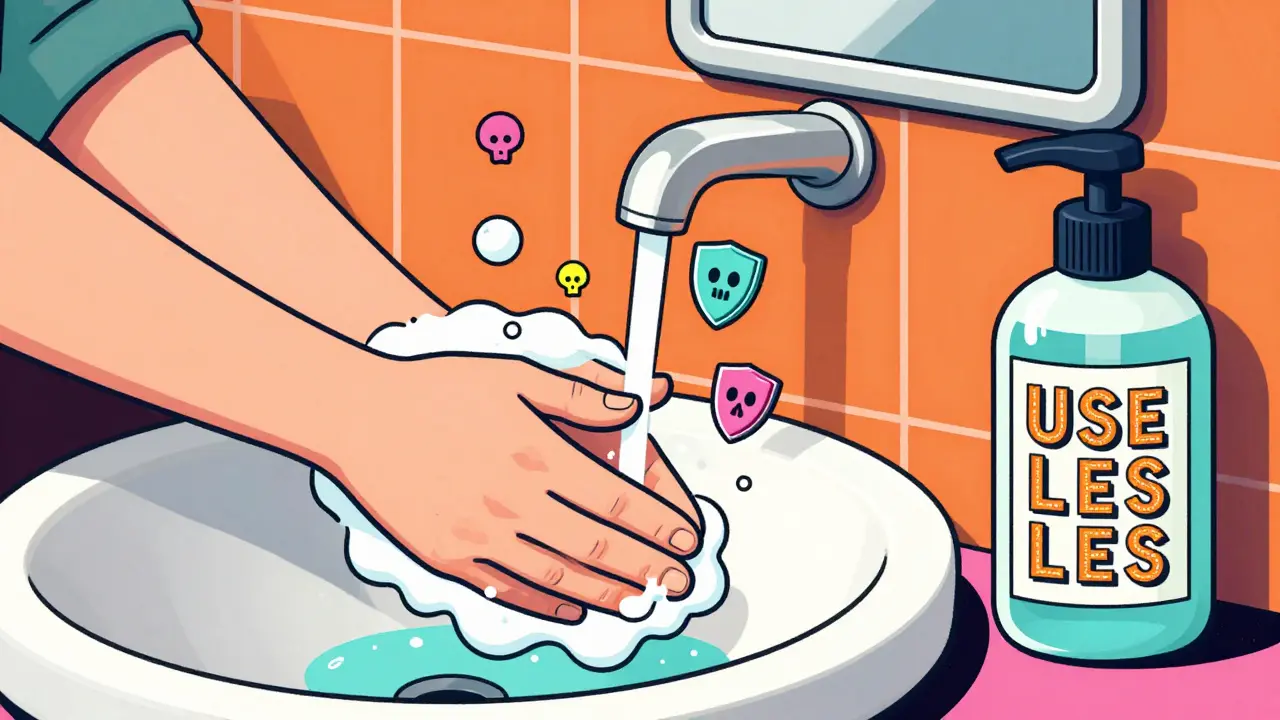
Treatment: What Works and What Doesn’t
The first rule? Don’t take anti-diarrheal meds like loperamide (Imodium). They may seem like they help, but they trap the toxins inside your colon, making things worse. For mild cases, the go-to treatments are vancomycin or fidaxomicin, both taken by mouth for 10 days. Vancomycin costs about $1,650 for a full course. Fidaxomicin costs over $3,300-but it’s better at preventing the infection from coming back. Studies show only 13% of people on fidaxomicin get a second infection, compared to 22% on vancomycin. Metronidazole used to be the first choice. Now? It’s a backup. Research shows it fails in up to 40% of cases today, and C. diff is becoming resistant to it. The CDC stopped recommending it as first-line in 2023. For severe cases-where you have a high white blood cell count or rising kidney levels-doctors use higher doses of vancomycin, sometimes even adding intravenous metronidazole. In the worst cases, where the colon swells dangerously (toxic megacolon), surgery might be needed.What Happens When It Comes Back?
One in five people who get C. diff will get it again. That’s called recurrent C. diff. And each time it returns, the chance of it coming back again goes up. For the first recurrence, doctors might repeat the same antibiotic. But after that? They switch tactics. One option is a vancomycin taper: you take it four times a day for two weeks, then twice a day for a week, then once a day for another week, and finally every other day for up to two months. This slow drop helps the good bacteria recover without letting C. diff bounce back. Another option is fecal microbiota transplantation (FMT). That’s when you get stool from a healthy donor-processed, screened, and delivered via capsule or colonoscopy. It’s not as gross as it sounds. Studies show it works in 85 to 90% of cases after multiple recurrences. The FDA approved the first FMT product, Rebyota, in November 2022. In April 2023, they approved another: Vowst, a pill form made of bacterial spores. A newer drug, ridinilazole, showed better results than vancomycin in a 2022 trial, with 45% of patients staying cured versus 30% on vancomycin. It’s still being reviewed but could be available soon.What About Probiotics?
You’ve probably heard that probiotics can help. Some strains-like Saccharomyces boulardii and Lactobacillus rhamnosus GG-have shown promise in studies. A 2017 Cochrane review found they reduced the risk of C. diff by about 60% in people taking antibiotics. But here’s the problem: the evidence isn’t consistent. The Infectious Diseases Society of America doesn’t currently recommend them for everyone. Why? Because not all probiotics are the same. The dose, strain, and timing matter. And if you’re immunocompromised, some probiotics can be risky. If you want to try one, talk to your doctor. Don’t just grab any supplement off the shelf. Look for products that list the exact strain and dose-and make sure they’re from a reputable brand.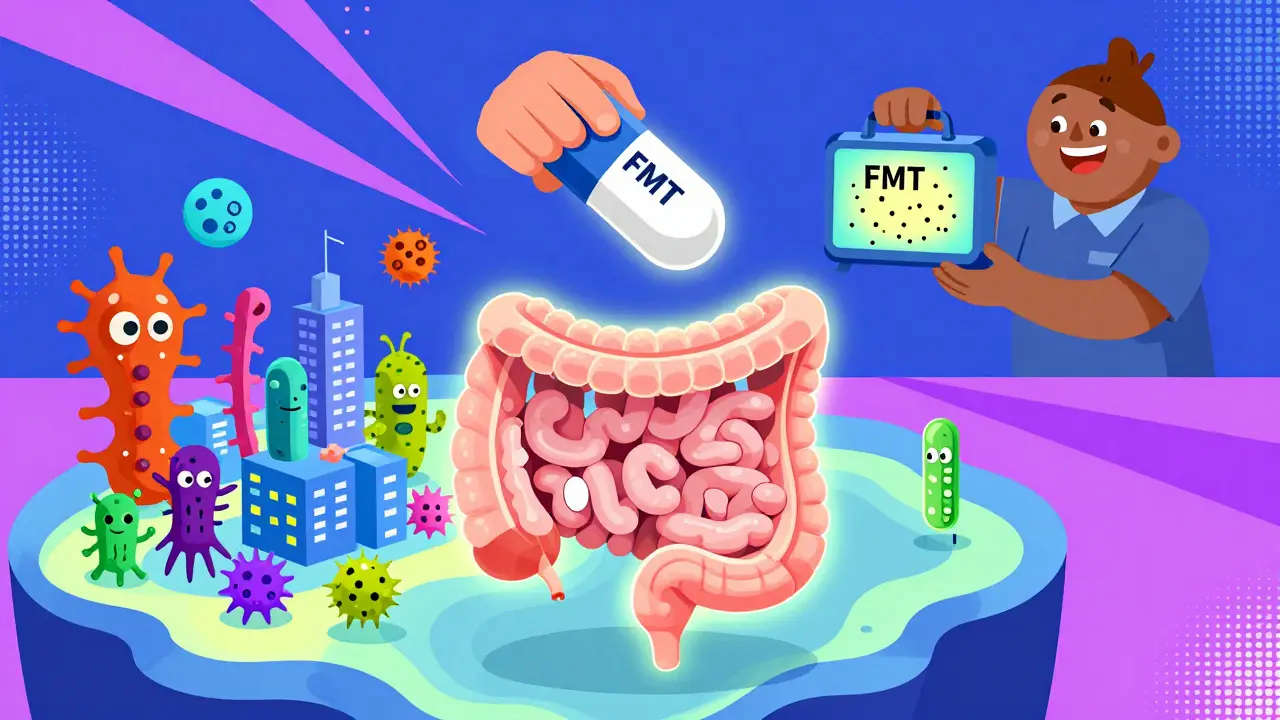
What Recovery Really Feels Like
People who’ve had C. diff don’t just get better overnight. Even after the diarrhea stops, many report lingering symptoms:- Brain fog (45% of patients)
- Extreme fatigue for weeks
- Dietary restrictions (82% avoid dairy, spicy food, or caffeine)
The Bigger Picture: Why This Matters
C. diff isn’t just a personal health issue. It’s a public health crisis. In the U.S., it causes 500,000 infections a year and kills nearly 30,000 people. The cost? Over $4.8 billion annually in hospital bills. Hospitals with strong antibiotic stewardship programs have cut C. diff rates by 26%. That means fewer people getting sick. Fewer deaths. Lower costs. It’s not magic. It’s just better prescribing: using the right drug, at the right dose, for the right length of time. And it’s not just hospitals. Doctors in clinics, pharmacies, and even urgent care centers need to be part of the solution. If you’re prescribed an antibiotic, ask: “Is this really necessary?” “Is there a narrower option?” “What are the risks?”What You Can Do Right Now
If you’re about to start antibiotics:- Ask your doctor if they’re absolutely needed.
- Take them exactly as prescribed-no skipping doses, no stopping early.
- Wash your hands with soap and water after every bathroom visit.
- Watch for diarrhea. If it starts, don’t ignore it. Call your doctor.
- Don’t take over-the-counter anti-diarrheals without checking with a professional.
- Carry a card in your wallet that says “History of C. diff.”
- Always tell new doctors about it before they prescribe antibiotics.
- Consider discussing FMT or other advanced options with a gastroenterologist if you’ve had more than two recurrences.
Final Thought
Antibiotics save lives. But they’re not harmless. C. diff is a warning sign-of how fragile our gut microbiome is, and how easily modern medicine can disrupt it. The best way to avoid it isn’t a fancy drug or a miracle cure. It’s awareness. It’s asking questions. It’s respecting the balance inside your body. You don’t need to fear antibiotics. But you do need to understand them.Can probiotics prevent C. diff infection?
Some probiotics, like Saccharomyces boulardii and Lactobacillus rhamnosus GG, have been shown in studies to reduce the risk of C. diff by about 60% in people taking antibiotics. But the evidence isn’t strong enough for major medical groups to recommend them for everyone. If you want to try one, talk to your doctor first-choose a product with a specific strain and dose, and avoid them if you’re immunocompromised.
Is C. diff contagious?
Yes, C. diff is highly contagious. It spreads through spores that can live on surfaces for months. You can get infected by touching something contaminated-like a doorknob or toilet handle-and then touching your mouth. That’s why handwashing with soap and water is critical. Alcohol-based hand sanitizers don’t kill the spores.
Why is metronidazole no longer first-line for C. diff?
Metronidazole used to be the go-to treatment, but studies now show it fails in 30-40% of cases. C. diff has become resistant to it, and it’s less effective than vancomycin or fidaxomicin at preventing recurrence. The CDC and Infectious Diseases Society of America updated their guidelines in 2023 to remove metronidazole as a first-line option.
Can you get C. diff without being in the hospital?
Yes. While hospitals and nursing homes are still high-risk areas, nearly 25% of new C. diff cases now happen in people who haven’t been hospitalized in the past year. This is called community-associated C. diff, and it’s on the rise. Anyone who takes antibiotics is at risk, no matter where they are.
What’s the best treatment for recurrent C. diff?
For people who’ve had two or more recurrences, fecal microbiota transplantation (FMT) is the most effective treatment, with success rates of 85-90%. FDA-approved options like Rebyota (a rectal suspension) and Vowst (a capsule) are now available. If FMT isn’t an option, a vancomycin taper or fidaxomicin followed by rifaximin may be used.
Should I avoid antibiotics altogether to prevent C. diff?
No. Antibiotics save lives and are essential for treating serious bacterial infections. The goal isn’t to avoid them completely, but to use them wisely. Ask your doctor if the antibiotic is truly necessary, if there’s a narrower-spectrum option, and how long you really need to take it. Using antibiotics only when needed is the single most effective way to prevent C. diff.

January 14, 2026 AT 16:31 PM
Antibiotics are such a double-edged sword. I had C. diff after a simple sinus infection last year. Took me six months to feel normal again. Now I ask my doctor for the narrowest spectrum possible before I even take the first pill. It’s not paranoia-it’s survival.
And yes, soap and water. Not sanitizer. This isn’t optional. If you think hand sanitizer is enough, you’re one contaminated doorknob away from disaster.
January 15, 2026 AT 01:51 AM
It is not merely a matter of antibiotic stewardship; it is a systemic failure of medical education and public health policy. The CDC’s guidelines are reactive, not proactive. The pharmaceutical industry profits from overprescription, and the medical establishment has been complicit in normalizing this epidemic. We are not fighting bacteria-we are fighting capitalism disguised as healthcare.
January 16, 2026 AT 16:33 PM
They don’t want you to know this but C. diff is actually engineered. The spores? Man-made. The rise in community cases? Coincidence? Think about it. Why would Big Pharma push drugs that make people sick unless they also sell the cure? FMT? That’s just a cover for their real product-the next antibiotic they’re patenting right now.
Also, your phone is contaminated. Always. You’re welcome.
January 17, 2026 AT 07:27 AM
Let me tell you something about India-when we had our first C. diff outbreak in a hospital in Chennai, the doctors didn’t even know what it was. We had to Google it. Now? We teach it in med school. But here’s the irony: Americans think they’re so advanced, yet they still take amoxicillin for a cold. You don’t need antibiotics for a viral infection. Not in 2025. Not ever.
Stop treating your body like a trash can you can flush with pills.
January 17, 2026 AT 18:26 PM
It is imperative to emphasize that the use of probiotics as a prophylactic measure remains statistically insignificant in the majority of peer-reviewed meta-analyses. The Cochrane review cited in the article, while frequently referenced, exhibits significant heterogeneity in strain selection, dosage, and methodological rigor. To recommend probiotics without specifying strain, colony-forming units, and timing of administration is clinically irresponsible.
January 19, 2026 AT 12:58 PM
I’ve had C. diff twice. The second time was after I took a Z-pack for a sore throat that turned out to be a virus. I didn’t even think about it until I was on the bathroom floor at 3 a.m. sweating through my pajamas. It took me three months to get my energy back. Now I eat sauerkraut every day. Not because it’s trendy, but because my gut remembers. And honestly? I’d rather eat fermented cabbage than spend a week in the hospital. Also, I wash my hands like I’m about to perform surgery. No exceptions.
Don’t wait until you’re in the ER to start caring.
January 20, 2026 AT 07:56 AM
While the article presents a comprehensive overview of Clostridioides difficile infection, it is noteworthy that the socio-economic disparities in access to fidaxomicin and fecal microbiota transplantation remain profoundly under-addressed. In underserved communities, vancomycin remains the only accessible option, despite its higher recurrence rate. This constitutes a structural inequity in infectious disease management that requires policy-level intervention, not merely individual behavioral change.
January 21, 2026 AT 00:33 AM
Everyone’s acting like C. diff is some new horror story. It’s been around since the 1930s. The real issue? People are too lazy to wash their hands properly. And now we’re paying $3,000 for a pill that’s just poop in a capsule? Give me a break. FMT is just a fancy way of saying ‘I ate someone’s poop and now I’m fine.’
Meanwhile, the CDC is still recommending antibiotics for sinus infections that don’t need them. Hypocrisy much?
January 22, 2026 AT 09:42 AM
There’s a metaphysical dimension to C. diff that no one dares to name: our modern microbiome is not merely disrupted-it is exiled. We have severed our symbiotic covenant with the microbial world through industrialized food, sanitized environments, and pharmaceutical arrogance. FMT isn’t medicine-it’s a ritual of reintegration. The capsule? A sacred vessel. The spore? A seed of ancestral memory. We are not treating an infection. We are attempting to remember who we were before we forgot how to live with bacteria.
And yes, I meditate before I eat yogurt.
January 24, 2026 AT 06:49 AM
If you’re on antibiotics, here’s your action plan: 1. Ask if it’s necessary. 2. If yes, take it exactly as prescribed. 3. Start probiotics on day one-Saccharomyces boulardii, 5 billion CFU. 4. Wash hands with soap after every bathroom trip. 5. If diarrhea hits, don’t wait. Call your doctor. Don’t Google it. Don’t take Imodium. Don’t ignore it. This isn’t a suggestion. It’s your survival checklist.
You’ve got this. But don’t wing it.
January 25, 2026 AT 17:20 PM
I’m curious-how many of the people who get recurrent C. diff were on long-term antibiotics for acne or UTIs? I’ve seen so many young people on low-dose doxycycline for years. Is that contributing to this? Or is it just older folks in hospitals?
January 25, 2026 AT 22:29 PM
It is appalling that the general public is being encouraged to self-diagnose based on forum posts. The assertion that ‘four in ten people were misdiagnosed’ is anecdotal and statistically meaningless. Furthermore, the casual promotion of fecal transplants as a ‘solution’ is dangerously irresponsible. This is not a spa treatment. It is a medical procedure with documented cases of pathogen transmission. Who is screening the donors? Who is regulating the labs? No one. And yet, here we are.
January 27, 2026 AT 05:40 AM
Interesting how the article frames antibiotic stewardship as the solution, yet ignores the fact that 80% of antibiotics in the U.S. are given to livestock. The real epidemic isn’t in hospitals-it’s in the feedlot. You want to stop C. diff? Stop eating factory-farmed meat. Or better yet-stop pretending you’re not part of the problem.
January 28, 2026 AT 21:23 PM
They’re lying about the spores. The government knows the real cause-it’s 5G. The radiation weakens your gut lining. Then the antibiotics finish you off. And they won’t tell you because they’re selling the pills. Watch the videos. The truth is out there. Wash your hands? No. Turn off your WiFi. That’s the real fix.