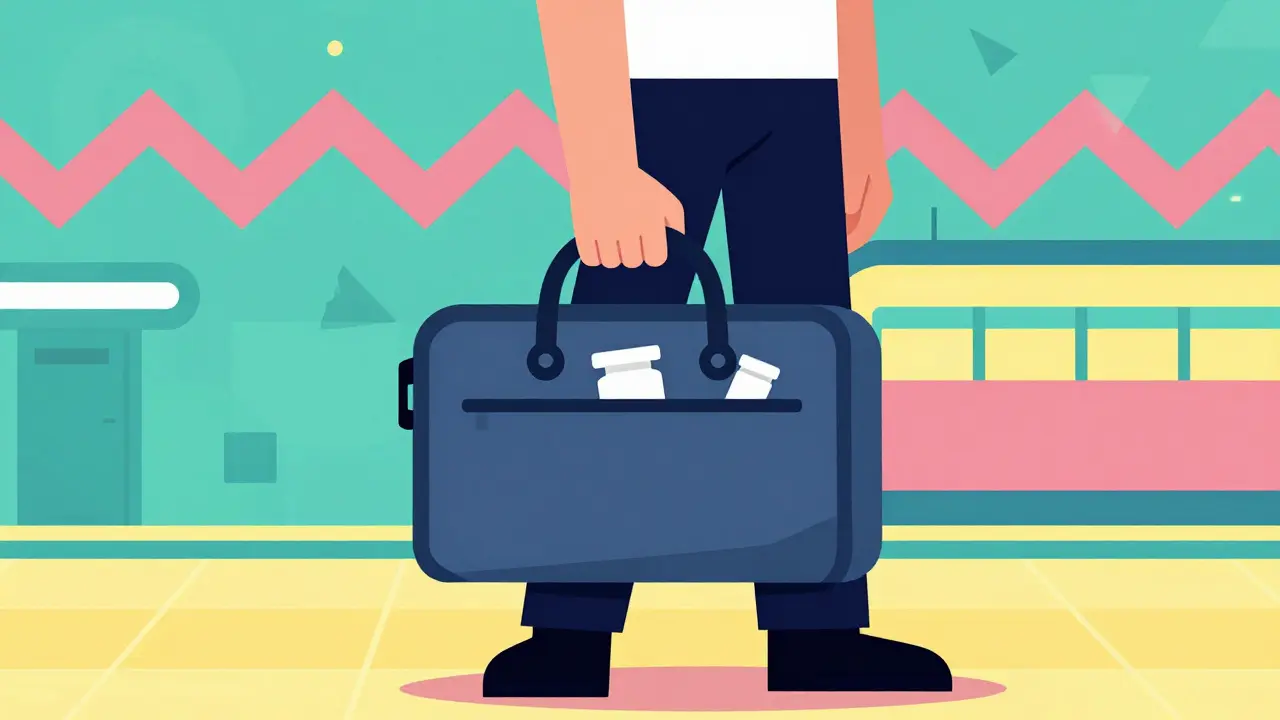
Traveling with necessary prescription drugs feels routine until you realize how much your luggage holds in terms of street value. You might be carrying essential medication, but to others, that pill bottle looks like cash. According to data from the Centers for Disease Control and Prevention, medication theft accounts for approximately 12% of all medication-related travel incidents. That number jumps significantly when we talk about controlled substances like opioids or benzodiazepines. These drugs are classified under systems like the U.S. Controlled Substances Act, grouping them by abuse potential. This means keeping your medicine safe isn't just about health maintenance; it's a security operation.
The Reality of Controlled Substance Risks
You need to understand exactly what classifies as a controlled substance before you even book your flight. Regulatory bodies like the Drug Enforcement Administration (DEA) sort these into schedules based on medical utility versus abuse risk. Schedule II substances, such as oxycodone or hydrocodone, carry the highest theft risk because their street value is significant. Even lower-schedule drugs like certain sleep aids or pain relievers are targets. A study from the American Academy of Family Physicians showed that medication diversion incidents increase by 37% during peak travel seasons. Thieves actively scan for travelers who look stressed, are displaying visible pill bottles, or discuss their medical needs openly in public spaces.
It is easy to assume airport security is the only hurdle, but the data tells a different story. Dr. Sarah Wyman, Chief Pharmacy Officer at Cleveland Clinic, highlights in her 2023 publication that maintaining physical possession of your meds is the single most effective theft prevention measure. Why? Because 92% of medication theft incidents happen during hotel stays or when medicines are left unattended in rental vehicles. Once you check into a room or step out of your car, your defense drops significantly. The environment shifts from a secure transit zone to one where unauthorized access becomes much easier for opportunistic thieves.
Packing Protocol: Carry-On Only
If you put your prescription drugs in your checked bag, you are gambling with your treatment plan. The Transportation Security Administration (TSA) mandates that all medications, especially controlled ones, must stay in your carry-on luggage. This rule exists for a dual purpose: preventing loss through luggage mishandling and ensuring you have immediate access if security checks arise. SITA's 2022 Baggage Report states that airlines mishandle approximately 25.5 bags per 1,000 passengers. Imagine checking in a suitcase filled with $500 worth of daily medication and losing it. Recovery takes weeks, and replacement involves a logistical nightmare.
Beyond just putting meds in your pocket, you need to manage quantity and storage carefully. Pharmacists recommend carrying no more than a 14-day supply for a seven-day trip when dealing with Schedule II substances like hydrocodone. This minimizes your exposure window. If you lose everything, a smaller amount is harder to sell illicitly, and the loss is less devastating to your long-term therapy. You also need to think about temperature. Many controlled substances, like buprenorphine films, degrade quickly outside a 68-77°F range. Exposure to hot cargo holds in checked bags can ruin efficacy by up to 35% based on Food and Drug Administration (FDA) stability studies. Keep your bag off the overhead bin floor if possible, and never hand your medication over to gate agents or baggage handlers.
The Power of Original Containers
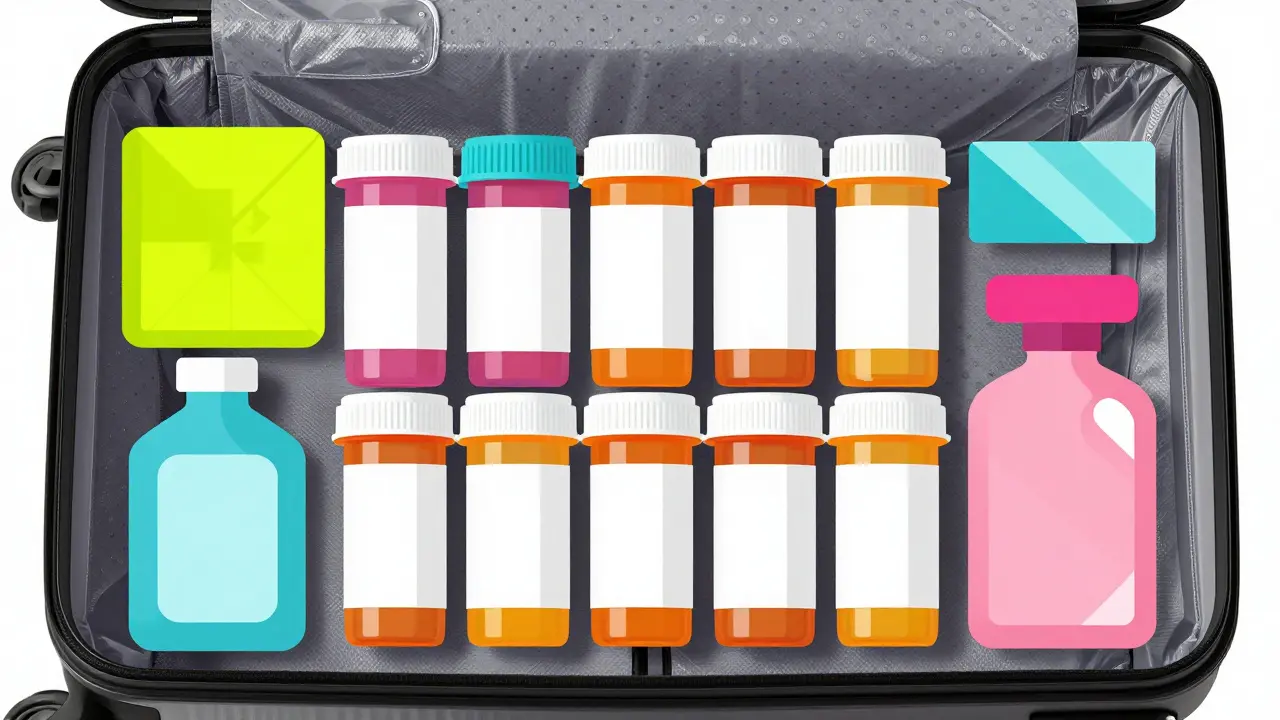
Never transfer your pills into a generic organizer or a small travel tin unless you have absolutely no choice. While this saves space, it destroys your legal protection. Data from Cleveland Clinic pharmacists indicates that 78% of medication-related security issues at airports stem from medications not being in properly labeled containers. Customs officers in almost any country prioritize the label. It connects the drug directly to a licensed physician and the traveler. If the label matches the ID and you have a supporting letter, you are clear. Without it, you face detention, confiscation, or worse.
Sometimes people worry about privacy, so they try to hide the labels. This is dangerous. For those requiring discreet storage, the International Narcotics Control Board permits transferring limited quantities to secondary containers, but only if they include identical labeling. That means patient name, prescribing physician, medication name, strength, and dosage instructions must still be visible. However, standard practice suggests sticking with the pharmacy-issued bottle. It is the gold standard. If you are flying internationally, check if your destination allows the container size limits. Some nations require smaller doses or specific packaging formats.
Navigating Documentation and Legalities
A pill bottle proves you own the medicine, but a doctor’s letter proves you need it. The CDC provides a standardized medication travel letter template that 83% of international pharmacies recommend completing for controlled substances. This document requires a physician signature, specific prescription details, and a justification of the diagnosis. It bridges the gap between two different healthcare systems. You should print three copies of this letter. Leave one in your checked bag as backup (if allowed by policy), keep one on your person with your passport, and save a digital copy in a cloud drive accessible offline.
International travel introduces massive variables. The CDC's Yellow Book 2024 explicitly states that travelers entering 67% of countries face potential medication confiscation without proper documentation. Forty-one countries require advance authorization for even small quantities of Schedule III-V substances. Japan is a prime example of strict enforcement; travelers attempting to enter with pseudoephedrine, common in cold meds, have faced 2,147 documented confiscation cases in 2022 alone. Saudi Arabia maintains the strictest policies, prohibiting 147 controlled substances entirely regardless of your prescription status. Before you fly, check the specific embassy website of your destination country. Do not rely on anecdotal stories from forums. If a rule exists, it will trap you.
| Requirement | Domestic Travel (US) | International Travel |
|---|---|---|
| Container Type | TSA allows non-original containers in carry-on | Most countries mandate original pharmacy labels |
| Documentation | Recommended, not always required | Mandatory Doctor's Letter + Prescription Copy |
| Quantity Limits | No strict federal limit (state variations exist) | Typically max 30-day supply (varies by nation) |
| Risk Factor | Theft in transit/hotels | Theft plus Criminal Detention Risk |
Secure Storage During Stays
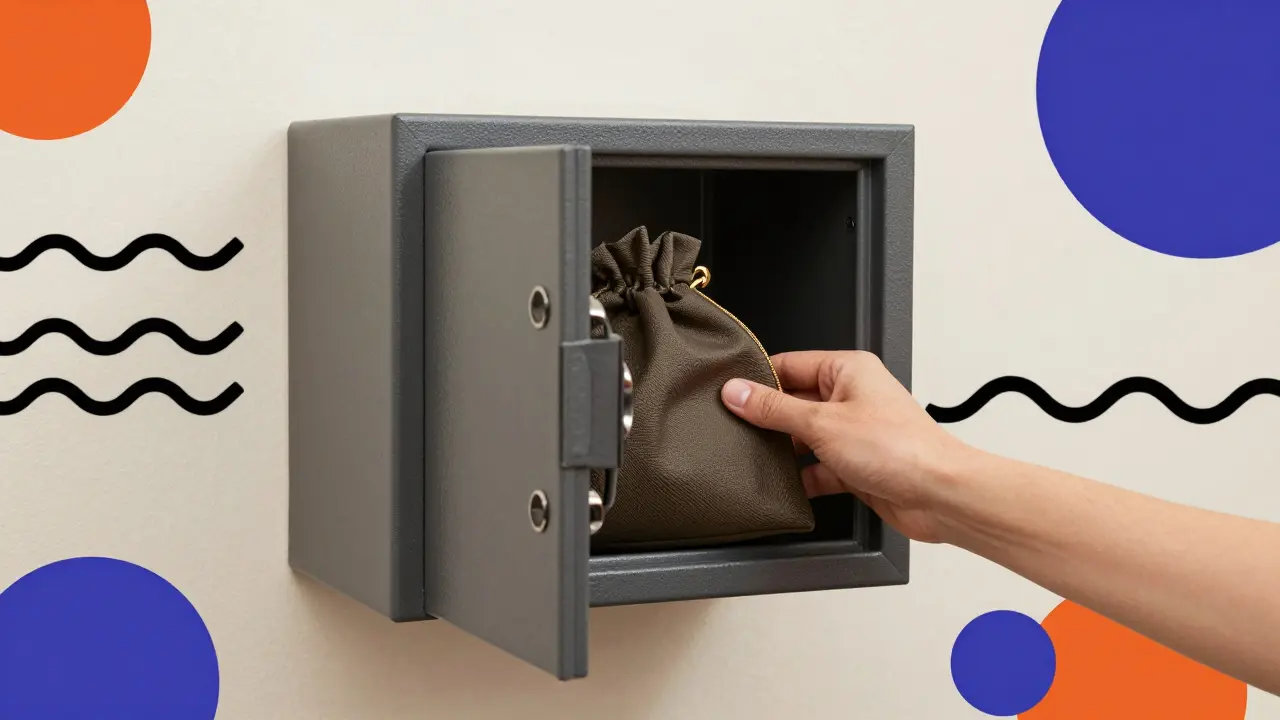
Arriving at your destination is only half the battle. Hotels are frequent sites for medication theft. TripAdvisor's travel safety forum contains hundreds of cases involving travelers who stored meds in checked luggage upon arrival or left them unsecured in accommodations. Between January 2022 and June 2023, 89% of reported cases involved unsecured storage. When booking, verify if the room has a working safe. Not all safes are created equal. Some are easily pried open, but they still deter casual opportunism. If you lack a safe, keep your medication bag on your person or locked in your luggage in your bedroom. Never leave the bag in plain sight on a nightstand.
Rental cars pose a unique danger. 92% of thefts occur when meds are left in vehicles. Even a "hidden" glove box offers little resistance to a professional thief using a pry bar or simply smashing a window. Park in well-lit, monitored areas. Better yet, bring your medication into the establishment whenever you park. If you must leave it, lock it in the trunk immediately and take your keys with you. There are specialized RFID-blocking medication cases available now. User reports on PackPoint indicate that using these combined with hotel safes reduces theft incidents by 76%. The tamper-evident feature alerts you if someone opened the case, giving you a chance to act before moving to a new location.
Contingency Plans for Theft and Loss
If the unthinkable happens and your medication is stolen, panic is your enemy. The first priority is filing a police report within 24 hours. This is non-negotiable for insurance claims. UnitedHealthcare's 2023 policy update showed that only 17% of stolen medication claims were approved without timely police documentation compared to 89% with it. The report serves as proof of loss for your insurer and validates your request for emergency replacements. Keep the case number handy and photograph the scene where the theft occurred if possible. Documenting the exact time helps coordinate with local authorities and your home pharmacy.
Replacing controlled substances is complex. DEA regulations prevent pharmacies from dispensing Schedule II medications more than 5 days early without special authorization. For Schedule III-V substances, you might get up to 14 days early refills. However, getting a new prescription across state lines triggers Prescription Drug Monitoring Program (PDMP) alerts. These databases track usage to prevent abuse. Out-of-state activity creates a flag. To mitigate this delay, contact your prescribing doctor immediately. They can explain the situation to local physicians or provide a temporary refill authorization to bypass monitoring flags. In severe cases, electronic prescription verification pilots in select regions allow for faster processing, potentially reducing wait times from 72 hours to under 4 hours at participating pharmacies.
Frequently Asked Questions
Can I put my controlled medication in checked luggage?
No, the TSA mandates that all medications must remain in carry-on luggage. Checked bags risk being lost or delayed, leaving you without essential treatment. Furthermore, cargo hold temperatures can degrade temperature-sensitive drugs.
Do I need a doctor's letter for domestic flights?
While not always legally mandatory for domestic US travel, it is highly recommended. Having a letter prevents delays at security checkpoints and proves medical necessity if questions arise regarding the volume or type of drugs carried.
What happens if I travel with pills in a generic organizer?
You risk having your medication confiscated or facing detention at border crossings. 78% of security issues involve unlabeled containers. Always use original pharmacy bottles to link the drug to you and your doctor.
Are there countries where bringing medication is illegal?
Yes. Countries like Saudi Arabia ban 147 controlled substances entirely. Japan frequently confiscates cold medicines containing pseudoephedrine. Always check your destination's customs website before departing.
What should I do immediately if my medication is stolen?
File a police report within 24 hours. This is required for insurance approval (89% approval rate with documentation). Contact your doctor immediately for a new prescription authorization to trigger emergency refills.


March 29, 2026 AT 08:18 AM
The regulatory classification of Schedule II substances fundamentally alters the logistics of personal transport. When moving through international borders, the Controlled Substances Act interacts with local sovereignty. Travelers must recognize that street value correlates directly with theft motivation. Airport security screening procedures prioritize identifying unlabeled pharmaceutical compounds. Compliance with TSA mandates ensures continuity of care during transit phases.
March 29, 2026 AT 16:37 PM
It is absolutely vital that everyone understands the gravity of this situation!!!! Please remember that customs agents inspect containers rigorously!!! The labeling must match the prescription exactly!!!! Do not compromise on the packaging standards!!!!! Original pharmacy bottles are mandatory for most jurisdictions!!!!!! Safety is the priority here!!!!!
March 30, 2026 AT 16:53 PM
You are essentially walking around with a target on your back unless you know the landscape. Thieves do not see patients, they see liquid assets. The moment you display stress, you become prime prey. Your bottle becomes currency the moment it leaves sight. Protect your own interests because the system will not shield you from opportunism.
March 31, 2026 AT 07:14 AM
It is imperative that individuals adhere strictly to established protocols. Deviation from standard storage practices invites significant liability. The enforcement mechanisms in place are robust and unforgiving. Legal recourse is minimal when violations occur during transit zones.
March 31, 2026 AT 12:29 PM
i feel like this scares people way too much honestly but the risks are real you cant just ignore it completely
keep the meds close at all times dont leave anything behind
April 2, 2026 AT 01:18 AM
peopl e forget tha t theft happens in holtes mostly u left your bag open one time and boom gone everything
it s crazy how fast thos e things disappear
April 2, 2026 AT 22:20 PM
its really important to stay calm and plan ahead you got this and dont let worry stop you from getting where you need to go
just remember to pack right and check the rules before flying
April 3, 2026 AT 11:33 AM
We must remain vigilant about our personal security measures!!!!! The community deserves safety while traveling!!!!! Preparation is the key to success!!!!!! Always carry the documentation with you!!!!! Peace of mind is invaluable!!!!!
April 4, 2026 AT 07:42 AM
The data regarding hotel theft incidents provides a clear picture of vulnerability patterns. Most losses occur due to temporary negligence rather than targeted attacks. Verifying the functionality of room safes mitigates the majority of potential risks.
April 4, 2026 AT 23:24 PM
they want you to panic so they can sell your data later 👀
its all about control and tracking where we go 💊
dont trust any safe in this economy 🙄
April 6, 2026 AT 10:23 AM
Just keep it in your carry on always :)
April 7, 2026 AT 19:45 PM
You have to understand the gravity of carrying these substances. It is not merely about health maintenance anymore. Security protocols demand strict adherence to container rules. Most people underestimate the risk involved in transit. I have seen countless cases where simple errors caused major delays. The documentation process is often overlooked by travelers. A letter from your physician bridges critical gaps legally. Customs agents look for discrepancies immediately upon arrival. You cannot assume that domestic laws apply internationally. Japan has extremely strict regulations regarding cold medicine. Saudi Arabia prohibits entire classes of drugs entirely. Checking specific embassy guidelines prevents future legal troubles. Storage methods change drastically once you leave home soil. Hotel safes are generally the only secure option available. Leaving bags unattended leads to immediate loss scenarios. 😷📄🏨
April 8, 2026 AT 09:45 AM
It is irresponsible to claim that casual storage suffices for potent compounds. The sheer negligence displayed by average travelers is astounding. Proper containment is a moral obligation to prevent diversion. Ignoring these basic safeguards reflects poorly on personal responsibility.
April 10, 2026 AT 08:58 AM
people really need to stop being so careless with their stuff 🚫
you mess up your life if you ignore the rules 👎
its common sense basically 💔
April 10, 2026 AT 13:13 PM
Different regions enforce chemical possession with varying degrees of leniency. Understanding the cultural context of drug regulation abroad prevents unintended conflict. Local customs officers operate under mandates that supersede international norms.
April 12, 2026 AT 10:47 AM
Federal monitoring systems track cross-border prescriptions closely now. Electronic verification pilots offer faster processing for legitimate emergencies. Coordination between prescribers and foreign pharmacies remains critical during crisis events.