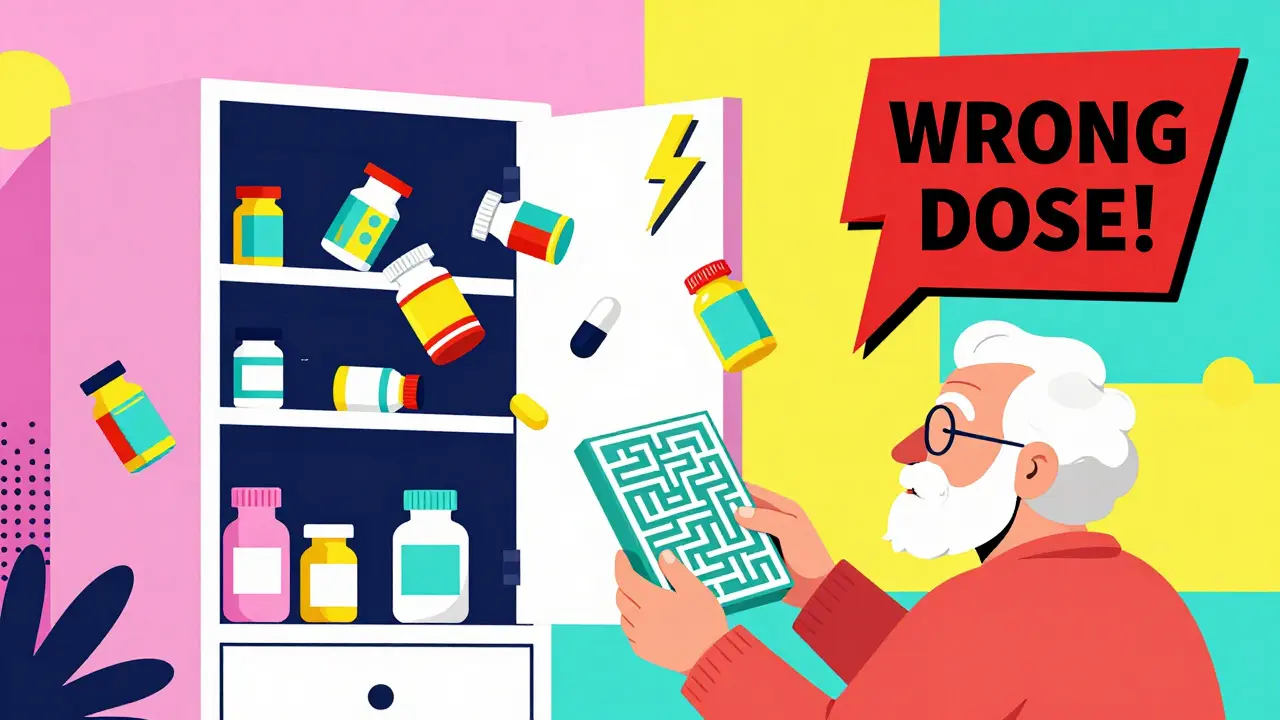
Every year, over 1.5 million people in the U.S. are harmed by medication errors. Many of these mistakes happen right in your home, or in a hospital where you expect to be safest. The good news? Most of them are preventable. You don’t need to be a doctor to help stop them. With simple steps, patients, families, and staff can cut down on dangerous mix-ups - whether you’re taking pills on the kitchen counter or getting an IV in a hospital room.
What Counts as a Medication Error?
A medication error isn’t just taking the wrong pill. It’s any mistake that happens when a drug is prescribed, dispensed, given, or taken - and it leads to harm or the risk of harm. That includes:- Getting the wrong drug
- Taking too much or too little
- Missing a dose
- Taking drugs that clash dangerously
- Using expired or fake medication
It’s not rare. In hospitals, one in every 200 doses given is wrong. At home, it’s even worse for older adults on five or more medications - nearly 9 out of 10 have had a mistake. The World Health Organization calls this a global crisis, costing $42 billion a year and causing at least one death daily in the U.S. alone.
How Hospitals Are Fighting Back (And Where They Still Fail)
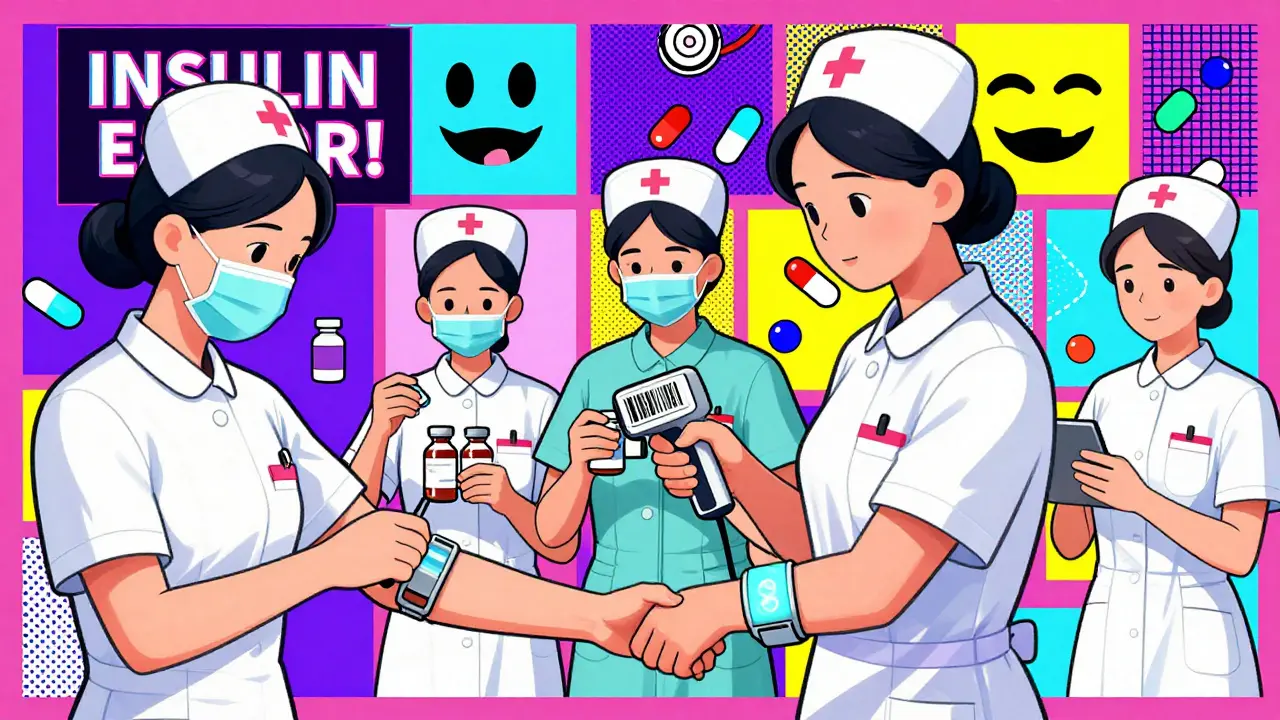
Hospitals have tools that should make things safer. Barcode Medication Administration (BCMA) is one of them. Nurses scan a patient’s wristband and the drug’s barcode before giving any medicine. In real-world use, this cut wrong drug errors by over 56%, wrong doses by 43%, and missed doses by two-thirds.But here’s the catch: many nurses hate it. In one 500-bed hospital, staff said scanning added 15 to 20 minutes per round. Some started skipping scans or scanning multiple drugs at once to save time - which created new errors. A 2024 survey found 57% of pharmacists saw new types of mistakes pop up because of these workarounds.
Computerized order systems (CPOE) help too. They stop doctors from prescribing dangerous doses or conflicting drugs. One study showed they cut errors by half. But if the system throws too many alerts - like 20 pop-ups for every order - doctors start ignoring them. One study found 42% of clinicians just click past warnings. That’s called alert fatigue. It’s deadly.
Medication reconciliation - going over every drug a patient takes - is another key tool. But it’s often done poorly. At discharge, many hospitals don’t update the list correctly. Patients go home thinking they’re on five pills, but they’re actually on seven. That’s how overdoses and bad reactions start.
What Works Best in Hospitals?
There’s no silver bullet, but the most effective approach combines three things:- BCMA for routine drugs - it’s reliable for simple meds like antibiotics or blood pressure pills.
- Clinical decision support for high-risk drugs - insulin, blood thinners, opioids. These need smart alerts that actually help, not annoy.
- Pharmacist-led reconciliation - when a pharmacist, not a nurse or doctor, reviews every medication during admission and discharge, errors drop by up to 40%.
Training matters too. Hospitals that spent 16-20 hours training staff on BCMA saw error rates fall after 3-6 months. Those that rushed training? Errors went up at first. Technology alone doesn’t fix human habits. You need culture change, feedback loops, and super-users - one trained expert per 10-15 staff - to keep things running right.
Medication Mistakes at Home Are Worse Than You Think
At home, there’s no barcode scanner, no pharmacist checking your list. That’s why older adults are most at risk. A 2024 study found 89% of home medication errors happened to people 75 and older taking five or more pills. The biggest problems? Timing and dosage.- 41% took pills at the wrong time - like morning vs. night
- 33% took too much or too little
- 63% got confused by multiple pill organizers
People think pill boxes help. They do - but only if they’re used right. A 2025 survey on SingleCare.com showed 72% of seniors using pill organizers still made at least one mistake a month. Why? Too many containers. One box for blood pressure, another for diabetes, a third for vitamins, a fourth for pain. It’s a mess. People mix them up. They forget which box is for what.
What Actually Works at Home?
Forget fancy apps or smart pill dispensers. The most effective, low-cost fixes are simple:- Use single-dose packaging - pharmacies can put each day’s pills in one sealed pouch. This cuts errors by 28%.
- Limit daily doses to three or fewer - if you’re on more than that, ask your doctor if you can combine or drop something.
- Get a weekly check-in with a pharmacist - a 2023 study found weekly reviews with a pharmacist reduced home errors by 37% in seniors.
- Keep one master list - write down every pill, supplement, and over-the-counter drug. Bring it to every doctor visit. Update it after every change.
Family involvement helps too. If someone’s forgetful or has trouble reading labels, a caregiver should help. Don’t assume they’ll remember. Write down instructions in big print. Use a phone alarm labeled “AM: Blood Pressure” instead of just “Take pill.”
High-Risk Drugs Need Extra Care
Some medications are more dangerous if messed up. These are called “high-alert” drugs. They include:- Insulin
- Warfarin (blood thinner)
- Opioids like oxycodone
- IV potassium
- Chemotherapy drugs
In hospitals, these drugs account for 62% of all severe medication errors. At home, insulin errors are the most common - people confuse long-acting and fast-acting types, or use the wrong syringe. Always double-check the label. Ask your pharmacist to color-code your insulin pens. Use a logbook to record each dose and time.
For blood thinners like warfarin, consistency matters. Take it at the same time every day. Avoid sudden changes in vitamin K intake (leafy greens). Get your blood tested regularly. Don’t skip appointments.
The Fake Drug Problem Is Growing
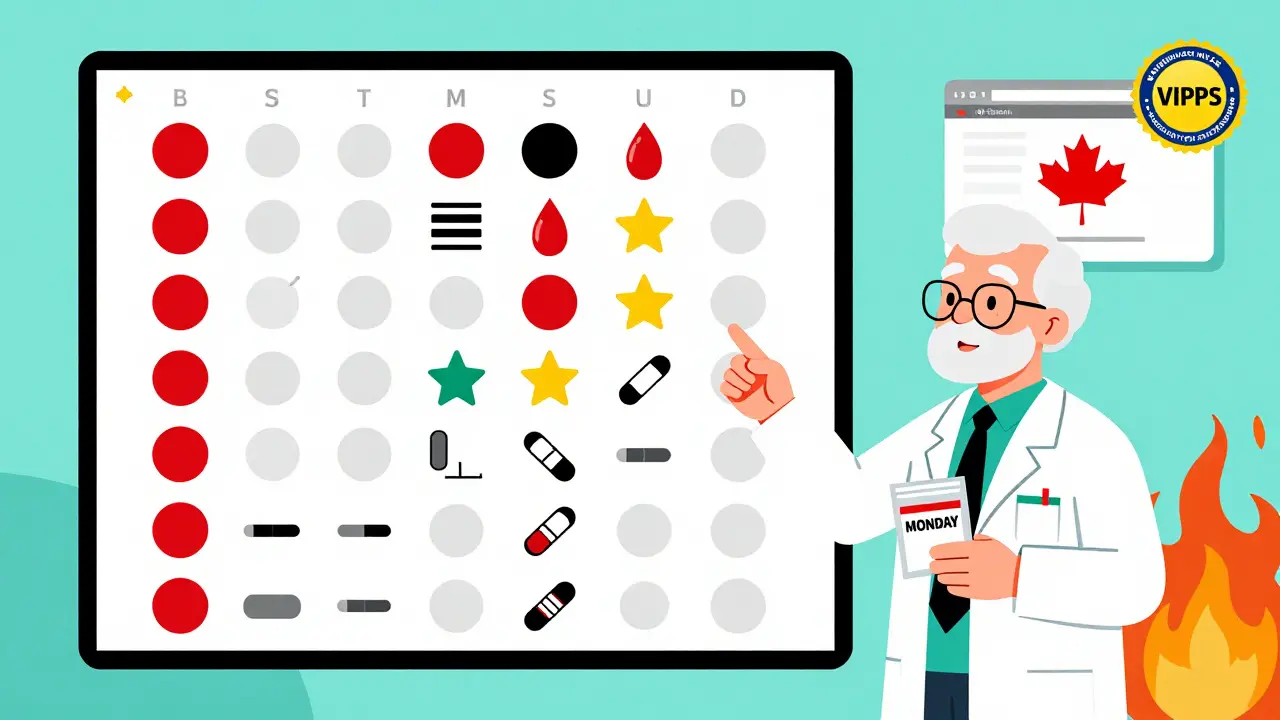
It’s not just mistakes - it’s fraud. The WHO warns that fake or substandard drugs are spreading. Online pharmacies claiming to be from Canada or the U.S. often sell pills with no active ingredient - or too much. One study found 95% of online pharmacies selling prescription drugs are illegal.Never buy meds online unless you’re sure. Check the pharmacy’s license. Look for the VIPPS seal (Verified Internet Pharmacy Practice Sites). If the price is way too low, it’s a red flag. Always get prescriptions filled at a licensed pharmacy. Don’t trust a website with a maple leaf logo and “Canada” in the URL - it’s likely fake.
What’s Next? AI and Blockchain
The future holds promise. Johns Hopkins tested an AI system that predicted dangerous prescriptions before they were written - and cut high-risk errors by 53%. Hospitals are starting to use blockchain to track drug supply chains, making it harder for fake pills to slip in.But tech won’t fix everything. ECRI’s 2025 report says 68% of BCMA failures happen because of bad training or poor workflow - not bad software. The real solution? Systems designed with people in mind. Nurses need less scanning, more time. Patients need simpler instructions. Doctors need smarter alerts, not more noise.
What You Can Do Today
You don’t have to wait for hospitals or tech to fix this. Start now:- At home: Use single-dose packaging. Keep one updated list. Ask your pharmacist for a weekly review.
- In the hospital: Ask, “What is this medicine for?” and “Is this new or did I take it before?”
- After discharge: Compare your discharge papers to your home list. If they don’t match, call your doctor.
- For seniors: Have a family member help with meds. Use alarms. Avoid too many pill boxes.
- Always: Never share pills. Don’t crush or split unless told to. Check expiration dates.
Medication safety isn’t just a hospital policy. It’s a daily habit. The more you know, the safer you are. And you don’t need a degree to make a difference.
What are the most common medication errors at home?
The most common errors at home involve taking the wrong dose, taking pills at the wrong time, or mixing up multiple pill containers. Seniors on five or more medications are at highest risk - 41% make timing mistakes, and 33% take incorrect amounts. Confusion between similar-looking pills or containers is the top cause.
Can barcode scanning really reduce hospital errors?
Yes, barcode scanning (BCMA) reduces errors significantly - by up to 57% for wrong drugs and 67% for missed doses. But it only works if staff are properly trained and don’t find workarounds. In some hospitals, scanning adds too much time, leading nurses to scan multiple drugs at once - which creates new mistakes. The system must fit the workflow, not disrupt it.
Why do hospitals sometimes make medication errors worse?
Hospitals often implement technology like CPOE or BCMA without changing how people work. If staff are overwhelmed, undertrained, or get too many alerts, they start ignoring them. Alert fatigue is real - 42% of clinicians bypass medication warnings. Poor training, rushed implementation, and lack of feedback cause more harm than the tech prevents.
How can I protect myself from fake medications?
Never buy prescription drugs from online pharmacies unless they’re verified. Look for the VIPPS seal. Avoid sites with fake Canadian logos or URLs ending in “.ca” that aren’t official. If the price is way lower than your local pharmacy, it’s likely fake. Always fill prescriptions at a licensed pharmacy - even if it costs more.
What’s the best way to manage multiple medications at home?
Use single-dose packaging - your pharmacy can put each day’s pills in one sealed pouch. Keep one master list of all meds, including supplements, and update it after every doctor visit. Ask for a weekly review with a pharmacist. Try to limit daily doses to three or fewer. Avoid using too many pill boxes - they cause more confusion than help.
Which medications are most dangerous if taken wrong?
High-alert medications include insulin, blood thinners like warfarin, opioids like oxycodone, IV potassium, and chemotherapy drugs. These can cause death or serious harm if dosed incorrectly. Always double-check labels, use logbooks, and ask your pharmacist to color-code pens or bottles. Never assume the dose is right - confirm it.
Should I use a pill organizer?
Pill organizers can help - but only if you use one that matches your schedule and avoid having too many. If you’re on five different meds with different times, five separate boxes will confuse you. Instead, ask your pharmacy for single-dose packaging. It’s more reliable and cuts errors by 28%. If you do use a box, label it clearly and have someone check it weekly.

January 7, 2026 AT 12:50 PM
Okay but like... why do hospitals make scanning pills take 20 minutes? I get it’s safety, but if you’re running on 3 hours of sleep and 12 patients, you’re gonna cut corners. I’ve seen nurses scan 5 vials at once just to get through the shift. And then they get blamed when someone gets the wrong med. It’s not the nurse’s fault-it’s the system that treats humans like robots. We need better UX, not more rules. Also, why is the pharmacist always the last person to check? They’re the only ones who actually know what’s in those pills. Put them at the front of the line, not the end.
And at home? My grandma has 7 pillboxes. Seven. One for each day, each color-coded, each with 8 different meds. She mixes them up constantly. She thinks the blue one is for blood pressure but it’s actually for anxiety. I swear, if we had single-dose pouches, she’d still be alive today.
Also-why is no one talking about how insurance won’t cover single-dose packaging unless you’re on hospice? Like, it’s cheaper than ER visits. But nope. We’d rather pay $80k for a heart attack than $50 a month for a better system. Capitalism is a drug error waiting to happen.
January 8, 2026 AT 09:41 AM
Of course you’re all crying about ‘workarounds’-because nobody wants to do their job right. If your system requires scanning every pill, then SCAN EVERY PILL. No excuses. You’re not a barista, you’re handling life-or-death meds. And don’t even get me started on ‘pharmacist-led reconciliation.’ That’s just a fancy way of saying ‘we’re too lazy to train nurses properly.’
Also, why are we letting seniors take 7 pills a day? That’s not medicine, that’s a junkie’s cocktail. If you can’t manage 3 meds, maybe you shouldn’t be living alone. Let the state step in. It’s not ‘ageism,’ it’s common sense. And stop romanticizing ‘family help.’ My aunt’s ‘caregiver’ was her 16-year-old grandkid who didn’t know the difference between insulin and metformin. That’s not safety-that’s a lawsuit waiting to happen.
January 8, 2026 AT 22:37 PM
Let’s normalize the fact that CPOE alert fatigue is a documented cognitive overload phenomenon, not ‘clinician laziness.’ The average ICU clinician gets 170 alerts per shift. 42% bypassing them isn’t negligence-it’s neurobiological survival. We’ve designed systems that scream at people until they go deaf. Then we punish them for not hearing the one scream that matters.
Also, single-dose packaging? 28% reduction? That’s a win. But why is this still optional? It’s not a luxury-it’s a public health imperative. And if your pharmacy won’t do it, switch pharmacies. Or better yet, demand Medicare/Medicaid mandate it for polypharmacy patients. We’re not asking for AI blockchain magic. We’re asking for basic packaging. It’s 2025. We have self-driving cars. We can’t package pills without 5 people touching them? Pathetic.
January 9, 2026 AT 17:56 PM
I hate how everyone acts like this is new. My mom died from a warfarin mix-up because the hospital changed her dose and never told her. She was on it for 10 years. They didn’t even call her. Just printed a new list and said ‘you’re good.’
And now everyone’s like ‘oh just ask your doctor’-like I’m supposed to be a medical detective at 72 with dementia. No. We need systems that don’t rely on people remembering things. We need machines that do the work. Not more lists. Not more alarms. Just... help us. Please.
Also, fake meds? I bought a ‘Canadian’ version of my blood pressure pill and it was just sugar. I almost had a stroke. Don’t trust anything online. Even if it looks legit. It’s not.
January 10, 2026 AT 22:38 PM
There’s a reason hospitals have so many errors. Too many people. Too many variables. Too many layers of bureaucracy. The solution isn’t more tech-it’s fewer meds. Fewer doctors. Fewer hospitals. People don’t need 12 pills. They need one: rest. Sleep. Food. Movement. But no. We’ll keep prescribing, scanning, alerting, and ignoring the root cause: we’ve turned medicine into a product, not a practice.
And yes, I know that sounds idealistic. But if you’re still taking 5 pills a day at 75, you’re not managing health-you’re managing a pharmacy.
January 11, 2026 AT 13:16 PM
Y’all are missing the big picture. This isn’t about scanning or pillboxes or even fake meds. This is about how we treat aging. We don’t design systems for humans-we design them for efficiency. And then we act shocked when humans break them.
My neighbor, 84, takes insulin, warfarin, metformin, lisinopril, and a daily aspirin. She uses one pill organizer. One. Because her daughter, who works two jobs, couldn’t afford five. She doesn’t know which is which. She doesn’t have time to learn. But she’s expected to be a medical expert? No. We’re failing her. We’re failing all of us.
Here’s the real fix: make every senior’s meds a free, pre-packed, labeled, weekly delivery with a 5-minute video call from a pharmacist. No cost. No paperwork. Just care. We spend billions on ER visits. This costs pennies. But we won’t do it because ‘it’s not scalable.’ Bullshit. It’s scalable if we care enough.
And for the love of god, stop calling it ‘medication safety.’ Call it ‘human dignity.’ Because that’s what this is. We’re not fixing pills. We’re fixing how we treat people who are tired, scared, and forgotten.
January 12, 2026 AT 20:34 PM
Single dose pouches are the real MVP. My aunt used them after her stroke and her errors dropped from 3 a week to zero. Pharmacy did it for free because she’s on Medicare. Just ask. Most places will do it if you say ‘I’m worried about mixing up meds.’ No one ever asks. Everyone thinks it’s expensive. It’s not. It’s cheaper than a hospital bed.
Also-use a phone alarm. Not ‘take pill.’ Say ‘TAKING BP MED AT 8AM.’ And put it on repeat. I know it sounds dumb but it works. My grandma didn’t know what ‘AM’ meant. But she knew ‘8AM’ and ‘BLOOD PRESSURE.’ Simple. Real. Works.
And don’t trust online pharmacies. I bought ‘Canadian’ oxycodone once. It was chalk. Literally. I thought I was having a panic attack. Turned out I just took a sugar pill. Don’t be me.
January 13, 2026 AT 03:51 AM
Why are we letting foreigners run our healthcare system? Canada doesn’t even have barcode scanners. They just hand out pills and hope. And now we’re copying their ‘low-tech’ model? That’s not progress-that’s surrender. We have the best tech in the world. Why are we using it to make things easier instead of safer?
Also, ‘pharmacist-led reconciliation’? That’s just another way of saying ‘we don’t trust our doctors.’ That’s un-American. We should trust our professionals. Not outsource safety to people who don’t even speak English properly. And why are we letting seniors take 7 pills? That’s not healthcare. That’s a welfare program gone wrong.
January 13, 2026 AT 04:50 AM
Can we just admit that most of this is about loneliness? People make mistakes because they’re scared. They don’t know who to ask. They’re ashamed. They think they’re dumb for forgetting. So they don’t say anything. And then they die.
My dad took his blood thinner at 3 AM because he thought the pill looked like his vitamin. He didn’t tell anyone for 3 days. He thought he’d be judged. We lost him to a bleed. He didn’t need a barcode. He needed someone to sit with him and say, ‘It’s okay to ask.’
So yes-use the pouches. Use the alarms. But also-call your mom. Ask her about her meds. Don’t wait until it’s too late. That’s the real solution. Not tech. Not policy. Just showing up.
January 14, 2026 AT 01:32 AM
Okay but why is everyone acting like this is a problem? Hospitals are full of lazy people. Nurses don’t want to scan. Doctors don’t want to think. Patients don’t want to learn. So we make apps? No. We need discipline. No more ‘it’s hard.’ Just do the thing. Scan the damn barcode. Read the label. Take it at the right time. Stop making excuses. This isn’t rocket science. It’s basic responsibility.
And fake meds? That’s why you don’t buy stuff online. If you want cheap meds, move to Mexico. But don’t blame the system. You made your choice. Now deal with it.
January 15, 2026 AT 01:51 AM
I’ve worked in pharmacy for 22 years. Let me tell you-the biggest problem isn’t the tech. It’s the patients who don’t know what they’re taking. They bring in a bag with 17 bottles. No labels. No dates. No clue. We have to guess. That’s not safety. That’s chaos.
And yes, single-dose packaging works. But most people won’t use it because they think it’s ‘too much work.’ They’d rather risk death than change their routine. That’s the real tragedy. Not the scanner. Not the alert. It’s the refusal to adapt.
Also-stop using pill organizers. They’re a trap. One box with 4 slots? Fine. Five boxes? You’re asking for disaster.
January 16, 2026 AT 06:25 AM
India has the same problem. My aunt takes 8 pills. No one checks. No one cares. We have no pharmacists in villages. Just a guy at the corner shop selling ‘American medicine’ in plastic bags. No barcode. No label. Just ‘take one.’
But here’s the thing-we don’t need fancy tech. We need one thing: a community health worker who visits every week. Just one person. To hold the pills. To ask questions. To say, ‘Did you take it?’
That’s what worked for us. Not apps. Not scanners. Just someone who showed up. And they didn’t charge us. They just cared.
Maybe the answer isn’t Silicon Valley. Maybe it’s your neighbor.
January 18, 2026 AT 00:47 AM
Single-dose packaging is the easiest win. Seriously. My dad’s pharmacy does it for free if you ask. Just say ‘I’m worried about mixing up my meds.’ They’ll set it up in 10 minutes. No forms. No extra cost. It’s not a miracle. It’s just common sense.
Also-keep a list. On paper. In your wallet. Update it after every visit. Even if you think it’s ‘not important.’ You’d be shocked how often doctors change things and forget to tell you.
And don’t trust online pharmacies. I bought ‘Canadian’ insulin once. It was expired. I had to go to the ER. Don’t be that person. Just go to CVS. It’s worth the extra $5.
January 18, 2026 AT 03:31 AM
What if the problem isn’t the meds-but the idea that we need so many? We treat aging like a disease to be managed with chemicals. But maybe it’s just… life. Maybe we’re over-medicalizing normal decline.
My grandfather took 12 pills a day. He was 92. He didn’t need them. He just believed he did. When we stopped half of them, he felt better. Not worse. He had more energy. Less dizziness. Less confusion.
Maybe the real error isn’t taking the wrong pill. It’s taking too many pills at all.
January 18, 2026 AT 18:53 PM
Let’s be honest: this entire system is a performance. Hospitals don’t want to prevent errors-they want to avoid liability. So they install scanners, then blame the nurses. They create alerts, then punish the doctors. They pretend they care about safety while optimizing for profit margins.
And ‘pharmacist-led reconciliation’? That’s PR. In reality, the pharmacist is overworked, underpaid, and given 3 minutes per patient. They’re not ‘leading’ anything. They’re triaging chaos.
Real safety? That’s when you stop treating patients like data points and start treating them like people. But that’s not scalable. So we’ll keep pretending tech will fix human failure. It won’t. It never does.
January 20, 2026 AT 10:16 AM
You know what’s wild? We spend billions on AI and blockchain to track pills… but we still don’t have a single, universal, real-time medication list that follows you from hospital to home to pharmacy. Why? Because it’s not profitable. It’s not sexy. But it’s the most powerful tool we could build.
Imagine: you walk into any ER, any clinic, any pharmacy-and your full med list pops up. No paperwork. No guessing. No ‘what’s this blue pill?’ Just… done.
It’s possible. We have the tech. We just need the will. And that’s the real problem. Not the pills. Not the scanners. The will.
So ask your doctor: ‘Can we build this?’ If they say no-ask why. And then keep asking until they can’t say no anymore.
January 21, 2026 AT 09:25 AM
Single-dose packaging? Too expensive. Pharmacist check-ins? Too much work. Alarms? Too childish. The real answer? Don’t get old. Don’t take meds. Don’t go to hospitals. Problem solved.
January 21, 2026 AT 20:05 PM
^ This is why we’re stuck. Someone says ‘just don’t get old’ and everyone nods like it’s wisdom. But people don’t choose to get sick. They don’t choose to need insulin. They don’t choose to be 80 and alone. This isn’t about laziness. It’s about dignity. And if you think the answer is ‘don’t get old,’ then you’ve never held someone’s hand while they’re confused because their meds don’t match the bottle.
We don’t need more tech. We need more humanity. And if that’s not profitable? Then we’re not a healthcare system. We’re a business with a stethoscope.