Every year, thousands of people are harmed because two drugs look or sound too much alike. It’s not a glitch in the system-it’s a predictable, preventable mistake. And it happens most often with generic drugs.
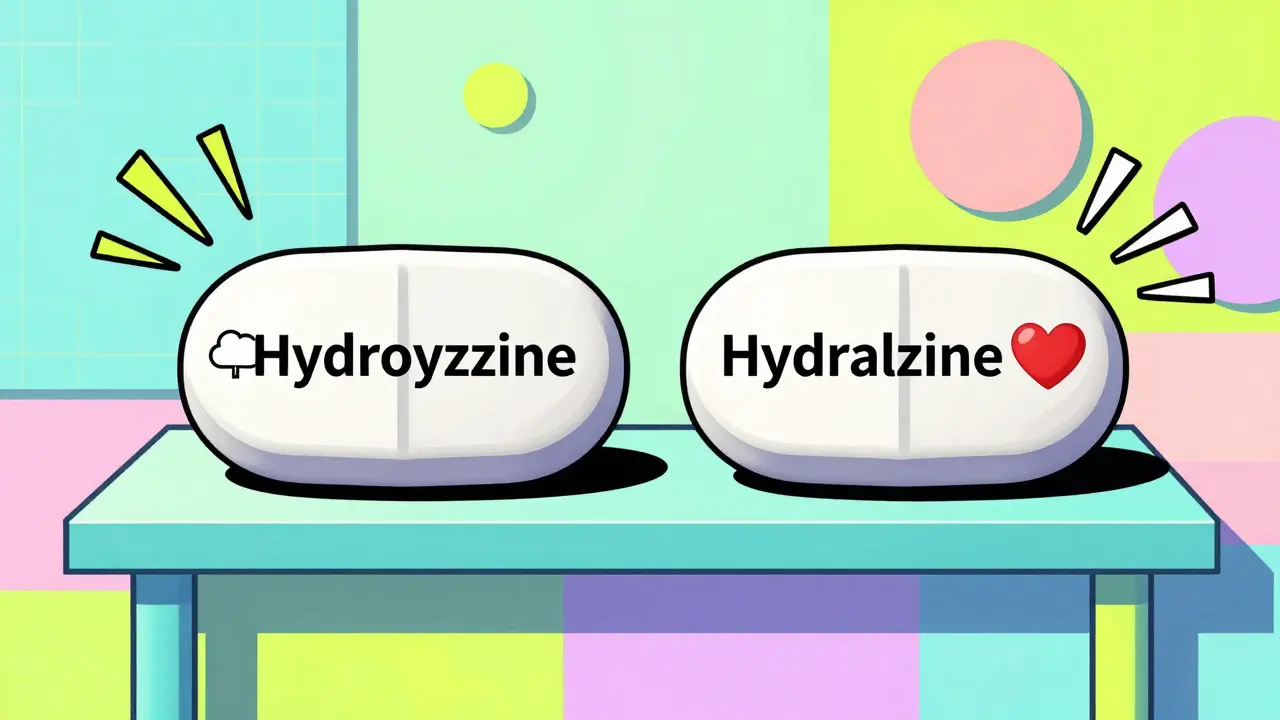
You might think generics are just cheaper versions of brand-name pills. But when two generics share nearly identical names-like hydroxyzine and hydralazine-or look almost the same on the shelf, the risk isn’t just theoretical. It’s real. And it’s deadly.
What Are Look-Alike, Sound-Alike (LASA) Drugs?
Look-alike, sound-alike (LASA) drugs are medications that are confusing because of how they look, sound, or are packaged. This isn’t about one bad batch or a careless pharmacist. It’s about systemic design flaws.
Look-alike means the pills, bottles, or labels are visually similar. Two 10 mg capsules, both white and oval, from different manufacturers. One is for anxiety. The other is for high blood pressure. Mix them up, and you could send a patient into cardiac arrest.
Sound-alike means the names sound alike when spoken. Think albuterol (for asthma) and atenolol (for heart rate). If a nurse hears “albuterol” over a noisy intercom and writes down “atenolol,” the patient gets the wrong drug. No one meant to make a mistake. But the names were too close.
According to the World Health Organization, LASA errors make up about 25% of all medication mistakes worldwide. That’s one in four. And the biggest source? Generic medications.
Why Generics Are the Main Culprit
Generics are supposed to be safe, affordable alternatives. But here’s the catch: there’s no global standard for how they look or how their names are chosen.
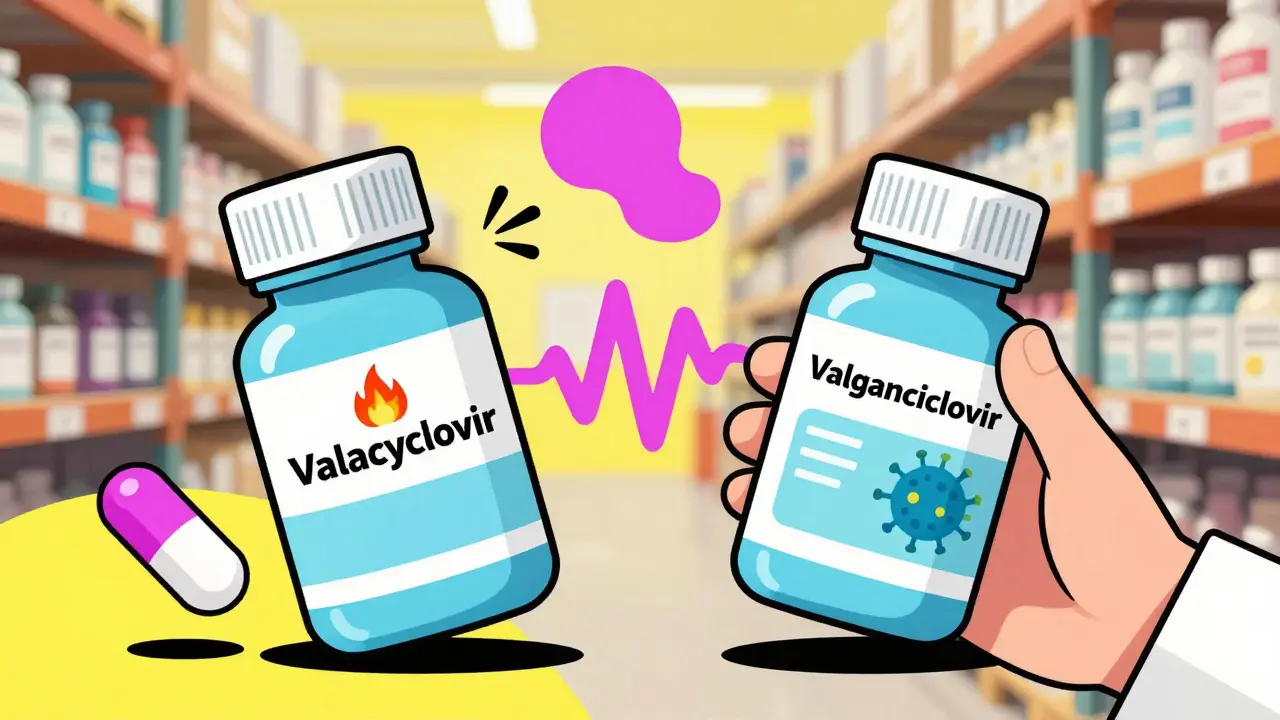
Take Valtrex and Valcyte. Both start with “Val.” Both are used in transplant and HIV patients. One treats herpes. The other fights a deadly CMV infection. The brand names are similar. But when generic versions hit the market, the confusion exploded. Generic versions of both drugs kept the “val” prefix. Pharmacists started seeing prescriptions for “valacyclovir” and “valganciclovir.” Same first three letters. Same dosage forms. Same patient population.
It’s worse when multiple generic makers produce the same drug. One company’s hydroxyzine might be a blue oval. Another’s hydralazine might be a blue oval too. Same size. Same color. Same bottle. No clear visual distinction.
And here’s the kicker: pharmacies stock dozens of generics side by side. In a busy warehouse, a pharmacist reaches for a bottle labeled “Hydralazine 10 mg” and grabs “Hydroxyzine 10 mg” because it’s right next to it. It happens every day.
Real Cases, Real Consequences
It’s not just theory. People have died.
In one case, a patient with heart failure was supposed to get dobutamine-a drug that strengthens heart contractions. Instead, they got dopamine, which raises blood pressure. The names sound identical when spoken. The nurse misheard. The patient went into cardiac arrest. They survived, but only because the error was caught in time.
Another patient was given hydralazine instead of hydroxyzine. Hydroxyzine is for itching and anxiety. Hydralazine is a powerful blood pressure drug. The patient’s BP dropped so fast they needed emergency treatment. The error happened because both drugs came in identical white capsules, stored in adjacent bins.
These aren’t rare. A 2021 survey found that 78% of pharmacists in the U.S. and Australia had encountered a LASA error at least once a month. Over a third saw near-misses weekly.
What’s Being Done-And Why It’s Not Enough
There are solutions. But they’re not used consistently.
Tall man lettering is one of the most effective tools. It highlights the differences in similar names by capitalizing the parts that differ. So instead of “prednisone” and “prednisolone,” you see “predniSONE” and “predniSOLONE.” This simple change cut LASA errors by 67% in a 12-hospital study.
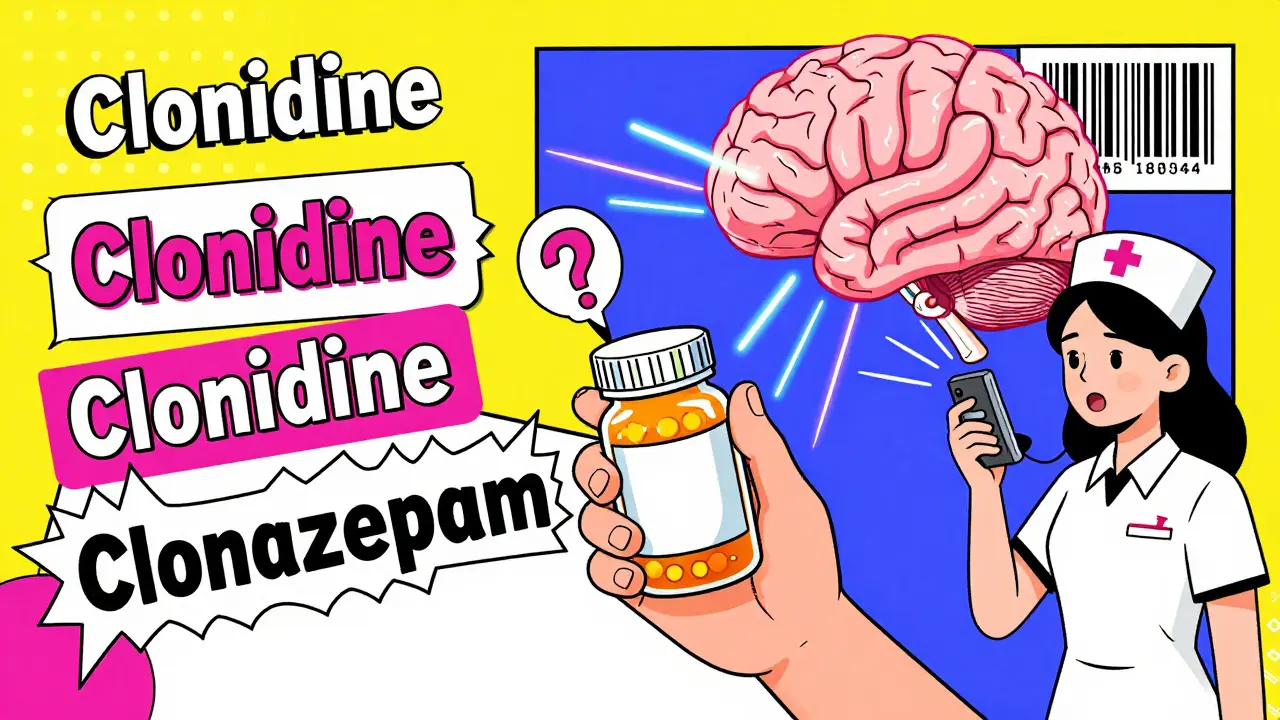
Another fix? Physical separation. Keep high-risk pairs like “clonidine” and “clonazepam” on different shelves. Not just different aisles-different rooms if possible.
Barcodes and electronic alerts help too. When a pharmacist scans a drug, the system can flag if it’s a known LASA match. One hospital system saw a 45% drop in errors after adding these alerts.
But here’s the problem: not all hospitals do this. Not all pharmacies. Not all countries. In Australia, while some major hospitals use tall man lettering and barcode scanning, many community pharmacies still rely on human memory and visual scanning. And with over 1,000 known LASA pairs, that’s not enough.
The U.S. FDA rejected 34 drug names in 2021 because they were too similar to existing ones. The European Medicines Agency now requires all new drug names to be checked for similarity. But generics? They’re often grandfathered in. No one forces manufacturers to change the look or name of a generic that’s already on the market.
What You Can Do-As a Patient or Caregiver
You don’t have to wait for the system to fix itself.
- Ask for the generic name. If your prescription says “hydroxyzine,” ask if it’s the one for itching or the one for blood pressure. Don’t assume.
- Check the pill. If you’ve taken a drug before, know what it looks like. If the color, shape, or imprint is different, ask why.
- Read the label twice. Look for the active ingredient. Don’t just trust the brand or the bottle.
- Speak up. If a nurse or pharmacist says “albuterol,” repeat it back: “You’re giving me albuterol for my breathing, right?”
- Use one pharmacy. If you use multiple pharmacies, they can’t track your full medication history. One pharmacy can flag a potential LASA conflict across your entire list.
These steps won’t stop every error. But they’ll catch a lot. And in a system where one wrong pill can kill, that’s worth it.
The Future: AI and System-Wide Change
The most promising tool isn’t a new rule or a new label. It’s artificial intelligence.
A 2023 study showed AI systems embedded in electronic health records caught 98.7% of potential LASA errors-with only a 1.3% false alarm rate. That’s better than any human. The AI doesn’t get tired. It doesn’t mishear. It doesn’t confuse “clonidine” with “clonazepam” because they both start with “clo.”
But AI won’t help if it’s not built into the system. Many small clinics and pharmacies still use paper records or outdated software. And even when AI is available, staff might ignore alerts if they’re too frequent.
The real fix? Treating LASA errors as a system failure-not a person failure. Blaming the pharmacist won’t stop it. Fixing the design will.
The WHO’s global goal is to cut severe medication harm by 50% by 2025. That’s not just a number. It’s 200,000 lives. And a big part of that goal is fixing LASA errors.
It’s possible. We’ve seen it work. Tall man lettering. Barcodes. Separation. AI alerts. But only if everyone-manufacturers, regulators, hospitals, pharmacists, and patients-works together.
Because the next time you pick up a prescription, you shouldn’t have to wonder: Is this the right drug? Or just the one that looks like it?”
Are look-alike, sound-alike errors common with generic drugs?
Yes. About 25% of all medication errors are linked to look-alike, sound-alike (LASA) drug names, and generics are the biggest source. Because multiple manufacturers produce the same generic drug, packaging and labeling often become visually similar. Names like hydroxyzine and hydralazine, or albuterol and atenolol, are easy to mix up-especially under time pressure or in busy pharmacies.
Can tall man lettering really prevent these errors?
Yes. Tall man lettering-capitalizing the different parts of similar drug names (like predniSONE vs. predniSOLONE)-has been shown to reduce LASA errors by up to 67% in hospitals that use it. It’s a simple, low-cost fix that makes visual differences obvious. Many hospitals in Australia and the U.S. have adopted it, but it’s not yet universal, especially in community pharmacies.
Why don’t drug companies change the names of generics to avoid confusion?
There’s no global requirement for generic manufacturers to change names or packaging to avoid confusion. Once a generic is approved, it can stay on the market even if its name is similar to another drug. Regulatory agencies like the FDA and EMA now block new drug names that are too similar-but existing generics are often grandfathered in. That means thousands of confusing pairs remain in use.
How can I check if my medication is at risk for a LASA error?
Look up the active ingredient on the label. Then search for “LASA drug pairs” or check the Institute for Safe Medication Practices (ISMP) list of confused drug names. If your drug shares a name with another (e.g., clonidine and clonazepam), ask your pharmacist to explain the difference. Always confirm the purpose: “Is this for high blood pressure or for anxiety?”
Are children at higher risk for LASA errors?
While children experience fewer LASA errors overall, the consequences are more severe. A wrong dose of a blood pressure drug or sedative can be life-threatening in a small body. Studies show that when LASA errors happen in pediatric patients, they’re more likely to cause serious harm than in adults. Always double-check medications for children, even if they’ve taken the same drug before.
What’s Next: How to Stay Safe
The system isn’t perfect. But you’re not powerless.
If you’re on multiple medications, keep a printed list with the active ingredient, dose, and reason for use. Bring it to every appointment. If you’re switching pharmacies, ask them to cross-check for similar drugs.
And if you ever feel unsure-ask. Again. And again. Because the person who catches the error before it happens? It’s not always the pharmacist. Sometimes, it’s you.

January 28, 2026 AT 01:37 AM
This is why I refuse to take generics anymore. My aunt died because a pharmacist mixed up hydroxyzine and hydralazine. Same damn bottle, same color, same size. No one was punished. No one even apologized. Just another statistic.
January 28, 2026 AT 05:04 AM
The term 'look-alike, sound-alike' is technically inaccurate. It's not about appearance or phonetics-it's about nomenclature homophony and visual redundancy in packaging design. The FDA's 2021 rejection of 34 drug names is a red herring; the real failure is the lack of mandatory standardized visual coding for generic manufacturers.
January 28, 2026 AT 12:48 PM
Generics are a regulatory failure. WHO data shows 25% of med errors stem from LASA. But why blame pharmacists when the FDA lets companies reuse prefixes like 'val' for entirely different drugs? No oversight. No accountability. Just profit-driven chaos. Fix the system or stop pretending generics are safe.
January 29, 2026 AT 18:16 PM
I’ve been a nurse for 18 years and I’ve seen this happen too many times. One time, a patient got clonidine instead of clonazepam because the labels were identical except for the font size. We caught it, but not everyone does. Please, if you’re on meds, always double-check the active ingredient. Don’t assume. Ask. And if your pharmacy doesn’t separate high-risk pairs, find one that does.
January 30, 2026 AT 04:29 AM
STOP BEING LAZY. This isn’t rocket science. Tall man lettering. Barcode scans. Physical separation. These are FREE solutions. Hospitals that use them cut errors by 60-70%. If your pharmacy doesn’t do this, switch. Your life isn’t worth risking because someone’s too cheap to upgrade their system.
January 30, 2026 AT 20:20 PM
Back home in Kerala, we have this phrase: 'If the bottle smiles like another, ask before you swallow.' It’s not just wisdom-it’s survival. I’ve seen a man given insulin instead of hydroxyzine because both were white capsules with a red dot. He nearly died. Now, every pharmacy in our town has color-coded bins and a laminated LASA list on the counter. Simple. Cheap. Life-saving.
February 1, 2026 AT 15:10 PM
Just got my script filled and noticed the pill looked different. Asked the pharmacist. Turns out they switched generics. She showed me the difference in the imprint. 🙏 Thank you for being careful. Please, everyone-check your pills. It’s not paranoia, it’s protection.
February 3, 2026 AT 01:25 AM
They’re hiding this. I know someone who works at a major pharmacy chain. They’re told to ignore the warnings. Corporate says it’s 'too expensive' to reorganize shelves or train staff properly. It’s not negligence-it’s intentional. They don’t want you to know how many people are dying because of a $2 savings.
February 4, 2026 AT 15:30 PM
im just glad i always check the label now… i used to just grab and go but after my cousin had that mixup… yeah. now i read everything. even if its the same med i’ve taken before. better safe than sorry lol
February 6, 2026 AT 10:56 AM
Let’s be real-this isn’t about generics. It’s about the entire pharmaceutical supply chain being designed for speed and profit, not safety. The FDA approves new generic names without testing them against existing ones in real-world pharmacy environments. Manufacturers don’t care because they know once it’s on the shelf, it’s too late to change. And regulators? They’re asleep at the wheel. We need mandatory pre-market LASA risk scoring for every single generic drug, not just new ones. And it needs to be public. Every pharmacist should be able to look up which pairs are high-risk before they even open the box.
February 7, 2026 AT 01:03 AM
Why are we even letting foreign countries make our meds? India and China are flooding the market with these confusing generics because they don’t follow US safety standards. We’re importing danger. Ban all foreign generics. Make everything in America. Then we can actually control the damn labels.
February 7, 2026 AT 03:50 AM
AI is the real villain here. They’re using algorithms to auto-generate generic names that sound similar on purpose. Why? Because it makes it harder for patients to track what they’re taking. It’s not a mistake-it’s a control tactic. Big Pharma wants you confused so you don’t question the dosage or the side effects. They want you dependent. This isn’t an error. It’s a system.
February 7, 2026 AT 07:59 AM
Man I’ve been a pharmacist for 12 years and I’ve seen this mess firsthand. We get 100 scripts a day. Sometimes you’re just tired. Sometimes the lights are flickering. Sometimes the bottle looks identical. But we’re not monsters-we’re overworked. If you want to fix this, fund the damn systems. Don’t yell at us. Pay us more. Give us better tools. We want to get it right too.
February 8, 2026 AT 10:45 AM
It’s funny how we blame the system but never change our own behavior. I used to just hand my script to the pharmacist and walk away. Then I got my first refill and the pill looked wrong. I asked. Turned out it was a LASA pair. Since then, I always ask two things: What’s the active ingredient? And what’s this for? That’s it. Two questions. No one’s ever been annoyed. And I’ve saved myself from three near-misses. We can all be part of the solution. It’s not complicated. Just human.
February 9, 2026 AT 17:30 PM
they say its about generics but really its the gov that lets big pharma push these drugs through. they dont want you to know that the same company that makes the brand also makes the generic. same factory. same machines. just different label. theyre milking you twice. once for the brand once for the 'cheap' version. its all a scam.
February 10, 2026 AT 14:44 PM
I work in a rural Irish pharmacy. We don’t have barcode scanners or AI alerts. We have a printed list of high-risk pairs taped to the counter. We also have a rule: if two drugs are on that list, we call the prescriber to confirm. It’s old-school. But it works. We’ve had zero LASA errors in five years. It’s not about tech-it’s about discipline.
February 11, 2026 AT 21:02 PM
My mom’s on five meds. Every time she gets a refill, I sit with her and check each pill against the ISMP list. We take pictures of the pills and compare them side by side. It takes 10 minutes. But it’s the only thing that gives me peace. You don’t have to trust the system. You just have to trust yourself enough to ask.