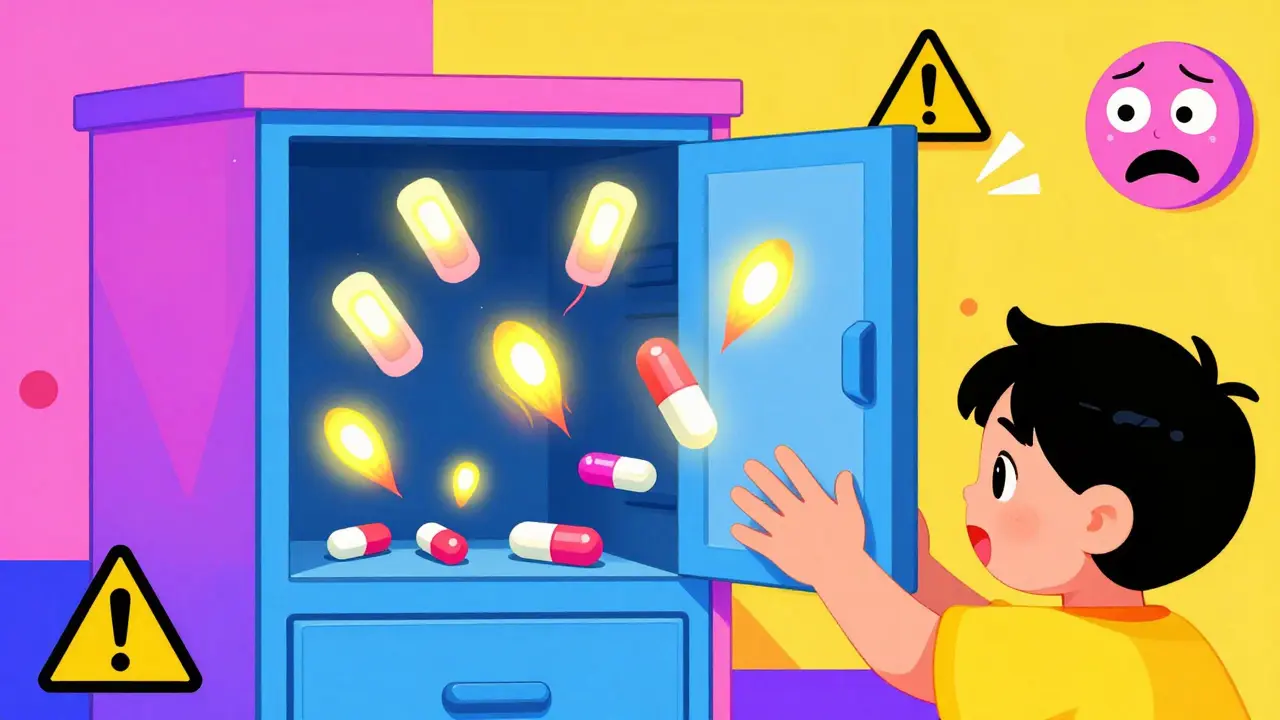
Putting old pills in the trash might seem harmless-until it’s not. Every year, children, teens, and even adults accidentally overdose on medications found in household trash. The truth? Some drugs are so deadly that even one pill or one patch can kill. That’s why the FDA has a strict list of medications you must never throw away. These aren’t just any pills. They’re powerful, fast-acting, and incredibly dangerous if they fall into the wrong hands.
Why Flushing Is Sometimes the Only Safe Option
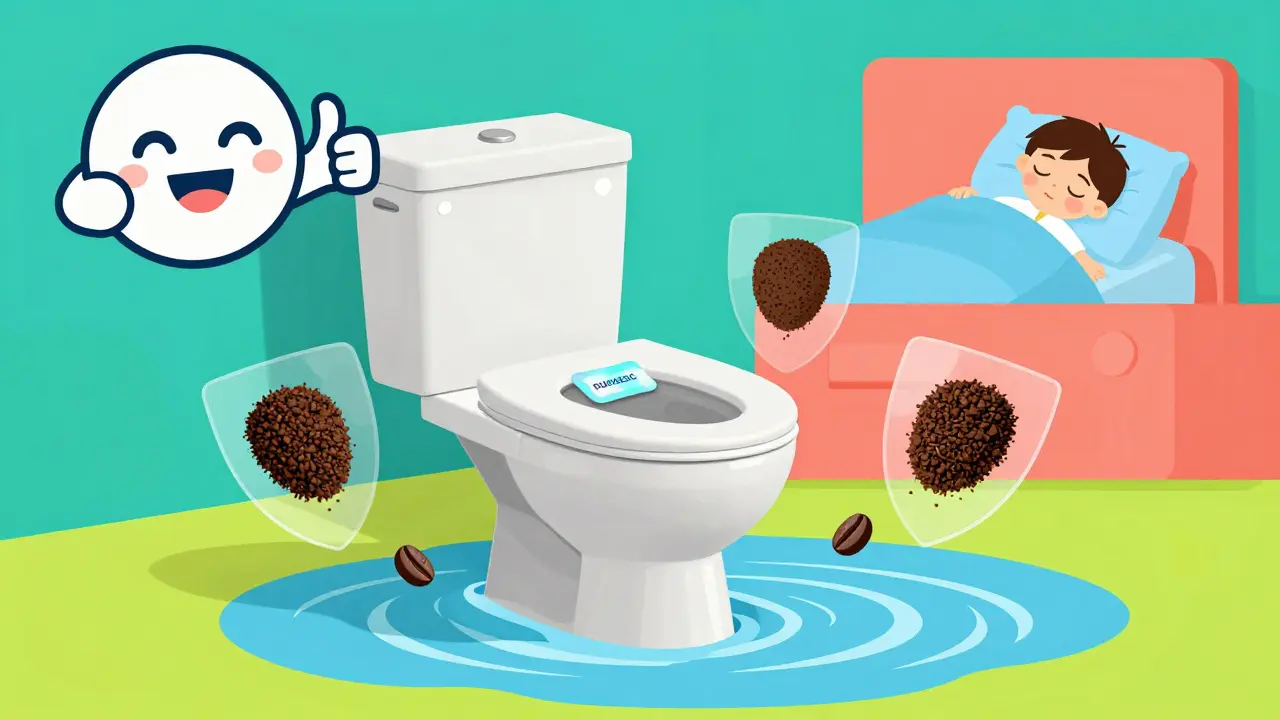
Most medications should go in the trash-after mixing them with coffee grounds or kitty litter. But for certain drugs, that’s not enough. These medications can cause death from a single dose. Fentanyl, for example, is 50 to 100 times stronger than morphine. A single patch left in the trash could be found by a curious child, a teenager experimenting, or someone struggling with addiction. In 2022, the American Association of Poison Control Centers reported over 8,900 cases of fentanyl exposure, and nearly half involved kids under five. The FDA created its Flush List because the risk of accidental death outweighs the environmental risk of flushing. Yes, flushing can lead to trace amounts of drugs in waterways. But wastewater plants remove only 30-90% of pharmaceuticals, and some, like carbamazepine, barely get filtered at all. Still, the EPA and FDA agree: when a drug can kill in one dose, the toilet is the safest option.The FDA Flush List: What You Must Never Throw Away
Here are the exact medications you must flush immediately-no exceptions. If you have any of these, don’t wait. Don’t store them. Don’t hope they’ll be safe in a drawer. Flush them now.- Buprenorphine - brands: BELBUCA, BUAVAIL, BUTRANS, SUBOXONE, SUBUTEX, ZUBSOLV
- Fentanyl - brands: ABSTRAL, ACTIQ, DURAGESIC, FENTORA, ONSOLIS
- Hydromorphone - brand: EXALGO
- Meperidine - brand: DEMEROL
- Methadone - brands: DOLOPHINE, METHADOSE
- Morphine - brands: ARYMO ER, AVINZA, EMBEDA, KADIAN, MORPHABOND ER, MS CONTIN, ORAMORPH SR
- Oxymorphone - brands: OPANA, OPANA ER
- Tapentadol - brands: NUCYNTA, NUCYNTA ER
- Sodium oxybate - brands: XYREM, XYWAV
- Diazepam rectal gel - brands: DIASTAT, DIASTAT ACUDIAL
- Methylphenidate transdermal system - brand: DAYTRANA
What to Do With Everything Else
If your medication isn’t on the flush list, here’s the correct way to dispose of it:- Take the pills out of their original bottles. (The label could reveal your name or condition.)
- Don’t crush tablets or capsules. Just leave them as they are.
- Mix them with something unappealing-used coffee grounds, kitty litter, or dirt.
- Put the mixture into a sealed plastic bag or container.
- Throw it in your household trash.
Why People Still Get It Wrong
Many people don’t know which drugs go where. A 2022 study found only 43% of patients could correctly identify which medications needed flushing. Pharmacists report confusion all the time. One patient in Perth recently asked if she could just throw away her husband’s leftover fentanyl patch because she didn’t want to “hurt the environment.” She didn’t know it could kill a child in minutes. Even when people know the rules, they hesitate. A 2023 Consumer Reports survey showed 68% of respondents were reluctant to flush because of environmental concerns. But here’s the reality: the risk of a fatal overdose from a single patch in the trash is far greater than the environmental impact of flushing one patch. The EPA’s Dr. John Scott put it plainly: “The environmental impact of a single fentanyl patch flushed is negligible compared to the potential for multiple fatalities.”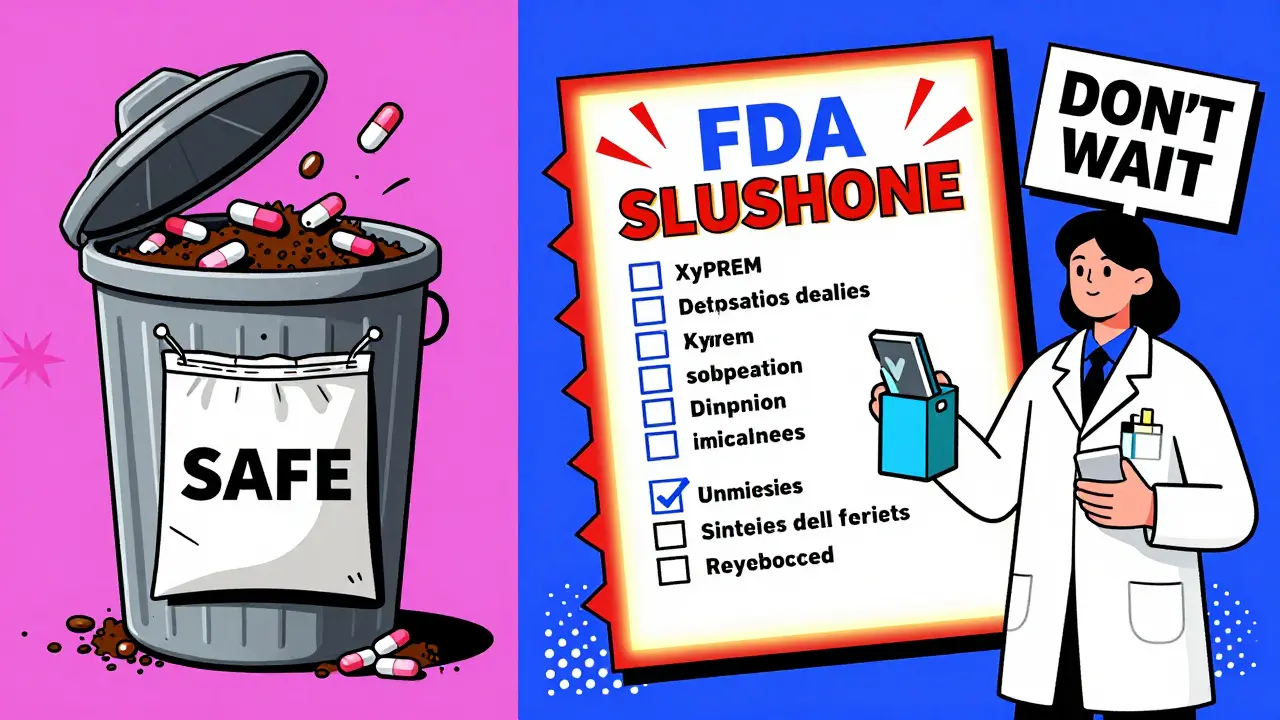
What You Can Do Right Now
Check your medicine cabinet today. Look for any of the medications on the FDA flush list. If you find them, flush them immediately. Don’t wait until you’re cleaning out the cabinet. Don’t think, “I’ll just keep them in case.” That’s how tragedies start. For everything else, mix it with coffee grounds and toss it. If you’re unsure, ask your pharmacist. Most pharmacies in Australia and the U.S. now offer free take-back programs. Walgreens and CVS have thousands of disposal kiosks across the country. In Perth, check with your local pharmacy or council-some offer collection bins for non-controlled drugs.What’s Changing in the Future
New solutions are coming. Some companies now sell $1.50 powder packets that turn pills into a gel when mixed with water-making them impossible to recover. These are already used in over 1,200 pharmacies in the U.S. And in 2023, the University of Florida tested special medication envelopes with activated charcoal. They cut improper disposal by 63%. Legislation is catching up too. The SNIPED Act, introduced in 2023, would require doctors to give disposal instructions with every Schedule II prescription. That’s a big step forward. But for now, the rules are simple: if it’s on the flush list, flush it. If it’s not, mix it, seal it, trash it. No exceptions. No delays. Because one wrong decision-thinking a pill is safe in the trash-can cost a life.What if I accidentally threw away a flush-list medication?
If you’ve already thrown away a medication on the FDA flush list, act quickly. If someone in your home-especially a child or teenager-could have accessed it, contact your local poison control center immediately. In Australia, call 13 11 26. In the U.S., call 1-800-222-1222. Don’t wait for symptoms. Even if the person seems fine, these drugs can act fast. If you still have the empty packaging, keep it handy for medical staff.
Can I flush all expired medications?
No. Only flush medications listed by the FDA. Flushing other drugs adds unnecessary chemicals to water systems. For everything else, mix them with coffee grounds or kitty litter, seal them in a plastic bag, and throw them in the trash. If you’re unsure, check the FDA’s official Flush List or ask your pharmacist.
Why doesn’t the FDA just ban these drugs instead?
These medications are vital for people with severe pain, addiction, or epilepsy. Fentanyl patches help cancer patients. Methadone saves lives in addiction treatment. Buprenorphine helps people recover from opioid dependence. The goal isn’t to ban them-it’s to make sure they’re used safely and disposed of properly. That’s why the flush list exists: to protect people from harm when the drugs are no longer needed.
Are there disposal programs in Australia?
Yes. Many pharmacies and local councils in Australia offer medication take-back programs. In Perth, check with your local pharmacy or visit your city council’s website. Some locations have secure drop boxes for non-controlled drugs. For flush-list medications, though, you still need to flush them immediately-take-back programs don’t accept these because they require immediate destruction.
Is it safe to flush medications if I have a septic tank?
Yes. The FDA’s flush list was designed with septic systems in mind. The risk of accidental exposure from trash far outweighs any potential impact on septic systems. Even if you have a septic tank, flushing these specific medications is still the safest choice. If you’re unsure, call your local health department-they can confirm local guidelines.
What should I do with needles or syringes?
Never flush needles or syringes. Place them in a hard plastic container like a laundry detergent bottle. Seal it tightly, label it “SHARPS - DO NOT RECYCLE,” and dispose of it through your local hazardous waste program. Most pharmacies and hospitals in Australia offer sharps disposal services. Never put loose needles in the trash.

January 19, 2026 AT 20:48 PM
This list saved my sister’s life. Her neighbor’s kid found a fentanyl patch in the trash and ended up in the ER. No one knew it was even there. I flushed every pill in my cabinet the day I read this. No excuses. Not even the ones I ‘might need someday.’
January 21, 2026 AT 03:08 AM
Brother, this is not just about safety-it’s about love. Every time you flush one of these, you’re telling your family, your neighbors, your community: ‘I see you. I care enough to protect you.’ Even if you’re not a parent, even if you live alone-this is how we hold each other up in this broken world. Thank you for speaking truth.
January 22, 2026 AT 06:31 AM
why dont they just make all these drugs illegal instead of making people flush them like its some kind of ritual i mean come on its not like the government cares about the environment anyway so why not just ban them all and save us the trouble of being responsible
January 22, 2026 AT 14:32 PM
Thank you for this comprehensive and meticulously researched article. The ethical imperative to prevent accidental exposure, particularly among vulnerable populations, is both clear and urgent. I have shared this with my elderly parents and will be visiting their residence this weekend to assist with proper disposal.
January 23, 2026 AT 18:57 PM
so like... if i flush my xanax is that like... spiritual cleansing or something? i mean we all gotta let go of something right? also why do they even make these things if they’re so dangerous?? like who thought this was a good idea??
January 25, 2026 AT 11:15 AM
It’s fascinating how we’ve created a society where the safest way to dispose of life-saving medicine is to send it down the toilet. We fear the contamination of water, yet we accept the contamination of lives. We treat the environment like a temple, but we treat human lives like an afterthought. This list isn’t just a guideline-it’s a mirror. What does it say about us that we need a government to tell us not to let a child die because we were too lazy to flush a patch? We’re not just disposing of pills. We’re disposing of our moral responsibility. And yet, here we are-still hesitating.
January 27, 2026 AT 10:39 AM
so i just flushed my dad’s oxycontin because i was too scared to keep it in the house but now i feel guilty?? like... is this making me the villain or the hero? also i mixed it with coffee grounds first but then i thought ‘wait what if someone digs through my trash like a raccoon with a PhD?’ so i flushed it anyway. now i’m just mad at the system that made me choose between poison and pollution.
January 29, 2026 AT 07:40 AM
Why are we letting foreign governments dictate our disposal policies? The FDA is a joke. If we had real American leadership, we’d be building incinerators, not flushing pills. This is weak. We need to stop caving to environmentalists who don’t even live here.
January 30, 2026 AT 03:27 AM
Thank you for the clear and actionable guidance. I have taken the initiative to distribute printed copies of the FDA Flush List to all residents in my senior living community. We held a brief educational session last week. Attendance was high, and the feedback was overwhelmingly positive. Knowledge is the most effective preventive tool we have.
January 30, 2026 AT 06:00 AM
I used to think flushing was gross-until my cousin’s toddler got into a patch and nearly died. Now I keep a small bucket by the toilet labeled ‘FLUSH ONLY.’ I’ve converted three of my friends. It’s not about being perfect-it’s about being responsible. And honestly? It’s easier than you think. Just do it. One patch at a time.
February 1, 2026 AT 02:17 AM
This article is dangerously misleading. The FDA is not a neutral body. This flush list was pushed by pharmaceutical lobbyists to avoid liability. You think they care about children? They care about lawsuits. And now we’re being manipulated into polluting water supplies under the guise of safety. This is a manufactured crisis. Someone is profiting from your fear.
February 2, 2026 AT 00:02 AM
Let me tell you-this is the most important thing you’ll read this year. I’m a paramedic. I’ve seen kids flatline from a patch they found in the trash. I’ve held mothers while they scream because they didn’t know. Don’t wait for the tragedy. Don’t wait for the call. Check your cabinet. Now. Flush the list. Mix the rest. And if you’re unsure-call your pharmacist. They’re not there to judge. They’re there to save lives. I’ve seen it. I’ve lived it. Please, just do it.
February 2, 2026 AT 02:11 AM
i checked my cabinet. flushed two patches. felt weird but good. thanks for the reminder.
February 3, 2026 AT 19:39 PM
Oh my GOD. I can’t believe people are still throwing these away like they’re old receipts. This is why our country is falling apart. No one takes responsibility anymore. My brother’s kid almost died because his neighbor didn’t flush a patch. And now you want to talk about ‘environmental impact’? Please. Your precious planet doesn’t care if your grandchild dies. This isn’t a debate. It’s a moral emergency. Flush. Now. Before someone else dies because you were too lazy.
February 4, 2026 AT 08:07 AM
Just flushed my mum’s methadone this morning. She’s been on it for 12 years-now she’s clean. We kept the empty box. I cried. But I flushed it. 🙏 I’m from Perth, and yeah, we’ve got take-back bins-but they won’t take flush-list stuff. So yeah, toilet it is. Thanks for the clarity. This is the kind of info we need more of.
February 4, 2026 AT 16:14 PM
I saw someone reply saying they’re worried about the environment. Look-I get it. I used to be that person. But here’s the truth: you can’t save the planet if your neighbor’s child is dead because you didn’t flush a patch. The water will recover. A child won’t. That’s not a trade-off. That’s a failure.