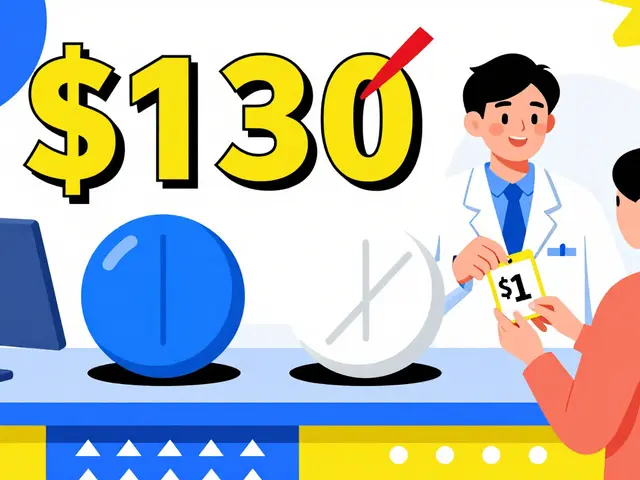
Imagine you’ve been prescribed a life-saving cancer drug. It works, but the price tag is astronomical. Now imagine a version of that same drug-made by a different company-that costs significantly less and does the exact same job. This isn’t science fiction; it’s the reality of monoclonal antibody biosimilars, which are highly similar biological medicines to an already approved reference monoclonal antibody product, with no clinically meaningful differences in safety, purity, and potency. But here’s the catch: they aren’t generic drugs. They can’t be. And understanding why matters if you’re navigating modern healthcare.
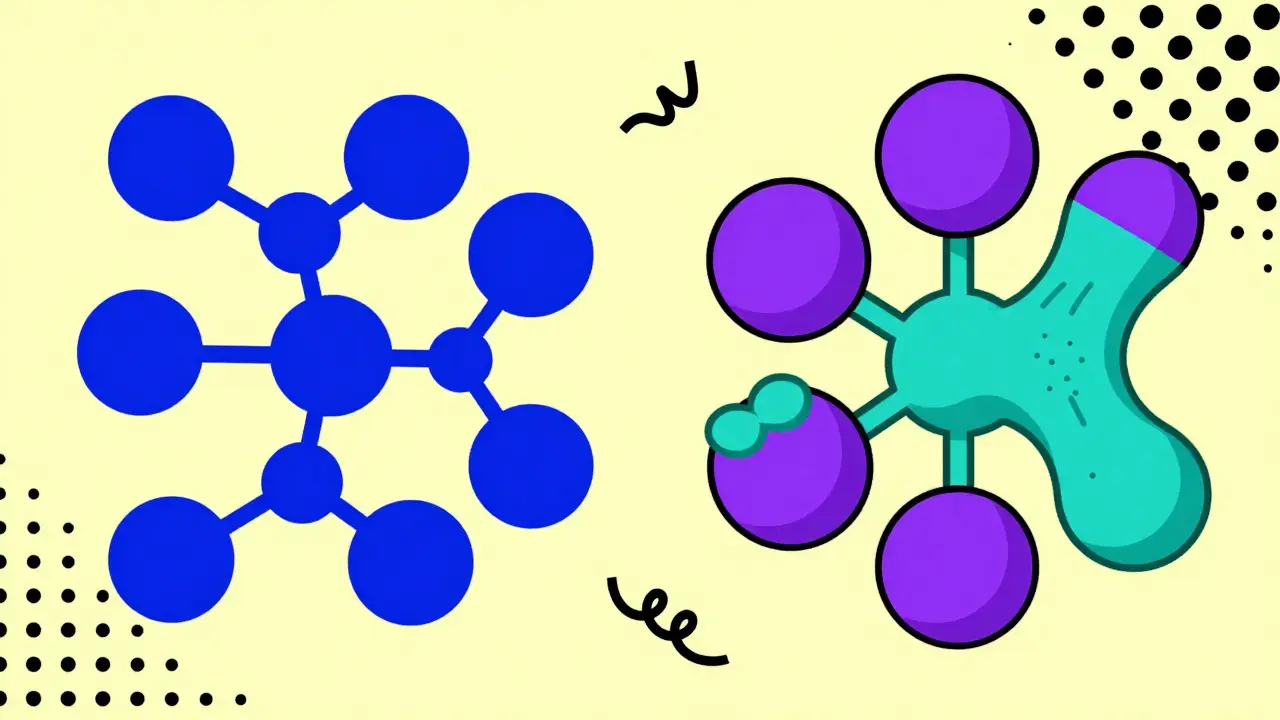
The confusion between generics and biosimilars is common. Generic small-molecule drugs are chemically identical copies of their brand-name counterparts. Think of ibuprofen or aspirin. The molecule is simple, easy to replicate, and every pill is exactly like the last. Monoclonal antibodies, however, are giant proteins produced in living cells. They are complex, fragile, and impossible to copy perfectly. That’s why we have biosimilars instead of generics for these treatments.
Why Biosimilars Are Not Generics (And Why That Matters)
To understand biosimilars vs generics, you need to look at scale. A small-molecule drug like insulin weighs about 5,808 daltons. A monoclonal antibody weighs approximately 150,000 daltons. That’s a massive difference in complexity. Because biologics are made in living systems-often Chinese Hamster Ovary (CHO) cells-the manufacturing process naturally introduces tiny variations. These aren’t defects; they’re inherent to biology.
Regulatory bodies like the U.S. Food and Drug Administration (FDA) and the European Medicines Agency (EMA) recognize this. The FDA defines a biosimilar as a product highly similar to the reference product except for minor differences in clinically inactive components. The EMA adds that there must be no clinically meaningful differences in safety, efficacy, or immunogenicity. So, while a generic is a carbon copy, a biosimilar is a ‘twin’-close enough that your body reacts the same way, but not identical down to the atom.
- Generics: Chemically identical, simple molecules, lower cost, straightforward approval.
- Biosimilars: Highly similar, complex proteins, rigorous comparative testing, significant cost savings.
This distinction shapes how these drugs are developed, tested, and eventually prescribed. It also explains why the regulatory pathway for monoclonal antibody biosimilars was only formally established after years of scientific debate, with the EMA releasing its first draft guideline in 2010 following a pivotal workshop in London.
Key Examples of Approved Monoclonal Antibody Biosimilars
The market for monoclonal antibody biosimilars has exploded since the first one, an infliximab biosimilar, was approved in the EU in 2013. By 2023, the EMA had authorized over 50 biosimilars, with roughly 35% being monoclonal antibodies. In the U.S., the landscape is equally robust. Let’s look at three major classes where biosimilars are changing patient care.
| Reference Product | Primary Use | Approved Biosimilars (U.S.) | Key Benefit |
|---|---|---|---|
| Bevacizumab (Avastin) | Cancer (Colorectal, Lung, Glioblastoma) | Mvasi, Zirabev, Alymsys, Vegzelma, Avzivi, Jobevne | Reduces tumor blood vessel growth |
| Rituximab (Rituxan) | Lymphoma, Leukemia, Autoimmune | Truxima, Ruxience, Riabni | Targets CD20 on B-cells |
| Trastuzumab (Herceptin) | HER2+ Breast & Gastric Cancer | Ogivri, Herzuma, Ontruzant, Trazimera, Kanjinti, Hercessi | Inhibits HER2 receptor signaling |
Take bevacizumab, for instance. Originally sold as Avastin, it’s used to treat several aggressive cancers. As of late 2023, six biosimilars were available in the U.S., including Mvasi (approved 2017) and Jobevne (approved 2023). Each underwent extensive analytical and clinical testing to prove similarity to the original. Similarly, rituximab biosimilars like Truxima have shown real-world value. A 2022 JAMA Oncology study found that switching patients to Truxima cut costs by 28% per cycle without compromising safety or effectiveness across 1,247 patients.
Clinical Uses and Real-World Impact
Why do clinicians switch to biosimilars? Cost is the obvious driver, but efficacy and safety are non-negotiable. The data supports confidence. For example, trastuzumab biosimilars are now standard options for HER2-positive breast cancer. Six versions are approved in the U.S., ranging from Ogivri (2017) to Hercessi (2022). Patients receive the same targeted therapy that blocks cancer cell growth, just from a different manufacturer.
Beyond oncology, biosimilars play a role in autoimmune diseases and blood disorders. Filgrastim biosimilars (like Fulphila and Nyvepria) prevent neutropenia in chemotherapy patients. Epoetin alfa biosimilars (Retacrit) manage anemia. These aren’t niche products; they’re mainstream therapies saving billions.
Market analysts at Evaluate Pharma project that biosimilar monoclonal antibodies will capture 45-65% of originator market share within three years of launch. Between 2023 and 2028, this could generate $250 billion in U.S. healthcare savings. Bevacizumab, trastuzumab, and rituximab biosimilars alone account for 78% of those projected savings. That’s not just good economics; it’s better access for patients who previously couldn’t afford treatment.

Safety, Immunogenicity, and Regulatory Oversight
A common concern is whether biosimilars trigger immune reactions more often than originals. The answer, based on current evidence, is no. The EMA’s 2021 safety report tracked 1.2 million patient-years of exposure to monoclonal antibody biosimilars and found only 12 cases of unexpected immune responses-a rate of 0.001%, statistically equivalent to reference products.
Immunogenicity remains a technical challenge during development. Minor structural differences, such as glycosylation patterns, can theoretically affect how the body responds. For instance, early issues with cetuximab anaphylaxis were linked to pre-existing IgEs targeting specific sugar epitopes. Modern manufacturing and analytical techniques, including advanced mass spectrometry and glycan analysis, minimize these risks. The FDA’s 2023 draft guidance recommends 127 specific tests to characterize biosimilarity, ensuring rigorous quality control.
Interchangeability is another key concept. An interchangeable biosimilar means pharmacists can substitute it for the reference product without doctor intervention. Celltrion’s Remsima (infliximab) became the first monoclonal antibody biosimilar designated as interchangeable by the FDA in July 2023. This designation requires additional proof that switching back and forth poses no extra risk.
Barriers to Adoption and Future Outlook
Despite strong data, adoption isn’t seamless. Patent litigation slows entry-an average of 14.7 patent challenges per monoclonal antibody biosimilar, according to a 2023 UC Hastings study. Provider education gaps persist too; a 2022 ASCO survey revealed only 58% of oncologists felt ‘very confident’ prescribing biosimilars. Pharmacy benefit managers sometimes restrict formulary access, affecting 32% of launches.
Yet the pipeline is growing. As of September 2023, 37 candidates were under FDA review, including 14 adalimumab (Humira) biosimilars (with Hyrimoz approved in late 2023) and six pembrolizumab (Keytruda) candidates. IQVIA projects monoclonal antibody biosimilars will make up 35% of all biologic prescriptions in the U.S. by 2027, up from 18% in 2022. Cancer therapies will drive 62% of this volume.
The EMA plans updated guidelines for complex biosimilars like bispecific antibodies and antibody-drug conjugates by Q2 2024. Analytical tech continues to improve, making similarity assessments more precise. The future looks bright-for patients, providers, and payers alike.
Are monoclonal antibody biosimilars as safe as the original drugs?
Yes. Regulatory agencies require extensive testing to prove no clinically meaningful differences in safety, efficacy, or immunogenicity. Real-world data, such as the EMA’s 2021 report showing a 0.001% unexpected immune response rate, confirms biosimilars are as safe as reference products.
What is the difference between a generic and a biosimilar?
Generics are chemically identical copies of small-molecule drugs. Biosimilars are highly similar versions of complex biological products like monoclonal antibodies. Due to the complexity of biologics, perfect replication is impossible, so biosimilars undergo rigorous comparative testing to ensure equivalence.
Can my pharmacist automatically switch me to a biosimilar?
Only if the biosimilar is designated as 'interchangeable' by the FDA. Currently, Remsima (infliximab) is the first monoclonal antibody biosimilar with this status. Otherwise, your doctor must prescribe the specific biosimilar or reference product.
Which cancers are treated with monoclonal antibody biosimilars?
Biosimilars treat several cancers, including colorectal, lung, glioblastoma (via bevacizumab biosimilars), non-Hodgkin’s lymphoma and leukemia (via rituximab biosimilars), and HER2-positive breast and gastric cancers (via trastuzumab biosimilars).
How much money can biosimilars save the healthcare system?
Evaluate Pharma projects cumulative savings of $250 billion in the U.S. between 2023 and 2028. Individual studies show reductions like 28% per treatment cycle when switching to rituximab biosimilars, making high-cost therapies more accessible.