OTC Drug Interaction Checker
Check Your Medications
Enter your current medications to see if they interact dangerously with common OTC drugs.
Results
When a medication moves from prescription-only to over-the-counter (OTC), it sounds like good news: easier access, lower cost, and more control over your health. But behind that convenience lies a hidden risk many consumers don’t see coming. OTC drugs aren’t harmless - they’re still powerful chemicals that can cause serious harm if used incorrectly. Every time a drug makes the switch from prescription to OTC, millions of people suddenly start using it without ever talking to a doctor. And that’s where problems begin.
What Happens When a Drug Goes OTC?
A prescription drug becomes OTC only after years of safety reviews by regulators like the U.S. Food and Drug Administration (FDA). The goal isn’t just to make drugs cheaper - it’s to give people access to treatments they can safely manage on their own. For example, ibuprofen was once prescription-only. After studies showed it was safe for short-term use in healthy adults, it switched to OTC in 1984. The price dropped from $30-$40 a month to $5-$10. That’s a win for consumers.
But here’s the catch: when a drug goes OTC, it doesn’t just become more available - it becomes more widely used. People who never would’ve taken it with a doctor’s oversight now grab it off the shelf. Someone with undiagnosed high blood pressure buys pseudoephedrine for a stuffy nose. A person on blood thinners starts taking aspirin for headaches. These aren’t rare mistakes. They’re common.
The Hidden Dangers of Self-Medication
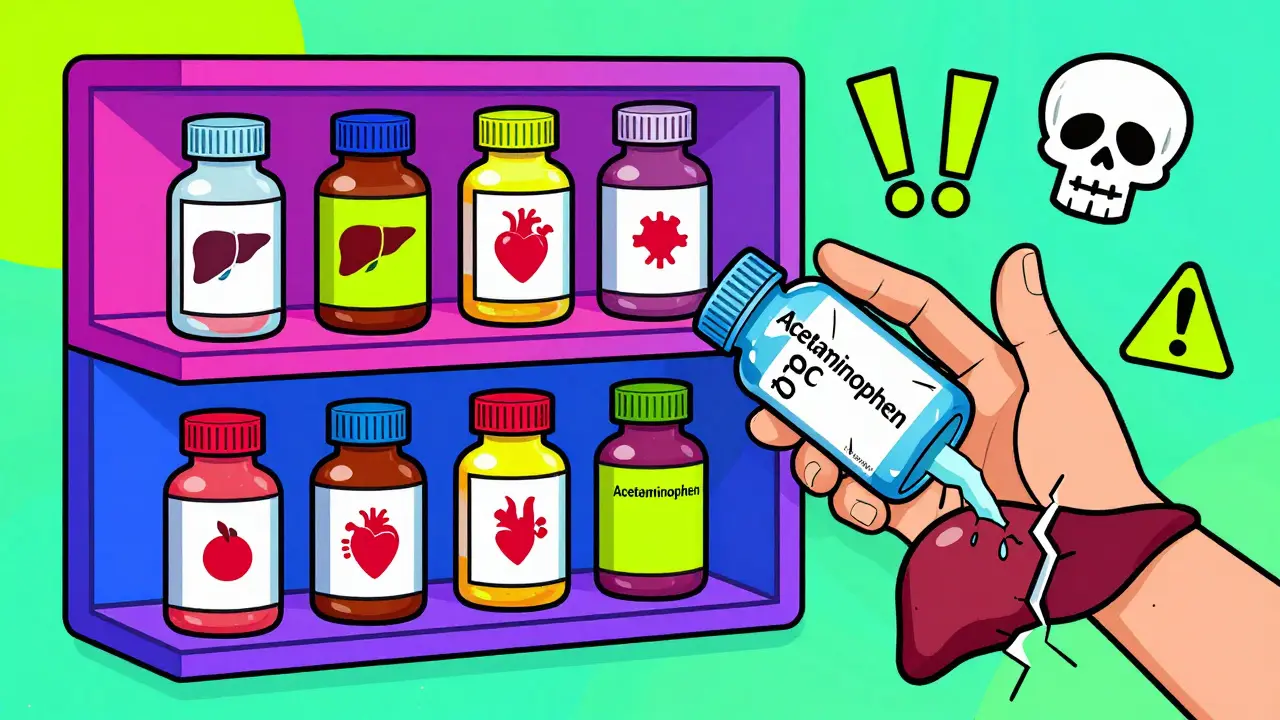
OTC drugs are designed for short-term, mild symptoms. But many people use them for weeks or months without realizing the risks. Take acetaminophen (Tylenol). It’s in more than 600 OTC products - cold medicines, sleep aids, pain relievers. People don’t realize they’re doubling up. A Reddit user named PharmTech2020 described seeing patients take double doses because they didn’t know both their painkiller and cold tablet contained acetaminophen. Liver damage from too much acetaminophen is one of the top reasons people end up in emergency rooms.
NSAIDs like ibuprofen and naproxen are another silent threat. They’re great for a headache or sore muscle. But long-term use? That’s where things get dangerous. Studies show prolonged NSAID use can cause stomach ulcers, kidney failure, and even heart attacks - especially in older adults or those with existing conditions. And without a doctor monitoring them, people have no idea they’re at risk.
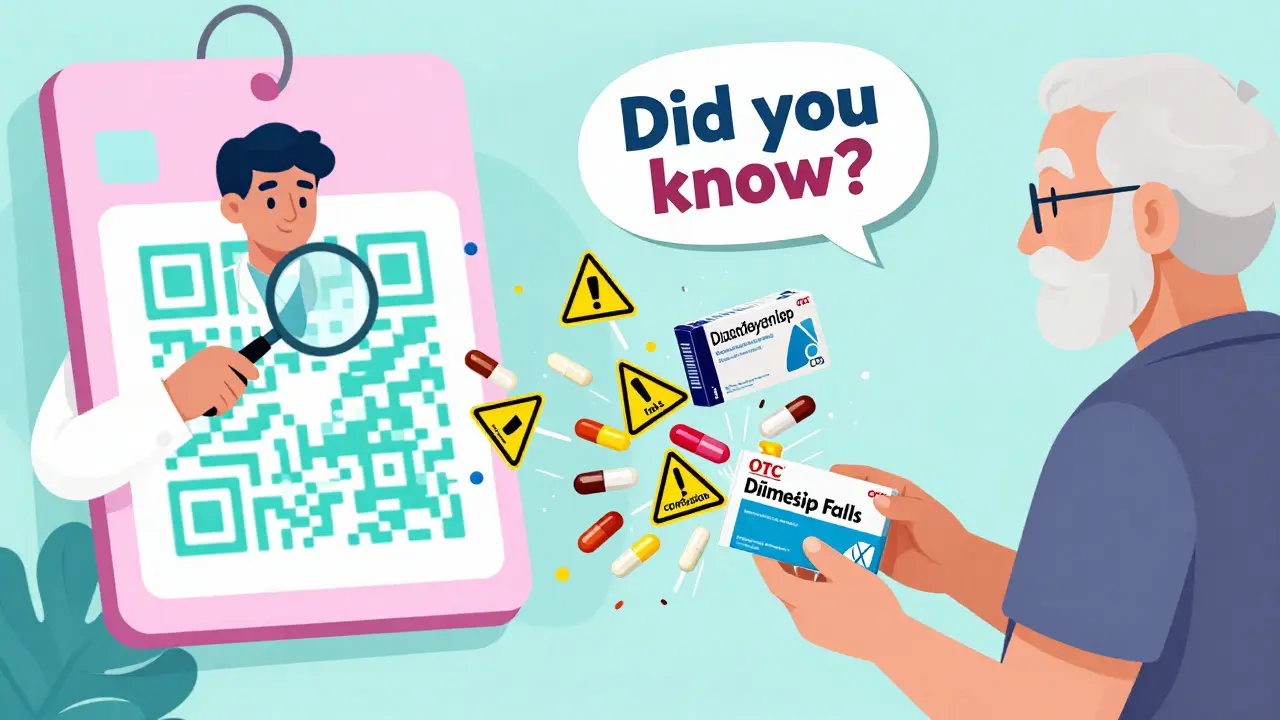
Even something as simple as an antihistamine like diphenhydramine (Benadryl) can be risky. The American Geriatrics Society lists it as one of 30 OTC drugs that should be avoided by adults over 65. Why? It can cause confusion, dizziness, and falls. Older people often take it for sleep - not realizing it’s not a sleep aid, it’s an allergy medicine with serious side effects in aging bodies.
Drug Interactions You Never Saw Coming
One of the biggest dangers of OTC drugs is how they interact with other medications. A 2023 study from Bangalore found that 77% of patients had no idea about drug contraindications. That means they didn’t know, for example, that taking a decongestant like pseudoephedrine while on an MAOI antidepressant could cause a sudden, dangerous spike in blood pressure. Or that mixing sleep aids with prescription sedatives could slow breathing to dangerous levels.
The FDA warns that even mild interactions can cause real harm. Alcohol with antihistamines? Drowsiness turns into dangerous dizziness. Aspirin with blood thinners? Risk of internal bleeding skyrockets. And here’s the kicker: most people don’t tell their doctor what OTC drugs they’re taking. They think it’s not “real medicine.” Dr. David Kaelber from Case Western Reserve University says, “The biggest risk with OTC medications is that people don’t realize they’re taking a medication.”
Who’s Most at Risk?
Not everyone is equally vulnerable. The biggest danger zones are:
- Older adults - Their bodies process drugs slower. They often take 5+ medications. The Beers Criteria lists 30 OTC drugs that are risky for people over 65.
- People with chronic conditions - Diabetes, heart disease, kidney problems, liver disease - these all change how your body handles OTC drugs. NSAIDs can wreck kidneys in people with diabetes. Decongestants can spike blood pressure in those with hypertension.
- Those taking multiple drugs - If you’re on three or more prescriptions, the chance of a bad interaction jumps dramatically. A 2022 survey found only 32% of OTC users consistently read labels. That’s a recipe for disaster.
- Children - Dosing errors are common. A child’s weight matters more than age. Many parents give adult doses because “it’s just a pill.”
How to Use OTC Drugs Safely
Just because a drug is OTC doesn’t mean it’s risk-free. Follow these steps before taking anything:
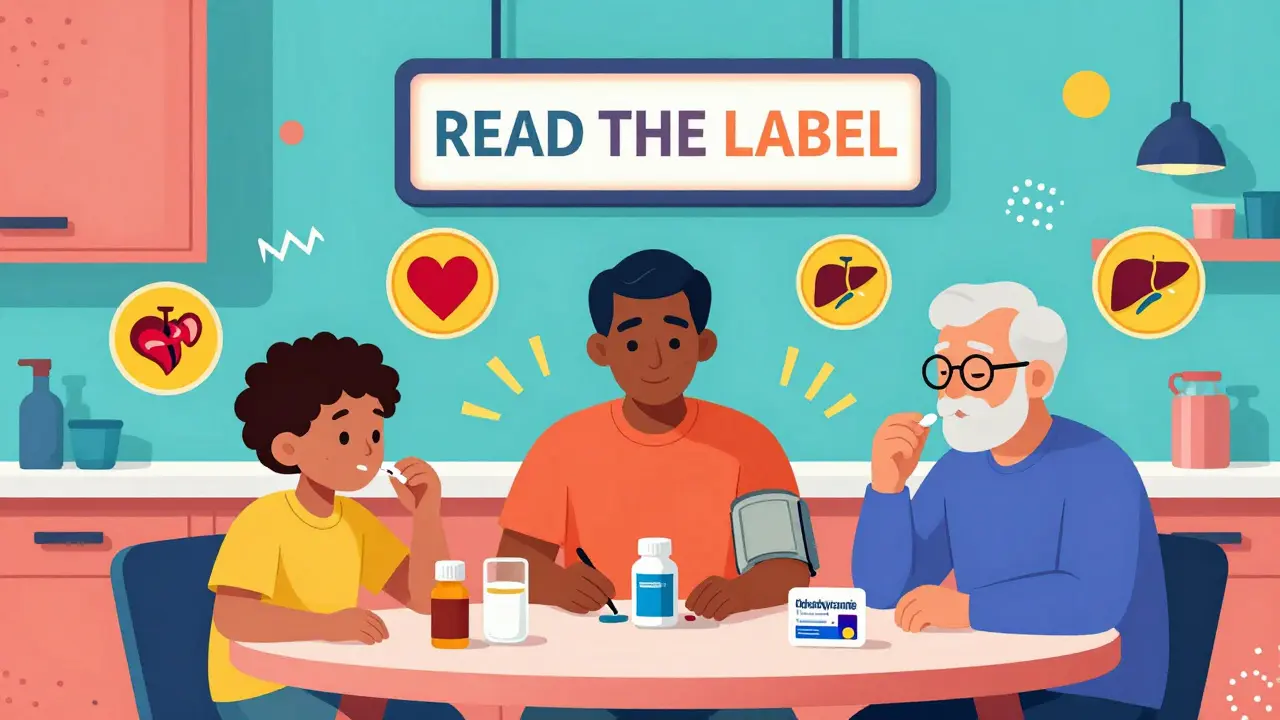
- Read the Drug Facts label - Not the fancy packaging. Look for the small print on the back. It lists active ingredients, warnings, and directions. If you don’t understand it, don’t take it.
- Check for duplicate ingredients - If you’re taking two products, make sure they don’t have the same active ingredient. Acetaminophen, ibuprofen, and antihistamines are the most common culprits.
- Ask a pharmacist - Pharmacists aren’t just there to hand you the box. They’re trained to spot interactions. Tell them what prescriptions you’re on, what supplements you take, and what symptoms you’re treating. Many pharmacies now offer free medication reviews.
- Know your limits - If a symptom lasts more than a few days, get checked out. OTC drugs are for temporary relief, not long-term fixes. Persistent pain, fatigue, or congestion could be signs of something serious.
What’s Changing in 2026?
The FDA is trying to make OTC labels easier to understand. New labels now use larger fonts, clearer headings, and simpler language. Some companies are adding QR codes that link to safety videos or interactive interaction checkers. Walmart started testing this in 2023 - scanning a code on a pain reliever can show you if it’s safe to take with your blood pressure med.
But technology won’t fix everything. The real problem is awareness. A 2023 study found that 85% of patients in India trusted pharmacists - but only 13% knew about adverse drug effects. That’s not trust - that’s ignorance. And it’s dangerous.
Final Thought: OTC Doesn’t Mean Risk-Free
OTC switches save money and improve access. But they also shift responsibility - from doctors to you. You’re now the gatekeeper of your own health. That’s empowering - but only if you know what you’re doing.
Every pill you take, whether prescription or OTC, has a job to do. And if you don’t understand how it works - or what it might do to your body - you’re playing with fire. The safest OTC drug is the one you never take without thinking. Ask questions. Read labels. Talk to your pharmacist. And if something doesn’t feel right? See a doctor. No OTC pill is worth ignoring a real problem.
Can OTC drugs really cause serious harm?
Yes. While OTC drugs are generally safe when used as directed, misuse - like taking too much, combining them with other drugs, or using them long-term - can lead to liver damage, kidney failure, internal bleeding, heart attacks, and even death. Acetaminophen overdose is the leading cause of acute liver failure in the U.S. NSAIDs can cause stomach ulcers and kidney damage in people with underlying conditions. The risks are real, even if the drugs are sold on store shelves.
Why do some drugs switch from prescription to OTC?
Regulators approve OTC switches only after years of data proving the drug is safe for self-use. The condition must be easy to self-diagnose (like heartburn or minor pain), the drug must have a wide safety margin, and users must be able to follow label instructions correctly. The goal is to reduce healthcare costs and improve access - but safety always comes first. For example, famotidine (Pepcid) switched to OTC after studies showed it was safe for occasional heartburn without medical supervision.
Are OTC drugs safer than prescription drugs?
Not necessarily. Prescription drugs are monitored by doctors, who check for interactions, adjust doses, and watch for side effects. OTC drugs remove that safety net. A drug that’s safe under supervision can become dangerous without it. The difference isn’t in the drug - it’s in the oversight. A prescription drug isn’t “stronger” - it’s just used with more caution.
What should I do if I’m taking multiple medications?
If you take three or more medications - prescription or OTC - you’re at high risk for harmful interactions. Always consult a pharmacist before adding any new OTC product. Bring a list of everything you take, including supplements and herbal remedies. Many pharmacies offer free medication reviews. Don’t assume OTC means safe - especially if you have conditions like high blood pressure, diabetes, or kidney disease.
How can I tell if an OTC drug is right for me?
Start by reading the Drug Facts label. Look for the “Warnings” section - it will tell you if you should avoid the drug based on your health conditions. Check if the active ingredient is already in another medicine you’re taking. If you’re unsure, ask a pharmacist. And if your symptoms don’t improve in 3-5 days, see a doctor. OTC drugs are for short-term relief - not long-term management.

February 9, 2026 AT 06:58 AM
Been a pharmacist in Bangalore for 12 years. Saw a guy take 6 different OTC meds for a cold - all with acetaminophen. Ended up in ER with liver failure. No one reads the label. Not even close. People think ‘OTC’ means ‘harmless’ - it’s the opposite.
February 10, 2026 AT 03:14 AM
Let me tell you something - this whole OTC switch thing is a corporate scam dressed up as consumer empowerment. Companies don’t care if you die from a liver overdose - they care about margins. Ibuprofen went OTC? Great. Now people are popping 800mg every 4 hours like candy. No oversight. No accountability. Just profit. And when you end up in the ER? The hospital bills you $20,000 and the company? They’re already on to the next drug. This isn’t progress - it’s exploitation.
February 11, 2026 AT 15:49 PM
Ugh I hate when people say ‘it’s just Tylenol’ like it’s water. I had my aunt take 3 different cold meds for a week - all had acetaminophen. She didn’t even know. Liver enzymes went through the roof. Like… do you not read the tiny print? It’s right there. It’s not hard. Stop being lazy.
February 13, 2026 AT 05:50 AM
So I was curious - how many OTC drugs have been switched in the last 10 years? I looked it up. 17 major ones. And guess what? ER visits for OTC overdoses went up 47%. That’s not coincidence. It’s systemic. People think they’re being smart - but they’re just untrained. We need mandatory labeling videos. QR codes aren’t enough. We need education baked into the product.
February 13, 2026 AT 12:46 PM
My grandpa took Benadryl every night to sleep. Thought it was ‘just a sleepy pill.’ Turned out it was making him fall, hallucinate, and forget his own name. He didn’t even know it was on the Beers list. I had to take his keys away. The system failed him. OTC doesn’t mean ‘safe for everyone.’ It means ‘safe enough for healthy adults under ideal conditions.’ Most people aren’t ideal. And they don’t know that.
February 15, 2026 AT 08:58 AM
YOU THINK THIS IS A PROBLEM? IT’S A MASS MURDER. PEOPLE ARE KILLING THEMSELVES WITH PILL BOTTLES THEY BUY AT WALMART. THEY DON’T READ THE LABELS. THEY DON’T ASK PHARMACISTS. THEY JUST GRAB IT. AND THEN THEY BLAME THE DOCTOR WHEN THEY’RE IN THE HOSPITAL. STOP BEING SOFT. MAKE THE LABELS BIGGER. MAKE THEM SCREAM. PUT A WARNING ON THE FRONT THAT SAYS ‘YOU COULD DIE FROM THIS.’
February 16, 2026 AT 03:52 AM
OMG I just took a new painkiller and didn’t even check if it had NSAIDs! 😱 I’m lucky I didn’t kill myself lol. But seriously - I’m gonna start asking my pharmacist EVERY TIME now. They’re like superheroes in white coats. 🙌 Also - anyone else use the Medscape app to check interactions? Life saver!!
February 17, 2026 AT 01:52 AM
I work in a rural pharmacy in Tasmania. We see this every day. Elderly patients come in with 10 different bottles. One has 5 different cold meds. All with pseudoephedrine. I had to sit down with Mrs. Henderson for 45 minutes last week. She didn’t know that ‘NyQuil’ and ‘DayQuil’ had the same stuff. She thought they were ‘day’ and ‘night’ versions - not duplicates. We need better packaging. Simpler language. Maybe even color-coded warnings. It’s not rocket science - it’s basic human design.
February 17, 2026 AT 07:50 AM
Here’s the real issue: we’ve outsourced responsibility. We used to go to the doctor. Now we go to Target. And the label? It’s written by lawyers, not doctors. It’s full of jargon. ‘Avoid if you have hepatic impairment.’ What does that even mean? Most people think ‘liver’ means ‘alcohol.’ They don’t know their liver is already damaged from 10 years of Tylenol. We need plain-language labeling. And mandatory counseling - like vaccines. This isn’t optional anymore.
February 18, 2026 AT 06:50 AM
India is full of people who take OTC drugs like candy. My neighbor took 10 aspirin for a headache. Said ‘it’s just painkiller.’ He had a GI bleed. Now he’s on dialysis. Who’s to blame? The manufacturer? No. The person who didn’t think. The system? Maybe. But the real failure? The culture of ‘I know better.’ You don’t. You’re not a doctor. Stop being arrogant.
February 19, 2026 AT 09:24 AM
Oh wow, another ‘educational’ post about OTC drugs. Let me guess - the author works for a pharmaceutical company that wants to sell more prescriptions? ‘Talk to your pharmacist.’ Right. And I’m supposed to trust the guy who’s paid to move product? Please. The real solution? Stop letting corporations decide what’s ‘safe.’ Regulators are bought. Labels are propaganda. I don’t trust any of it.
February 19, 2026 AT 17:35 PM
OTC drugs are just Big Pharma’s way of turning you into a drug addict without a prescription. You think you’re saving money? Nah. You’re just getting hooked on ibuprofen. Then you need more. Then you need something stronger. It’s a pyramid scheme with Advil.
February 20, 2026 AT 19:03 PM
Consider the deeper epistemological crisis: if a drug can be safely self-administered, why was it ever prescription? If it was unsafe, why is it now legal? The entire regulatory framework is built on a false binary. The truth? All drugs are inherently risky. The distinction between OTC and Rx is a social construct designed to maintain institutional power. The FDA doesn’t care about safety - it cares about market control. You’re not being empowered. You’re being managed.
February 22, 2026 AT 13:03 PM
As a clinical pharmacologist, I can confirm: the most dangerous OTC agents are those with narrow therapeutic indices - acetaminophen, NSAIDs, antihistamines. Polypharmacy risk increases exponentially with age. The Beers Criteria exists for a reason. But the real gap? Patient literacy. We don’t teach pharmacokinetics in high school. We should. This isn’t just about labels - it’s about systemic education failure.
February 24, 2026 AT 09:35 AM
I’m a nurse. I’ve seen this too many times. A patient comes in with GI bleeding. Turns out they’ve been taking naproxen daily for ‘arthritis’ - no doctor, no checkups. Said they ‘didn’t think it was that serious.’ OTC doesn’t mean ‘no risk.’ It means ‘you’re on your own.’ We need a national campaign. Like ‘Don’t Text and Drive.’ Maybe: ‘Don’t Mix and Die.’
February 25, 2026 AT 12:42 PM
My dad’s from Nigeria. He took aspirin every day because ‘it’s good for the heart.’ Didn’t know he was on warfarin. One day he blacked out. Turned out he had a brain bleed. We thought it was a stroke. Turns out, aspirin + warfarin = disaster. He’s fine now. But I’ll never let him touch OTC meds again. Cultural differences matter. Not everyone sees ‘OTC’ the same way.
February 26, 2026 AT 15:03 PM
OTC = Over-Trusted, Under-Understood. 🤡 I’ve seen people take 3 different cough syrups because ‘they didn’t work.’ They all had dextromethorphan. One guy OD’d on DXM and thought he was having a spiritual awakening. LOL. The system’s broken. We need QR codes + AI chatbots that scream ‘STOP’ when you scan. Or better yet - make OTC meds require a 5-minute video quiz before purchase. #PharmacistBot
February 27, 2026 AT 01:49 AM
My mom took Benadryl for sleep for 20 years. She didn’t know it was bad. Now she’s confused all the time. I hate that we let this happen.
February 27, 2026 AT 02:05 AM
I’m a pharmacy tech. I see 30 people a day who don’t know what’s in their meds. I’ve started asking: ‘What are you treating?’ and ‘What else are you taking?’ Half the time they say ‘I don’t know.’ So I pull up the bottle. We go line by line. It takes 2 minutes. But it saves lives. Pharmacists aren’t just order-fillers. We’re the last line of defense. Let’s treat us like it.
February 28, 2026 AT 09:39 AM
Love this post. My brother’s a diabetic. He started taking OTC painkillers for back pain. Didn’t tell his doctor. His kidneys started failing. We caught it in time. But he didn’t know OTC drugs could hurt kidneys. This isn’t just about labels - it’s about trust. We need to rebuild the bridge between patient and provider. Not just sell more pills.