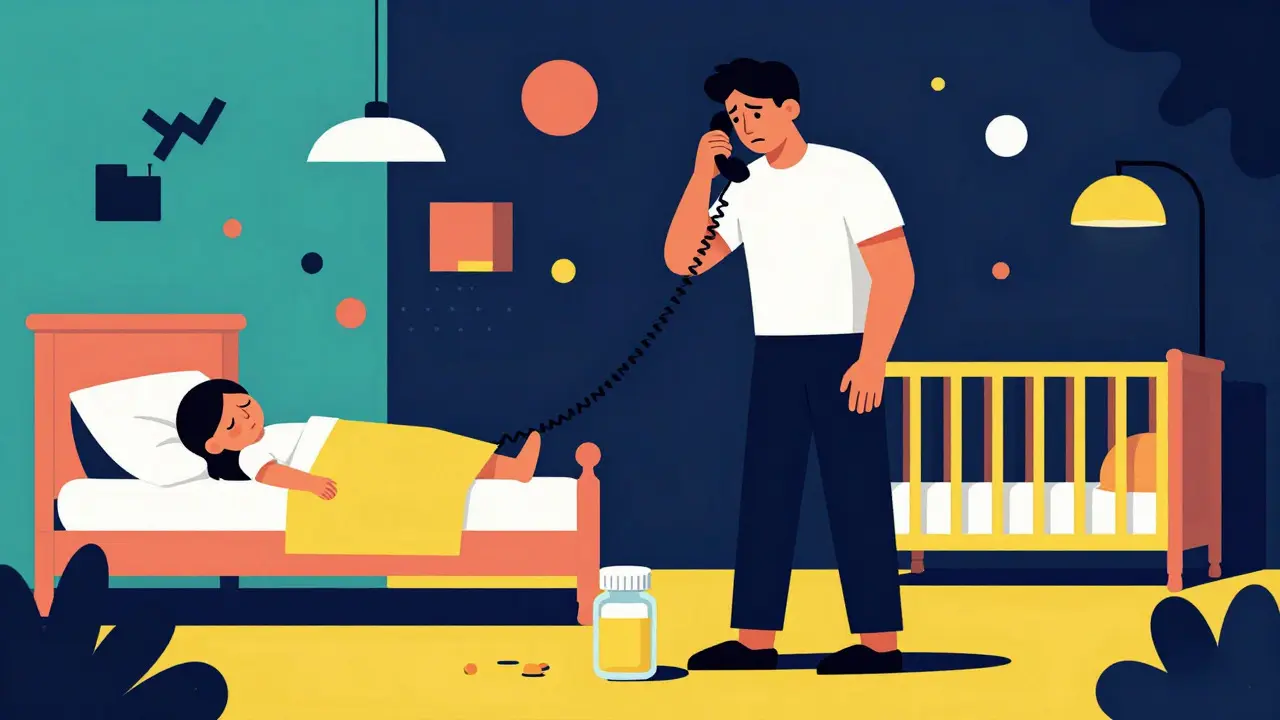
Imagine this: it’s 2 AM, your toddler is asleep, and you find an empty bottle of ibuprofen next to them. Your heart pounds. Do you rush to the ER? Do you wait for morning? Or do you pick up the phone? If you’re in the U.S., that phone number is Poison Control, and it might just save you a night in a crowded emergency room.
The Poison Control Hotline isn’t just a random phone line; it’s a specialized public health infrastructure designed to handle exactly these moments. Since 2001, when the national toll-free number 1-800-222-1222 was established by the American Association of Poison Control Centers (now America's Poison Centers), this service has become the first point of contact for millions of Americans facing potential poisoning. It’s free, confidential, and staffed by experts who know more about drugs than most general practitioners. But knowing *what* to say when you call can make or break the outcome. Here’s how the system works and exactly what information you need to have ready regarding medications.
How the Poison Control System Actually Works
When you dial 1-800-222-1222, you aren’t calling a generic switchboard. You are routed automatically to one of 53 accredited poison control centers across the United States based on your area code. This ensures you get advice tailored to local hospital capabilities and regional drug availability. The service operates 24/7/365, which is crucial because medication errors don’t keep office hours.
The people answering your call are not just nurses or pharmacists; they are Specialists in Poison Information (SPIs). About 70% hold advanced degrees in health sciences, and they undergo rigorous training in toxicology. They use a database of over 1,540 evidence-based algorithms to assess risk. These algorithms cover specific substances and exposure scenarios, allowing them to give precise, data-driven advice rather than guessing. For example, if you report an acetaminophen ingestion, the algorithm factors in the patient’s weight, the amount taken, and the time elapsed to determine liver toxicity risk with high precision.
You don’t have to call either. If you prefer typing, you can text 'poison' to 797979. There’s also the webPOISONCONTROL tool at poisonhelp.org. Launched in 2014, this online platform uses an algorithmic decision tree. You input six specific data points: substance identification, amount, age, weight, time since exposure, and zip code. In an average of 2.6 minutes, it generates recommendations that match human specialist advice with a 97.3% accuracy rate. However, the web tool has limits. It doesn’t handle intentional overdoses or cases involving more than two substances. For those complex scenarios, the phone line is still the gold standard.
What Exactly to Report About Medications
This is where most people fumble. When you call about a medication, vague answers lead to vague advice. The specialists need concrete data to run their risk assessments. Here is the checklist of information you should have ready before you even dial:
- Exact Product Name: Don’t just say "pain pills." Say "Tylenol Extra Strength" or "Ibuprofen 200mg." Brand name and generic name both help. If you have the bottle, read the label aloud.
- Strength/Dosage: Is it 500mg per tablet? 10mg per milliliter? This matters immensely for calculating total dose.
- Total Quantity Ingested: Be as precise as possible. Did they take 5 tablets? 10? A handful? Estimate if necessary, but specify it’s an estimate.
- Patient Details: Age and weight in kilograms. Weight is critical for pediatric cases. If you only know pounds, convert it or state the pounds clearly so the specialist can convert it accurately.
- Time of Exposure: When did it happen? "Around 3 PM" is okay, but "3:15 PM" is better. Time elapsed dictates whether certain antidotes are effective.
- Symptoms Observed: Nausea? Vomiting? Confusion? Drowsiness? Note the timing of symptoms too. "Vomited twice at 4:30 PM" gives the specialist a timeline to correlate with drug absorption.
- Other Substances: Did they take anything else? Alcohol? Another medication? Polypharmacy is a major risk factor. 32% of serious medication outcomes involve interactions between two or more drugs.
Documentation quality from the hotline is exceptional. After the call, you’ll often receive an emailed summary containing the exact product identification, risk assessment, and management instructions. Keep this. 78% of users report keeping these summaries for reference, and they are invaluable if you do end up going to the ER.
Why Call Instead of Going Straight to the ER?
Many people assume that any ingestion means a trip to the hospital. That’s outdated thinking. According to 2022 data, 60% of medication exposure cases are resolved without requiring a healthcare facility referral. The Poison Control Center acts as a triage service, preventing unnecessary emergency department visits while ensuring appropriate care for those who truly need it.
The economic impact is significant. A 2019 study in Clinical Toxicology found that poison control center recommendations saved the U.S. healthcare system approximately $1.8 billion annually. Dr. Robert G. Hendrickson, Medical Director of the Oregon Poison Center, puts it simply: for every dollar invested in poison control centers, society gains $7.67 in medical cost savings and productivity preservation. By calling first, you save money, reduce stress, and avoid the chaos of the ER unless it’s absolutely necessary.
| Method | Best For | Average Time to Advice | Limitations |
|---|---|---|---|
| Phone (1-800-222-1222) | All cases, especially complex/intentional | 8-12 minutes | Requires verbal communication |
| Text (797979) | Simple, single-substance accidental ingestions | Variable, usually under 15 mins | No real-time conversation |
| Web Tool (poisonhelp.org) | Uncomplicated accidental exposures | ~2.6 minutes | No intentional OD, max 2 substances |
| Emergency Room | Severe symptoms, cardiac arrest, unknown substances | Hours for full assessment | High cost, long wait times |
Special Considerations: Children, Seniors, and Complex Cases
Pediatric ingestions account for 47% of all cases. Children are curious, and their smaller body weight makes dosing errors more dangerous. However, specialists prevent emergency department visits in 83% of these situations through home management instructions. This is why accurate weight reporting is non-negotiable for kids.
On the other end of the spectrum, seniors face different risks. Polypharmacy is common, and organ function changes affect how drugs are metabolized. If an elderly person takes a mix of blood thinners, statins, and pain relievers, the interaction risk spikes. Always mention every medication in the household, including supplements.
Then there are the novel threats. The landscape of medications is changing. Opioid exposures rose 22.3% from 2018 to 2022, and sedatives saw a 19.8% increase. New synthetic compounds appear regularly. The Poison Control system updates its protocols quarterly to address these, but Dr. John R. Richards notes that the increasing complexity of novel psychoactive substances challenges traditional approaches. This is why the human element of the phone call remains vital for newer or less common drugs.
Follow-Up and What Happens Next
The call doesn’t always end the story. Depending on the drug, the specialist may schedule callback assessments. For acetaminophen, follow-ups occur at 4, 8, and 24 hours to monitor for liver toxicity. For many other drugs, the half-life determines the monitoring window. 92% of these follow-up attempts are successfully completed, which is impressive given the chaotic nature of emergency situations.
If you are referred to a hospital, the Poison Control Center will often coordinate directly with the ER doctors. This seamless handoff ensures the ER team knows exactly what has been assessed and what the current plan is. With 100% of Level I and II trauma centers maintaining formal referral protocols, this integration is robust.
Privacy is another concern for many. All centers maintain HIPAA-compliant systems. While some hospitals have struggled with sharing data back to poison centers due to strict privacy interpretations, the core consultation remains confidential. No one is notified, no credit check is done, and no ID is required. Just facts and advice.
Frequently Asked Questions
Is the Poison Control Hotline really free?
Yes. The service is funded by government appropriations, hospital subsidies, and state grants. There is no direct fee for callers. It is considered essential public health infrastructure.
Who answers the phone?
You speak with Specialists in Poison Information (SPIs), typically registered nurses, pharmacists, or physicians with specialized toxicology training. They use evidence-based algorithms to guide their advice.
Can I use the web tool for an intentional overdose?
No. The webPOISONCONTROL tool excludes intentional overdose cases. For these situations, you must call 1-800-222-1222 to ensure comprehensive psychiatric and medical evaluation.
What if I don't know the exact weight of the patient?
Provide your best estimate. For children, a rough weight is better than none. The specialist can adjust the risk assessment based on available data, but precision improves accuracy significantly.
Does the hotline work for foreign medications?
Yes. Specialists are trained to recognize brand/generic equivalencies across international borders. Have the packaging or a photo of the label if possible to confirm active ingredients and dosages.
How fast is the response time?
Average consultations for medication exposures take 8-12 minutes. The web tool provides recommendations in about 2.6 minutes. Phone lines are monitored 24/7 to ensure rapid access.