Topical Steroid Risk Calculator
Assessment Parameters
Your Risk Profile
Enter your details and click calculate to see your risk assessment.
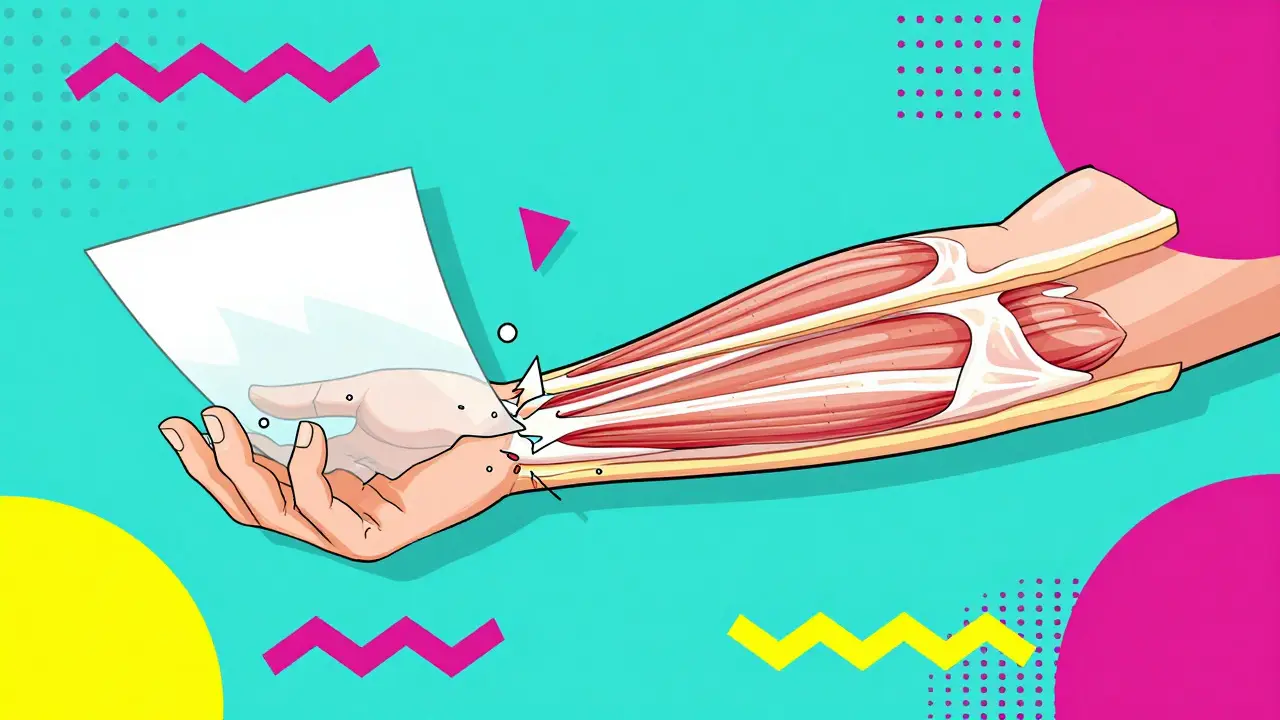
You might reach for that tube of hydrocortisone or prescription cream every time your skin gets red or itchy. It works fast. But there is a hidden cost to long-term use. Your skin can thin out, lose its elasticity, and become vulnerable to serious infections. This condition is known as skin atrophy, which is the thinning of the epidermis and dermis caused by prolonged exposure to glucocorticoids. Alongside this structural damage, your immune defense in the skin weakens, opening the door for bacteria and fungi to take hold.
It’s not just about looking older than you are. It’s about losing the physical barrier that keeps you healthy. Understanding how these medications change your skin’s biology helps you use them safely without causing permanent harm.
How Steroids Thin Your Skin
To understand why your skin thins, you have to look at what happens on a cellular level. When you apply topical corticosteroids (TCS), they do more than just stop itching. They suppress the activity of keratinocytes and fibroblasts. These are the cells responsible for building your skin’s structure.
Fibroblasts produce collagen, the protein that gives skin its strength and bounce. Research published in the Journal of the European Academy of Dermatology and Venereology shows that glucocorticoids reduce the synthesis of extracellular matrix proteins. Specifically, they decrease prolyl hydroxylase activity and degrade collagen mRNA. Without enough collagen being made, the dermis-the deeper layer of your skin-starts to shrink.
At the same time, the outer layer, the epidermis, stops renewing itself properly. The production of essential lipids like ceramides, cholesterol, and fatty acids drops significantly. A study in Frontiers in Allergy (2025) highlights that this lipid disruption breaks down the stratum corneum, the topmost protective layer. The result? Increased transepidermal water loss (TEWL). Your skin dries out, cracks, and becomes fragile. Even short-term use of potent steroids for just three days can alter this structure, though visible changes often take longer to appear.
The Risk of Skin Infections
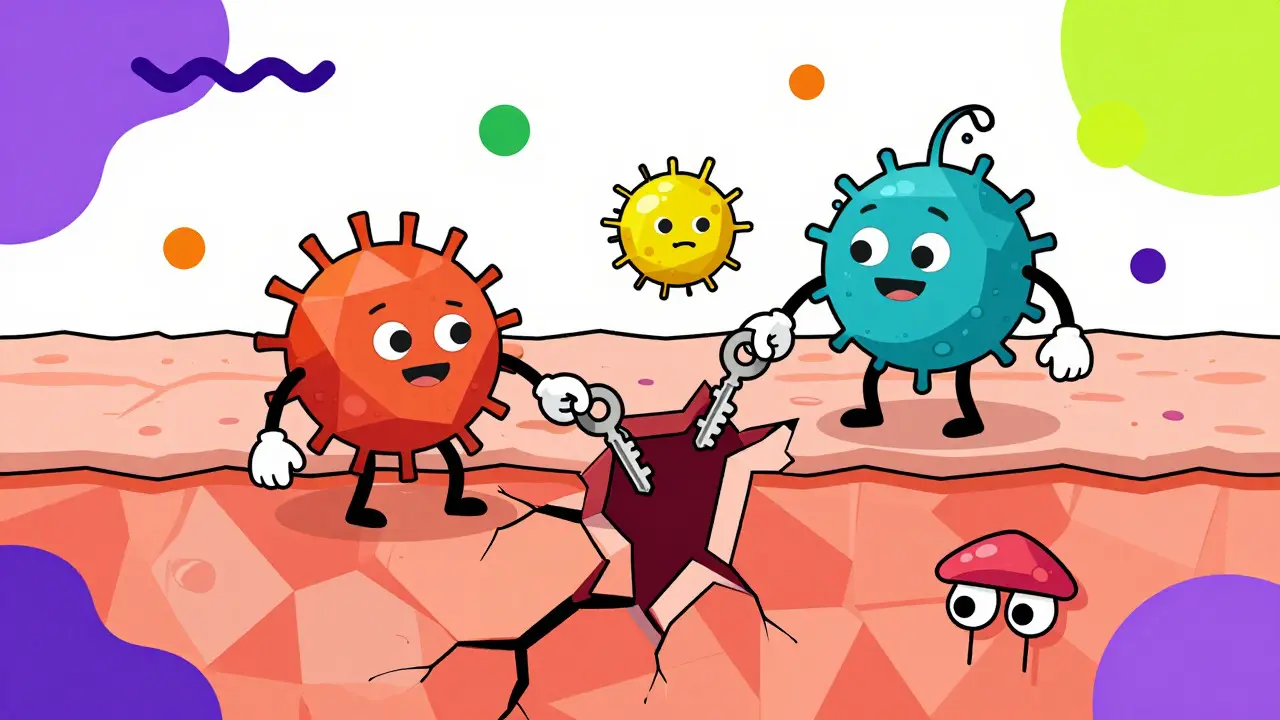
When your skin barrier is compromised, it’s not just dry; it’s defenseless. Healthy skin acts as a shield against pathogens. Thinned skin loses this ability. This creates a perfect environment for secondary infections.
Bacteria like Staphylococcus aureus thrive on damaged skin. Because the physical barrier is broken, these bacteria can penetrate deeper layers more easily. You might notice small pustules, crusting, or weeping sores that don’t heal quickly. This is often mistaken for a flare-up of eczema, leading people to apply more steroids, which only makes the infection worse.
Fungal infections are another major risk. Candida and dermatophytes can spread rapidly in areas where the skin has been thinned by steroids, especially in warm, moist folds like the armpits or groin. The immunosuppressive effect of the steroid means your body’s local immune response is muted, so you might not feel the usual burning or pain associated with an active infection until it’s advanced.
Signs You Should Watch For
Catching atrophy early can prevent permanent damage. Here are the specific signs that indicate your skin is suffering from steroid side effects:
- Translucency: Your skin looks see-through. You can clearly see veins or blood vessels underneath. This is called telangiectasia.
- Striae: Also known as stretch marks. These appear as purple or silver lines on the abdomen, thighs, or breasts. Unlike normal stretch marks, these are caused by the rupture of collagen fibers due to steroid use and are often permanent.
- Purpura: Small purple spots that appear after minor bumps or scratches. This happens because the blood vessels become fragile and break easily.
- Elephant Wrinkles: Deep, coarse wrinkles that look aged beyond your years. This is a hallmark of severe atrophy, particularly on the face.
- Burning Sensation: A continuous burning feeling that seems disproportionate to how much redness you see. Patients often describe this as "burning face syndrome.""
If you notice any of these, especially striae or purpura, you need to reassess your treatment plan immediately.
Who Is Most at Risk?
Not everyone reacts the same way to topical steroids. Several factors increase your likelihood of developing atrophy and infections:
| Risk Factor | Why It Increases Risk |
|---|---|
| Skin Thickness | Thin skin areas like the face, eyelids, and groin absorb more medication and have less structural reserve. |
| Age | Children and the elderly have more permeable skin barriers, making them 3-5 times more susceptible. |
| Potency Class | Class I-IV (super-high/high potency) steroids carry a much higher risk than Class V-VII (low/moderate). |
| Duration of Use | Using potent steroids for more than 2-4 weeks significantly increases the chance of irreversible damage. |
| Occlusion | Covering treated skin with bandages or plastic wrap increases absorption and toxicity. |
A meta-analysis of 15 clinical trials involving over 8,000 patients found that atrophy occurs in approximately 17% of long-term users. Striae affect 7.2%, while rosacea and perioral dermatitis affect nearly 10% combined. If you are using a high-potency steroid on your face for more than a few days, you are playing a dangerous game.

Managing Withdrawal and Recovery
Stopping steroids abruptly can trigger Topical Steroid Withdrawal (TSW). This is a rebound effect where symptoms return worse than before. Patients report intense erythema (redness), swelling, and desquamation (peeling). The withdrawal phase typically follows a pattern: mild erythema appears one week after cessation, lasts two weeks, and ends with peeling. A second flare often follows within two weeks.
Community data from Reddit forums analyzing nearly 900 patient testimonials suggests the average recovery time is 8.2 months, with significant variation. To manage this, dermatologists recommend a gradual taper rather than cold turkey. Reduce the frequency of application slowly over several weeks.
During recovery, focus on repairing the skin barrier. Look for moisturizers containing ceramides, cholesterol, and free fatty acids in a 3:1:1 molar ratio. A 2020 randomized controlled trial showed this specific formulation improved skin barrier function by 68.4% after eight weeks. Avoid harsh soaps and hot water. Sun protection is critical; UV radiation accelerates collagen degradation. Using SPF 50+ broad-spectrum sunscreen can reduce further collagen loss by 42% in atrophic regions.
Safer Alternatives and Future Treatments
Because of these risks, the medical community is shifting toward "steroid-sparing" agents. Calcineurin inhibitors like tacrolimus and pimecrolimus are non-steroidal options that reduce inflammation without thinning the skin. They are particularly useful for sensitive areas like the face and eyelids.
New research is exploring "dual-soft" glucocorticoid receptor agonists. These molecules aim to maintain anti-inflammatory benefits while minimizing the inhibition of collagen synthesis. Additionally, Phase II trials are testing formulations that combine low-dose corticosteroids with fibroblast growth factor to counteract collagen degradation. Early results show a 63% reduction in atrophy incidence compared to standard treatments.
Until these new drugs become widely available, the best strategy is prevention. Use the lowest effective potency for the shortest possible duration. Limit potent steroids to two weeks on sensitive areas. And always monitor your skin for early signs of thinning.
Is skin atrophy from topical steroids reversible?
Mild epidermal atrophy can often reverse if caught early and the steroid is discontinued. However, dermal atrophy, especially when striae (stretch marks) have formed, is usually permanent. The key is stopping use before deep structural damage occurs.
How long does it take for skin to recover after stopping steroids?
Recovery varies widely. Mild cases may improve in weeks, but severe cases involving Topical Steroid Withdrawal (TSW) can take 8 to 12 months or longer. The duration of withdrawal often correlates with how long and how potently the steroids were used.
Can topical steroids cause systemic infections?
While rare, extensive use of potent steroids over large areas can lead to systemic absorption, potentially suppressing the overall immune system. More commonly, they cause localized skin infections like bacterial impetigo or fungal yeast infections due to barrier breakdown.
What is the safest steroid for the face?
Low-potency steroids like hydrocortisone 1% are generally considered safer for facial use, but even these should be limited to short bursts (under 7 days). Many dermatologists prefer non-steroidal alternatives like calcineurin inhibitors for chronic facial conditions to avoid atrophy entirely.
How can I tell if my rash is an infection or a steroid side effect?
Infections often present with pus, honey-colored crusting, or rapid spreading warmth. Steroid side effects like atrophy present with thinning, transparency, and easy bruising. If you are unsure, see a dermatologist for a culture test to rule out bacteria or fungus before applying more medication.