Ever picked up your prescription and thought, "This doesn’t look right"? You’re not alone. Many people are confused when their authorized generic pill is a different color, shape, or has a weird imprint-even though they were told it’s the same medicine. It’s not a mistake. It’s the law.
What Exactly Is an Authorized Generic?
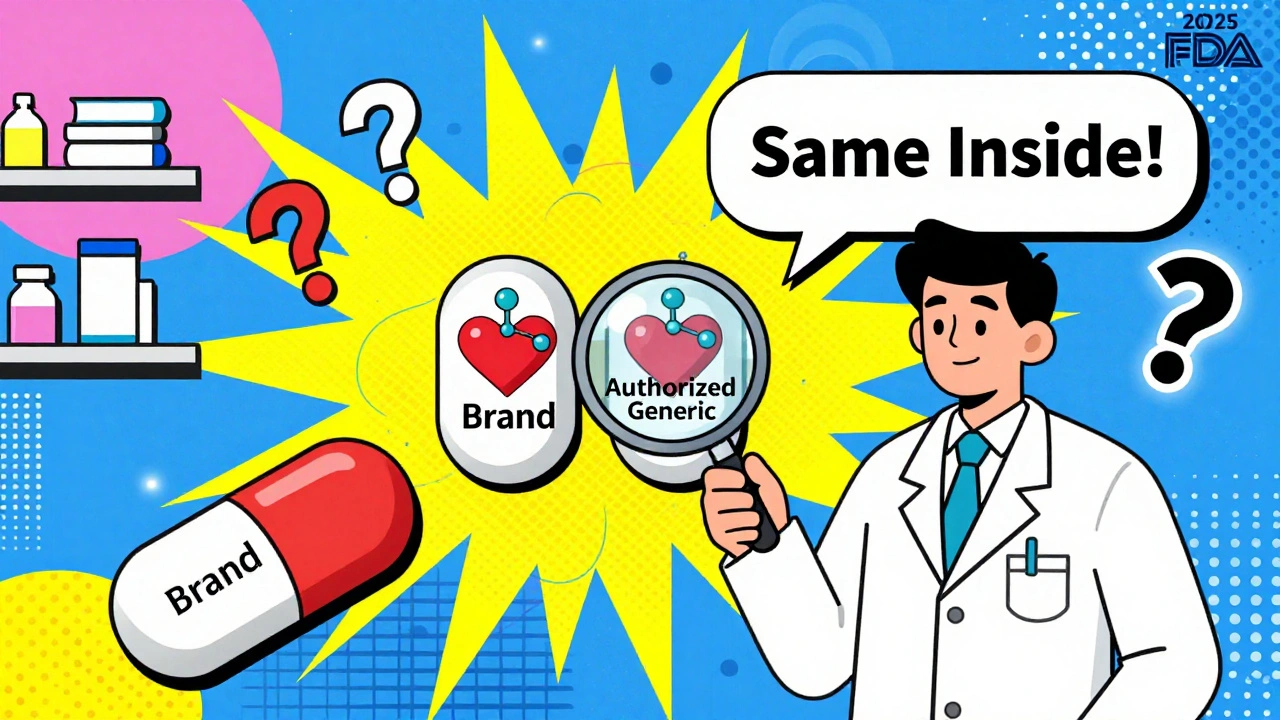
An authorized generic is the exact same drug as the brand-name version, down to the last molecule. It’s made by the same company, in the same factory, using the same ingredients. The only differences? No brand name on the label, and a different appearance.
The FDA defines it clearly: an authorized generic is a brand-name drug sold without the brand name. That’s it. No changes to the active ingredient. No changes to the fillers, binders, or coatings. If your brand-name drug contains lactose or FD&C Yellow No. 6, so does the authorized generic. That’s why patients with sensitivities to certain inactive ingredients often prefer authorized generics over regular generics-they avoid unexpected reactions.
Unlike regular generics, which go through the Abbreviated New Drug Application (ANDA) process, authorized generics use the original brand’s New Drug Application (NDA). That means they skip the bioequivalence testing. They don’t need to prove they work the same way-they already do, because they’re the same product.
Why Do They Look Different If They’re Identical?
The reason comes down to trademark law, not medicine.
In the U.S., you can’t legally sell two different products that look exactly the same. Even if one is just a rebranded version of the other. Trademark rules exist to prevent consumer confusion. If every pill looked identical, someone could accidentally take the wrong one-or worse, a counterfeit drug could slip in unnoticed.
So manufacturers make tiny, controlled changes to the appearance. They might tweak the dye concentration by less than 0.05%. They might change the imprint from “AB123” to “CD456.” Sometimes they switch from a white tablet to a light blue one. But the active ingredient? Still 100% identical. The release profile? The same. The dose? Unchanged.
According to FDA data from 2023, 76.4% of authorized generics have a different color than their brand-name counterpart. Nearly 90% have a different marking. And yet, 98.7% are the same size and shape. These aren’t random changes-they’re deliberate, legal adjustments to satisfy trademark requirements while keeping the drug identical inside.
Authorized Generic vs. Regular Generic: What’s the Real Difference?
It’s easy to mix up authorized generics and regular generics. Here’s the breakdown:
- Authorized generic: Same active and inactive ingredients as the brand. Same manufacturer. Same process. Just no brand name on the label. Appearance differs due to trademark rules.
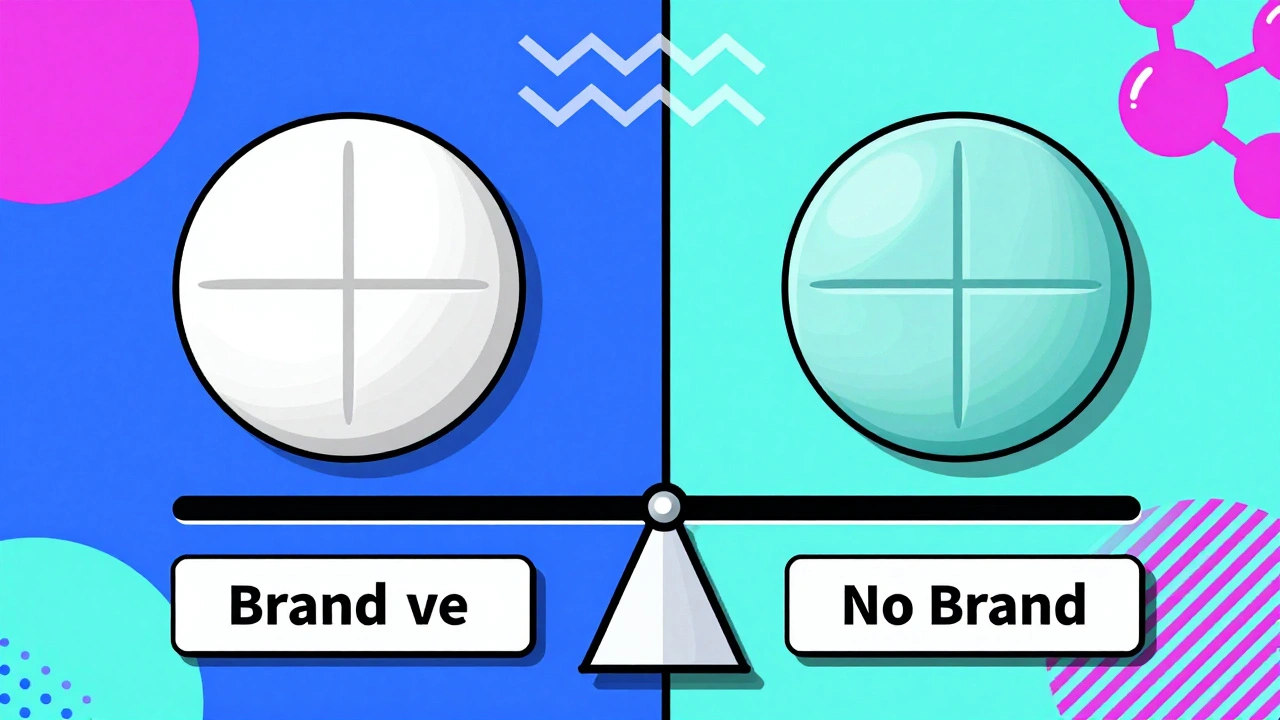
- Regular generic: Must contain the same active ingredient, but can use different inactive ingredients. Made by a different company. Must pass bioequivalence testing. Appearance almost always differs-94.6% of regular generics change color, shape, size, or imprint.
That difference matters. About 4.7% of patients report adverse reactions to inactive ingredients in regular generics-things like stomach upset, rashes, or headaches. These reactions often disappear when they switch to an authorized generic because the formulation is unchanged.
For example, if you’ve ever had a reaction to the dye in a generic version of your asthma inhaler, switching to the authorized generic might solve the problem-because it uses the exact same coating as the brand.
Cost: Are Authorized Generics Cheaper?
Yes-usually. But not always.
On average, authorized generics cost about 28.7% less than the brand-name version. Regular generics are even cheaper, at 42.3% less. So why pay more for an authorized generic?
Because sometimes, the savings aren’t worth it. In 18.3% of cases, the authorized generic costs less than 10% less than the brand. That’s not a big discount. But if you’re sensitive to inactive ingredients, that small savings might be worth it for your peace of mind.
And here’s the catch: authorized generics aren’t available for most drugs. Only 38.4% of brand-name drugs with generic competition have an authorized version. Regular generics exist for 92.7% of off-patent drugs. So if your drug doesn’t have an authorized generic, you’re stuck with the regular version-or the brand.
Why So Much Confusion Among Patients?
Patients aren’t stupid. They’re just not told the whole story.
When you get a pill that looks different, your brain assumes it’s a different drug. That’s natural. A 2022 survey by PharmacyTimes found that 58.3% of patients questioned whether the authorized generic would work as well. That drops to 89.7% after a pharmacist explains it-but only if the pharmacist takes the time.
On Reddit’s r/pharmacy, 68.3% of users said they were initially confused by the appearance change. But 92.4% were relieved once they understood it was the same medicine inside. The problem? Most people never get that explanation.
Pharmacists spend an extra 1.7 minutes per prescription explaining this difference. That’s not a lot-but in a busy pharmacy, it’s easy to skip. And if you don’t ask, you might never know.
Some patients even mistake authorized generics for counterfeit drugs. One user on Amazon wrote: “I thought this was fake because it didn’t look like my ProAir. My pharmacist had to call the manufacturer to prove it was real.”
What’s Changing in 2025?
The FDA is making moves to reduce confusion.
In May 2023, they released draft guidance proposing standardized ways to modify the appearance of authorized generics-so changes are consistent and predictable. They’re also planning to include authorized generics in the Orange Book starting in 2025. Right now, they’re not listed there, which adds to the mystery.
Some drugmakers are responding to patient feedback. Pfizer launched an “appearance continuity program” in early 2023 for 12 of its drugs. Instead of changing shape and color, they keep the shape the same and only adjust the color slightly. That way, patients recognize the pill more easily.
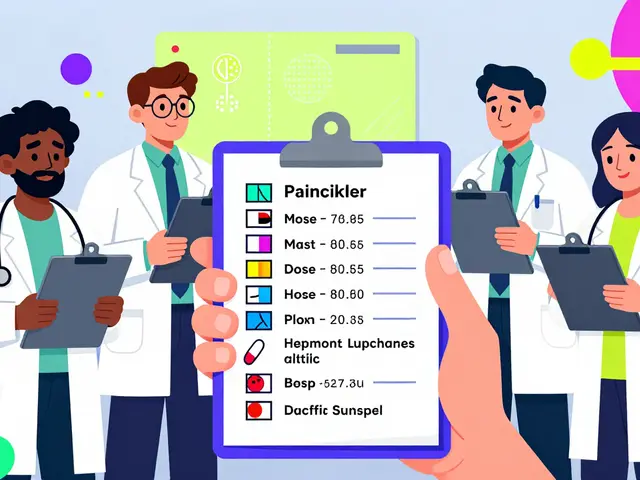
Pharmacy chains are helping too. CVS and Walgreens now use visual comparison charts and standardized scripts to explain authorized generics. These tools show side-by-side images of brand, authorized generic, and regular generic versions-so you know exactly what to expect.
What Should You Do If Your Pill Looks Different?
Don’t panic. Don’t stop taking it. And don’t assume it’s wrong.
Here’s what to do:
- Check the label. Does it say “authorized generic”? If yes, it’s the same drug.
- Compare the imprint and color to your last prescription. Use the FDA’s Orange Book or GoodRx’s drug lookup tool to verify.
- Ask your pharmacist: “Is this an authorized generic? Is it the same as my brand-name pill?”
- If you’ve had reactions to other generics before, ask if this one has the same inactive ingredients.
- If you’re still unsure, call the manufacturer. Most list customer service numbers on the bottle.
Most importantly: if you feel different after switching-like dizziness, nausea, or a rash-contact your doctor. It’s rare, but possible. And it’s better to check than to assume.
Bottom Line: Same Medicine, Different Look
Authorized generics exist to give you the same medicine at a lower price-without changing the formula. The appearance difference isn’t a flaw. It’s a legal requirement. And while it causes confusion, it’s also a safety feature.
For patients with sensitivities to dyes or fillers, authorized generics are a game-changer. For everyone else, they’re just a cheaper version of the same pill.
Next time you get a pill that looks unfamiliar, don’t assume it’s wrong. Ask. Understand. And know this: the medicine inside hasn’t changed. Only the label-and the color-have.

December 6, 2025 AT 07:19 AM
So you're telling me the government forces drug companies to make pills look different just so we don't confuse them with fake ones? That's wild. I bet the real reason is so they can charge more for the 'original' look. I mean, who even checks the imprint? People just swallow it and hope.
December 7, 2025 AT 06:10 AM
i had a reaction to a generic lisinopril last year-hives, itchy as hell. switched to the authorized generic and boom, gone. no joke, my skin cleared up in 2 days. why isn't this common knowledge? pharmacists should hand out flyers with this info.
December 7, 2025 AT 09:22 AM
It's fascinating how a legal construct-trademark law-ends up having such profound implications for patient outcomes. The invisible architecture of pharmaceutical regulation often determines whether someone experiences side effects or not. The pill’s appearance becomes a proxy for identity, even though the biochemistry remains unchanged. We anthropomorphize medicine without realizing it.
December 8, 2025 AT 16:02 PM
98.7% same size and shape? That’s statistically meaningless. If the imprint changes, it’s a different product. The FDA should just let them keep the branding. Who cares if two pills look alike? If someone’s taking counterfeit meds, they’re already dumb enough to buy from a sketchy website. Stop overcomplicating.
December 9, 2025 AT 00:49 AM
This is why India’s generic industry is superior. We don’t play these games. If the molecule is the same, the pill looks the same. No color changes, no fake trademark theatrics. Americans overthink everything. Your regulatory system is a circus.
December 9, 2025 AT 09:41 AM
so the drug is the same but the pill looks different because… trademark law? lol. next they’ll say my iphone battery is the same as my android’s but the casing has to be different so i don’t confuse them. brilliant. pure genius. i’m sure the shareholders are thrilled.
December 11, 2025 AT 04:53 AM
It’s not about trademarks. It’s about control. The pharma giants don’t want you to know they’re selling the exact same thing for half the price. They need the illusion of difference to justify the brand premium. This is capitalism in its most transparent form.
December 11, 2025 AT 14:52 PM
I literally cried when I found out my anxiety med was an authorized generic. I thought I was going crazy because the pill was blue instead of white 😭 thank you for explaining this so clearly. I feel so much better now 💙
December 12, 2025 AT 05:55 AM
The entire pharmaceutical regulatory apparatus in the United States is a monument to bureaucratic absurdity designed to extract maximum profit under the guise of consumer protection. The fact that a change in dye concentration of 0.05 percent constitutes a legal necessity rather than an arbitrary corporate decision speaks volumes about the rot at the core of this system
December 12, 2025 AT 09:54 AM
i had no idea authorized generics existed. i always thought generics were just cheap knockoffs. my grandma takes a med that switched and she swears the new one makes her feel better. guess she was onto something. thanks for clearing this up 🙏
December 12, 2025 AT 19:25 PM
I think the real tragedy here isn’t the confusion-it’s that patients have to be detectives just to know if their medicine is safe. We’ve turned healthcare into a puzzle instead of a right. Maybe if we treated people like humans instead of data points, we wouldn’t need these workarounds.
December 13, 2025 AT 23:52 PM
Let’s be real: 76.4% color change? That’s not trademark law-it’s a profit-maximizing strategy disguised as regulation. The manufacturers are exploiting legal loopholes to maintain brand loyalty while undercutting their own pricing. This is predatory compliance.
December 15, 2025 AT 07:37 AM
so like… if i take the blue pill instead of the white one… is it still the same? wait no i’m confused now. jk i’m just messing with you. but seriously though, why do we need 12 different pills that do the same thing? my brain hurts.
December 16, 2025 AT 21:13 PM
I’ve been on this med for 12 years. Last month, my pill turned from white to green. I called my doctor. I called the pharmacy. I called the FDA. I called my ex. Turns out it was an authorized generic. I felt like a fool. But also… why didn’t anyone tell me this before? This isn’t just confusing-it’s emotionally traumatic.
December 18, 2025 AT 03:41 AM
The system is designed to make you doubt yourself. That’s the real design flaw. You’re not supposed to trust your own experience-you’re supposed to trust the label, the pharmacist, the manufacturer, the FDA. But when all those entities are in a legal dance to avoid trademark infringement, who’s left to protect the patient? The answer is: no one. Until you ask. Until you dig. Until you refuse to accept 'because the law says so' as an answer. That’s when change begins-not in Congress, but in the quiet moment between the bottle and your hand.
December 18, 2025 AT 18:09 PM
I find it deeply irresponsible that the FDA allows such a system to persist. Patients are being misled by superficial changes, and the medical community is complicit in perpetuating this confusion. This is not healthcare-it’s a public relations exercise masquerading as science. We need accountability.