Have you ever picked up a prescription that looked different from the last one but was supposed to be the exact same medicine? You aren't alone. Many patients feel confused when their pharmacist hands them a pill with a different color or shape than what they are used to seeing. This is often where authorized generics come into play. They sit in a strange middle ground between expensive brand-name drugs and cheap traditional generics. Understanding this category helps you navigate your medication costs without worrying about safety.
What Exactly Is an Authorized Generic?
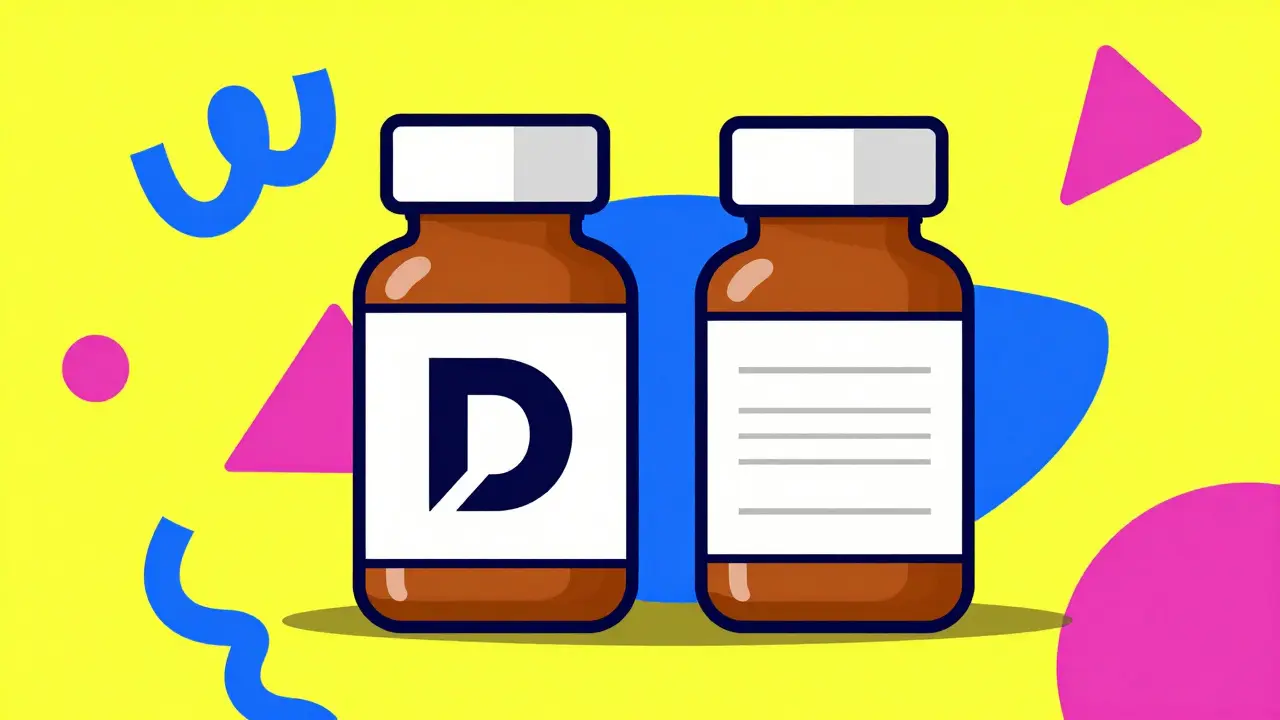
An authorized generic is not a new drug. It is the identical product as the brand-name version, made by the same company. The only difference is the label. Imagine buying a bottle of Coca-Cola, but instead of the famous red logo, it has a plain white label that just says "Cola." The liquid inside is exactly the same. That is an authorized generic.
The U.S. Food and Drug Administration (FDA) defines this clearly in 21 CFR 314.3. An authorized generic is a drug approved under the brand manufacturer's New Drug Application (NDA). It is marketed with different labeling, packaging, or trade names, but it contains the exact same active and inactive ingredients as the brand-name drug. Companies like Pfizer use subsidiaries such as Greenstone to sell these versions. Procter & Gamble uses Prasco for similar purposes. These entities allow big pharma companies to compete in the generic market without losing their brand identity entirely.
How Do They Differ From Traditional Generics?
This is where things get tricky for consumers. Most people know that generic drugs must have the same active ingredient as the brand name. However, traditional generics can have different inactive ingredients. These inactive parts determine the pill's color, shape, coating, and filler materials. Because of this, a traditional generic might look totally different from the brand name.
Authorized generics are different. They are chemically identical to the brand name in every way. They do not need to prove bioequivalence because they *are* the bioequivalent product. They simply borrow the brand's existing approval. Here is how they stack up against other options:
| Feature | Brand-Name Drug | Authorized Generic | Traditional Generic |
|---|---|---|---|
| Active Ingredient | Original | Identical to Brand | Identical to Brand |
| Inactive Ingredients | Original | Identical to Brand | May Differ |
| Regulatory Pathway | New Drug Application (NDA) | Uses Brand's NDA | Abbreviated New Drug Application (ANDA) |
| FDA Orange Book Listing | Listed | Not Listed | Listed |
| Price | Highest | Lower (Generic Price) | Lowest |
Notice the regulatory pathway difference. Traditional generics must file an Abbreviated New Drug Application (ANDA) to prove they work the same way. Authorized generics skip this step because they are already approved under the brand's NDA. This makes them faster to launch and cheaper to produce for the manufacturer.
Why Don't They Appear in the Orange Book?
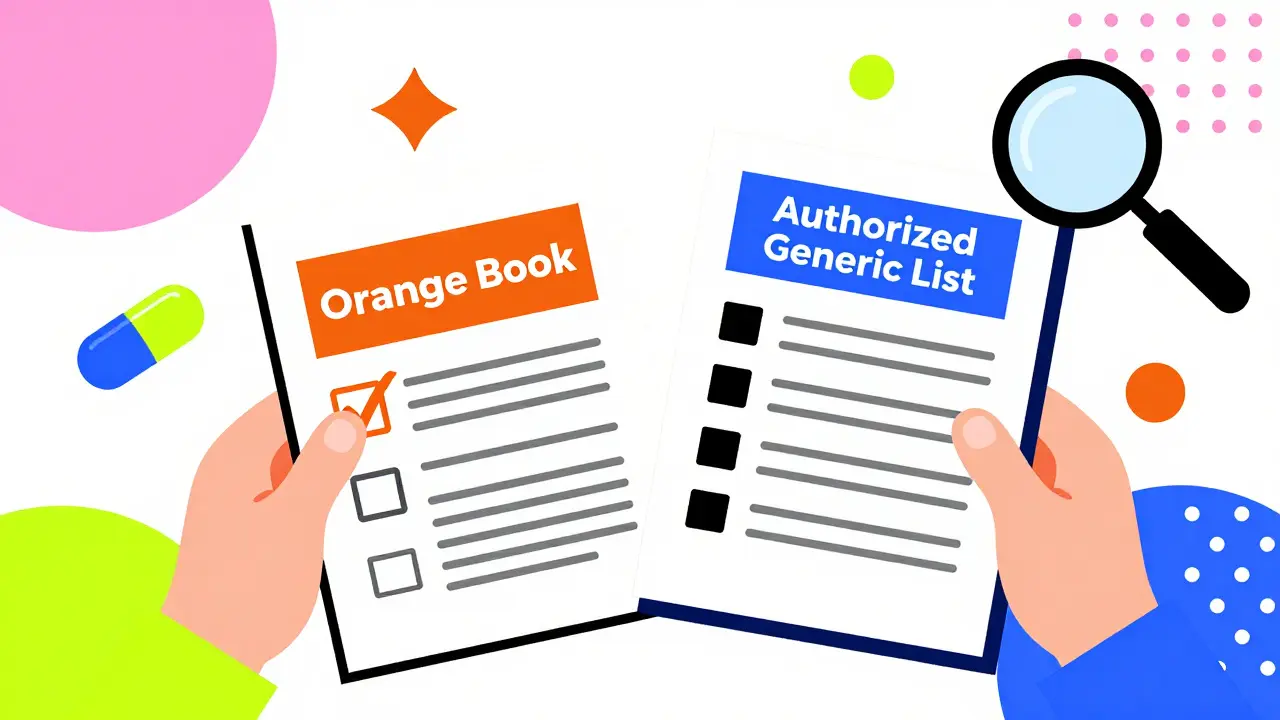
If you are a pharmacist or a healthcare provider, you likely rely on the FDA's Orange Book. This publication lists approved drug products with therapeutic equivalence evaluations. It tells pharmacists which generics are safe substitutes for brand names. Authorized generics are missing from this list. This causes confusion.
Because authorized generics operate under the brand's NDA, they are not considered separate therapeutic entities in the Orange Book system. Instead, the FDA maintains a separate "List of Authorized Generic Drugs." Pharmacists must check this specific list to verify if a non-listed pill is actually an authorized generic. If a patient receives a pill that isn't in the Orange Book, the pharmacist needs to confirm its source. Without this check, there is a risk of dispensing errors or patient anxiety.
The Hatch-Waxman Act and Market Strategy
To understand why authorized generics exist, you need to look at the Hatch-Waxman Act of 1984. This law created a balance between innovation and competition. It gave brand manufacturers patent protection while allowing generic competitors to enter the market once patents expired. Crucially, it offered 180 days of marketing exclusivity to the first generic company that successfully challenged a brand's patent.
This 180-day window is huge money for generic companies. But brand manufacturers didn't want to lose all their revenue overnight. So, they started using authorized generics. By launching their own generic version right before or during those 180 days, brand companies could capture some of the generic market share. They undercut their own high prices slightly but still make more profit than selling to third-party generic makers. This strategy protects their revenue stream while technically complying with the law.
Critics argue this distorts the market. Health Affairs research notes that authorized generics can undermine the financial incentive for independent generic companies to challenge patents. If the brand sells its own generic, the first challenger doesn't get the full monopoly period they were promised. This creates tension between big pharma and smaller generic manufacturers.
What Does This Mean for Patients?
For you, the patient, the impact is mostly positive regarding cost, but it requires attention to detail. Authorized generics are usually priced similarly to traditional generics. This means you pay less than for the brand name, even though you are getting the exact brand formulation. Insurance plans often cover them just like other generics.
However, appearance matters. Since authorized generics may differ only in color or markings to distinguish them from the brand, you might notice a change. GoodRx points out that patients sometimes think they received the wrong medication because the pill looks different. Rest assured, if it is an authorized generic, it is the same drug. The Commonwealth of Massachusetts confirms that patients receive the exact same drug product as the branded version, minus the brand name on the label.
One practical tip: always ask your pharmacist if you see a unfamiliar pill. Ask specifically, "Is this an authorized generic or a traditional generic?" If you have sensitivities to certain fillers or dyes found in the brand name, an authorized generic will contain those same fillers. A traditional generic might not. This distinction can matter for people with allergies or digestive issues related to inactive ingredients.
Future Outlook and Regulatory Changes
Will authorized generics disappear? Unlikely. As long as the Hatch-Waxman framework exists, they remain a powerful tool for brand manufacturers. The FDA continues to update its List of Authorized Generic Drugs, signaling institutional acceptance of this category. Recent studies in 2023 show these drugs are becoming more prevalent as blockbuster drugs face patent cliffs.
Some lawmakers debate whether Congress should amend the Hatch-Waxman Act to restrict this practice. They argue it hurts competition. However, until changes happen, authorized generics will stay. For now, they offer a unique option: brand quality at generic prices. Just keep an eye on your labels and talk to your pharmacist if something looks odd.
Are authorized generics safer than traditional generics?
Authorized generics are not necessarily "safer," but they are identical to the brand-name drug in both active and inactive ingredients. Traditional generics must meet strict FDA standards for bioequivalence and safety, so they are also safe. The main difference is that authorized generics guarantee the same excipients (fillers, dyes) as the brand, which can be important for patients with specific sensitivities.
Why are authorized generics not listed in the FDA Orange Book?
The FDA Orange Book lists drugs approved via Abbreviated New Drug Applications (ANDAs). Authorized generics are marketed under the brand manufacturer's existing New Drug Application (NDA). Therefore, they are not separate entries in the Orange Book. Pharmacists must consult the FDA's separate List of Authorized Generic Drugs to identify them.
Can I switch between an authorized generic and a traditional generic?
Yes, you can switch, but be aware of the differences. Switching from an authorized generic to a traditional generic might change the inactive ingredients, such as dyes or binders. If you tolerate the brand name well, sticking with the authorized generic ensures you get the exact same formulation. Always inform your pharmacist of any preferences or sensitivities.
Do insurance plans cover authorized generics?
Most insurance plans treat authorized generics like traditional generics. They are typically placed in lower copay tiers compared to brand-name drugs. However, coverage can vary by plan. Check with your insurer to see if they recognize the authorized generic as a preferred generic option.
Who manufactures authorized generics?
Authorized generics are produced by the original brand-name manufacturer or a subsidiary they control. For example, Pfizer markets authorized generics through Greenstone, and Procter & Gamble uses Prasco. Sometimes, they license the production to another company, but the product remains identical to the brand version.